

Mental health is an essential part of overall well-being, yet it remains a sensitive topic, particularly in workplaces. For businesses, creating a safe space for mental health discussions at work isn’t just about fulfilling social responsibilities; it’s about building an environment where employees can thrive.
Research shows that open discussions about mental health can improve employee productivity, engagement, and satisfaction while reducing stress and burnout.
In this article, we’ll explore why mental health discussions matter, the key characteristics of a safe space, strategies to implement such spaces, and practical tips for fostering a judgment-free workplace environment. Let’s dive into actionable steps to support mental well-being at work.
Why Mental Health Discussions Matter in the Workplace?
Addressing mental health in the workplace is no longer optional. Companies that prioritize mental health create healthier, more engaged workforces. Here’s why mental health discussions are critical:
Benefits of Open Mental Health Discussions
| Benefit | Explanation |
| Improved Productivity | Employees who feel supported are more focused and efficient. |
| Lower Absenteeism | Open communication reduces stress-related absences. |
| Enhanced Employee Trust | Promotes a culture of openness and builds stronger employer-employee bonds. |
| Reduced Burnout | Early identification of issues helps prevent emotional exhaustion. |
The Cost of Ignoring Mental Health
- High Turnover: Employees in unsupportive environments often leave for better workplaces.
- Poor Morale: Silence around mental health can create a stigma that erodes team cohesion.
- Financial Losses: The World Health Organization estimates that untreated mental health issues cost the global economy $1 trillion annually in lost productivity.
Additionally, mental health challenges can lead to communication breakdowns, missed deadlines, and even workplace conflicts. By fostering open discussions, businesses can create an environment that allows employees to thrive both professionally and personally.
Fostering open discussions benefits both employees and employers. Let’s explore how to build such a culture.
Key Characteristics of a Safe Space for Mental Health Discussions
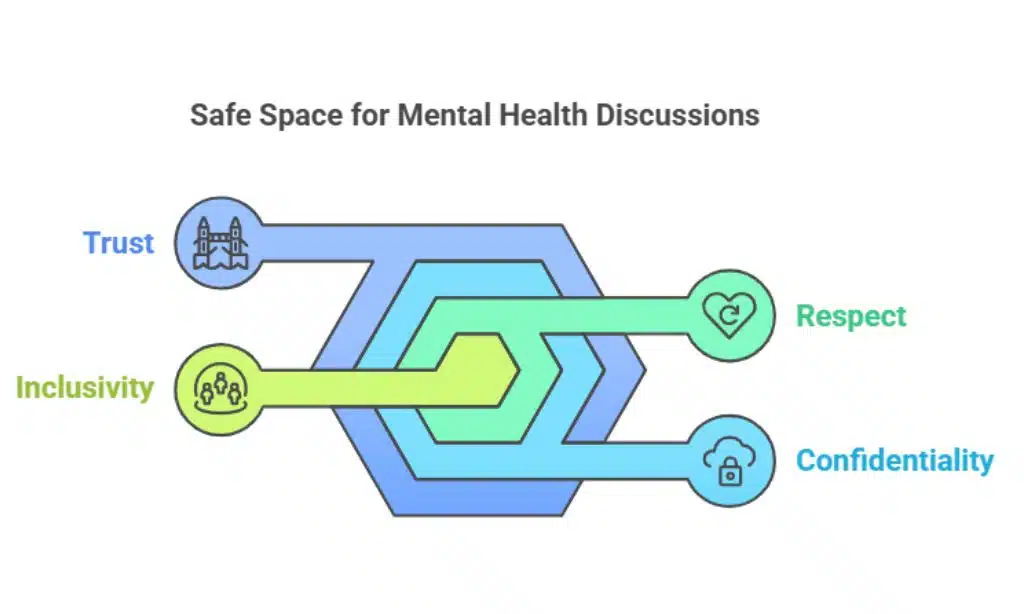
Creating a safe space for mental health discussions requires intentional effort. These spaces thrive on trust, respect, and confidentiality.
Characteristics of a Safe Space
| Characteristic | Description |
| Trust | Employees must feel confident that their concerns will be heard and addressed. |
| Confidentiality | Private matters stay private. |
| Respect | Everyone’s experiences and feelings are acknowledged without judgment. |
| Inclusivity | Policies must embrace diversity and ensure all employees feel welcome. |
Creating a Welcoming Environment
A safe space isn’t just about policy; it’s about physical and emotional environments:
- Comfortable Spaces: Design break rooms or wellness spaces where employees can decompress.
- Open-Door Policies: Ensure leadership is approachable and accessible.
- Anonymous Reporting Systems: Allow employees to voice concerns without fear of retaliation.
A safe space doesn’t happen by accident. It requires proactive measures from leadership and employees alike.
Strategies to Create a Safe Space for Mental Health Discussions
Build a Supportive Workplace Culture
Promoting mental health requires embedding it into your company’s culture. Here’s how:
- Normalize Conversations: Encourage leaders to share their experiences with mental health.
- Regular Communication: Host town halls or team meetings to discuss workplace mental health initiatives.
- Encourage Peer Support: Set up support groups where employees can share experiences.
- Celebrate Awareness Days: Recognize Mental Health Awareness Month or other relevant observances to demonstrate commitment.
| Action | Outcome |
| Leadership sharing personal stories | Reduces stigma and fosters trust. |
| Mental health town halls | Opens the floor for discussions and feedback. |
| Peer support groups | Provides a safe, judgment-free platform for sharing challenges. |
Implement Employee Assistance Programs (EAPs)
EAPs are designed to provide employees with resources to address mental health challenges.
- What to Include:
- Access to licensed counselors.
- Confidential hotlines.
- Resources for stress and time management.
- Digital mental health tools such as meditation apps or online therapy platforms.
- Promote Utilization: Regularly remind employees about the availability and benefits of EAPs through email campaigns, posters, or newsletters.
| Component | Benefit |
| Licensed counselors | Provides professional support for employees. |
| Confidential hotlines | Ensures privacy for those seeking help. |
| Stress management tools | Offers practical solutions for work-life balance. |
| Digital mental health tools | Makes support accessible at any time. |
Train Managers and Leaders
Managers play a key role in fostering a safe environment. Equip them with the tools they need to support their teams.
- Trainings to Provide:
- How to recognize signs of mental health struggles.
- Best practices for initiating sensitive conversations.
- Ensuring confidentiality during discussions.
- Addressing mental health issues without bias or judgment.
- Tools for Managers:
- Conversation scripts for approaching mental health.
- Resources to refer employees for further assistance.
- Clear guidelines on what to do if an employee expresses a mental health crisis.
| Training Focus | Manager’s Role |
| Recognizing warning signs | Identifies employees who might need support. |
| Maintaining confidentiality | Builds trust with team members. |
| Referring employees to resources | Ensures they receive the right level of help. |
| Addressing crises | Prepares managers to act in urgent situations. |
Best Practices for Fostering a Judgment-Free Environment

Encourage Active Listening
Active listening involves giving full attention to the speaker without interrupting or judging.
| Tip | Result |
| Maintain eye contact | Shows attentiveness and builds trust. |
| Avoid interrupting | Encourages employees to share openly. |
| Paraphrase responses | Demonstrates understanding and empathy. |
Establish Clear Guidelines
Set the tone for discussions by creating policies that promote respect.
- Examples of Guidelines:
- No interruptions during conversations.
- Prohibit dismissive language or attitudes.
- Create reporting channels for breaches in respectful behavior.
| Guideline | Purpose |
| No interruptions | Ensures everyone has a chance to speak. |
| Prohibit dismissive language | Maintains a respectful and inclusive environment. |
Promote Psychological Safety
Psychological safety means employees feel comfortable being themselves without fear of negative consequences.
- How to Foster Psychological Safety:
- Encourage diverse perspectives.
- Avoid blaming individuals for mistakes.
- Reward vulnerability and openness.
| Action | Impact |
| Encouraging diverse views | Leads to innovative ideas and inclusion. |
| Avoiding blame | Reduces fear and builds trust. |
| Rewarding openness | Shows employees that their honesty is valued. |
The Role of Feedback and Continuous Improvement
Gather Employee Feedback
Regularly ask employees for their thoughts on workplace mental health initiatives.
- Use anonymous surveys to encourage honesty.
- Host feedback sessions for direct input.
- Act on suggestions to show that feedback is valued.
| Feedback Method | Benefit |
| Anonymous surveys | Ensures employees feel safe sharing concerns. |
| Open feedback sessions | Encourages real-time dialogue and brainstorming. |
Evolve Practices Over Time
- Review and update policies to match employee needs.
- Stay informed about the latest trends in workplace mental health.
- Introduce new initiatives, such as wellness programs or on-site therapy options.
| Action | Outcome |
| Policy updates | Keeps initiatives relevant and effective. |
| Trend research | Ensures alignment with modern mental health practices. |
| New wellness programs | Expands available support for employees. |
Takeaways
Creating a safe space for mental health discussions at work is an ongoing commitment that benefits employees and organizations alike. By fostering open communication, offering resources like EAPs, and training leaders to support their teams, businesses can reduce stigma and build trust. Such efforts lead to happier, healthier employees and a more productive workplace.
Start today by implementing some of the strategies shared in this guide. Remember, every step toward normalizing mental health discussions is a step toward a stronger, more compassionate workplace.
By taking the steps outlined in this article, you’re helping build a workplace where employees feel supported and empowered to bring their whole selves to work.





















