

Australia has long been a global leader in agriculture and livestock management. However, as challenges such as labor shortages, climate change, and increasing demand for sustainable practices grow, the agricultural sector has turned to innovative solutions.
Robotics, once considered futuristic, is now revolutionizing how livestock is managed. These advanced technologies address inefficiencies, improve animal welfare, and pave the way for a sustainable future.
From precision feeding systems to automated health monitoring, robotics offers Australian farmers a new level of productivity and profitability.
This article explores ten groundbreaking ways robotics are transforming livestock management in Australia, showcasing real-world examples and actionable insights for farmers.
1. Automating Livestock Feeding Systems
Efficient feeding is critical for livestock health and productivity. Robotic feeding systems are helping Australian farmers optimize this process with precision and consistency.
Smart Feeding Systems
Robotic feeders use sensors and AI to deliver the right amount of feed based on livestock size, weight, and dietary needs. These systems can adapt feeding schedules and portion sizes automatically, ensuring each animal gets optimal nutrition. This precision reduces waste, improves health, and enhances overall productivity.
Case Studies in Australia
For example, in Victoria, robotic feeding systems have improved the efficiency of dairy farms by 30%, allowing farmers to focus on other critical tasks. These systems also help mitigate labor shortages, a persistent issue in Australian agriculture.
Key Benefits:
- Precise nutrition tailored to individual livestock needs.
- Reduction in feed wastage, cutting operational costs.
- Significant labor savings for farm operations.
Features of Robotic Feeding Systems
| Feature | Benefit | Impact |
| AI-Driven Sensors | Monitors dietary needs of livestock | Ensures optimal health and nutrition |
| Automated Scheduling | Consistent feeding routines | Reduces human labor |
| Waste Minimization | Precision feeding | Cuts down on feed-related expenses |
2. Enhanced Livestock Monitoring with Drones
Monitoring livestock across large-scale properties has traditionally been time-consuming and labor-intensive. Drones are now making this process faster, more efficient, and data-driven.
Drone Usage in Livestock Tracking
Equipped with high-resolution cameras, thermal imaging, and GPS, drones can monitor herds, assess pasture conditions, and locate missing animals.
These aerial systems can cover vast areas in minutes, providing detailed insights that would otherwise take hours or days to gather manually.
Key Benefits of Drone Surveillance
- Real-time tracking for early detection of issues like injuries or illnesses.
- Improved efficiency in locating and rounding up livestock.
- Reduction in costs associated with manual monitoring.
Example: A sheep farm in New South Wales implemented drones and reported a 40% reduction in the time needed for routine inspections. The data collected also helped optimize grazing patterns, boosting pasture utilization.
Drone Applications in Livestock Management
| Application | Description | Benefit |
| Herd Monitoring | Tracks location and movement | Saves time and improves efficiency |
| Health Assessment | Uses thermal imaging to detect issues | Enables early intervention |
| Grazing Optimization | Monitors pasture usage | Improves resource allocation |
3. Robotic Milking Systems
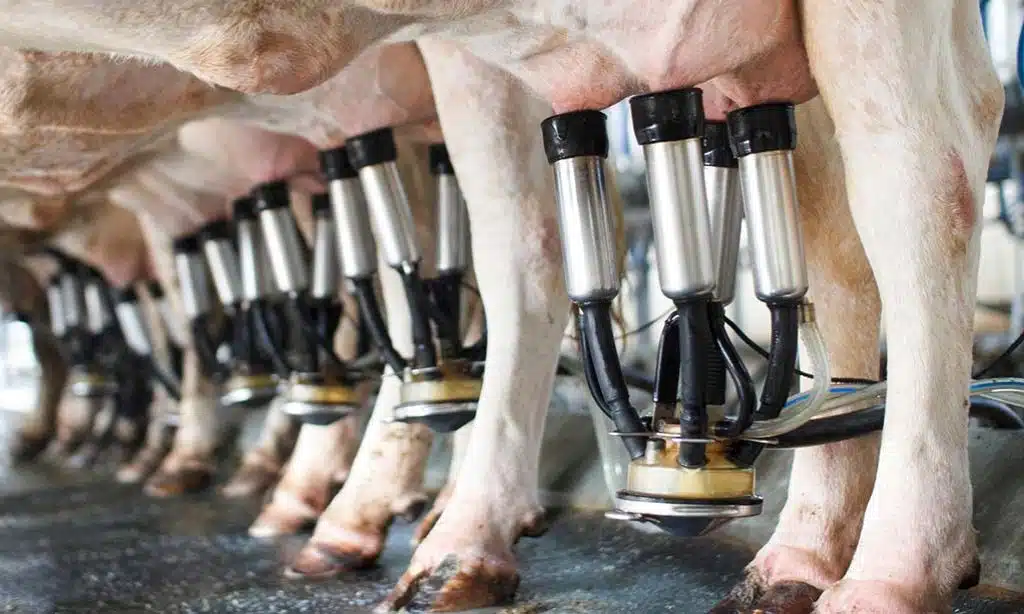
Robotic milking systems are reshaping the dairy industry by automating a traditionally labor-intensive process. These systems enhance consistency and improve animal welfare.
Revolutionizing Dairy Farming
Robotic milking systems allow cows to approach the milking stations voluntarily, reducing stress and improving milk yield.
Advanced sensors analyze the cow’s health during the process, providing valuable data for farm management.
Advantages for Australian Farmers
- Enhanced milk production through stress-free processes.
- Better animal welfare due to voluntary milking.
- Labor cost savings and more efficient operations.
Impact: Farms in Tasmania using robotic milking systems have reported a 20% increase in productivity.
Moreover, automated data collection helps farmers make informed decisions about herd management.
Features of Robotic Milking Systems
| Feature | Description | Impact |
| Health Monitoring | Tracks cow’s health during milking | Improves overall herd health |
| Automated Scheduling | Cows milked as needed | Reduces stress and increases yield |
| Data Collection | Real-time analytics on milk output | Helps in better farm decision-making |
4. Automated Health Monitoring and Diagnosis
Ensuring livestock health is essential for productivity and sustainability. Robotics and AI are playing a pivotal role in this area by enabling real-time monitoring and early detection of health issues.
Health Sensors and AI Integration
Wearable devices and stationary sensors monitor vital signs like temperature, heart rate, and activity levels.
AI analyzes these data points to detect early signs of illness or stress, alerting farmers to take immediate action.
Benefits:
- Early disease detection reduces mortality rates.
- Significant savings on veterinary costs through preventative care.
- Improved herd health leads to higher productivity.
Key Metrics Monitored by Health Sensors
| Metric | Significance | Impact |
| Temperature | Detects fever or illness | Early intervention |
| Activity Levels | Monitors movement patterns | Identifies injuries or stress |
| Heart Rate | Tracks stress or cardiac issues | Ensures animal welfare |
5. Robotic Herding Systems
Traditional herding methods are time-consuming and labor-intensive. Robotics offers a modern alternative that is both efficient and animal-friendly.
Managing Livestock Movement with Precision
Robotic herders, often paired with drones, guide livestock to desired locations using programmed routes.
These systems minimize stress on animals and reduce the need for manual intervention.
Example: A cattle station in Queensland reported a 50% reduction in herding time after adopting robotic systems. The reduced stress on livestock also led to better weight maintenance and overall health.
Comparison of Traditional vs. Robotic Herding
| Aspect | Traditional Herding | Robotic Herding |
| Time Efficiency | Labor-intensive and slow | Automated and quick |
| Animal Stress | High due to manual intervention | Minimal due to precision guidance |
| Cost | Requires more human labor | Reduced long-term operational costs |
6. Waste Management Automation
Managing livestock waste efficiently is crucial for environmental sustainability and farm hygiene. Robotic systems are streamlining this process.
Robotic Manure Management Systems
Automated systems collect and process manure, converting it into usable by-products like fertilizer or biofuel.
This reduces manual labor and creates additional revenue streams for farmers.
Benefits:
- Cleaner living environments for livestock.
- Reduced labor requirements for waste management.
- Enhanced sustainability through recycling waste into useful products.
Benefits of Automated Waste Management
| Benefit | Description | Impact |
| Hygiene Improvement | Regular cleaning of facilities | Better livestock health |
| Resource Utilization | Converts waste into fertilizer | Adds revenue streams |
| Labor Efficiency | Reduces manual workload | Saves time and costs |
7. Breeding Optimization with Robotics
Advanced robotics and AI are transforming livestock breeding, improving genetic quality and herd productivity.
AI-Powered Breeding Analysis
Robotics and AI tools monitor breeding cycles, identify ideal mating times, and track genetic traits.
These systems ensure healthier offspring, reducing risks associated with inbreeding and other issues.
Example: A farm in South Australia reported a 25% increase in calving rates by integrating AI-driven breeding technologies.
These tools also helped reduce the time spent on manual monitoring of livestock cycles.
Applications of AI in Breeding
| Application | Description | Benefit |
| Cycle Monitoring | Tracks reproductive cycles | Ensures optimal breeding timing |
| Genetic Analysis | Identifies desirable traits | Improves offspring quality |
| Health Tracking | Monitors pre- and post-breeding | Enhances herd welfare |
8. Precision Agriculture and Livestock Integration
The combination of precision agriculture and robotics is unlocking new opportunities for sustainable farm management.
By integrating data-driven techniques, farmers can optimize both crop and livestock productivity.
Data-Driven Farming and Robotics
Robotic systems gather real-time data on soil quality, pasture growth, and livestock health.
This integration enables better decision-making, improving resource utilization and ensuring the sustainability of farming operations.
Example: A mixed farm in Western Australia implemented robotics for both livestock monitoring and soil analysis.
his holistic approach led to a 15% increase in overall farm efficiency within the first year.
Benefits:
- Reduced water and fertilizer use.
- Enhanced pasture quality for grazing.
- Improved crop-livestock synergy.
Precision Agriculture Applications in Livestock
| Application | Description | Benefit |
| Soil Monitoring | Analyzes soil health | Optimizes crop and pasture yields |
| Livestock Tracking | Monitors grazing patterns | Improves pasture rotation strategies |
| Resource Allocation | Tracks resource use efficiency | Reduces environmental impact |
9. Robotic Shearing Solutions
Robotic shearing technologies are modernizing the Australian wool industry by making the process faster, safer, and more humane.
Innovations in Wool Harvesting
Robotic shearing machines handle the labor-intensive task of wool harvesting with precision.
These systems significantly reduce the physical strain on workers while minimizing stress on sheep.
Impact: Farms in New South Wales using robotic shearing machines have reported a 25% reduction in wool harvesting time and a marked improvement in wool quality due to consistent shearing techniques.
Features of Robotic Shearing Machines
| Feature | Description | Impact |
| Precision Shearing | Automated cutting ensures accuracy | Enhances wool quality |
| Stress Reduction | Gentle handling systems | Improves animal welfare |
| Labor Efficiency | Reduces manual effort | Saves time and costs |
10. AI and Robotics in Livestock Markets
The livestock trade is also being transformed by AI and robotics, improving market efficiency and transparency.
Smarter Auction Platforms
AI tools analyze livestock conditions, predict market trends, and assist in setting fair prices. Robotics enhances the process by enabling real-time health assessments during auctions.
Example: In Queensland, an AI-powered auction platform was introduced, helping farmers secure better prices by providing buyers with detailed health reports and growth projections for livestock.
Enhanced Market Efficiency:
- Real-time insights for buyers and sellers.
- Improved transparency in pricing.
- Increased market reach through online platforms.
Benefits of AI in Livestock Markets
| Benefit | Description | Impact |
| Market Insights | Real-time trend analysis | Informed decision-making |
| Price Transparency | Accurate valuation of livestock | Fairer transactions |
| Remote Participation | Online auctions | Broader market access |
The Future of Robotics in Livestock Management
Emerging Technologies to Watch
- Autonomous Livestock Transport: Automated systems for moving livestock across large properties.
- AI-Enhanced Pasture Management: Tools that optimize grazing patterns and monitor pasture health.
- Advanced Health Diagnosis: Integrating robotics with genomic data for personalized livestock care.
Challenges and Opportunities Ahead
While the initial investment and training requirements for robotic systems may pose challenges, their long-term benefits—from increased efficiency to sustainability—are undeniable.
Governments and agricultural organizations are now offering incentives to help farmers adopt these transformative technologies.
Key Trends:
- Increasing affordability of robotics solutions.
- Greater focus on sustainability in agriculture.
- Rising demand for high-quality livestock products globally.
Takeaway
Robotics is no longer a luxury but a necessity for Australian livestock management. These technologies are addressing long-standing challenges while paving the way for a more sustainable and efficient future.
By adopting robotics, Australian farmers can stay ahead of global trends, ensure animal welfare, and secure their livelihoods.
From automated feeding to precision agriculture, the future of livestock management is here—and it’s robotic.





















