

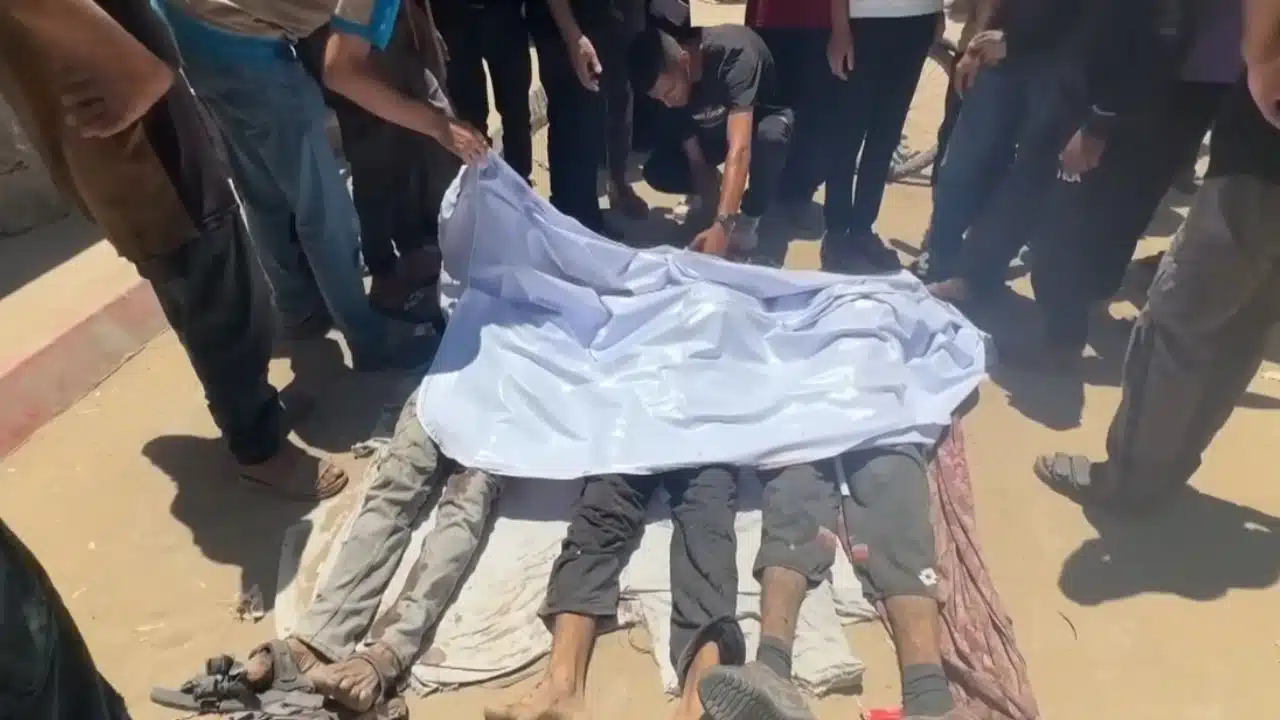
In a chilling revelation, the United Nations Human Rights Office reported on Tuesday that more than 1,000 Palestinians have been killed in Gaza since May 2025 while attempting to obtain food. These individuals were primarily gunned down near aid distribution points, amid a worsening famine and increasing desperation among Gaza’s civilian population of over 2 million people.
According to the Office of the UN High Commissioner for Human Rights (OHCHR), a staggering 1,054 people have died trying to reach food supplies since late May. Of those, at least 766 deaths occurred near aid sites run by the Gaza Humanitarian Foundation (GHF), a newly formed and controversial organization.
GHF: A Controversial Aid Group Backed by Israel
The Gaza Humanitarian Foundation (GHF) was established in February 2025, following Israel’s ban on UNRWA (United Nations Relief and Works Agency) — the principal agency that had been responsible for providing food, medical care, and shelter to Palestinians in Gaza.
GHF is a Delaware-registered nonprofit backed by the Israeli government. It took over distribution duties at four main aid hubs within the Gaza Strip, effectively replacing the decades-old UN-run aid infrastructure. However, the organization has come under intense scrutiny from international aid agencies and rights groups for lacking operational transparency, accountability, and most importantly — experience in crisis-zone logistics.
Critics say the organization is ill-equipped to manage food distribution in a conflict zone, particularly in a place where the infrastructure is severely damaged, law and order is fragile, and famine is rapidly unfolding.
Deadly Clashes Near Aid Sites: Civilians Caught in Crossfire

The UN rights office states that many of these deaths occurred in chaotic scenes near GHF aid points. Thameen al-Kheetan, spokesperson for OHCHR, emphasized that the figures are based on “multiple reliable sources on the ground,” including local medics, humanitarian NGOs, eyewitnesses, and human rights monitors.
Civilians were often shot during stampedes, or when Israeli forces and private security contractors opened fire near the crowds. In some cases, these were said to be warning shots, but many on the ground say live rounds were fired directly into groups of starving people.
Palestinian witnesses describe a terrifying pattern: families, children, and elderly citizens rushing to aid trucks in the early morning hours, only to be met with violence and confusion. Dozens of people were reportedly killed in single incidents, some being trampled, others shot.
Israeli Military and GHF Deny Responsibility for Civilian Deaths
The Israeli military has strongly denied any responsibility for the high death toll. Officials claim that their forces only fire warning shots, and only when security concerns arise due to large and uncontrollable crowds. They further assert that Hamas militants sometimes embed themselves in these gatherings, though no evidence has been provided to support these claims.
Likewise, the Gaza Humanitarian Foundation has dismissed the UN’s findings as “false and exaggerated statistics.” In an official statement, GHF said that their armed contractors have only fired into the air, and that they are committed to preventing stampedes and maintaining safety at their food distribution points.
However, multiple humanitarian workers and observers argue that GHF’s methods are disorganized and lack coordination with international partners, increasing the risk to civilians.
Gaza’s Famine: A Humanitarian Disaster in Motion
The human toll of Gaza’s hunger crisis is staggering and growing daily. According to the World Food Programme (WFP), food insecurity in Gaza has reached “new and astonishing levels of desperation.”
Ross Smith, Director of Emergencies at WFP, stated on Monday that nearly 100,000 women and children in Gaza are suffering from severe acute malnutrition (SAM) — a life-threatening condition requiring urgent medical intervention. In addition, one-third of the entire population isn’t eating for multiple consecutive days, a clear indicator of famine-level food scarcity.
Aid workers report that food, water, and basic medical supplies are so limited that even frontline health staff are experiencing hunger-related symptoms, including headaches, fainting, and blurred vision.
Malnutrition Deaths Mounting: Infants and Children at Highest Risk
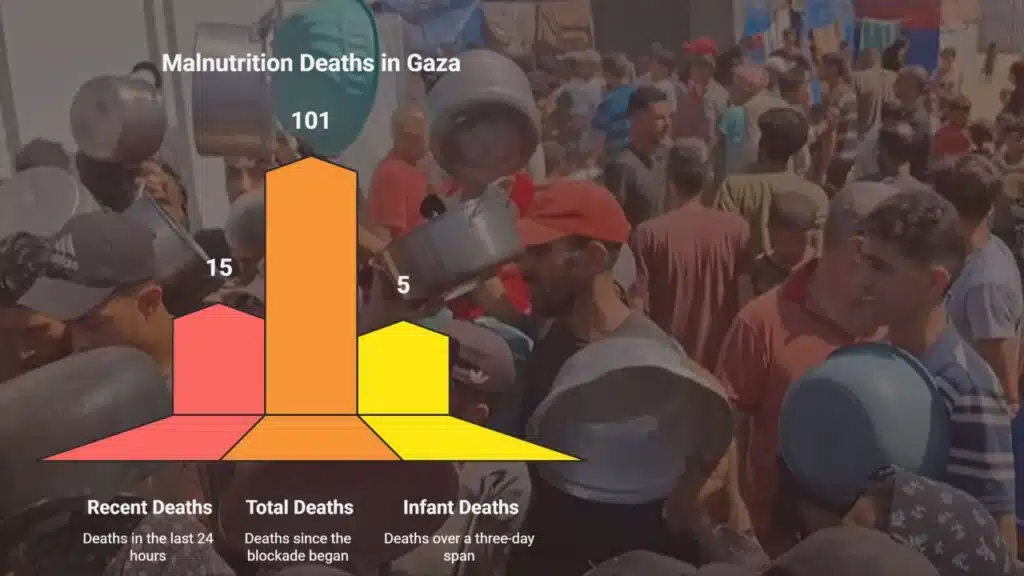
The Gaza Health Ministry announced on Tuesday that 15 more people died of malnutrition in just the last 24 hours, including four children under the age of 10. This brings the official death toll from hunger and famine-related causes to 101 since the beginning of the blockade.
The humanitarian organization MedGlobal, which operates mobile clinics in Gaza, released a grim update. Five infants, including babies as young as three months old, died from starvation over a three-day span. Many had been brought to field hospitals in extremely weakened states — thin, dehydrated, and beyond recovery due to the lack of IV fluids, therapeutic feeding formula, and lifesaving medication.
“This is a deliberate and human-made disaster,” said Joseph Belliveau, MedGlobal’s Executive Director. “Those children died not because of illness, but because there is not enough food in Gaza — and not enough medicine to save them when they arrive too weak to survive.”
Aid Still Inadequate Despite Border Loosening in May
In May 2025, under increasing international pressure, Israel slightly eased its blockade, allowing limited aid to enter through UN-run systems and the new GHF model. Despite this, UN agencies and NGOs say the supplies that make it in are a fraction of what is needed.
Long delays, lack of security, and fragmented coordination continue to obstruct delivery. Many distribution points lack the personnel and tools needed to safely manage food handouts, especially with thousands of desperate people gathering at once.
According to the Integrated Food Security Phase Classification (IPC) system, which assesses famine risk, Gaza is now at IPC Phase 5 — Catastrophe/Famine for significant portions of the population.
International Outcry: 28 Nations Condemn Israeli Aid Model
A coalition of 28 Western-aligned countries, including France, the United Kingdom, Germany, Canada, and others, issued a joint statement on Monday condemning Israel’s approach to aid delivery in Gaza.
The statement said:
“The Israeli government’s aid delivery model is dangerous, fuels instability, and deprives Gazans of human dignity.”
It added that “drip feeding aid” and “inhumane killing of civilians” violate basic humanitarian principles. The group demanded unhindered humanitarian access, safe corridors, and a return to internationally coordinated relief efforts.
Israel and U.S. Respond with Blame on Hamas
Both the Israeli government and the United States rejected the joint condemnation. They insist that Hamas is responsible for the suffering of civilians by continuing hostilities and refusing ceasefire terms.
Israel maintains that Hamas diverts aid and embeds fighters within civilian infrastructure, including in areas around food distribution hubs. However, no comprehensive evidence has been made public to support these claims at the scale suggested.
U.S. officials echoed Israel’s stance, stating that a ceasefire agreement is being blocked by Hamas’s refusal to release hostages taken during the October 7, 2023 incursion into southern Israel — an attack that marked the beginning of this latest war.
A Crisis That Cannot Be Ignored
The situation in Gaza is not just a humanitarian emergency — it’s a collapse of systems that once provided the bare essentials to an already vulnerable population. As famine spreads, food aid delivery falters, and innocent civilians continue to be killed while seeking help, the global community is once again faced with a critical moral and political dilemma.
Without a coordinated international intervention, backed by safe access for humanitarian workers, transparent oversight, and a restoration of credible aid systems, more deaths are inevitable — and the price will be paid by Gaza’s most vulnerable: children, women, and the elderly.
The Information is Collected from Live Mint and MSN.






















