Emotional intelligence (EQ) plays a critical role in a child’s development, shaping how they interact with others, manage their emotions, and navigate social situations.
Children with high emotional intelligence are better equipped to handle stress, form healthy relationships, and succeed in school and beyond.
As parents, caregivers, or educators, it is essential to nurture these skills from a young age.
This comprehensive guide explores 10 effective ways to foster emotional intelligence in children, helping them grow into emotionally healthy, empathetic, and resilient individuals.
Through intentional practices, you can guide your child in recognizing their own emotions, understanding the feelings of others, and responding to challenges with emotional maturity.
Why Emotional Intelligence is Important for Children?
Before we dive into the strategies for fostering emotional intelligence, it’s important to understand why EQ matters.
Emotional intelligence refers to the ability to recognize, understand, manage, and express emotions effectively.
It also involves empathy—understanding the feelings of others—and developing strong interpersonal skills.
Children with high emotional intelligence tend to perform better academically, form healthier relationships, and have stronger mental health.
They are better at coping with stress, resolving conflicts, and bouncing back from setbacks.
By fostering EQ in children, you’re equipping them with lifelong skills that contribute to their overall happiness and success.
How to Foster Emotional Intelligence in Children?
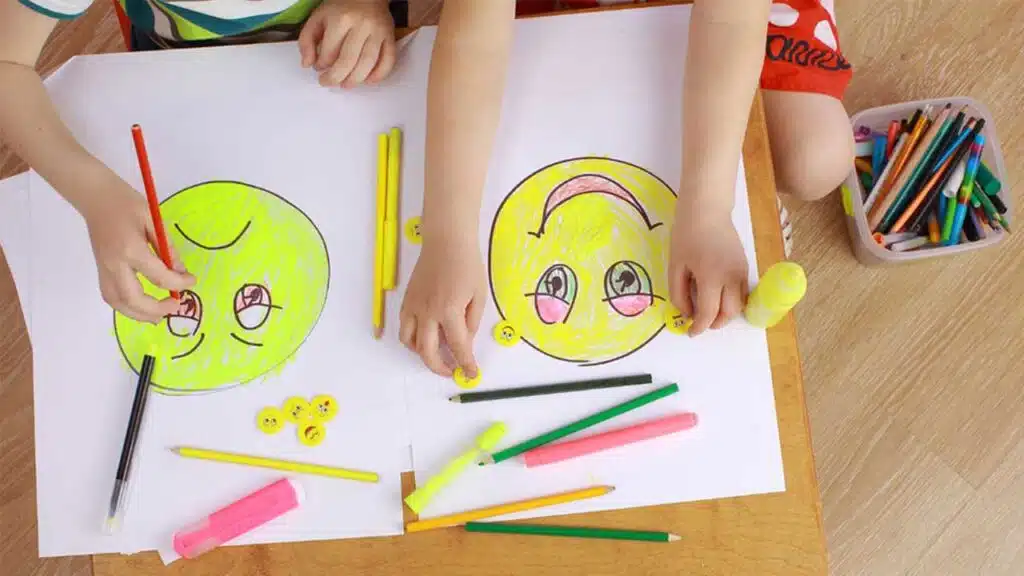
Here are ten powerful ways to foster emotional intelligence in children.
These strategies aim to build self-awareness, emotional regulation, empathy, and interpersonal skills.
1. Model Emotionally Intelligent Behavior
Children learn from the adults around them, so one of the most effective ways to foster emotional intelligence in your child is by modeling emotionally intelligent behavior yourself.
Show your child how to handle emotions in a healthy way by managing your own reactions to stress, frustration, or disappointment.
This includes being mindful of how you express anger or frustration and demonstrating calm problem-solving techniques.
By being open about your emotions, you show your child that it’s okay to feel a range of emotions and that they can manage them constructively.
For example, if you feel upset, you might say, “I’m feeling frustrated right now, so I’m going to take a deep breath to calm down.”
Your child will learn that it’s normal to experience strong emotions and that they can be handled with care and thoughtfulness.
2. Encourage Emotional Expression
Children need to feel safe expressing their emotions, whether they’re happy, sad, angry, or scared.
Encourage your child to talk about how they’re feeling by creating a supportive environment where emotions are not dismissed or punished.
Ask open-ended questions such as, “How are you feeling today?” or “What made you feel that way?”
Let your child know that all feelings are valid—even the difficult ones.
For example, if your child is angry, help them label their emotions and offer comfort instead of minimizing or scolding them for feeling that way.
“I can see that you’re really angry right now. Let’s talk about what’s making you feel this way.”
Encouraging emotional expression helps children understand and communicate their feelings, leading to better emotional regulation and a greater sense of emotional safety.
3. Teach Empathy
Empathy—the ability to understand and share the feelings of others—is a cornerstone of emotional intelligence.
Teaching empathy involves helping your child recognize the emotions of others and respond with kindness and understanding.
Start by teaching your child to notice facial expressions, body language, and tone of voice in others, as these non-verbal cues often convey emotions.
You can foster empathy by discussing how other people might feel in certain situations.
For example, if your child sees a classmate crying, ask them, “How do you think they’re feeling right now?
What could we do to help them feel better?”
This encourages your child to put themselves in someone else’s shoes and respond in a caring way.
Through daily interactions and guided conversations, you can nurture your child’s capacity for empathy, helping them build stronger relationships and become more compassionate individuals.
4. Validate Their Feelings

Validating your child’s feelings is an essential step in helping them feel understood and supported.
When children express emotions, it’s important to acknowledge their feelings rather than dismissing or minimizing them.
Validating emotions lets your child know that their feelings are real and important, even if the feelings are challenging or inconvenient at the moment.
For example, if your child is upset about losing a game, instead of saying, “It’s just a game; don’t be upset,” try validating their emotions with a response like, “I know you’re disappointed because you really wanted to win. It’s okay to feel that way.”
This shows your child that their emotions are valid and gives them permission to feel what they’re feeling.
Validating your child’s feelings fosters emotional self-awareness and helps them learn to process emotions in a healthy way.
5. Practice Active Listening
Active listening is a crucial skill for fostering emotional intelligence.
When your child talks to you about their feelings or experiences, give them your full attention by practicing active listening.
This means listening without interrupting, making eye contact, and offering thoughtful responses that show you’re engaged in the conversation.
By practicing active listening, you’re demonstrating empathy and respect for your child’s emotions.
For example, if your child says they had a bad day at school, respond with something like, “Tell me more about what happened today,” instead of immediately jumping in with advice or judgment.
This approach encourages your child to express their feelings openly and helps them feel heard and understood.
Active listening also teaches your child how to listen to others, promoting better communication and emotional connection in their relationships.
6. Use Emotional Vocabulary
Helping children develop a strong emotional vocabulary is an important part of fostering emotional intelligence.
Children who can accurately label their emotions are better able to understand and manage their feelings.
Start by teaching your child the names of different emotions—happy, sad, angry, frustrated, excited, etc.—and use these words regularly in conversation.
Encourage your child to describe how they’re feeling in specific terms rather than using general words like “good” or “bad.”
For example, instead of saying, “I feel bad,” guide them to say, “I feel disappointed because my friend didn’t share with me.”
This specificity helps children better understand the nuances of their emotions and how to address them.
Using emotional vocabulary helps children gain clarity about their internal experiences, leading to improved emotional regulation and expression.
7. Promote Problem-Solving Skills
Teaching your child how to solve problems independently is an essential part of developing emotional intelligence.
When children face challenges, guide them through the process of identifying their emotions, understanding the problem, and brainstorming solutions.
Encourage them to think about possible outcomes and choose the best course of action.
For example, if your child is upset because they’re having trouble with a classmate, you can help them explore different ways to resolve the conflict.
Ask questions like, “What do you think you can say to your friend to solve the problem?” or “How can we make sure this doesn’t happen again?”
This approach teaches your child to approach problems with a solution-focused mindset.
By promoting problem-solving skills, you’re empowering your child to navigate emotional challenges with confidence and resilience.
8. Teach Mindfulness and Self-Regulation

Mindfulness and self-regulation are essential skills for emotional intelligence.
Teaching children to be mindful of their thoughts and emotions can help them manage stress, reduce impulsive reactions, and improve focus.
Introduce mindfulness techniques, such as deep breathing, meditation, or simple visualization exercises, to help your child calm down when they’re feeling overwhelmed.
Self-regulation involves recognizing when emotions are escalating and taking steps to control those feelings.
For example, teach your child that when they’re angry, they can take a few deep breaths, count to ten, or step away from the situation until they feel calmer.
By practicing mindfulness and self-regulation, children develop the ability to manage their emotions effectively, leading to better emotional health and decision-making.
9. Help Them Understand Body Language and Non-Verbal Cues
Non-verbal communication is a key aspect of emotional intelligence.
Children need to learn how to read body language, facial expressions, and other non-verbal cues to understand how others are feeling.
This skill helps them respond more empathetically and appropriately in social situations.
You can teach your child to recognize non-verbal cues by pointing them out during everyday interactions.
For example, if someone looks upset, you can say, “Look at their face. They’re frowning, and their shoulders are slumped.
What do you think they’re feeling?” These observations help your child become more attuned to the emotions of others, even when words aren’t spoken.
Understanding non-verbal cues enhances empathy and helps children build stronger social relationships.
10. Praise Effort, Not Just Results
When fostering emotional intelligence in children, it’s important to focus on praising their efforts rather than just the outcomes.
This teaches children to value the process of learning and growing emotionally rather than only seeking praise for accomplishments.
For example, instead of saying, “You’re so smart,” you could say, “I’m proud of how hard you worked on that project.”
When it comes to emotional growth, praise your child for showing kindness, patience, or empathy in difficult situations.
“I saw how you helped your friend when they were upset. That was really thoughtful of you.”
This encourages children to continue developing positive emotional behaviors and reinforces the importance of effort in emotional growth.
By praising effort, you build a growth mindset in your child, where they value continuous learning and emotional development.
Conclusion
Fostering emotional intelligence in children is a vital part of their overall development.
By teaching them how to recognize, express, and manage their emotions, you’re equipping them with the skills they need to navigate the complexities of life with empathy, resilience, and confidence.
These 10 strategies offer a comprehensive approach to developing emotional intelligence in children, from modeling emotionally intelligent behavior to promoting problem-solving skills.
Through patience, practice, and intentional effort, you can guide your child in building strong emotional foundations that will benefit them in their relationships, academic performance, and overall well-being.
By nurturing emotional intelligence, you’re setting your child up for success in all areas of life.