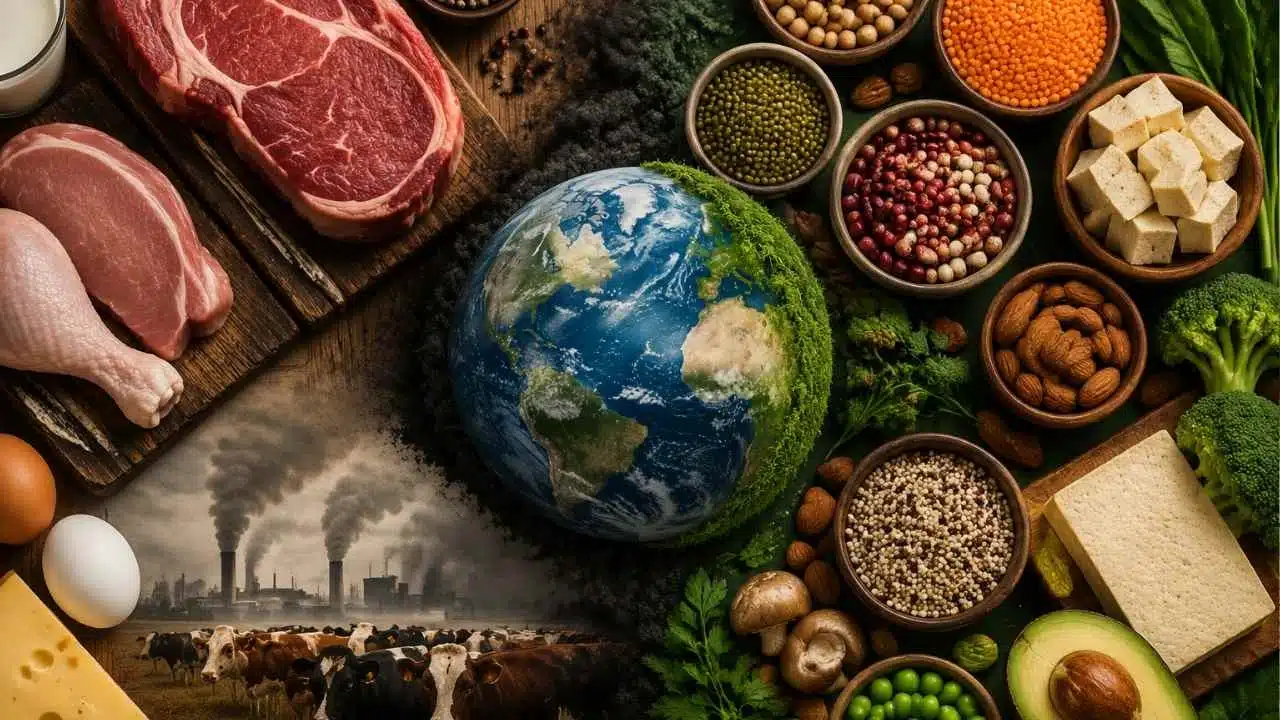
The most exhaustive study to date on the environmental impact of diets has concluded that adopting a vegan diet can dramatically decrease the damage caused by food production. This exciting research sheds new light on the positive influence of veganism on our planet.
According to the study, a vegan diet is responsible for 75% fewer emissions that contribute to climate change, water pollution, and land use, compared to diets that include more than 100g of meat a day. Furthermore, those embracing vegan diets are also cutting the destruction of wildlife by two-thirds and reducing water usage by over half.
The negative effects of meat and dairy on the environment have been widely recognized, leading to calls for wealthier nations to cut back on meat consumption to combat the climate crisis. While previous research has relied on model diets and average values for various food types, this particular study took a more detailed approach.
By analyzing the real diets of 55,000 people in the UK and incorporating data from 38,000 farms across 119 countries, the study provided a more nuanced understanding of food’s environmental impact. This comprehensive methodology lends greater credence to the findings.
Interestingly, the study revealed that what people eat is a far more critical factor in environmental impact than where or how the food is produced. Even organic pork, often considered a lower-impact meat, was found to cause eight times more climate damage than the highest-impact plant, such as oilseed.
These findings emphasize the potential power of individual dietary choices in contributing to a healthier planet. While not everyone may be ready to adopt a full vegan diet, the research strongly suggests that even small shifts towards plant-based eating could have substantial positive effects on the environment. It serves as a compelling reminder that personal choices about what we put on our plates can make a significant difference in the world around us.
In a groundbreaking study led by Prof Peter Scarborough at Oxford University and published in the journal Nature Food, researchers are urging the UK to introduce policies to reduce meat consumption in an effort to meet the country’s climate goals. Despite precedents like taxes on high-sugar drinks, ministers have so far resisted dictating dietary choices.
Prof Scarborough stated that our individual food choices have a significant effect on the planet. By simply reducing meat and dairy consumption, a person can substantially decrease their environmental footprint.
The global food system’s impact on the environment is enormous, contributing to a third of the total greenhouse gas emissions causing global warming. Additionally, it consumes 70% of the world’s freshwater and is responsible for 80% of river and lake pollution. The majority of the Earth’s land, about 75%, is utilized by humans, primarily for farming, and deforestation has led to significant losses in biodiversity.
Experts have welcomed the research, including Prof Neil Ward at the University of East Anglia, who emphasized that the findings strongly support the argument that moving away from animal-based foods can reduce the UK’s environmental impact.
An interesting aspect of the study revealed that low-meat diets—those containing less than 50g of meat a day—had only half the environmental impact of high-meat diets. However, the environmental differences between low-meat, pescetarian, and vegetarian diets were found to be relatively minor.
Prof Richard Tiffin at the University of Reading praised the study as the most comprehensive attempt to connect food consumption data with the environmental impacts of food production. He acknowledged that persuading high-meat-eaters to cut back and encouraging vegetarians to switch to veganism would likely result in lower emissions. However, he also noted that, based on this research, it’s difficult to advocate for changes to the diets of moderate omnivores, unless they choose to adopt a completely vegan diet.
The study underscores the tangible connection between diet and the environment and makes a strong case for policy interventions to promote more sustainable eating habits. The findings add to the growing body of evidence that personal dietary choices can play a critical role in combatting climate change and preserving the planet for future generations.
In a recent study that explores the link between dietary choices and sustainability, researchers have concluded that individuals in wealthier nations must “radically” cut back on meat and dairy consumption for global food production to remain sustainable. This study argues that other solutions like new technology and reducing food waste won’t be sufficient by themselves.
One of the most startling findings was the substantial reduction in methane emissions associated with vegan diets. Methane, a highly potent greenhouse gas, is produced mainly by cattle and sheep. The study showed that vegan diets resulted in a remarkable 93% decrease in methane emissions when compared to high-meat diets.
In light of these results, the UK Health Alliance on Climate Change recommended in 2020 that sustainable diets be promoted through mandatory environmental labelling on food products, regulating promotions, and even taxing high-carbon foods.
However, the government’s response has been cautious. A spokesperson emphasized that individuals should have the freedom to make their own food choices. While acknowledging the connection between food choices and greenhouse gas emissions, the government also noted the potential environmental benefits of well-managed livestock, such as supporting biodiversity, preserving the character of the countryside, and providing vital income to rural communities.
The farming minister, Mark Spencer, further expressed his interest in exploring technological solutions like genetically modified cows that emit less methane.
The study, while offering compelling evidence on the benefits of reducing meat and dairy consumption, ignites a complex debate. Balancing individual freedoms, economic considerations, and the pressing need to address climate change presents a multifaceted challenge. This research adds to the growing dialogue around how personal dietary habits can influence global sustainability, prompting governments and individuals alike to consider the broader impact of what’s on our plates.