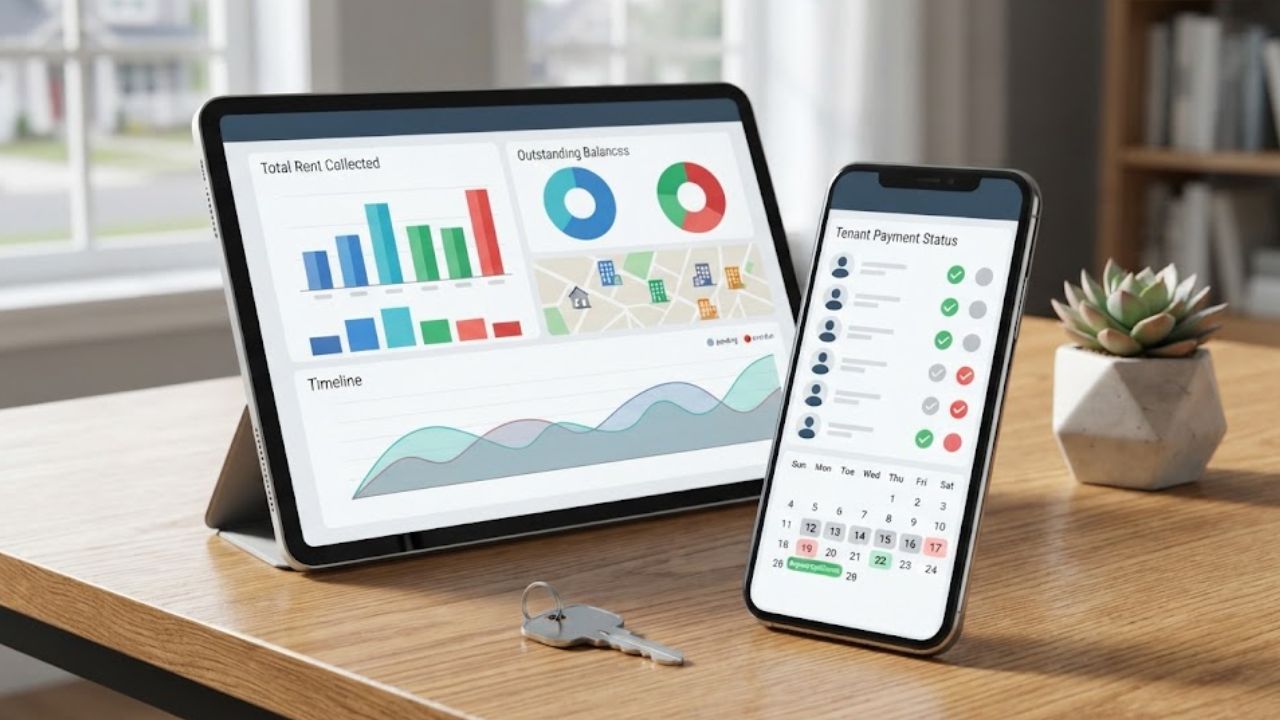
Validating SaaS ideas before building helps founders avoid wasting months on products nobody truly needs. In 2026, SaaS markets are bigger, more competitive, and filled with AI-powered tools, so a good idea must prove more than basic interest. It needs a clear problem, a specific target customer, a real buyer, existing demand, payment intent, and strong retention potential.
This explains how to validate startup idea quality through practical SaaS market validation steps. It covers problem research, ICP definition, customer interviews, competitor analysis, search demand checks, landing page tests, smoke tests, pricing conversations, concierge MVPs, and validation scorecards. It also shows how to spot weak signals, avoid false positives, test willingness to pay, and decide whether to build, narrow, pivot, or pause.
The goal is simple: build only after the market gives you enough evidence. By validating SaaS ideas early, founders can reduce risk, sharpen positioning, create a better MVP, and move with more confidence toward launching a useful SaaS product.
What Validating SaaS Ideas Really Means?
Validating SaaS ideas means proving that a specific group of people has a real problem and may pay for a better solution. It is not about asking friends if your idea sounds good. It is not about getting likes on LinkedIn. It is not about building a demo and hoping the market reacts later. Real validation turns a guess into evidence. You start with a rough idea, then test the problem, buyer, market, pricing, workflow, and demand. The goal is not to remove all risk. That never happens. The goal is to remove the most obvious risks before you spend months building.
A weak SaaS idea usually sounds broad. For example, “I want to build a better project management tool.” That does not tell you who needs it, what pain it solves, why current tools fail, or why anyone would pay for another subscription. A stronger version sounds more specific.
“Small creative agencies lose time collecting client approvals across email, Slack, Google Docs, and WhatsApp. Account managers spend several hours every week chasing feedback. They already use project management tools, but approvals still happen manually. Several agency owners said this delays projects and hurts margins.” Now you have something to test.
| Validation Element | Weak Version | Strong Version |
| Target user | Small businesses | Web design agencies with 3 to 15 employees |
| Problem | They need better workflow | Client feedback arrives across too many channels |
| Pain level | Annoying | Delays projects and wastes billable hours |
| Current solution | They use tools | They use email, Google Docs, Slack, and manual reminders |
| Buyer | Anyone in the company | Agency owner or operations manager |
| Payment signal | They said it sounds useful | They agreed to test a paid pilot |
| Retention signal | They may use it sometimes | They deal with the problem on every client project |
Good validation gives you sharper language. It shows you the customer’s real problem, not the founder’s imagined one. It also helps you decide what not to build. That is underrated. Early SaaS products usually fail from too many assumptions, not too few features.
Why SaaS Market Validation Matters More in 2026?
SaaS is still a growing market, but growth does not make validation easier. In fact, it makes validation more important. Current market research estimates the global SaaS market at hundreds of billions of dollars in 2026, with strong growth expected through the next decade. AI SaaS is also expanding fast, with many companies adding AI features to products that used to be simple workflow tools.
That sounds positive. But it also means customers have more options. Every department already has a software stack. Many teams are tired of tool overload. A buyer may like your product and still avoid buying it because they already pay for too many tools. Modern software buyers also care more about adoption. Capterra’s 2026 software buying research shows that successful adoption is still difficult for many buyers. That is important for SaaS founders because a product does not win just because it gets purchased. It has to fit into real team behavior.
In 2026, idea validation SaaS work should answer three questions at once: is the problem painful, is the buyer reachable, and can the product become a repeat habit? If you only validate interest, you may build something people try once and forget. That is not enough for SaaS.
| 2026 SaaS Reality | Why It Matters for Validation | What Founders Should Test |
| SaaS markets are larger | More demand exists, but competition is high | Clear positioning and target niche |
| AI features are common | AI alone is no longer a strong moat | Business outcome, accuracy, trust, workflow fit |
| Buyers face tool overload | Teams avoid unnecessary subscriptions | Urgency, ROI, and replacement value |
| Adoption is difficult | Purchase does not guarantee usage | Onboarding, habit formation, workflow fit |
| Reviews are public | Buyers compare options before demos | Competitor gaps and customer complaints |
| Search data is easier to access | Founders can check demand early | Pain keywords and high-intent queries |
| No-code payment tools exist | Payment tests are easier | Willingness to pay before full build |
The simple truth is this: building got faster, but buyer trust got harder. That is why SaaS market validation should happen before the MVP, not after.
Start With the Problem, Not the Product
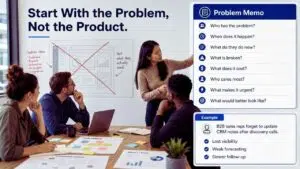
Most founders start with a product idea because products are easier to imagine than customer pain. You can picture dashboards, buttons, automations, and reports. But customers do not buy dashboards. They buy relief from a painful job. Before building anything, write a problem memo. Keep it simple. The memo should explain who has the problem, when it happens, how they solve it today, what is broken about the current method, and why the problem matters now.
This step feels slow, but it saves time later. I have learned that the first version of a SaaS idea is usually too broad. The problem memo forces you to narrow it. That narrowing is where real positioning begins.
For example, “sales teams need better CRM updates” is too broad. A sharper problem is, “B2B sales reps forget to update CRM notes after discovery calls, so managers lose visibility and forecasts become unreliable.” That version gives you a workflow, a user, a buyer, and a measurable pain.
| Problem Memo Question | Why It Matters | Example Answer |
| Who has the problem? | Prevents vague targeting | B2B sales teams with 5 to 30 reps |
| When does it happen? | Shows frequency | After discovery calls and demos |
| What do they do now? | Reveals current workaround | Manual CRM notes and manager follow-ups |
| What is broken? | Shows pain | Notes are incomplete, late, or missing |
| What does it cost? | Shows business impact | Poor forecasting and slower follow-up |
| Who cares most? | Identifies buyer | Sales manager or revenue operations lead |
| What makes it urgent? | Finds buying trigger | Team growth, missed targets, poor reporting |
| What would better look like? | Shapes product promise | Auto-summarized call notes synced to CRM |
A strong problem is usually specific, repeated, and expensive. If the problem happens once a year, it may not support SaaS. If it happens every week and affects revenue, time, compliance, or customer experience, it deserves deeper validation.
Define the ICP Before You Build the MVP
Your ICP, or ideal customer profile, is the type of customer most likely to feel the pain, understand the value, and pay for the product. Many early SaaS founders resist narrowing the ICP because they fear losing market size. In reality, a clear ICP makes validation easier.
“Small businesses” is not an ICP. “B2B agencies with 5 to 25 employees that manage at least 10 active clients” is closer. It tells you who to interview, where to find them, what language to use, and what workflows to study.
A clear ICP also helps separate the user from the buyer. In SaaS, these are often different people. The user feels the daily pain. The buyer controls the budget. The champion wants the product internally. The admin worries about access, security, and integrations. If you interview only users, you may validate pain but miss the buying process. If you talk only to executives, you may understand budget but miss daily workflow friction. You need both.
| Role | What They Care About | Validation Question |
| End user | Less manual work, speed, ease | What slows you down every week? |
| Buyer | ROI, budget, priority | What would make this worth paying for? |
| Champion | Internal credibility | What would help you convince your team? |
| Admin | Security, access, integrations | What tools must this connect with? |
| Manager | Reporting and control | What visibility do you lack today? |
| Founder | Growth, cost, retention | What business result matters most? |
A good ICP also improves SEO later. When you know the exact audience, your content topics become sharper. You can create pages around pain points, alternatives, workflows, comparisons, and industry use cases. That is how cluster content supports the larger pillar topic around building SaaS product strategy.
Check Whether People Already Spend Money on the Problem
One of the strongest signs in SaaS market validation is existing spending. If people already spend money, time, or staff effort on the problem, you are not inventing demand from scratch. You are looking for a better wedge into an existing behavior.
Spending does not always mean software subscriptions. It can mean hiring employees, using agencies, buying templates, paying for consultants, maintaining spreadsheets, or spending hours on manual work. Time is also a cost. If a founder, manager, or operations person spends five hours a week fixing the same issue, that pain may support a paid tool.
This is why competitor research is useful even before you build. Competitors prove that buyers exist. Reviews show where customers are unhappy. Pricing pages show what the market accepts. Comparison pages show decision criteria. Do not panic if competitors exist. No competition can be a warning sign. It may mean buyers do not care, the market is too small, or the problem is too hard to monetize.
| Spending Signal | What It Means | How to Use It |
| Paid tools exist | Buyers already pay for solutions | Study pricing, reviews, and positioning |
| Agencies offer the service | The workflow has business value | Test a software version of the service |
| Templates sell well | People want shortcuts | Find repeatable manual pain |
| Job descriptions mention the task | Companies hire for the problem | Study roles and responsibilities |
| Communities discuss workarounds | Pain exists without prompting | Collect customer language |
| YouTube tutorials exist | People need help solving it | Identify confusing steps |
| Search demand exists | People actively look for answers | Build keyword and content map |
| Negative reviews repeat | Current tools leave gaps | Find your product wedge |
The best validation clues often come from complaints. A review saying “great tool but too complex for small teams” can point toward a simpler SaaS. A review saying “reporting is weak” can point toward an analytics wedge. A review saying “setup takes too long” can point toward onboarding as the advantage.
Use Search Data to Understand Demand and Language
Search data is not perfect validation, but it is valuable. Google Trends can show interest over time and by region. Google Keyword Planner can help discover keywords, estimated search demand, and paid search competition. Search results also reveal what type of content already ranks for the problem.
The mistake is treating search volume as market proof. High search volume does not always mean high buying intent. Some keywords are informational. Some are dominated by big brands. Some bring traffic but no customers. A lower-volume keyword with clear buying intent can be much more valuable. For validating SaaS ideas, search research should focus on customer language. What words do people use when they feel the problem? Do they search for tools, templates, examples, comparisons, or fixes? Are they aware of the category, or are they only aware of the pain?
For example, someone searching “best client portal software for agencies” is probably closer to buying than someone searching “how to manage client feedback.” Both matter, but they belong to different stages.
| Search Signal | What It Reveals | Example |
| Pain keyword | User knows the problem | “client feedback delays” |
| Tool keyword | User wants software | “client approval software” |
| Alternative keyword | User compares options | “best client portal alternatives” |
| Template keyword | User wants a workaround | “client feedback form template” |
| Integration keyword | User has a workflow stack | “Slack client approval integration” |
| Pricing keyword | User is near purchase | “project proofing software pricing” |
| Comparison keyword | User is evaluating vendors | “Markup.io vs Pastel” |
| Industry keyword | User has vertical need | “client portal for design agencies” |
Search data should not decide the whole idea. It should help you understand demand, language, and positioning. If search demand is weak but community pain is strong, the idea may still work through outbound, partnerships, or founder-led sales.
Study Competitors Without Copying Them
Competitor research is not about copying features. It is about understanding the market’s expectations and frustrations. A competitor’s product page tells you what they want to be known for. Customer reviews tell you what buyers actually experience. Start with direct competitors, then study indirect alternatives. Direct competitors solve the same problem with software. Indirect alternatives include spreadsheets, consultants, internal tools, manual processes, or broader platforms.
Many SaaS ideas become stronger when you stop asking, “Who has this feature?” and start asking, “What are customers forced to tolerate today?”
Look at reviews on software directories. G2 lists millions of real software reviews, and Capterra highlights millions of verified reviews. These platforms are useful because the language comes from real users, not only from marketing teams.
| Competitor Research Area | What to Look For | Validation Use |
| Pricing | Free plans, tiers, usage limits | Understand budget expectations |
| Reviews | Praise and complaints | Find gaps and must-have features |
| Positioning | Target audience and promise | Spot crowded or underserved segments |
| Onboarding | Setup steps and friction | Find speed or simplicity advantage |
| Integrations | Connected tools | Learn workflow dependencies |
| Support complaints | Response speed and quality | Test support as a differentiator |
| Feature gaps | Missing repeated requests | Shape MVP scope |
| Customer size | SMB, mid-market, enterprise | Choose entry segment |
Your first SaaS product does not need to beat the market leader. It needs a wedge. A wedge can be a niche audience, simpler setup, better onboarding, a vertical workflow, a cheaper entry price, stronger reporting, or a more focused AI feature.
Sharp beats broad at the validation stage.
Talk to Real Customers Before You Pitch
Customer interviews are powerful, but only when you avoid leading questions. The worst question is, “Would you use this?” Most people will say yes because they are being polite. That answer feels good but teaches very little. Better interviews focus on past behavior. Ask about the last time the problem happened. Ask how they solved it. Ask what tools they used. Ask how long it took. Ask who else was involved. Ask what broke. Ask if they have paid to fix it before.
I like to spend the first half of the conversation saying almost nothing about the product idea. That is difficult, but it works. The less you pitch, the more honest the conversation becomes.
When someone says, “That is a big problem,” do not stop there. Ask, “When did it last happen?” If they cannot remember, the pain may not be frequent. If they immediately open a spreadsheet, show a messy workflow, or tell a recent story, keep digging.
| Bad Interview Question | Better Interview Question |
| Would you use this? | How do you solve this problem today? |
| Would you pay for it? | What do you currently spend to handle this? |
| Do you like this idea? | What happened the last time this problem came up? |
| Is this a big problem? | How often does it happen in a normal month? |
| What features do you want? | What outcome would make this worth switching for? |
| Would your team adopt it? | Who would need to approve or use it? |
| Is our pricing fair? | What budget would this come from? |
| Should we build it? | What would stop you from buying this? |
The goal is not compliments. The goal is evidence. A useful interview may even hurt your feelings. That is fine. Bad news before building is cheaper than bad news after launch.
Validate Willingness to Pay Early
Many founders delay pricing because they are afraid of rejection. That is understandable, but dangerous. If you only validate free interest, you may build a product people like but will not buy. Willingness to pay is not only about the number. It is about value, budget, urgency, authority, and timing. A prospect may love the idea but have no budget. Another may have budget but no urgency. Another may feel the pain but lack decision power.
You do not need perfect pricing during validation. You need a realistic price anchor. You can test whether the product feels like a $19, $49, $99, $299, or $1,000 per month problem. The number depends on the customer and the value.
For B2B SaaS, connect pricing to business value. If the product saves 20 hours per month, reduces churn risk, improves close rates, or prevents expensive mistakes, the price conversation becomes more grounded.
| Pricing Test | What It Reveals | Example |
| Ask about current spend | Existing budget | What tools or services do you pay for now? |
| Ask what it would replace | Replacement value | Would this replace spreadsheets, an assistant, or another tool? |
| Show a starting price | Seriousness | Early access starts at $49 per month |
| Offer a paid pilot | Commitment | Try it with your team for 30 days |
| Ask who approves | Buying process | Who signs off on software like this? |
| Ask about blockers | Sales friction | What would stop you from buying? |
| Test annual interest | Confidence | Would annual pricing make sense if it worked? |
| Collect payment intent | Strong validation | Deposit, invoice, or payment link |
No-code payment tools make this easier in 2026. You can create a payment link, invoice, or paid pilot without building a full billing system. You do not need a complete product to test whether customers will commit.
Build a Landing Page That Tests the Offer
A validation landing page should not be a brand exercise. It should test demand for a clear offer. A simple page with sharp copy is better than a beautiful page that says nothing specific. The landing page needs to answer five questions quickly: who is it for, what problem does it solve, what outcome does it deliver, why is it better than the current way, and what should the visitor do next?
Do not hide behind vague phrases like “streamline your workflow” or “unlock productivity.” Say the real thing. “Collect client approvals in one place so agency projects stop getting stuck in email” is much stronger.
The call to action matters too. “Join the waitlist” is okay, but it is a softer signal. “Book a workflow review,” “Request a private pilot,” or “Get early access for your team” shows stronger intent.
| Landing Page Section | Purpose | Practical Tip |
| Headline | Make the promise clear | Mention audience and outcome |
| Pain section | Show you understand the problem | Use real customer language |
| Solution section | Explain the new way | Keep it simple |
| Workflow section | Show how it works | Use 3 to 4 steps |
| Proof section | Add credibility | Use interviews, pilots, or early numbers |
| Pricing signal | Test budget reaction | Add “starting from” if needed |
| FAQ | Handle objections | Mention setup, integrations, and data |
| CTA | Capture intent | Ask for demo, pilot, or payment |
A landing page can validate messaging, but it cannot validate everything. If people sign up, talk to them. Ask why they signed up, what they expected, and what would make them pay. The real learning often happens after the form submission.
Run a Smoke Test With Targeted Traffic
A smoke test checks whether real prospects act when they see your offer. It is called a smoke test because you are looking for signals before the full machine exists. This can be very simple. Create a landing page, define one offer, send targeted traffic, and measure what happens. You can use LinkedIn posts, founder communities, direct outreach, small ads, newsletters, Reddit discussions where allowed, or niche Slack groups.
The key is traffic quality. A thousand random visitors mean less than 20 qualified prospects. SaaS validation depends on the right people seeing the right message.
LinkedIn Lead Gen Forms can be useful for B2B validation because they use pre-filled profile data. That helps reduce friction and gives you cleaner lead information. But the same rule applies: leads are not customers. Follow up and test real intent.
| Smoke Test Metric | Weak Signal | Strong Signal |
| Page visits | Random traffic | Qualified target visitors |
| Signup rate | Curiosity | Clear ICP fit |
| Demo requests | Low intent | Prospects ask specific workflow questions |
| Reply quality | “Looks cool” | “Can this solve our current process?” |
| Pricing reaction | Avoids price | Discusses budget and value |
| Follow-up behavior | Ignores reply | Books call or sends details |
| Pilot interest | Wants free access | Agrees to limited paid pilot |
| Objections | Vague | Specific concerns you can solve |
A smoke test does not need to be expensive. The goal is learning, not scale. A small test with clear feedback can save months of unnecessary development.
Use a Concierge MVP Before Writing Too Much Code

A concierge MVP means you manually deliver the result before building the full software system. It may feel unscalable, but that is exactly why it works. At this stage, you are not trying to scale. You are trying to learn what the product must do.
For example, if you want to build an AI reporting SaaS, start by creating manual weekly reports for five customers. If you want to build a lead-scoring tool, manually score leads with a repeatable process. If you want to build an onboarding automation platform, manually guide a few customers through the workflow.
This helps you see the messy reality. You learn what data customers can provide, where they get stuck, what they value, and what they ignore. You also learn which steps can be automated later. A concierge MVP also builds trust. Customers feel heard because you are close to the problem. That closeness is hard to get once you hide behind a dashboard.
| SaaS Idea | Concierge MVP Version | What You Learn |
| AI reporting tool | Manual weekly reports | Which insights customers value |
| Client onboarding SaaS | Manual checklist and reminders | Where onboarding breaks |
| Lead enrichment tool | Spreadsheet delivered by hand | What data matters most |
| Customer success platform | Manual health-score audit | Which churn signals are useful |
| Content planning SaaS | Manual content brief service | What strategy users need |
| Compliance tracker | Manual audit and task tracker | Which requirements are urgent |
| Sales call summary tool | Human-reviewed call notes | Accuracy and CRM workflow needs |
| Finance dashboard | Manual monthly analysis | Which metrics buyers trust |
Many founders discover that the first product should be simpler than they thought. That is a good thing. Simpler MVPs launch faster and test better.
Choose the Right MVP for the Risk You Need to Test
An MVP should test the riskiest assumption. This is where many founders get confused. They think MVP means “small product.” A better definition is “smallest useful experiment that teaches the most important lesson.”
If your biggest risk is demand, do not build a product first. Build a landing page and run outreach. If your biggest risk is usability, create a clickable prototype. If your biggest risk is payment, offer a paid pilot. If your biggest risk is technical, build a small proof of concept.
The MVP should match the question. This is also where the validation process starts moving toward the bigger SaaS build journey. Once the risk is clearer, your MVP scope becomes easier to plan inside Building a SaaS Product from Idea to Launch.
| Risk | Best MVP Type | Example |
| Demand risk | Landing page MVP | Test offer and CTA |
| Payment risk | Paid pilot | Charge for early access |
| Workflow risk | Concierge MVP | Deliver result manually |
| Usability risk | Clickable prototype | Test user flow before code |
| Technical risk | Proof of concept | Test API, AI output, or integration |
| Data risk | Manual data audit | See what inputs customers can provide |
| Retention risk | Repeated manual service | See if customers return weekly |
| Channel risk | Smoke test | Test traffic and conversion |
Do not build features to feel safe. Build experiments to answer questions.
Validate Switching Motivation
Most SaaS products do not replace anything. They replace spreadsheets, messy email chains, internal tools, old habits, or existing software. That means your product must overcome switching resistance. Customers may agree that your idea is better and still not switch. Why? Because switching takes effort. They have to learn a new tool, move data, invite teammates, trust your company, get approval, and change habits.
That is why “better” is not enough. The product must be better in a way that matters right now.
Look for switching triggers. A trigger can be team growth, a missed deadline, a new regulation, a broken workflow, a current tool becoming too expensive, a manager needing reporting, or a customer complaint.
| Switching Barrier | Why It Matters | Validation Question |
| Data migration | Users fear losing history | What data would need to move? |
| Team adoption | One user cannot force change | Who else must use this? |
| Budget approval | Buyer may not control funds | Who approves new tools? |
| Workflow habit | Old methods feel easier | What would make switching worth it? |
| Integrations | Tools must connect | What systems are required? |
| Trust | New vendors feel risky | What proof would you need? |
| Training | Teams resist complexity | How much setup is acceptable? |
| Timing | Buyers delay non-urgent changes | Why now? |
If there is no switching trigger, sales may drag. A strong trigger makes the buying conversation easier because the customer already feels pressure.
Validate Retention Before Launch
SaaS businesses need repeat usage. If people use the product once and leave, the idea may still be useful, but it may not support a recurring subscription model. Retention starts before launch. You can estimate it by studying how often the problem happens and how deeply the product fits into the workflow. Daily and weekly pains are stronger than rare pains. Team workflows are often stickier than solo one-off tasks. Products that store history, connect data, automate recurring work, or support collaboration can become harder to replace.
This is especially important for AI SaaS. Many AI tools create an exciting first experience but weak repeat behavior. The novelty fades. The product must produce a result customers need again and again.
Ask yourself: What brings the user back next week?
| Retention Factor | Strong Signal | Weak Signal |
| Frequency | Problem happens daily or weekly | Problem happens rarely |
| Workflow depth | Fits existing process | Sits outside normal work |
| Data value | Gets better with stored data | No history or learning effect |
| Team use | Multiple users depend on it | One curious user tries it |
| Integration | Connects to core tools | Standalone and isolated |
| Business impact | Saves money or drives revenue | Mild convenience |
| Habit loop | Clear repeat action | No reason to return |
| Reporting | Tracks progress over time | One-time output |
If retention looks weak, you may need a different model. Some ideas work better as templates, services, marketplaces, audits, or one-time tools.
Build a SaaS Validation Scorecard
A validation scorecard keeps you honest. Without one, it is easy to remember the best conversations and ignore the weak signals. Founders are naturally biased toward their own ideas. A scorecard adds friction to that bias.
Score each area from 1 to 5. A score of 1 means weak evidence. A score of 5 means strong evidence. Do not score based on hope. Score based on what prospects actually did or said. If most scores are low, do not build yet. If some scores are strong and others are weak, keep testing. If the most important areas are strong, you may be ready for a focused MVP or paid pilot.
| Validation Area | 1 Means Weak | 5 Means Strong |
| Pain urgency | Nice-to-have | Frequent and costly |
| ICP clarity | Broad audience | Specific reachable segment |
| Buyer clarity | Unknown buyer | Clear budget owner |
| Existing spend | No current spend | Already pays for tools or services |
| Search and market signal | No visible demand | Clear pain, tool, and comparison demand |
| Competitor gap | No clear wedge | Repeated complaints show opportunity |
| Pricing confidence | Avoids money talk | Accepts pilot or price anchor |
| Switching trigger | No urgency | Strong reason to change now |
| Retention potential | One-time use | Recurring workflow need |
| Founder advantage | No access or insight | Strong domain knowledge or distribution |
A practical rule: Do not move into serious product development until pain, ICP, buyer, and willingness to pay are reasonably strong. You can refine features later. Weak demand is much harder to fix.
A 30-Day Plan for Validating SaaS Ideas
You can run a serious validation sprint in 30 days. It will not prove everything, but it can reveal whether the idea deserves deeper investment.
The goal is to move from vague idea to evidence. You will define the customer, study the market, talk to prospects, test positioning, check pricing, and decide whether to build, narrow, pivot, or stop.
Do not treat this like a paperwork exercise. Treat it like fieldwork. Your job is to leave your assumptions and enter the customer’s world.
| Timeline | Main Task | Output |
| Days 1 to 3 | Write problem memo | ICP, pain, assumptions, buyer map |
| Days 4 to 6 | Research search demand | Keyword groups, intent map, content gaps |
| Days 7 to 9 | Study competitors | Review notes, pricing, gaps, positioning |
| Days 10 to 16 | Interview prospects | Pain patterns, current workflows, objections |
| Days 17 to 19 | Build landing page | Clear offer, CTA, pricing signal |
| Days 20 to 23 | Run outreach or traffic test | Qualified leads, replies, demo requests |
| Days 24 to 27 | Offer concierge MVP or pilot | Usage feedback, payment reaction |
| Days 28 to 30 | Score and decide | Build, narrow, pivot, or pause |
The best outcome is not always “build it.” Sometimes the best outcome is “narrow the audience,” “change the buyer,” “raise the price,” “drop the AI feature,” or “turn this into a service first.”
That is still progress. Validation is supposed to change the idea.
Example: Validating a SaaS Idea for Client Approvals
Let’s walk through a realistic example. Suppose the idea is a SaaS tool for small agencies that need faster client approvals. The first version might sound like this: “A project management tool for agencies.” That is too broad. Agencies already have project management tools. You need a sharper pain.
After research and interviews, the idea becomes: “A simple client approval workspace for small design and marketing agencies that lose time collecting feedback across email, Slack, PDFs, and Google Docs.”
Now the problem is clearer. The product is not trying to replace every agency tool. It is solving one painful approval workflow.
| Validation Step | What Happens | What You Learn |
| ICP | Agencies with 3 to 15 employees | Small teams feel the pain but need simple tools |
| Problem interviews | Project managers describe delayed feedback | Pain is real and repeated |
| Competitor research | Existing proofing tools feel too complex | Simplicity may be the wedge |
| Search research | People search for client portal and approval tools | Demand exists in several keyword groups |
| Landing page | Promise focuses on approvals, not project management | Clearer message improves response |
| Smoke test | Agency owners request demos | Buyer interest appears |
| Concierge MVP | Founder manually manages approval boards | Workflow details become clear |
| Pricing test | $49 to $99 per month pilot | Tests budget and seriousness |
This example shows why narrowing matters. “Project management” is crowded. “Client approval workflow for small agencies” is sharper. The smaller entry point makes validation easier.
Common Mistakes When Validating SaaS Ideas
Most validation mistakes come from wanting certainty too fast. Founders want someone to say, “Yes, build this.” But customers rarely understand your future product clearly enough to give that answer. You have to observe behavior, not just opinions.
Another common mistake is overvaluing positive feedback. A prospect saying “interesting” is not validation. A prospect sending their workflow, asking about pricing, inviting a teammate, or agreeing to a pilot is much stronger.
Founders also build too much too early. They confuse product progress with business progress. A polished MVP can still be built on weak demand. That is why validation should happen before heavy development.
| Mistake | Why It Hurts | Better Approach |
| Asking friends | They are too polite | Talk to real prospects |
| Pitching too early | Biases answers | Ask about past behavior first |
| Chasing broad markets | Weak messaging | Narrow the ICP |
| Ignoring pricing | Hides weak demand | Test payment early |
| Copying competitors | Creates no wedge | Study complaints instead |
| Building too much | Slows learning | Test riskiest assumption first |
| Trusting waitlists too much | Signups may be weak intent | Follow up with interviews |
| Ignoring adoption | Product may not stick | Validate workflow fit |
A useful mindset: validation is not a confidence ritual. It is a pressure test. It should expose weak spots.
Red Flags That Mean You Should Pause
Some SaaS ideas are not ready to build. That does not always mean they are bad. It may mean the market is wrong, the ICP is too broad, the pain is weak, or the timing is off.
The biggest red flag is vague pain. If prospects cannot describe the last time the problem happened, be careful. Another red flag is no current workaround. If nobody spends time or money solving the issue today, the pain may not be urgent.
Also watch for ideas that require too many behavior changes. If the product needs the whole team to change habits from day one, adoption may be hard.
| Red Flag | What It May Mean | What to Do |
| Users cannot recall the problem | Pain is not frequent | Interview a narrower segment |
| No one pays for alternatives | Weak commercial demand | Look for stronger pain or different buyer |
| Buyer is unclear | Sales process may stall | Map budget owner |
| Everyone says “nice idea” | Low urgency | Ask for payment or pilot |
| Market is too broad | Messaging will be weak | Pick one niche |
| Too many required integrations | MVP scope is too large | Start with one workflow |
| No switching trigger | Buyers may delay | Find urgent use case |
| Product depends on novelty | Retention may be weak | Tie value to repeated business outcome |
Pausing is not failure. Building the wrong SaaS product for six months is far more expensive.
What to Do After Validation?
Once validation looks strong, move into MVP planning. This is where you decide the first use case, core workflow, onboarding path, pricing model, and launch channel.
Do not build every requested feature. Early prospects often ask for many things. Your job is to find the smallest product that delivers the core promised outcome. If the promise is “collect client approvals faster,” do not build full project management, invoicing, time tracking, and file storage in version one.
The next step should connect validation to execution. You move from “Should we build this?” to “What is the smallest version that proves customers will use it repeatedly?” This is where your cluster content naturally supports the pillar article Building a SaaS Product from Idea to Launch. Validation gives the foundation. The MVP turns that foundation into a product. Launch brings it to the market.
| After Validation | Key Question | Practical Output |
| MVP scope | What must exist first? | Core feature list |
| Onboarding | How will users reach value quickly? | First-use flow |
| Pricing | What model fits value? | Starter pricing or pilot terms |
| Analytics | What should be measured? | Activation and retention events |
| Sales motion | How will customers buy? | Self-serve, demo-led, or hybrid |
| Support | What help will users need? | Setup guide and support flow |
| Roadmap | What comes later? | Feature priority list |
| Launch plan | Where will demand come from? | Channels, content, outreach |
A good validation process makes product planning calmer. You know who you are building for. You know what pain matters. You know which features can wait.
Final Thoughts
Validating SaaS ideas is not about slowing down ambition. It is about aiming better. A founder can spend months building a polished product and then discover that the market does not care. Or they can spend a few focused weeks testing the problem, buyer, demand, pricing, and workflow before committing serious time and money.
The second path is less glamorous, but it is smarter. In 2026, the barrier to building SaaS is lower than ever. The barrier to earning trust is higher. Customers already have tools. They already have habits. They already have budgets under pressure. Your product must solve a problem that matters enough to change behavior.
Start with the problem. Narrow the ICP. Study current spending. Read competitor reviews. Talk to real prospects. Test pricing. Run a smoke test. Use a concierge MVP. Score the evidence honestly. Then build, not because the idea sounds exciting, but because the market has given you a reason to believe.
Frequently Asked Questions (FAQs) About Validating SaaS Ideas
What does validating SaaS ideas mean?
Validating SaaS ideas means testing whether a real group of customers has a painful problem, already tries to solve it, and may pay for a better solution. It includes customer interviews, market research, competitor analysis, pricing tests, landing pages, smoke tests, and MVP experiments.
How do I validate a SaaS idea before building?
Start by writing a problem memo. Define the ICP, buyer, current workaround, pain level, and business impact. Then talk to real prospects, study search demand, read competitor reviews, test a landing page, discuss pricing, and offer a small pilot or concierge MVP before writing too much code.
How many customer interviews do I need for SaaS validation?
For early validation, 10 to 20 high-quality interviews can reveal useful patterns. The number matters less than the quality of the people. Five conversations with perfect-fit buyers are better than 50 random opinions from people who will never use or buy the product.
What is the strongest validation signal for a SaaS idea?
The strongest signal is commitment. Payment is the clearest form, but other strong signals include a booked demo, a signed pilot, access to real workflow data, team involvement, repeated usage, or a buyer asking specific pricing and implementation questions.
Is a waitlist enough to validate a SaaS idea?
A waitlist is helpful, but it is not enough by itself. Many people join waitlists out of curiosity. Stronger validation comes when waitlist members reply to follow-up emails, book calls, discuss pricing, join a pilot, or agree to use the product with their team.
Should I build an MVP before validating the idea?
Not always. If your biggest risk is demand, validate with interviews, landing pages, outreach, and pricing tests first. Build an MVP only after you understand the problem, buyer, workflow, and strongest assumptions. The MVP should test the riskiest remaining question.
What is SaaS market validation?
SaaS market validation means checking whether the market is large enough, reachable, willing to pay, and actively dealing with the problem. It includes studying competitors, search demand, software reviews, industry workflows, buyer behavior, pricing, and distribution channels.
How do I know if people will pay for my SaaS?
Talk about pricing early. Ask what they currently spend, what tool or manual process your product would replace, who approves software purchases, and what result would make the price worth it. A paid pilot, deposit, or signed agreement is much stronger than verbal interest.