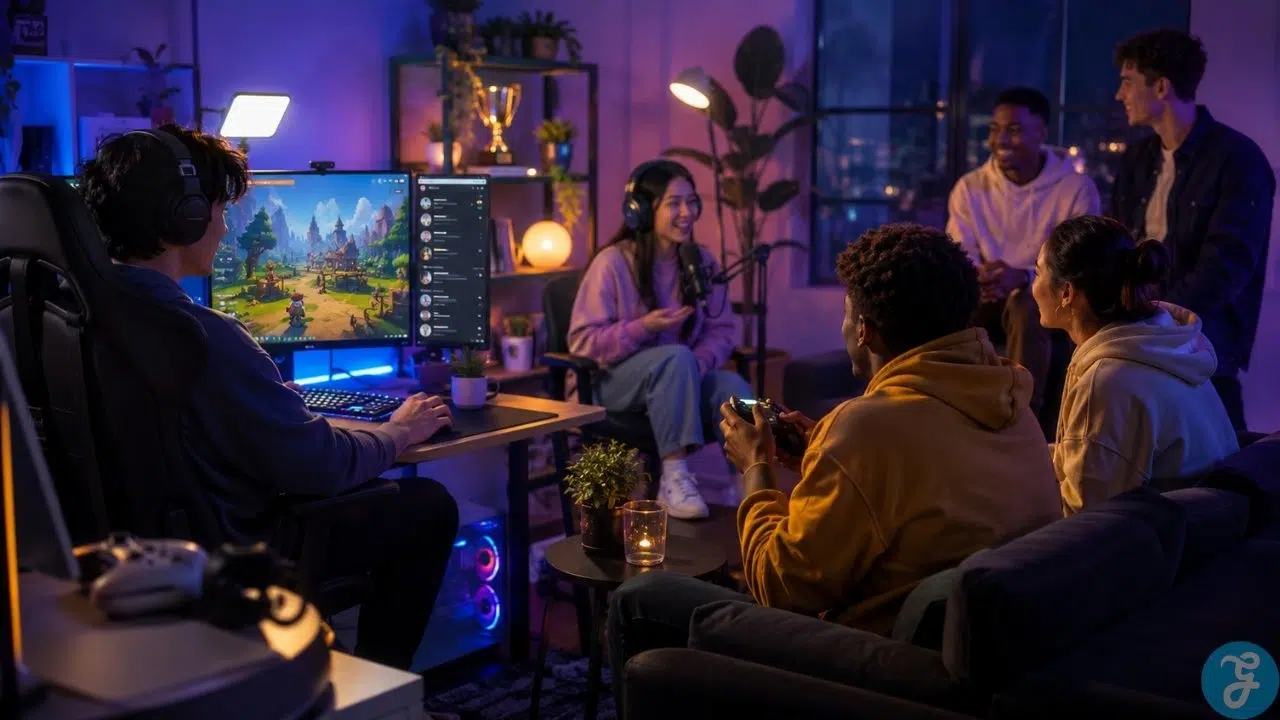
Gaming is supposed to feel connected, but modern gaming often feels scattered. One conversation happens on Reddit, another on Discord, another on YouTube, another inside a livestream chat, and the useful answer you needed is somehow buried in a forum thread from 2018. That is why the best gaming communities still matter: they help players find people, knowledge, events, creators, and spaces that make games feel bigger than the screen.
Our Selection Criteria
This pillar is not just a list of the biggest names in gaming. Size matters, but usefulness matters more. A large platform can still feel empty if it does not help players discover games, learn skills, discuss ideas, or join meaningful communities.
Here are the selection filters used to build this gaming community list.
| Selection Filter | Why It Matters |
|---|---|
| Active relevance | Communities and platforms had to remain useful for gamers today, not just famous historically. |
| Clear gaming value | Each pick needed a strong connection to gaming discussion, discovery, content, competition, or learning. |
| Community usefulness | Stronger picks help players ask questions, meet others, watch content, join events, or improve. |
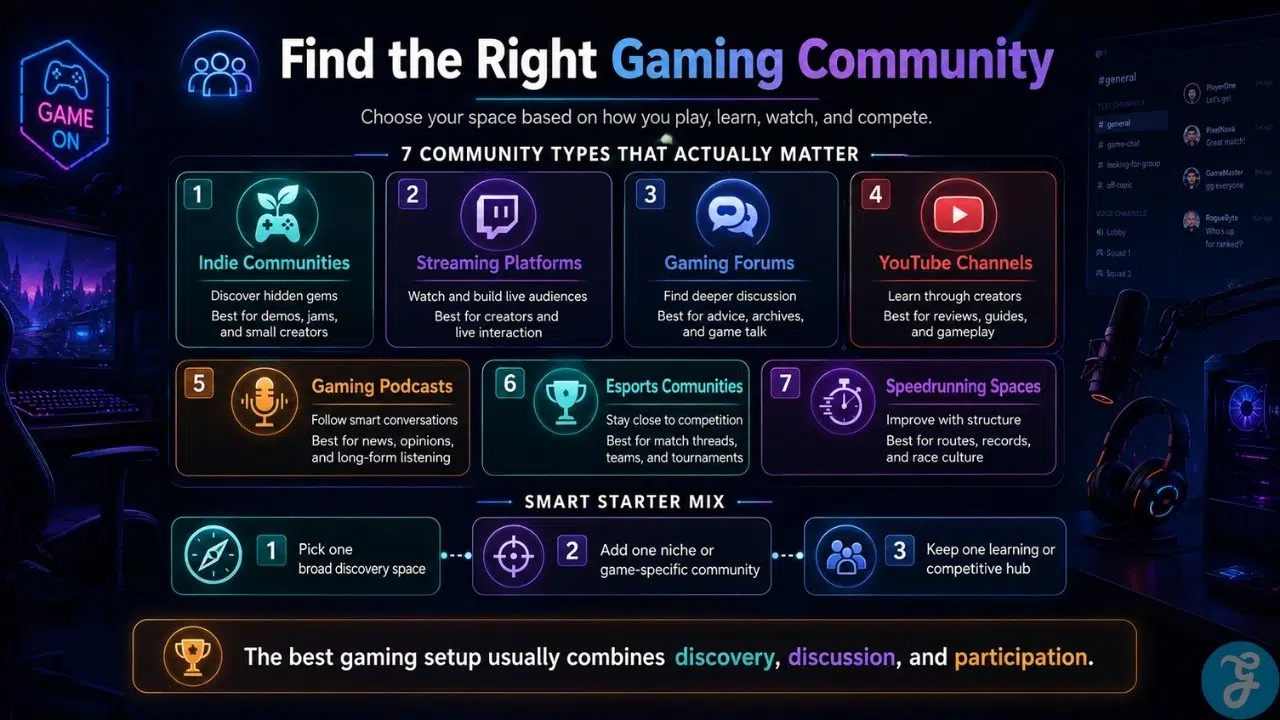
| Category variety | The list includes indie communities, streaming platforms, forums, YouTube channels, podcasts, esports hubs, and speedrunning spaces. |
| Accessibility | Public, easy-to-find, or widely used spaces were prioritized. |
| Long-term value | Communities with searchable archives, recurring events, strong formats, or lasting influence ranked higher. |
| Reader fit | Each section helps a different type of gamer, from casual players to competitive fans and creators. |
These criteria help separate useful gamer communities from spaces that only look active because everyone is shouting at once.
Whom This Is For
This guide is for anyone trying to build a better gaming routine, not just people looking for another app to check.
| Reader Type | Best Fit |
| Casual gamers | Players who want better recommendations, discussions, and discovery spaces. |
| Indie game fans | Gamers looking for hidden gems, small creators, demos, and experimental projects. |
| Streamers and creators | People who want platforms, tools, and audience-building spaces. |
| Competitive players | Gamers interested in esports, tournaments, leaderboards, and improvement. |
| Deep discussion readers | Players who prefer forums, podcasts, and long-form conversations over fast social feeds. |
| Speedrunners | Runners and fans looking for leaderboards, events, routes, and game-specific communities. |
25 Best Gaming Communities and Platforms Worth Joining by Category
The 25 picks below are organized around the different ways gamers actually connect today, from large social platforms and game-specific hubs to voice-chat communities, creator spaces, esports networks, and indie-friendly forums.
Best Indie Gaming Communities
Indie games often need communities more than they need algorithms. The right indie community can help players find hidden gems and help developers get early feedback before a game has a marketing budget.
1. r/IndieGaming
r/IndieGaming is one of the easiest entry points for players who want a steady flow of indie trailers, screenshots, demos, and creator updates. It works well because it brings indie fans and developers into the same casual discovery space.
Best Feature/For: broad indie game discovery and early project visibility.
2. r/indiegames
r/indiegames is useful for players who want a more focused stream of indie game posts without as much general gaming noise. It is especially helpful for discovering projects directly from developers who are trying to reach real players.
Best Feature/For: indie game showcases, developer updates, and focused discovery.
3. itch.io Community
itch.io is one of the most important indie ecosystems because it connects games, creators, experiments, jams, demos, and discussions in one place. It is especially valuable for players who enjoy strange, small, creative, or genre-bending projects that may never dominate mainstream storefronts.
Best Feature/For: experimental games, game jams, and creator-first indie discovery.
4. IndieDB
IndieDB remains useful because it gives indie projects a more structured presence through pages, updates, screenshots, videos, and downloads. It is less chaotic than social media and better suited for following a project over time.
Best Feature/For: structured indie game browsing and project updates.
Best Game Streaming Platforms Compared
Game streaming communities are not just about going live. They shape discovery, monetization, audience behavior, clips, chat culture, and whether viewers actually return.
5. Twitch
Twitch is still one of the strongest platforms for live-first gaming culture. Its biggest strength is the way viewers already understand live chat, raids, subscriptions, emotes, and streamer-led community habits.
Best Feature/For: live gaming communities, chat interaction, and streamer culture.
6. YouTube Gaming
YouTube Gaming works well for creators who want livestreams, VODs, Shorts, searchable videos, and long-term content value in one ecosystem. It is especially useful for creators who want streams to keep working after the live moment ends.
Best Feature/For: long-term gaming content, search visibility, livestreams, and video libraries.
7. TikTok LIVE
TikTok LIVE is powerful because it connects gaming creators with fast short-form discovery. It is not always the best standalone home for long streams, but it can help personality-led creators reach new audiences quickly.
Best Feature/For: fast discovery, mobile-first gaming clips, and creator personality growth.
8. Discord Go Live
Discord Go Live is not built for broad public discovery, but it is excellent for private or semi-private community streaming. It works best when a creator already has fans, friends, members, or a niche group that wants closer interaction.
Best Feature/For: private gaming communities, member events, coaching, and close-knit streams.
Best Gaming Forums Still Active
Gaming forums still matter because they preserve discussions better than fast social feeds. They are useful when you want searchable answers, longer debates, and community memory that does not vanish after one scroll.
9. ResetEra
ResetEra is one of the more active traditional gaming forums for industry news, platform debates, reviews, announcements, and major release discussion. It is useful for readers who want current gaming conversation in a classic forum format.
Best Feature/For: active gaming news discussion and industry debate.
10. Steam Community Discussions
Steam Community Discussions are practical because they connect players directly to game-specific hubs. They are especially useful for troubleshooting, patch reactions, mod questions, technical issues, and player feedback tied to specific games.
Best Feature/For: PC game help, bug discussion, updates, and game-specific community posts.
11. GameFAQs Message Boards
GameFAQs still matters because its message boards are tied to specific games, platforms, guides, and older gaming archives. It can be surprisingly useful when you need help with a niche title or an older game that modern social platforms no longer discuss.
Best Feature/For: game-specific help, older games, guides, and long-tail community archives.
12. r/truegaming
r/truegaming works like a modern discussion forum for players who want thoughtful conversations rather than memes, rage bait, or one-line reactions. It is a strong space for design debates, genre analysis, player behavior questions, and reflective gaming talk.
Best Feature/For: deeper gaming discussion and long-form analysis.
Best YouTube Channels for Gaming
YouTube gaming channels are communities in their own right. The best ones help players choose games, understand performance, follow news, watch walkthroughs, and enjoy gaming through creator personality.
13. gameranx
gameranx is one of the most useful all-round channels for gaming news, list videos, first impressions, and buyer-friendly content. It works well for players who want quick but useful coverage without drowning in technical details.
Best Feature/For: gaming discovery, accessible recommendations, and buyer-friendly videos.
14. Skill Up
Skill Up is a strong channel for viewers who want detailed reviews, thoughtful criticism, and weekly gaming news. It is especially useful when you want a creator’s argued perspective rather than a basic review summary.
Best Feature/For: opinionated game reviews, weekly industry commentary, and smart criticism.
15. Digital Foundry
Digital Foundry fills a unique role because it explains how games actually run. Its technical breakdowns help players understand performance, frame rates, ports, graphics modes, hardware differences, and version comparisons.
Best Feature/For: game performance analysis, graphics comparisons, and platform testing.
Best Gaming Podcasts to Follow
Gaming podcasts are useful when you want context, not just headlines. They give conversations room to breathe, which makes them ideal for commuters, workers, walkers, and anyone avoiding another thumbnail war.
16. Kinda Funny Games Daily
Kinda Funny Games Daily is one of the strongest options for frequent gaming news. It is useful for listeners who want regular updates on PlayStation, Xbox, Nintendo, PC, and industry stories with conversational energy.
Best Feature/For: daily gaming news and platform updates.
17. Triple Click
Triple Click is a strong weekly podcast for smart, approachable gaming discussion. Its strength is the balance between criticism, culture, listener questions, and host chemistry.
Best Feature/For: weekly gaming conversation, culture talk, and thoughtful analysis.
18. Axe of the Blood God
Axe of the Blood God is one of the best specialist podcasts for RPG fans. It covers JRPGs, Western RPGs, MMORPGs, classics, systems, characters, and the kind of genre debates only RPG listeners truly understand.
Best Feature/For: RPG-focused game discussion and genre expertise.
Best Esports Communities Worth Joining
Esports communities help fans move beyond passive watching. The best spaces give people match threads, roster talk, tournament context, strategy discussion, and sometimes a path into actual competition.
19. r/esports
r/esports is a simple starting point for broad competitive gaming discussion. It is useful for fans who want general esports updates, tournament news, industry talk, and cross-title coverage.
Best Feature/For: broad esports news and general competitive gaming discussion.
20. r/ValorantCompetitive
r/ValorantCompetitive is one of the strongest game-specific esports communities for a modern tactical shooter scene. It is especially useful for VCT discussion, roster moves, match reactions, regional debates, and competitive storylines.
Best Feature/For: VALORANT esports, VCT discussion, and match reactions.
21. HLTV Forums
HLTV is central to Counter-Strike esports culture because it combines news, stats, rankings, forums, and intense scene discussion. It is not always gentle, but it is one of the deepest spaces for CS fans.
Best Feature/For: Counter-Strike esports stats, rankings, forums, and fan debate.
22. FACEIT Clubs
FACEIT Clubs are valuable for players who want to compete, improve, and join structured multiplayer communities. Unlike a discussion-only space, FACEIT gives competitive players a more action-based path through clubs, events, and matchmaking.
Best Feature/For: competitive play, clubs, events, and improvement-focused communities.
Best Speedrunning Communities
Speedrunning communities are proof that gaming obsession can become shared knowledge. Routes, rules, submissions, categories, tricks, and records all depend on community work.
23. Speedrun.com
Speedrun.com is the central hub for leaderboards, categories, rules, guides, resources, and run submissions. If a player wants to learn how a speedrun is officially tracked, this is usually the first serious stop.
Best Feature/For: official speedrun leaderboards, rules, submissions, and game pages.
24. Games Done Quick
Games Done Quick is one of the most visible cultural centers in speedrunning. Its charity marathons introduce viewers to speedruns, runners, commentary, glitches, obscure games, and the community spirit behind the scene.
Best Feature/For: charity speedrunning marathons, showcase runs, and community discovery.
25. Game-Specific Speedrunning Discords
Game-specific Discords are often where real speedrunning learning happens. Runners use them for route questions, trick explanations, practice tools, category updates, clip review, and direct help from people who actually run the game.
Best Feature/For: route learning, direct runner feedback, and game-specific optimization.
A Quick Overview
Not every community solves the same problem. Some help you discover games, some help you talk about them, some help you create, and some push you toward competition.
Use this snapshot to match your goal with the right community category before joining too many spaces at once.
| Reader Goal | Best Community Type | Strong Starting Picks |
| Discover indie games | Indie gaming communities | itch.io Community, r/IndieGaming, IndieDB |
| Build a creator audience | Streaming platforms | Twitch, YouTube Gaming, TikTok LIVE, Discord Go Live |
| Find deep discussions | Gaming forums | ResetEra, GameFAQs, r/truegaming |
| Follow gaming content | YouTube channels | gameranx, Skill Up, Digital Foundry |
| Listen to smarter game talk | Gaming podcasts | Triple Click, Kinda Funny Games Daily, Axe of the Blood God |
| Follow competitive scenes | Esports communities | r/esports, r/ValorantCompetitive, HLTV |
| Improve as a runner | Speedrunning spaces | Speedrun.com, GDQ, game-specific Discords |
The strongest setup is usually not one giant community. It is a small mix of spaces that match how you actually play.
Our Top 3 Picks and Why?
For most readers, three communities or platforms stand out because they cover discovery, discussion, and participation.
| Rank | Pick | Why It Stands Out |
| 1 | Discord Go Live and community servers | Discord is often where the deepest ongoing community bonds happen, especially for creators, speedrunners, indie fans, and competitive groups. |
| 2 | YouTube Gaming | It combines live content, long-form videos, Shorts, search, reviews, walkthroughs, and creator communities in one ecosystem. |
| 3 | Speedrun.com | It shows how powerful structured gaming communities can be when leaderboards, rules, records, and resources are organized around shared goals. |
These are not the only great picks, but they show the three major directions gaming communities are heading: private community spaces, creator ecosystems, and structured participation hubs.
How to Choose the Right Gaming Community by Yourself
The wrong community makes gaming feel more stressful. The right one makes you play more, learn more, laugh more, and maybe argue slightly less badly.
The Selection Framework:
- Start with your behavior: Choose communities based on whether you watch, play, compete, create, speedrun, or discuss.
- Check the activity quality: Recent posts matter, but useful replies matter more.
- Look for structure: Strong communities usually have rules, categories, guides, moderation, or recurring events.
- Avoid joining everything: Two or three good communities beat ten noisy ones you never use.
The Final Checklist
Before joining any gaming community or platform, use this quick check.
- Does it match the kind of gamer you actually are?
- Are people currently posting, replying, or participating?
- Does the community help with discovery, learning, discussion, or competition?
- Are the rules and culture clear enough for newcomers?
- Would you still visit it if you had nothing to promote?
If the answer is mostly yes, it is probably worth your time. If not, it may become just another digital room you enter once and immediately mute.
Where Gaming Communities Go From Here
The uncomfortable truth is that gaming communities are becoming both more powerful and more fragmented. Players no longer gather in one universal forum. They split across Discord servers, Reddit communities, YouTube channels, Twitch chats, esports hubs, speedrun leaderboards, podcasts, and niche creator spaces. That makes discovery harder, but it also makes belonging more specific.
The best gaming communities of the future will not be the loudest. They will be the spaces that help people do something useful: discover better games, understand the industry, compete seriously, learn routes, follow creators, or talk with people who care about the same strange corner of gaming. The future belongs to focused communities with a reason to exist. Big platforms will still matter, but the real value will come from the smaller groups inside them where people know the culture, share the language, and keep showing up.
Frequently Asked Questions (FAQs) About Best Gaming Communities
What are the best gaming communities to join in 2026?
Answer: Strong options include itch.io Community, r/IndieGaming, Twitch, YouTube Gaming, ResetEra, Steam Community Discussions, gameranx, Triple Click, r/esports, Speedrun.com, and Games Done Quick. The best choice depends on whether you want discovery, discussion, content, competition, or speedrunning.
What is the best gaming community for beginners?
Answer: Reddit communities like r/Games, r/IndieGaming, and r/esports are easy starting points because they are public and simple to browse. Discord communities can be better once you know the exact game, creator, or niche you want to follow.
Are forums still useful for gamers?
Answer: Yes. Forums are still useful for searchable answers, long-form discussion, troubleshooting, older games, and community archives. They are slower than Discord or TikTok, but that slower pace can be the reason they still work.
Which gaming platforms are best for creators?
Answer: Twitch, YouTube Gaming, TikTok LIVE, and Discord are the strongest starting points for gaming creators. Twitch is strong for live culture, YouTube for long-term content, TikTok for fast discovery, and Discord for deeper community ownership.
How many gamer communities should I join?
Answer: Most players only need two or three active spaces. A smart mix is one broad gaming community, one niche or game-specific community, and one content or competition space that matches your actual habits.