Meditation aids tools are useful when they make the practice easier to start, repeat, and trust. They are not magic. They do not replace patience, honesty, or professional support when someone needs deeper help.
I used to think meditation required a perfectly calm mind. That misunderstanding made the practice feel impossible. Later, I learned the goal was not to empty the mind. The goal was to notice the mind and return gently.
The right mindfulness tools can help with that return. A timer reduces clock-checking. A cushion reduces discomfort. A journal catches racing thoughts. A breathing card gives structure. A guided audio track helps when silence feels too wide. For the corporate athlete, meditation is not about escaping life. It is a recovery skill for people who carry pressure through work, screens, decisions, deadlines, and constant attention switching.
These meditation accessories also support the best healthy habits because a calmer mind can make sleep, focus, movement, recovery, hydration, and stress control easier to repeat.
The goal is simple: Use tools that support practice without turning mindfulness into shopping.
Why Meditation Tools Help Beginners Stay Consistent?
Meditation tools help beginners stay consistent because most people do not struggle only with meditation itself. They struggle with discomfort, distraction, uncertainty, and lack of routine. A beginner may sit down and immediately wonder, “Am I doing this right?” Then the back hurts. The phone buzzes. The room feels noisy. The timer is unclear. Thoughts keep coming. After a few sessions, meditation starts to feel like failure.
The right tool removes one piece of friction. A cushion makes sitting more comfortable. A timer removes the need to check the clock. Guided audio gives direction. A journal helps clear thoughts before practice. Earplugs or soft sound reduce noise. A habit tracker reminds you to return tomorrow. That matters because mindfulness grows through repetition. One perfect session is less useful than a small practice repeated often. A tool should help you return, not judge your performance.
For busy professionals, tools also create a boundary. When you sit on the same cushion, open the same timer, or write in the same journal, your brain starts to recognize the cue. The tool becomes a signal that the workday is pausing. The mistake is thinking the tool is the practice. It is not. The tool is only support. Meditation still happens through attention, breath, body awareness, self-compassion, and repeated return.
| Beginner Problem | Helpful Tool | Why It Helps |
| Back or hip discomfort | Cushion, chair, or bench | Makes sitting easier |
| Clock-checking | Meditation timer | Reduces distraction |
| Racing thoughts | Journal | Clears mental clutter |
| Too much silence | Guided audio | Gives structure |
| Noisy environment | Earplugs or white noise | Reduces sound distraction |
| Weak routine | Habit tracker | Builds repetition |
| Restless body | Mat or gentle movement setup | Supports mindful movement |
| Phone distraction | Standalone timer | Keeps apps away |
Meditation aids work best when they make the practice simpler, not more complicated.
What Makes a Meditation Aid Worth Using?
A meditation aid is worth using when it solves a real problem and helps you practice more consistently. It should not add pressure, clutter, or guilt. Before choosing any meditation gear, ask what is actually stopping you. Is sitting uncomfortable? Use a cushion, bench, or chair. Is the room noisy? Try sound support. Do you forget to practice? Use a reminder. Does your mind race before bed? Use a journal. Do you feel lost in silence? Try guided audio.
A useful tool should also be easy to maintain. If it needs constant setup, charging, cleaning, adjusting, or app switching, you may stop using it. Simple tools often work better than impressive ones. Comfort matters. A beautiful cushion is not helpful if your knees ache. Expensive headphones are not useful if they feel heavy. A meditation app is not useful if it keeps pulling you into notifications.
The best mindfulness tools also protect the mood of practice. Meditation should not feel like another productivity contest. A tracker can help, but if it makes you feel guilty, simplify it. A wearable can show patterns, but if it creates anxiety, use it less. A meditation aid should support awareness, not obsession.
| Buying or Choosing Question | Why It Matters | Practical Example |
| What problem does it solve? | Prevents random buying | Cushion for discomfort |
| Will I use it often? | Checks real-life fit | Simple timer instead of complex app |
| Is it comfortable? | Comfort supports consistency | Chair instead of floor sitting |
| Does it reduce distraction? | Tools should simplify practice | Airplane mode or standalone timer |
| Is it easy to clean or store? | Low friction matters | Washable cushion cover |
| Does it fit my space? | Small homes need simple tools | Foldable mat or small cushion |
| Does it create pressure? | Avoid overtracking | Use checkmarks, not strict scores |
The right aid should make meditation easier to begin and easier to repeat.
11 Meditation Aids and Tools
Meditation aids and tools are designed for real life. You do not need every item. Most people only need one or two tools that solve their biggest meditation barrier. If sitting hurts, start with a cushion, chair, or bench. If you keep checking the time, start with a timer. If your mind is crowded, start with a journal. If silence feels difficult, use guided audio. If noise breaks your attention, use sound support. If you forget the habit, use a small tracker.
Meditation accessories should not become a shopping list. They should make the practice feel more approachable. A person can meditate with no gear at all, but good gear can help when real friction gets in the way.
The best setup is usually simple: A comfortable seat, a timer, a quiet cue, and a place to write down thoughts.
1. Meditation Cushion

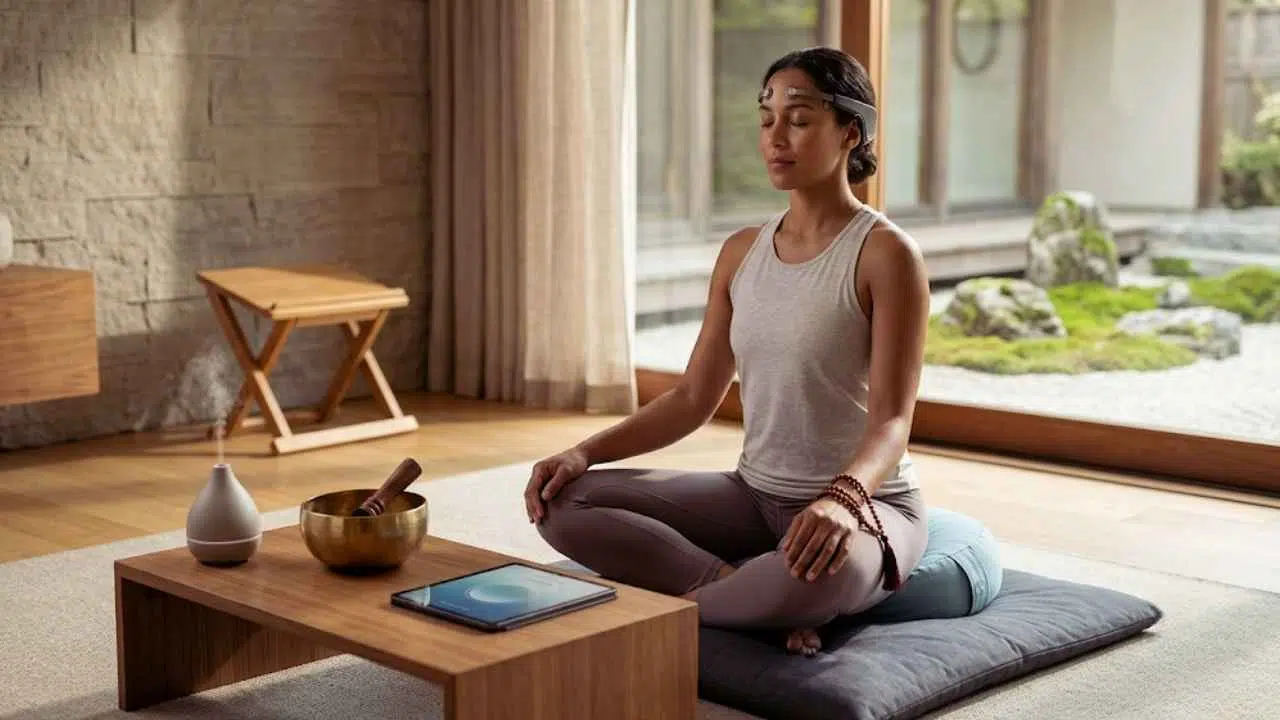
A meditation cushion helps when sitting on the floor feels uncomfortable. It raises the hips slightly, which can make it easier for the spine to stay upright and the legs to settle. This matters because discomfort can become the whole practice. If your hips, knees, or back are shouting at you after two minutes, it is hard to notice the breath with patience.
A cushion does not need to be fancy. It needs to be firm enough to support you and comfortable enough to use often. Some people prefer a round cushion. Others like a rectangular cushion. The best choice depends on your body, floor setup, and sitting style.
The mistake is forcing a posture that does not fit your body. Meditation is not more “real” because you suffer through pain. If the cushion helps you sit with less strain, use it. If the floor does not work for you, use a chair. A cushion is especially useful if you want a clear practice cue. When the cushion comes out, the brain knows the routine is starting.
| Cushion Feature | Why It Helps |
| Firm support | Keeps hips from sinking too much |
| Washable cover | Easier to keep clean |
| Right height | Supports your sitting position |
| Stable base | Reduces wobbling |
| Comfortable fabric | Encourages regular use |
| Easy storage | Works in small spaces |
| Simple design | Less distraction |
A meditation cushion is useful when it makes sitting feel steady instead of forced.
2. Supportive Chair or Meditation Bench
A chair or meditation bench is one of the most underrated meditation aids tools because many beginners think they must sit cross-legged on the floor. You do not. If sitting on the floor hurts your knees, hips, lower back, or ankles, use a chair. The goal is attention, not proving flexibility. A stable chair with both feet on the floor can support a very strong practice.
A meditation bench can also help some people who like kneeling but need support. It lifts the body and reduces strain compared with unsupported kneeling. But it is not right for everyone. For desk workers, a chair practice can be especially practical. You can pause between work blocks, sit upright, set a timer, and breathe for three to five minutes without changing clothes or moving to a special room.
The mistake is using a chair that makes you slump. Choose a seat where your feet can rest, your spine can feel tall, and your shoulders can relax. You can place a small cushion behind the lower back if needed. Comfort should support alertness. Too soft, and you may feel sleepy. Too rigid, and you may feel tense.
| Seating Option | Best For | What to Notice |
| Dining chair | Simple seated practice | Feet flat, spine tall |
| Office chair | Workday pauses | Lock wheels if needed |
| Meditation bench | Kneeling posture | Knee comfort matters |
| Cushion on chair | Extra hip comfort | Avoid sinking too low |
| Wall-supported sitting | Back support | Keep shoulders relaxed |
| Foldable stool | Small spaces | Stability matters |
A chair is not a shortcut. It is a valid meditation setup.
3. Yoga Mat or Soft Floor Space
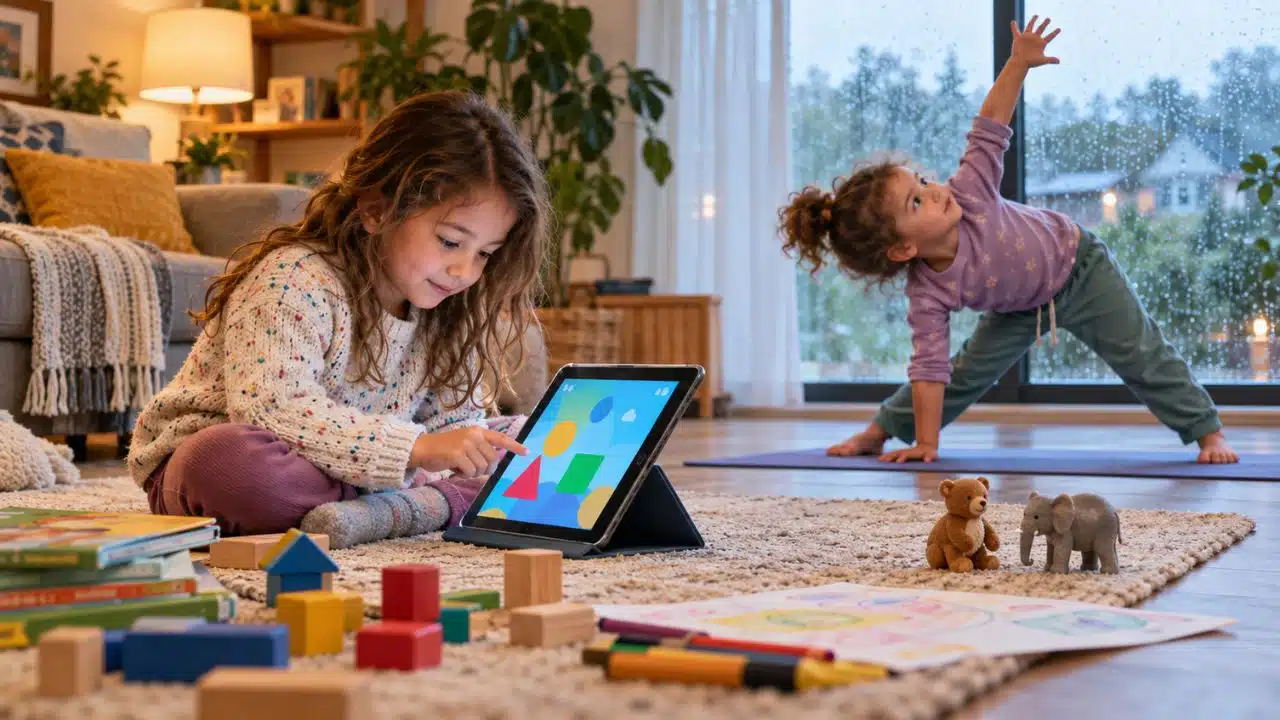
A yoga mat or soft floor space helps people who cannot jump straight from desk work into stillness. Sometimes the body needs a few minutes of movement before the mind can settle. This is especially true for sedentary workers. After hours of sitting, the hips feel tight, the shoulders feel rounded, and the breath feels shallow. A short mindful movement routine can prepare the body for seated meditation.
You do not need a full yoga session. A few gentle movements are enough: cat-cow, child’s pose, neck rolls, hip circles, slow forward fold, or lying breathing. The mat simply gives you a defined space. This tool also helps with recovery day routines. Light stretching, breathwork, and body scans become easier when you have a comfortable surface ready.
The mistake is turning the mat into a performance zone. This is not about perfect flexibility. It is about reconnecting with the body. Keep the mat visible if you want to use it more often. If it stays rolled in a closet, the habit may disappear.
| Mat-Based Practice | Time Needed | Best For |
| Cat-cow breathing | 1-2 minutes | Spine stiffness |
| Child’s pose | 1-3 minutes | Back and hip calm |
| Legs up the wall | 3-5 minutes | Evening relaxation |
| Body scan lying down | 5-10 minutes | Stress and fatigue |
| Seated breathing | 3-10 minutes | Simple meditation |
| Gentle hip circles | 1-2 minutes | Desk tightness |
| Slow stretch flow | 5 minutes | Transition from work |
A mat helps when the body needs to move before the mind can rest.
4. Meditation Timer
A meditation timer is one of the most useful meditation accessories because it removes clock-checking. Without a timer, many beginners keep wondering, “Has it been long enough?” A simple timer gives the practice a clear container. You set three minutes, five minutes, ten minutes, or whatever feels realistic. Then you stop negotiating.
A timer can be a phone app, smartwatch, kitchen timer, or dedicated meditation timer. The important part is that it does not pull you into distractions. If your phone is the timer, use airplane mode or do-not-disturb. The best timer has a gentle sound. A harsh alarm can feel jarring, especially after a calm session. Bells, chimes, or soft tones usually feel better.
Start short. A five-minute timer used daily is more useful than a 30-minute goal you avoid. Consistency matters more than duration at the beginning. You can also use interval bells. For example, a soft bell every two minutes can remind you to return to the breath without judging yourself.
| Timer Feature | Why It Helps |
| Gentle ending sound | Prevents a harsh finish |
| Simple setup | Reduces friction |
| Short time options | Supports beginners |
| Interval bells | Reminds you to return |
| No bright screen | Reduces distraction |
| Do-not-disturb mode | Protects attention |
| Repeat presets | Makes routine easier |
A timer teaches your mind that practice has a beginning and an end.
5. Guided Meditation App or Audio
Guided meditation can help when silence feels too open. A calm voice gives structure, especially for beginners who do not know where to place attention. A guided session may focus on breathing, body scan, stress release, compassion, sleep, gratitude, or simple mindfulness. The right one depends on your goal.
This tool is helpful because it reduces the fear of “doing it wrong.” Instead of sitting alone with confusion, you follow clear prompts. Over time, you may become comfortable practicing without guidance too. The mistake is spending more time browsing meditation apps than meditating. Too many choices can become another distraction. Choose one teacher, one track, or one simple series and repeat it.
Also be careful with phone use. If the app leads you into notifications, messages, or scrolling, the tool becomes part of the problem. Use app limits, airplane mode, or downloaded audio if needed. Guided meditation works well for mental health habits, evening habits that improve sleep, and habits that reduce stress long term.
| Guided Audio Type | Best For | Practical Use |
| Breath awareness | Beginners | Morning or work break |
| Body scan | Tension and sleep prep | Evening |
| Loving-kindness | Emotional softness | Stressful relationship periods |
| Walking meditation | Restless body | Outdoor or indoor walk |
| Stress reset | Overwhelmed mind | Midday break |
| Sleep meditation | Bedtime wind-down | Before lights out |
| Short 3-minute practice | Busy schedule | Between tasks |
Guided audio is useful when it helps you practice, not when it becomes another endless content library.
6. Breathing Card or Visual Breathing Tool
A breathing card or visual breathing tool gives your mind something simple to follow. This can help when stress makes the breath feel scattered. A breathing card can be handwritten. It might say: inhale for four, exhale for six. Or box breathing: inhale, hold, exhale, hold. Or simply: breathe in, breathe out, soften the shoulders.
The value is not the card itself. The value is the cue. When stress rises, you do not need to remember a technique. You look at the card and follow it. Visual breathing tools can also help. Some apps, animations, or small devices show a rhythm to breathe with. These can be useful, but they should stay simple. If the tool becomes too technical, it may distract from the body.
Breathing practice is especially helpful before tense messages, after meetings, during anxiety spikes, before sleep, or between deep work blocks. Do not force the breath aggressively. Breathing should feel steady and comfortable. If breath practices make you dizzy or uneasy, stop and use a gentler method.
| Breathing Tool | Best For | Example |
| Handwritten card | Desk or bedside | “Inhale 4, exhale 6” |
| Box breathing note | Stressful work moments | 4-4-4-4 rhythm |
| Visual breathing app | People who like visual cues | Expanding circle |
| Finger breathing | No equipment | Trace fingers while breathing |
| Breath counter | Wandering attention | Count 1 to 10 breaths |
| Sticky note cue | Work desk | “Exhale slowly” |
A breathing tool is useful because it gives stress a clear next step.
7. Meditation Journal
A meditation journal helps when thoughts feel too loud to ignore. Writing before or after practice can clear mental clutter and reveal patterns. Before meditation, use the journal for a brain dump. Write tasks, worries, emotions, reminders, and unfinished thoughts. This tells the mind, “You do not have to hold all of this during practice.”
After meditation, write one or two lines. What did you notice? Was the mind busy? Was the body tense? Did one emotion keep returning? Did the session feel easier or harder than usual? The goal is not beautiful writing. The goal is awareness. A meditation journal should be simple enough to use when tired.
This tool works well with mental health habits because it helps name feelings before they become reactions. It also supports evening habits that improve sleep because racing thoughts often need a place to land. The mistake is turning journaling into a long assignment. If 10 minutes feels too much, write three lines.
| Journal Prompt | Why It Helps |
| What am I feeling right now? | Builds emotional awareness |
| What thought keeps repeating? | Reveals mental loops |
| What does my body feel like? | Builds body awareness |
| What can wait until tomorrow? | Reduces bedtime clutter |
| What did I notice during practice? | Tracks patterns |
| What helped me return today? | Builds skill |
| What is one kind next step? | Turns awareness into action |
A journal gives the mind a place to empty before it tries to settle.
8. Mala Beads or Tactile Anchor

Mala beads, prayer beads, or any small tactile anchor can help people who focus better with touch. The object gives the hands a simple job and gives attention a place to return. This tool can be spiritual for some people and purely practical for others. The meaning depends on the user. The key is repetition. Touch one bead with each breath, phrase, prayer, mantra, or moment of attention.
A tactile anchor is helpful for restless minds because it makes the practice physical. Instead of only thinking about the breath, you feel the bead, the texture, the movement, and the rhythm. You do not need traditional beads if that does not fit your practice. A smooth stone, small bracelet, ring, or simple object can work. The object should be calming, not distracting.
The mistake is turning the item into decoration only. If you use it, use it intentionally. Pick it up, breathe, move bead by bead, and return when the mind wanders. This tool is especially useful for short practices during work breaks or travel.
| Tactile Tool | How to Use It | Best For |
| Mala beads | One bead per breath or phrase | Structured repetition |
| Prayer beads | Prayer or reflection rhythm | Spiritual practice |
| Smooth stone | Hold while breathing | Grounding |
| Simple bracelet | Touch each bead slowly | Discreet practice |
| Ring | Use as return cue | Workday stress |
| Small fabric item | Notice texture | Sensory grounding |
A tactile anchor helps meditation feel less abstract.
9. Earplugs, Headphones, or White Noise
Noise can make meditation harder, especially in shared homes, apartments, dorms, offices, cities, or family spaces. Earplugs, headphones, or white noise can help reduce that barrier. The goal is not total silence. The goal is fewer disruptive sounds. Meditation can include awareness of sound, but beginners often benefit from a calmer environment first.
Earplugs work well for sudden or sharp sounds. Headphones work well for guided meditation or calming audio. White noise works well when background noise is unpredictable. Comfort matters. Heavy headphones can become annoying. Earplugs that press or hurt will distract you. A white noise machine that is too loud can create stress instead of calm.
If you use headphones, choose a volume that is comfortable. If you use guided meditation, download the track or use do-not-disturb so the phone does not interrupt. This tool is useful for people who say, “I cannot meditate because my house is too noisy.” You may not be able to control every sound, but you can reduce some friction.
| Sound Tool | Best For | Watch Out For |
| Earplugs | Sudden noise | Fit and comfort |
| Over-ear headphones | Guided audio | Heat or heaviness |
| Earbuds | Short sessions | Volume level |
| White noise machine | Background noise | Keep volume low |
| Fan sound | Simple noise masking | Temperature comfort |
| Nature audio | Calming background | Avoid endless browsing |
| Noise-canceling headphones | Busy environments | Cost and comfort |
Sound support is helpful when noise keeps breaking attention.
10. Soft Lighting or Candle-Style Lamp
Soft lighting can help create a calmer meditation space, especially in the evening. Harsh overhead lights can make the room feel active and work-like. Softer light can signal a shift. This does not need to be complicated. A small lamp, warm bulb, dimmable light, salt-style lamp, candle-style electric light, or safe candle can create a calmer environment.
If you use a real candle, safety comes first. Never leave it unattended. Keep it away from fabric, paper, pets, children, and anything flammable. Electric candle-style lights are easier and safer for many people. Soft lighting works especially well before bed. It supports evening habits that improve sleep by helping the body move away from bright stimulation.
The mistake is making the space too perfect. You do not need a beautiful meditation corner before you begin. You need a small cue that says, “This is a calmer moment.” For desk workers, switching from work lighting to softer evening lighting can also help create a boundary between productivity and recovery.
| Lighting Tool | Best For | Practical Tip |
| Dimmable lamp | Evening practice | Lower brightness gradually |
| Warm bulb | Calm room feel | Avoid harsh white light at night |
| Electric candle | Safe visual cue | Good for bedrooms |
| Real candle | Ritual feel | Use only with safety |
| Small bedside lamp | Sleep transition | Pair with breathing |
| Window light | Morning meditation | Natural cue |
| Low screen brightness | App-guided practice | Reduce glare |
Lighting is a simple environmental cue that helps the mind shift gears.
11. Habit Tracker or Reminder System
A habit tracker helps when the biggest problem is not technique but remembering to practice. Meditation works better when it has a place in the day. The tracker can be simple. A calendar checkmark. A sticky note. A phone reminder. A journal box. A habit app. A recurring calendar event. The tool matters less than the cue.
The key is to track lightly. You are not trying to build another reason to feel guilty. Missing a day is normal. The tracker should help you restart, not shame you. A good reminder is specific. “Meditate more” is vague. “Three minutes after coffee” is clear. “Breathing practice after closing laptop” is clear. “Body scan before bed” is clear.
This tool works well for busy people because the day fills itself quickly. If meditation has no cue, it often disappears. Use a minimum version. Even one minute counts when you are building the habit. A short practice repeated often is more valuable than a long practice you avoid.
| Tracking Method | Best For | Example |
| Calendar checkmark | Visual motivation | Mark each practice day |
| Sticky note | Desk cue | “Breathe before email” |
| Phone reminder | Busy schedule | 5-minute reminder after lunch |
| Habit app | People who like tracking | Keep it simple |
| Journal log | Reflection | One line after practice |
| Recurring calendar block | Professionals | 3 p.m. reset |
| Bedside cue | Evening routine | Timer and journal together |
A reminder system turns meditation from an idea into a routine.
A Simple Meditation Setup for Busy People
A simple meditation setup should make practice easy to start. It should not require rearranging the room, lighting incense, opening five apps, or finding perfect silence. Start with one place. It can be a corner, chair, bedside, floor mat, balcony, office chair, or even the edge of the bed. Keep one or two tools there: a timer, journal, cushion, or breathing card.
Then choose one practice time. Morning works for some people because the day has not become noisy yet. Midday works for people who need a stress reset. Evening works for people who need a bridge into sleep. Keep the first version short. Three to five minutes is enough. The goal is to build trust with the habit. Once the routine feels natural, increase time if you want.
A simple setup should also protect attention. Put the phone on do-not-disturb if you use it. If the phone distracts you, use a standalone timer. If sound distracts you, use earplugs or white noise.
| Setup Step | What to Do | Why It Helps |
| Choose one place | Chair, cushion, mat, or bedside | Creates a practice cue |
| Choose one tool | Timer, journal, or guided audio | Keeps it simple |
| Choose one time | Morning, midday, or evening | Builds rhythm |
| Start short | 3-5 minutes | Reduces resistance |
| Reduce phone pull | Airplane mode or standalone timer | Protects attention |
| Keep notes nearby | Journal or sticky note | Captures thoughts |
| Repeat the same order | Sit, timer, breathe, close | Helps habit formation |
Minimum setup:
| Minimum Meditation Setup | Action |
| Place | Sit in a chair |
| Tool | Set a 3-minute timer |
| Cue | Practice after coffee or after work |
| Method | Notice breath and return gently |
| Close | Write one line if helpful |
A simple setup is better than an ideal setup you never use.
Beginner Mistakes With Meditation Gear
The first mistake is buying too much before building the habit. A cushion, app, beads, lamp, journal, and headphones may look inspiring, but tools do not create consistency by themselves.
The second mistake is expecting comfort to remove all difficulty. A cushion can help your hips, but it will not stop thoughts. A timer can help structure, but it will not make every session peaceful. Meditation still includes boredom, restlessness, emotions, and wandering attention.
Another mistake is using apps in a way that increases distraction. If a meditation app leads to notifications, social media, or endless browsing, it may hurt the habit. Keep the tool focused.
Some people also confuse relaxation with meditation. Relaxation may happen, but not always. Some sessions feel calm. Others feel busy. A session can still be useful even if the mind wanders many times.
A common mistake is judging progress too quickly. Beginners often say, “I am bad at meditation because I keep thinking.” Thinking is not failure. Noticing and returning is the practice.
Finally, be careful if meditation brings up intense distress, trauma memories, panic, or overwhelming emotions. In that case, stop forcing it and seek support from a qualified professional.
| Mistake | Why It Hurts | Better Habit |
| Buying too much gear | Adds clutter and pressure | Start with one useful tool |
| Forcing floor sitting | Creates pain | Use chair or cushion |
| Overusing apps | Leads to distraction | Choose one guided track |
| Chasing perfect calm | Creates frustration | Practice returning |
| Meditating too long too soon | Builds resistance | Start with 3-5 minutes |
| Tracking obsessively | Adds pressure | Use light checkmarks |
| Ignoring discomfort | Can make practice unpleasant | Adjust posture |
| Forcing through distress | May worsen discomfort | Pause and seek support |
Meditation gear should make the habit kinder, not stricter.
Meditation Tools by Lifestyle Type
Different lifestyles need different meditation tools. A remote worker may need a workday timer. A parent may need short guided audio. A student may need a focus cue. A founder may need breathing cards between decisions. A desk worker may need a chair setup and body scan. This is why generic advice often fails. Not everyone has a silent room, flexible schedule, or calm morning. A good mindfulness setup should fit the life you actually have.
If your home is noisy, sound support matters. If your body feels stiff, use a mat or chair. If you forget habits, use reminders. If your thoughts race, use a journal. If you feel lost in silence, use guided meditation. For introverts, solo practice may feel natural. For socially motivated people, group meditation, online classes, or accountability may help. For travelers, portable tools matter more than room setup.
Choose the tool that solves your real barrier, not the one that looks most peaceful online.
| Lifestyle Type | Common Barrier | Best Tool to Start |
| Desk worker | Tension and screen fatigue | Chair practice and breathing card |
| Remote worker | Blurred work-life boundary | Timer after work shutdown |
| Parent | Little quiet time | Short guided audio |
| Student | Focus pressure | 3-minute timer |
| Founder or manager | Decision fatigue | Breathing card |
| Writer or creator | Racing thoughts | Meditation journal |
| Frequent traveler | No consistent space | Sleep mask, earplugs, timer |
| Fitness beginner | Restless body | Mat and mindful movement |
| Night owl | Bedtime overthinking | Journal and body scan audio |
The best meditation aid is the one that fits your actual day.
How Meditation Aids Support the Best Healthy Habits?
Meditation aids support the best healthy habits because they make mental recovery easier to repeat. A calmer mind can support sleep, focus, movement, stress control, and emotional balance. Mental health habits become easier when you have a journal, breathing card, or guided meditation to help you notice what is happening inside. Evening habits that improve sleep become stronger when meditation helps close the day. A short body scan or breathing routine can become part of a nighttime reset.
Movement habits for sedentary lifestyles also connect with meditation. A mat can support mindful stretching. A walking meditation can turn movement into awareness. Recovery day routines can include breathwork and body scans to help the body settle. Habits for better focus benefit from short meditation breaks. A three-minute timer between work blocks can reduce mental switching and help you return with clearer attention.
Social wellness habits can also connect. Group meditation, shared walks, or quiet community spaces can build belonging without forcing constant conversation.
| Meditation Tool | Related Healthy Habit Topic |
| Meditation timer | Habits for better focus |
| Breathing card | Habits that reduce stress long term |
| Journal | Mental health habits |
| Guided sleep meditation | Evening habits that improve sleep |
| Mat-based body scan | Recovery day routines |
| Walking meditation | Movement habits for sedentary lifestyles |
| Water before practice | Hydration habits |
| Group meditation | Social wellness habits |
| Cushion or chair | Best healthy habits |
| Soft lighting | Sleep products that help |
Meditation tools are most useful when they support a wider daily rhythm.
When Meditation Tools Are Not Enough?
Meditation tools can help with daily stress, attention, and self-awareness, but they are not a substitute for professional care when someone needs deeper support. If anxiety, sadness, panic, trauma symptoms, insomnia, anger, hopelessness, or emotional distress is intense, persistent, or affecting daily life, speak with a qualified mental health professional or healthcare provider.
Meditation can also feel uncomfortable for some people. Sitting quietly may bring up difficult thoughts, emotions, memories, or body sensations. If that happens, it is okay to stop, open your eyes, move, ground yourself, or choose a different practice. Some people do better with guided support, therapy-informed mindfulness, movement-based mindfulness, or shorter grounding exercises instead of long silent meditation.
If someone feels unsafe, at risk of self-harm, or worried they may harm someone else, urgent support is needed. Contact local emergency services, a crisis line, or a trusted person immediately. Meditation should support mental wellness, not become a place where someone feels trapped with distress.
| Sign Extra Support May Help | Why It Matters |
| Meditation increases panic | Practice may need guidance |
| Distress lasts for weeks | Deeper support may be needed |
| Trauma memories appear | Professional care can help |
| Sleep problems persist | Needs broader review |
| Hopelessness appears | Support should not wait |
| Daily function suffers | Self-care may not be enough |
| You feel unsafe | Urgent help is needed |
| You cannot cope alone | Support reduces the load |
A healthy practice includes knowing when to ask for help.
Final Thoughts
Meditation aids tools are helpful when they remove friction. A cushion can make sitting easier. A chair can make meditation accessible. A timer can stop clock-checking. Guided audio can give structure. A breathing card can calm the next few minutes. A journal can empty mental clutter. Beads can give the hands a steady anchor. Sound tools can soften a noisy room. Soft lighting can create a calmer evening. A habit tracker can help you return tomorrow.
You do not need all of them. Start with the barrier you actually face. If your body hurts, fix comfort. If your mind races, use a journal. If you feel lost, use guidance. If you forget, use reminders. If noise distracts you, use sound support.
The goal is not perfect meditation. The goal is a practice you can return to with less resistance.
That is how meditation accessories become useful. That is how mindfulness tools support daily mental health.
And that is why meditation aids belong among the best healthy habits for focus, recovery, sleep, stress control, and long-term wellness.
Frequently Asked Questions (FAQs) About Meditation Aids Tools
What are meditation aids tools?
Meditation aids tools are items that help make meditation easier, more comfortable, or more consistent. They include cushions, chairs, mats, timers, guided meditation apps, journals, breathing cards, mala beads, earplugs, soft lighting, and habit trackers.
Do I need meditation gear to meditate?
No. You can meditate without any gear. Meditation gear is useful only when it solves a real problem, such as discomfort, noise, lack of structure, or weak consistency.
What is the best meditation tool for beginners?
The best meditation tool for beginners is usually a simple timer or guided meditation audio. A comfortable chair or cushion also helps if sitting discomfort is the main barrier.
Are meditation cushions worth it?
Meditation cushions are worth it if floor sitting feels uncomfortable and the cushion helps your posture. If sitting on the floor hurts, a chair may be a better choice.
What mindfulness tools help with stress?
Breathing cards, guided audio, meditation timers, journals, body scan tracks, and tactile anchors can help with stress. The best tool is the one that gives your mind a simple next step.
Can meditation accessories improve sleep?
Some meditation accessories can support sleep routines, especially guided body scans, breathing tools, journals, soft lighting, and timers. They work best when paired with good evening habits.