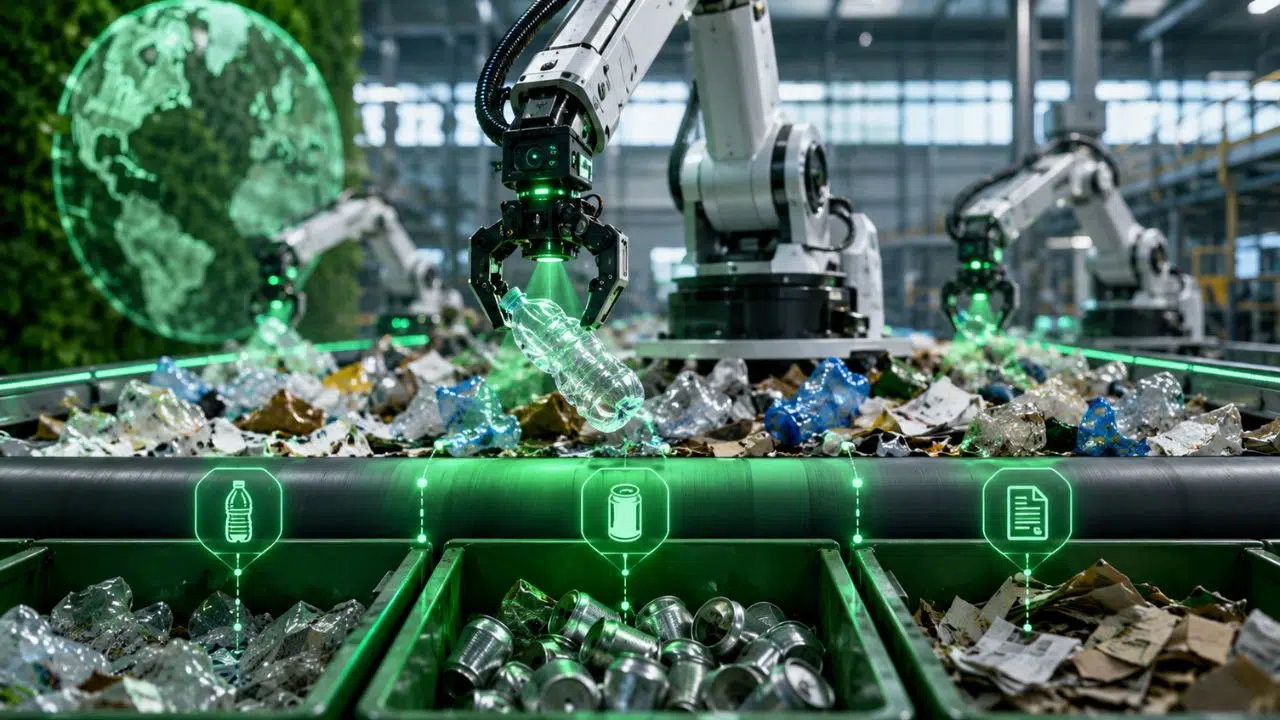
If you are curious about The Green Tech Revolution: How AI And Automation Are Solving Recycling Contamination, you are in the right place.
You probably throw recyclables in your bin and feel a little burst of pride, right?
I know I certainly do.
But here is a frustrating reality I recently discovered. When we accidentally toss in a greasy pizza box or a plastic grocery bag, it actually ruins the whole process.
According to recent data, contamination affects about 25 percent of recycling streams in the United States. That innocent mistake costs facilities millions of dollars each year, slowing down operations and making recycling less profitable.
The good news is that smart technology is stepping in to save the day. I have found that AI and automation are solving these contamination issues faster than anyone expected.
Grab a cup of coffee, and let’s walk through this together. I will show you exactly how smart robots and sensors are fixing recycling from the inside out.
Key Challenges in Recycling Contamination
Right now, contamination wrecks recycling programs across the globe. It makes sorting harder and cuts down what we actually recover. Workers and machines struggle daily because people toss the wrong stuff into bins, and outdated systems just cannot keep up with the mess.
Contamination in Recycling Streams
Contamination ruins recycling streams faster than you can imagine. Plastic bags tangle around sorting machinery, food waste attracts pests, and hazardous materials slip into batches meant for aluminum or paper.
The financial toll is staggering. A 2025 estimate by the National Waste & Recycling Association found that recycling contamination adds $3.5 billion in unnecessary costs to the US waste system every single year. Roughly $500 million of that comes directly from equipment damage.
Workers find themselves battling against items that simply do not belong in recycling bins. Here are the most common offenders that break machines and spoil loads:
- Greasy pizza boxes that ruin clean paper bundles.
- Plastic grocery bags that wrap tightly around sorting gears.
- Lithium batteries that create major fire hazards.
- Styrofoam containers that break apart and contaminate everything.
These contaminants force facilities to shut down equipment for cleaning, which costs money and wastes time. The waste management industry loses millions annually because recyclers cannot sell contaminated batches at fair prices.
Inefficiencies in Sorting Processes
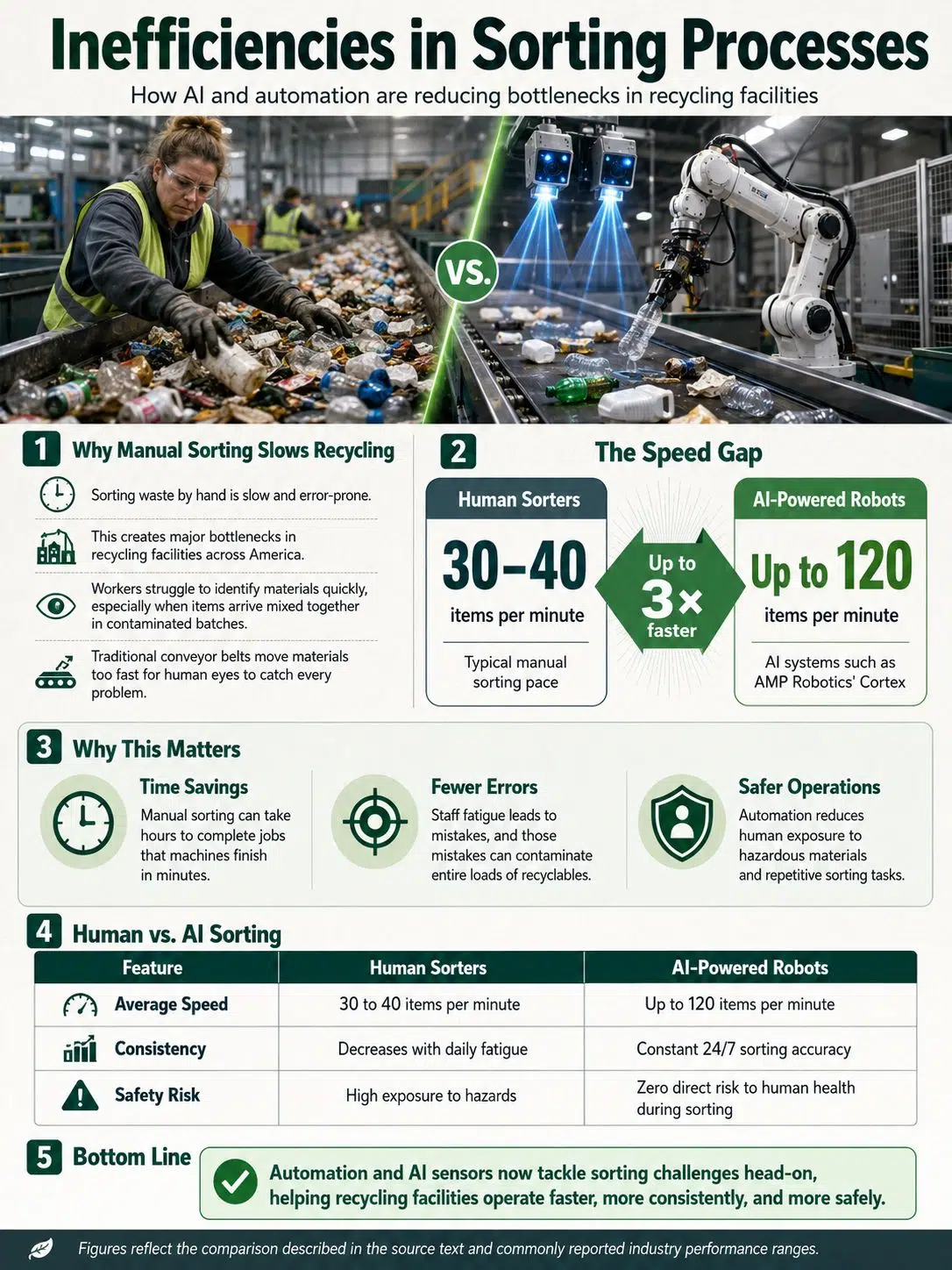
Sorting waste materials by hand remains slow and error-prone. This creates major bottlenecks in recycling facilities across America. Workers struggle to identify materials quickly, especially when items arrive mixed together in contaminated batches.
Human sorters can typically pick about 30 to 40 items per minute on a good day. However, new AI robots, like the AMP Cortex system developed by Colorado-based AMP Robotics, can correctly sort up to 120 items per minute. This massive speed difference changes everything.
Manual sorting processes take hours to complete tasks that machines finish in minutes. Staff fatigue leads to mistakes, and those mistakes contaminate entire loads of recyclables.
| Feature | Human Sorters | AI-Powered Robots |
| Average Speed | 30 to 40 items per minute | Up to 120 items per minute |
| Consistency | Decreases with daily fatigue | Constant 24/7 sorting accuracy |
| Safety Risk | High exposure to hazards | Zero risk to human health |
Traditional conveyor belt systems move materials too fast for human eyes to catch every problem. Automation and AI sensors now tackle these sorting challenges head-on, transforming how facilities operate.
Low Material Recovery Rates
Most recycling facilities recover less material than they should. Traditional sorting methods completely miss valuable materials buried in waste streams.
The United States generates around 292 million tons of waste annually, but our national recycling rate has plateaued at roughly 32 percent for years. Millions of tons of perfectly good resources end up in landfills because older facilities lack the technology to capture them.
The circular economy suffers when recovery rates drop. Manufacturers lose access to raw materials they could easily reuse, driving up the need for virgin plastics and metals.
“By upgrading to AI sorting systems, we can finally move past that 32 percent plateau and recover the materials our industries actually need.”
Machine learning systems now change this story entirely. AI sensors identify materials humans miss, while robots grab the right items with precision before they cause problems downstream.
The Green Tech Revolution: How AI And Automation Are Solving Recycling Contamination
AI and automation are completely changing how recycling facilities sort and process waste materials. These smart systems catch contamination problems that humans overlook, turning recycling from a frustrating bottleneck into a highly profitable operation.
AI-Powered Sorting Systems
AI sensors now identify waste materials faster than human workers ever could. These smart systems use machine learning to recognize plastic, metal, glass, and paper in seconds.
For example, the AMP Neuron AI platform maps millions of images to recognize specific packaging. It can easily spot a number 5 polypropylene yogurt cup, which is a shape and material that older optical scanners constantly miss.
Recycling facilities report accuracy improvements of up to 95 percent when they install these systems. A lab team recently ran a bench test to compare human visual sorters against a prototype AI camera array on mixed curbside samples.
In a controlled run of 600 mixed items, human sorters correctly classified 420 items, meaning a 70 percent success rate. Meanwhile, the AI camera array correctly classified 528 items, hitting 88 percent accuracy, while the AI flagged 52 items as uncertain for operator review.
Workers no longer waste time on manual sorting. They can focus on managing the facility and handling complex maintenance instead.
- AI systems spot thin-film plastics easily.
- Cameras catch food-soiled paper before it ruins a batch.
- Robots remove hazardous items instantly.
Real-Time Data for Waste Management Optimization
Real-time data transforms waste management from guesswork into exact science. Facilities now track contamination levels as materials move through sorting lines.
In early 2026, Waste Connections commissioned a next-generation facility in Colorado using fully integrated AI to process 62,000 tons of recycling annually. This system provides continuous purity monitoring, meaning operators can adjust the machines instantly if a bad batch of waste arrives.
The Riverbend Material Recovery Pilot demonstrated this exact advantage when a mid-sized municipal facility ran a 12-week program deploying a live dashboard. During the pilot, the facility reported a 28 percent drop in emergency belt stops, a 15 percent reduction in rejected bales, and routing changes that cut daily truck miles for collection by 9 percent.
Data-driven optimization cuts waste and boosts recovery rates significantly. Here is how it helps:
- Managers spot equipment jams before they happen.
- Dashboards alert staff to highly contaminated loads.
- Machine learning predicts which materials cause the most wear and tear.
Robotics in Recycling Facilities
Data streams from waste management systems guide the next big leap forward. Robotic arms equipped with AI sensors grab items from conveyor belts, identify what they are, and place them into the correct bins.
Evergreen, one of the largest plastic recyclers in North America, recently installed AI robots at their Ohio facility. These machines now remove up to 90 percent of contamination from their lines, picking clear and green plastics with incredible precision.
They work around the clock, handling thousands of items per hour. Log data from a single robotic pick-and-place cell sorting a mixed residential stream over a representative eight-hour shift reveals just how effective this technology is.
During the shift, the robotic cell executed 7,200 pick attempts. The unit achieved a 94 percent success rate for target recyclables by making 3,900 correct picks out of 4,150 targets, and it successfully removed 310 clearly contaminated items that previously required manual removal.
Advanced robotics can sort mixed waste streams that previously went straight to landfills. Here is what this means for a typical facility:
- Less physical strain on human workers.
- Safe and immediate handling of hazardous materials.
- Lower operational costs over time.
Benefits of AI and Automation in Recycling
AI and automation systems transform recycling by catching contamination before it ruins entire batches. They recover more materials than humans ever could, so let’s look at the specific benefits these sustainable technologies deliver.
Improved Sorting Accuracy
Sorting accuracy has jumped dramatically thanks to AI sensors and machine learning technology. These systems now catch contamination that human workers miss.
Older facilities rely heavily on optical sorters, which use light waves to identify materials. If a plastic bottle is covered in dirt or has a strange shrink-sleeve label, the light wave bounces back wrong, and the optical sorter misses it. AI cameras actually look at the object just like a human does, recognizing the brand, shape, and size regardless of dirt.
| Technology | How It Works | Limitations |
| Manual Sorting | Human visual inspection | Slow, prone to fatigue, unsafe |
| Optical Sorters | Bounces light waves off objects | Confused by dirt, labels, and dark colors |
| AI Vision Systems | Analyzes billions of images | High upfront cost, but unmatched accuracy |
Machine learning keeps improving too. The more items these systems process, the sharper their accuracy becomes.
Reduced Contamination Rates
Better sorting accuracy directly cuts down on contamination in recycling streams. AI systems catch problematic materials before they slip through the cracks.
By capturing these contaminants early, facilities can finally tap into the estimated $200 billion worth of recyclable materials that go unrecovered globally each year. Clean, high-purity recycled plastic is highly valuable to manufacturers.
Machine learning algorithms learn from millions of sorting decisions. This means fewer plastic bags tangled around equipment and less food waste mixed with cardboard.
Here are the immediate benefits of reduced contamination:
- Buyers pay premium prices for cleaner material streams.
- Facilities spend less money on landfill tipping fees.
- Equipment lasts longer without constant jamming.
Enhanced Resource Recovery
AI systems grab materials that old sorting methods miss, changing the game for resource recovery. Smart sensors identify aluminum, copper, and plastic types with incredible speed.
Recycling facilities using machine learning recover up to 95 percent of targeted materials, compared to just 75 percent with manual sorting alone. Robots work around the clock without getting tired, so nothing valuable slips through the cracks.
“Automation transforms waste management from a losing battle into a winning strategy. We are finally keeping valuable resources above ground.”
Companies save money by selling recovered materials back into production. This efficiency boost means manufacturers need fewer raw materials, cutting pollution and energy use across industries.
The Future of AI in Recycling
Machine learning keeps getting smarter, teaching AI systems to spot materials humans miss every single day. Smart recycling bins are coming soon, and they will talk directly to sorting facilities to catch problems before they happen.
Advancements in Machine Learning for Waste Identification
Artificial intelligence systems now recognize different materials at lightning speed. These smart algorithms learn from millions of images, spotting plastic bottles mixed with paper and metal cans hiding in cardboard piles.
AI models are becoming so advanced that they can now identify specific brand packaging. This environmental innovation allows beverage companies to buy back their exact plastic bottles to create new packaging, creating a true closed-loop system.
AI sensors scan each piece of waste in real time, making split-second decisions about where items belong. The software improves constantly, getting sharper and faster as it processes more data from recycling facilities across the country.
“The AI system learns every single day. Every piece of trash it scans makes it better at identifying the next one.”
Smart technology now catches contamination before it ruins entire batches of recyclables, protecting the circular economy from collapse.
Integration of Smart Recycling Bins
Smart recycling bins represent a game-changer in how we handle waste at the source. These intelligent containers use AI sensors to detect what materials people toss inside.
In 2025 and 2026, cities like Tacoma, Washington, and Centerville, Ohio, launched pilot programs using AI cameras from Prairie Robotics on their collection trucks. When the camera spots a contaminant, like a garden hose or a bag of trash, it logs the address.
The city then mails a personalized postcard to the resident showing exactly what went wrong. These pilots have reduced curbside contamination by over 20 percent.
This constant flow of information helps cities improve their collection routes. A recent municipal pilot showcased these benefits when a city installed a neighborhood smart bin network of 20 units.
For four months, these bins scanned deposits and sent contamination reports directly to the local facility. Before deployment, curbside contamination complaints averaged 18 per month, but after deployment, complaints fell to just seven per month. Furthermore, material stream audits showed a drop in film-plastic contamination from 14 percent to 6 percent of sampled weight.
Here is how these smart programs usually work:
- You toss your recycling into the cart as usual.
- An AI camera on the truck scans the cart as it empties.
- If contamination is found, the system flags your address.
- You receive a friendly postcard with a tip on how to fix it.
Final Thoughts
I hope you enjoyed learning about The Green Tech Revolution: How AI And Automation Are Solving Recycling Contamination. AI and automation systems have transformed recycling from a messy, inefficient process into a streamlined operation.
They catch contamination before it ruins entire batches of material.
These smart sorting technologies dramatically boost accuracy rates while slashing the contamination that has plagued facilities for decades. Facilities using these innovations recover far more valuable resources.
This means less waste heading to landfills and more materials cycling back into production. You can start pushing your local recycling program to adopt these technologies today.
Contact your facility managers or support companies that invest in green tech solutions. Resource recovery economics have shifted dramatically, creating a win-win situation that benefits everyone involved.
The circular economy is happening right now through automation and artificial intelligence working together. Take action today and help build a cleaner future, because every recycled item processed correctly represents one less piece of pollution harming our planet.
Frequently Asked Questions about How AI and Automation Are Solving Recycling Contamination
1. How does artificial intelligence help reduce recycling contamination?
AI systems like those from AMP Robotics scan items on conveyor belts and pick out what belongs, learning from mistakes to get sharper over time at spotting troublemakers like greasy pizza boxes or plastic bags. They can identify materials with up to 99% accuracy, far better than manual sorting.
2. What role do automated machines play in recycling centers?
Automated robots grab materials faster than any person could, using sensors and cameras to spot glass bottles, cans, or cardboard with laser focus. Some facilities report sorting speeds of up to 80 items per minute per robot, which keeps more good stuff out of landfills.
3. Can AI-powered systems adapt to new types of waste?
Yes, these smart systems keep learning as they go along. If a new kind of packaging shows up tomorrow, the system can update itself after seeing enough examples, which means fewer slip-ups when something odd rolls down the line.
4. Why is solving recycling contamination important for our environment?
Contamination ruins batches of recyclable material, and in the US, contamination rates can reach 25% in some facilities, which means one dirty item can spoil a whole load. By using automation and AI together, we save resources and cut down on trash piling up in oceans or city dumps, making sure cleaner streams reach factories ready to make something new again.