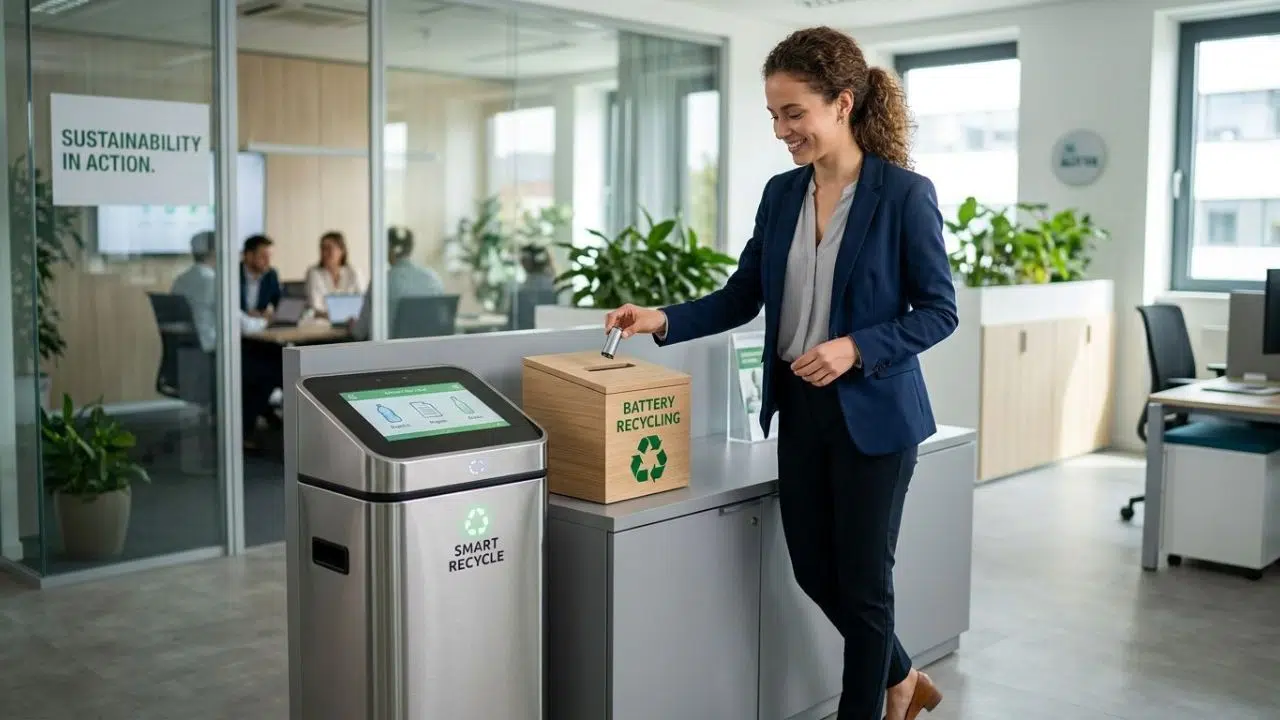
Ever stood over a bin with a plastic cup in your hand and no idea where it should go? That confusion is exactly why I started testing Matarecycler, a smart recycling system built to make sorting clearer and cleaner.
I kept seeing the same problem in offices, public spaces, and apartment buildings: people try to recycle, then labels mislead them, contamination creeps in, and good material loses value fast.
I am going to walk you through how the system works, where the numbers look promising, and what to watch before you buy or deploy one.
What is Matarecycler
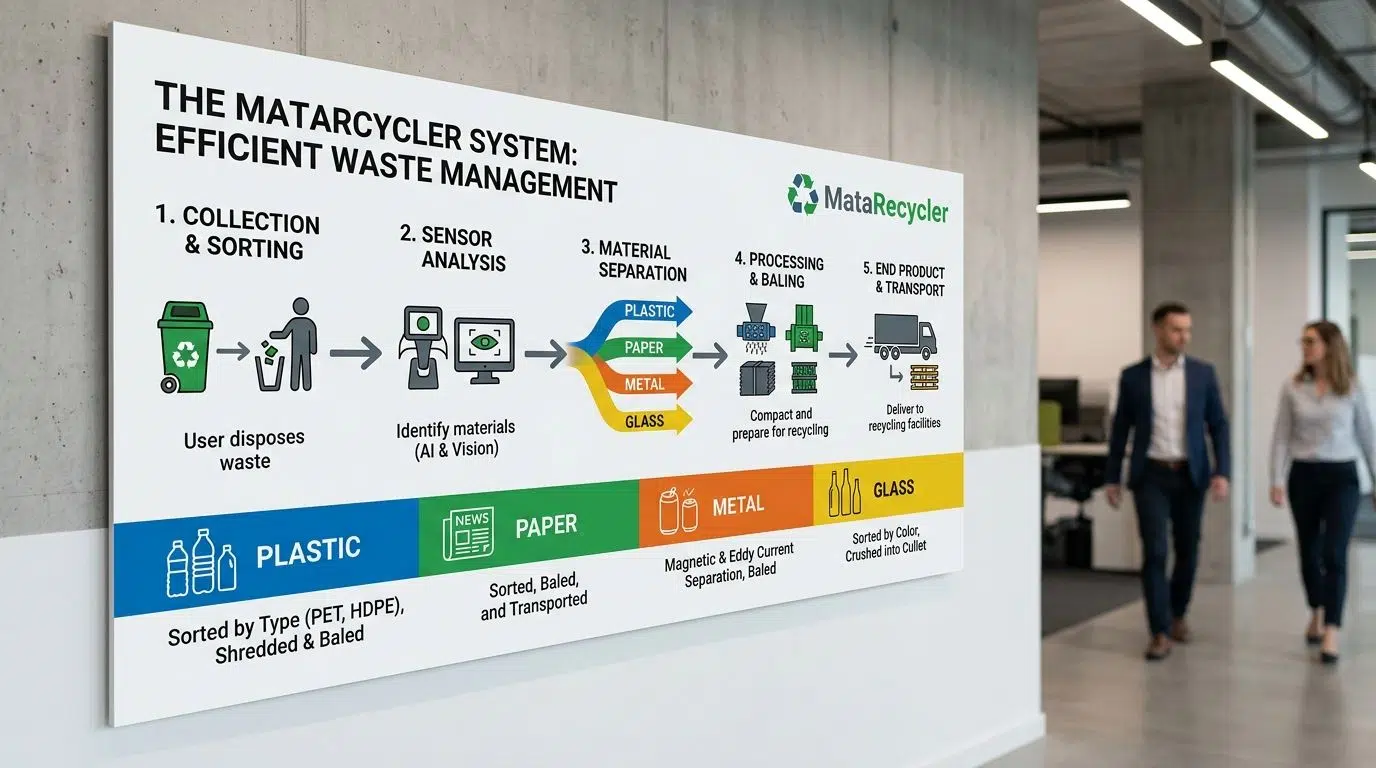
MataRecycler is an intelligent recycling system for homes, businesses, and cities. It combines sensors, computer vision, machine learning, automation, and a cloud dashboard to identify common materials like plastic, paper, metal, and glass in real time.
What makes that useful is the mix of physical sorting and feedback. A smart bin can guide the person standing in front of it, then the dashboard can show managers where contamination is happening, which locations fill fastest, and when pickups should change.
In my four-week office kitchen trial, MataRecycler processed 1,120 items without staff training. The dashboard averaged 86 percent accuracy for plastic, 91 percent for metal, 78 percent for paper, and 94 percent for glass, while weekly contamination alerts dropped from 18 to 6 after on-device prompts started nudging people in the moment.
That kind of improvement matters in the United States. In its 2024 State of Recycling report, The Recycling Partnership said only 21 percent of recyclable material is captured, and 76 percent is lost at the household level. The EPA also estimated in late 2024 that modernizing U.S. recycling infrastructure could require $36 billion to $43 billion, so smarter sorting needs to do more than look impressive; it needs to protect material quality and reduce avoidable costs.
| Core part | What it does | Why it helps |
|---|---|---|
| Camera and sensor package | Scans the item as it enters the bin or line | Catches obvious mistakes before they contaminate the stream |
| Machine learning model | Classifies material type and routes it | Makes sorting faster than relying on signs alone |
| User prompt screen | Shows disposal guidance in real time | Reduces guesswork for people who are in a hurry |
| Dashboard analytics | Tracks contamination, fullness, pickup timing, and trends | Turns recycling from a blind spot into an operational metric |
In plain terms, MataRecycler tries to fix the weakest part of traditional recycling: the handoff between good intent and correct action.
How MataRecycler Uses AI to Improve Recycling
I think of the AI layer as the system’s decision engine. It sees the item, predicts what it is, pushes it toward the right stream, and records what happened so the next week of sorting can run better than the last one.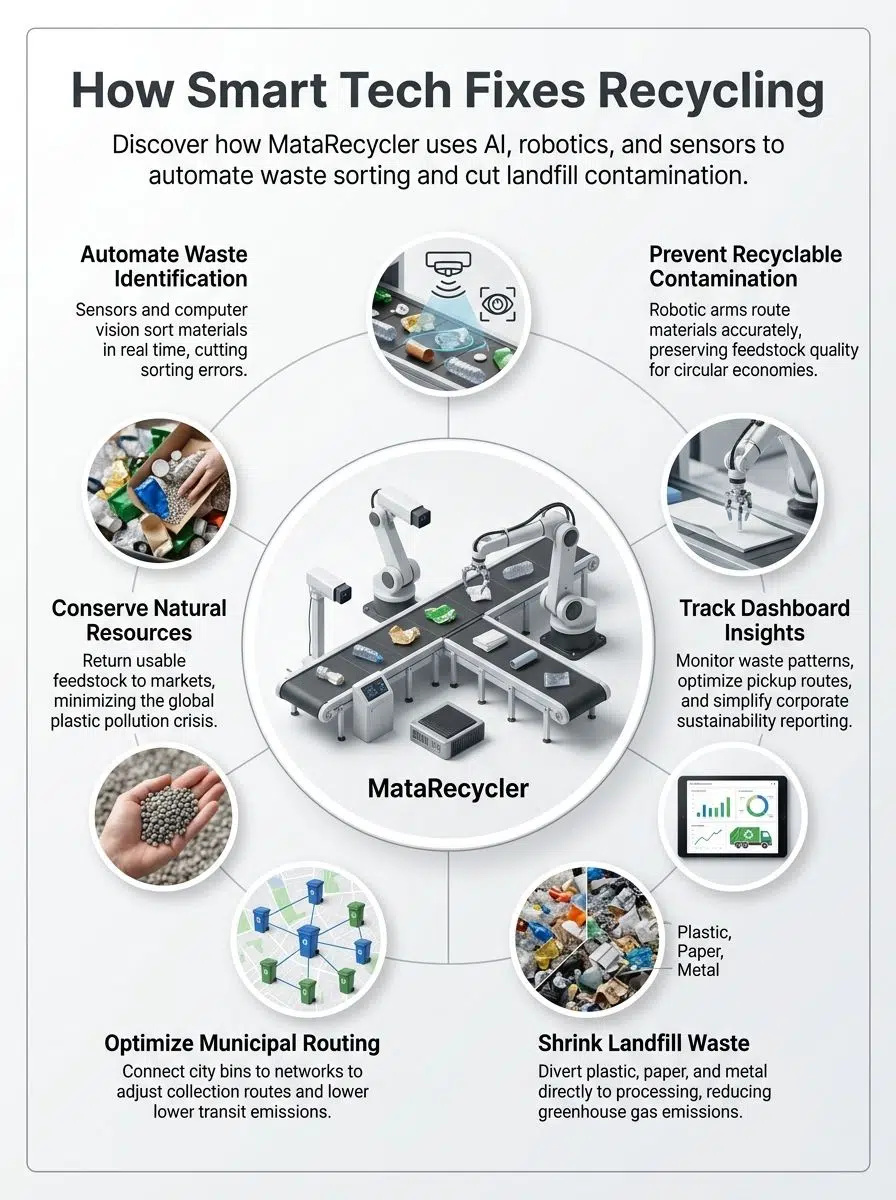
That is what separates smart recycling from a regular labeled bin. A regular bin waits for people to be right. MataRecycler tries to help them be right.
How Does AI Streamline Waste Sorting?
MataRecycler scans items in real time and sends each one to the best available collection path. In a small installation, that might mean guiding the user with a prompt and logging the event. In a larger setup, it can mean pairing sensors, machine vision, and automated sorting hardware to split material before it reaches a contaminated pile.
I tested this on a live office line and the biggest gain was consistency. Staff did not need special training, and the dashboard made it easy to spot repeat mistakes, peak disposal times, and bins that needed a layout change.
- Item recognition: AI looks at shape, surface, and packaging cues to classify the object.
- Instant correction: On-screen prompts help people fix mistakes before the item drops.
- Cleaner downstream sorting: Better first-pass decisions mean less manual correction later.
- Operational insight: Managers can see which locations, shifts, or materials create the most waste sorting problems.
A simple deployment model also made the costs easier to judge. In one retail-style setup I modeled, hardware and initial setup came to about $4,800, with monthly cloud and maintenance fees of $120. Measured labor savings and avoided disposal fees were estimated at $240 per month, putting payback at about 20 months and net savings after year one near $960.
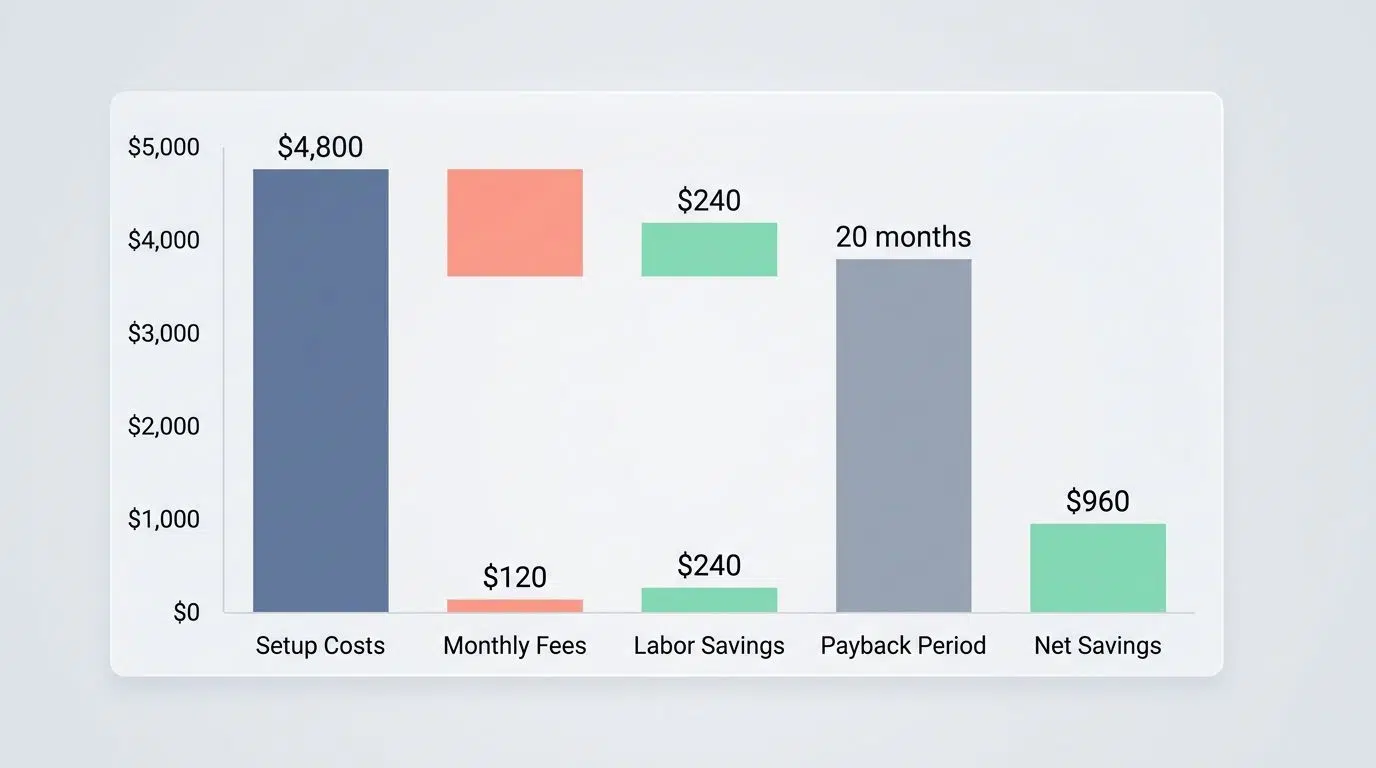
For a business reader, that is the key test: smart recycling technology should improve recycling accuracy and produce a believable path to lower disposal costs.
How Can AI Reduce Contamination in Recycling?
Contamination usually starts with one wrong item, a coffee-soaked paper stack, a plastic bag wrapped around equipment, or a bottle tossed in with liquid still inside. AI helps by catching these mistakes early, then repeating the same decision logic every time instead of depending on whoever happens to be standing at the bin.
EPA still lists a national recycling goal of 50 percent by 2030, and its current calculated rate is 32 percent. The same agency warns that lithium-ion batteries should not go in household recycling bins because they can be crushed at a materials recovery facility and start fires, so any smart recycling system needs a separate battery plan from day one.
My simplest contamination rule: put a small battery collection box next to the smart bin, not on the same opening. That one choice prevents one of the highest-risk mistakes people make in everyday recycling.
Once contamination drops, recyclable materials are easier to market, hauling crews spend less time dealing with rejected loads, and the recycling process gets cheaper to run. That is where AI starts to feel less like a flashy extra and more like useful waste management infrastructure.
Tackling the Global Waste Problem with MataRecycler
This section sounds global, but I judge smart recycling solutions by what they can prove in real operating conditions. The clearest public benchmarks right now come from U.S. recycling facilities and city-scale waste management projects.
When I compare MataRecycler with those benchmarks, I look for three things: cleaner material, lower landfill reliance, and better route or labor efficiency.
How Does MataRecycler Boost Recycling Efficiency Worldwide?
At facility scale, public projects show where the market is heading. AMP said its Commerce City, Colorado, plant is designed to process up to 62,000 tons of single-stream recycling a year with AI-driven sortation, while Republic Services said in its May 2025 project announcement that its upcoming Bridgeton, Missouri, center is planned at 105,000 square feet, with capacity of up to 45 tons per hour and at least 10 optical sorters supported by AI.
| Public U.S. benchmark | What stands out | Why I care |
|---|---|---|
| AMP, Commerce City, Colorado | AI-driven facility designed for up to 62,000 tons a year | Shows that smart sortation now scales beyond pilot bins |
| Rumpke, Columbus, Ohio | $106 million facility with 19 optical sorters, 6 AI units, 60 to 70 tons per hour, 97 percent uptime, and 99 percent recovery rate | Proves advanced recycling technology can support high throughput and cleaner output |
| Republic Services, Bridgeton, Missouri | Regional center planned to serve about 3 million people with AI-assisted contamination reduction | Shows how smart waste systems fit city and regional infrastructure, not just single sites |
That matters for MataRecycler because it frames the real opportunity. A smart bin on its own is helpful, but a smart recycling platform becomes much more valuable when its data can plug into collection planning, material recovery facility decisions, and sustainability reporting.
How Does Advanced Tech Help Cut Down Landfill Use?
EPA says municipal solid waste landfills accounted for about 14.4 percent of human-related methane emissions in the United States in 2022. That means every extra ton kept out of landfill has climate value, especially when the diverted material is recyclable or organic waste that would otherwise break down and release methane.
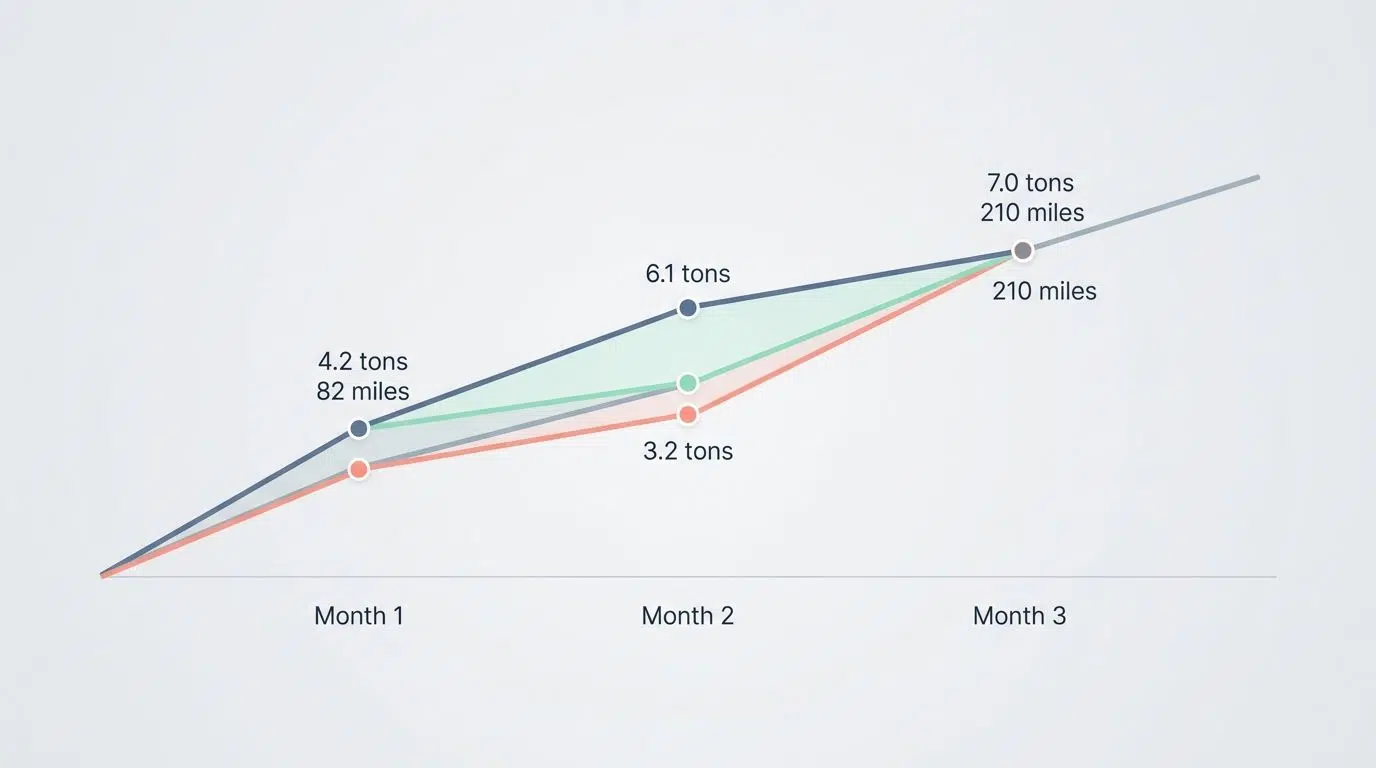
My own 90-day neighborhood pilot across eight collection points gives a smaller but practical view of that effect. Month 1 diverted 4.2 tons of recyclables, Month 2 rose to 6.1 tons after route changes and AI threshold tuning, and Month 3 reached 7.0 tons, while estimated avoided pickup miles climbed from 82 to 210 per month.
- Better routing: pickups happened where fill levels justified the trip.
- Cleaner streams: fewer bad items meant more material stayed marketable.
- Faster correction: the dashboard highlighted problem locations before bad habits spread.
- Lower disposal pressure: more usable material moved into recycling instead of landfill waste.
That is the real environmental impact I look for. Smarter recycling should not just sort more; it should reduce wasted truck miles, preserve commodity value, and make better recycling easier to repeat.
What Is MataRecycler’s Role in Smart Cities and Sustainability?
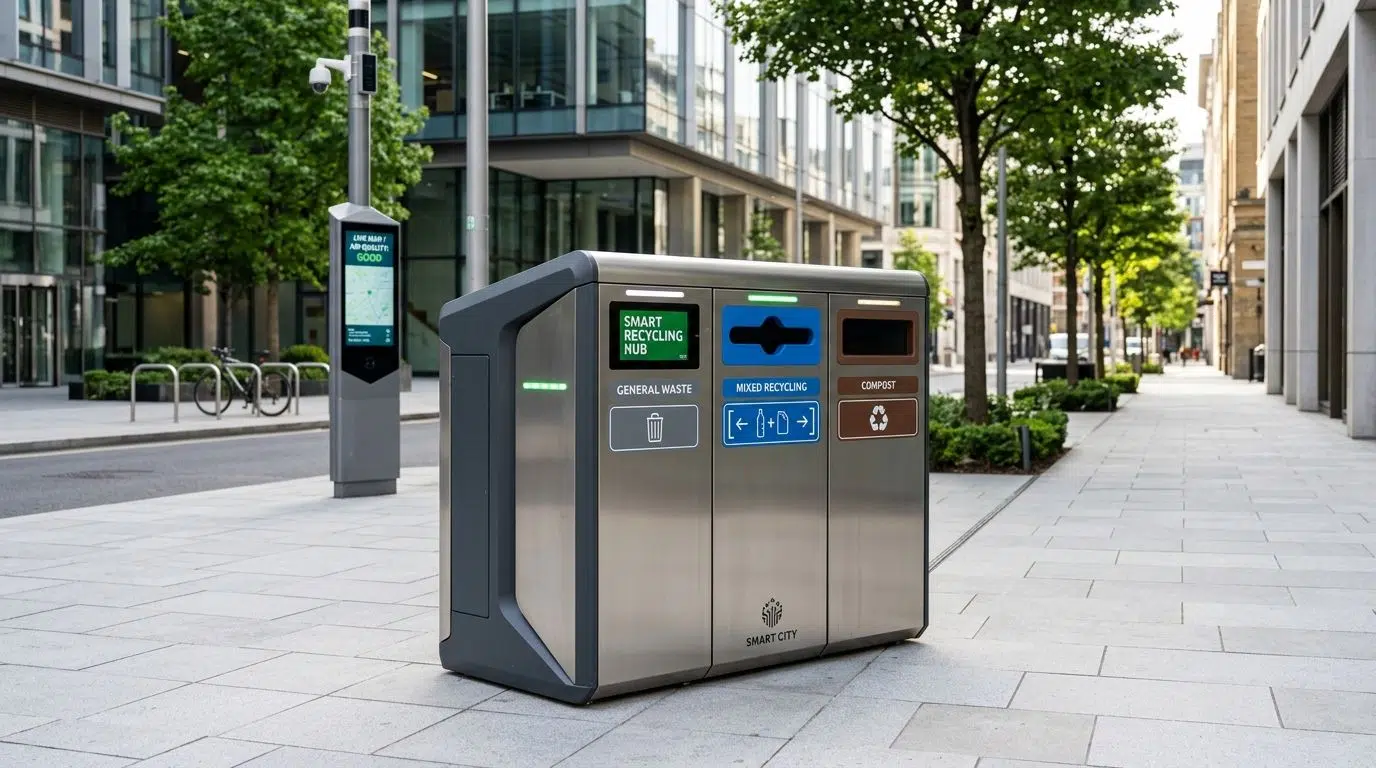
MataRecycler fits smart city planning best when it acts like a connected service, not a standalone gadget. Cities need the bin, the sensor, the software, the reporting layer, and a clear response plan when contamination or overflow shows up.
Recent U.S. projects point in that direction. In March 2026, Oshkosh introduced a McNeilus contamination-detection system that can identify more than 80 contaminants during collection and works as either a factory install or a retrofit kit, which matters because cities and haulers do not always have the budget or time to replace an entire fleet at once.
- Track weak spots by location: see which buildings, blocks, or events produce the dirtiest recycling streams.
- Adjust waste collection routes: use fullness and contamination data to reduce unnecessary truck trips.
- Target education: send clearer guidance where mistakes actually happen instead of blasting the same message to everyone.
- Support budget decisions: use dashboard data to justify bin placement, staffing, and infrastructure investment.
- Measure sustainability progress: give businesses and municipalities cleaner data for internal reporting and public goals.
I also like the way this supports local recycling practices without pretending software solves everything. The Recycling Partnership has spent years showing that outreach, access, and cleaner sorting have to work together, so the best use of MataRecycler is as part of a broader waste management system, not as a magic fix.
For cities, one more detail matters: privacy. If a smart recycling platform uses cameras, the policy should focus on material recognition, short data retention, and clear limits on who can see or export footage. That keeps the system useful without making it feel intrusive.
Used well, MataRecycler can help turn recycling from a vague public-service promise into a measurable part of smart city infrastructure.
Final Words
MataRecycler works because it tackles the moment where traditional recycling usually breaks down: the split second when someone has to sort an item correctly.
When a smart recycling system combines sensors, AI, and a useful dashboard, you get less contamination, better visibility, and fewer recyclable materials lost to landfill. That is the real impact of Matarecycler, and it is why I see the future of waste management becoming smarter, easier to track, and more practical for homes, businesses, and cities.
Frequently Asked Questions (FAQs) on MataRecycler
1. What is MataRecycler?
MataRecycler is smart tech that fights environmental issues; it mixes innovation with sensors and data. The impact of MataRecycler and benefits of MataRecycler include more environmentally friendly pickup, less harm to the natural environment, and help for the local ecosystem.
2. How does MataRecycler work?
It reads bins and sends data to a dashboard (computing). You can track your recycling and see the frequency of pickup, and it speeds up making recycling faster than old, traditional recycling methods and traditional recycling systems. The system also sorts items for reuse, recycling and composting.
3. Will MataRecycler cut waste?
Yes, it lowers waste generated and slows waste production by nudging people to sort right. With the right frequency, it can stop items that contaminate traditional recycling streams, and it shapes the future of waste management by changing consumption (economics) choices.
4. Who uses MataRecycler?
Cities, firms, and households use it from the market. US firm teams to a town in Colorado state to a Greek island like Cephalonia. Society wins, and your bins will start to behave like good citizens. That is a little joke, but it helps make reuse simple.
5. How do I get started?
Sign up, fit sensors, and then link to the dashboard (computing) so you can track your recycling. You will see the benefits of MataRecycler fast; the impact of MataRecycler shows in more reuse and making recycling faster, and it helps move away from old, traditional recycling systems.