

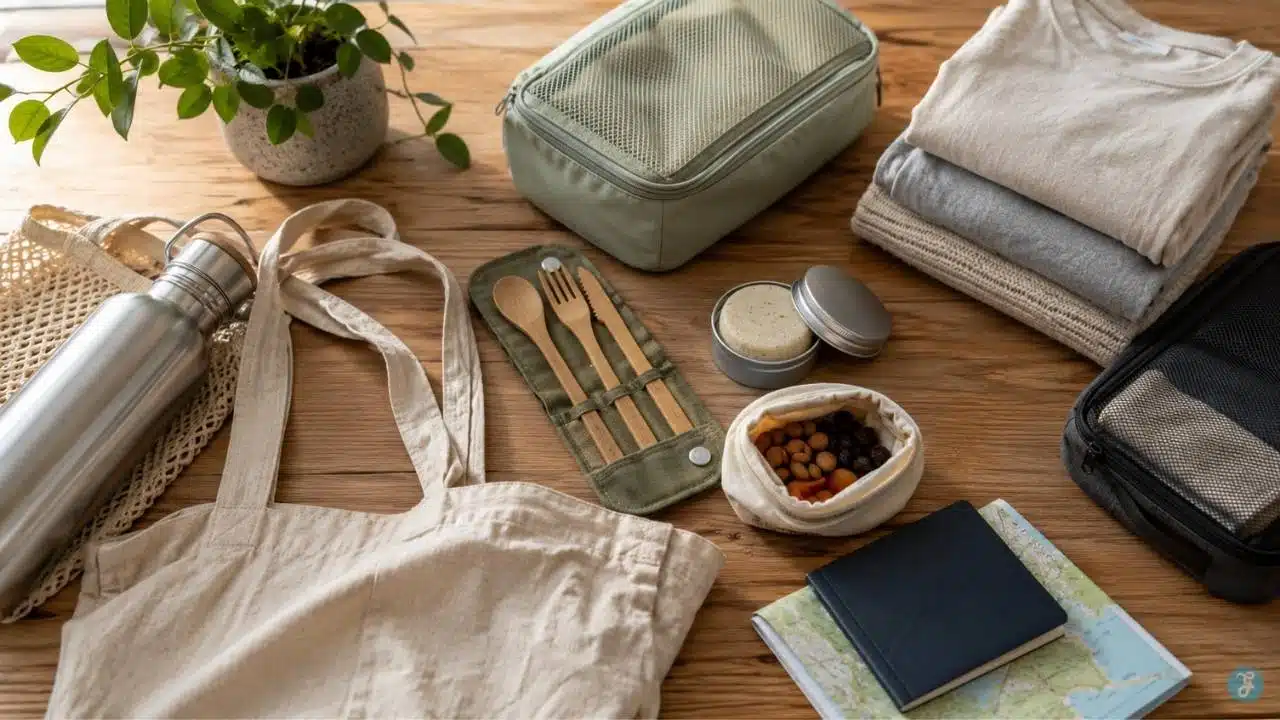
The best sustainable travel swaps are not the ones that make your suitcase look perfect. They are the ones you actually use when you are tired, hungry, rushing through security, checking into a hotel late, or trying to avoid buying another plastic bottle at a station. That is where sustainable travel becomes real.
It is easy to talk about low-impact travel when you are planning from home. It is harder when your flight is delayed, your hotel only provides tiny plastic toiletries, the café gives every drink in a disposable cup, and you forgot to pack a reusable bag. This list is built for that real version of travel.
Sustainable travel does not mean buying every green travel product you see online. In fact, overbuying “eco” products can become another form of waste. The smarter approach is to replace the most common throwaway travel habits with practical items or choices that last longer, pack well, and work across many trips.
Some swaps reduce plastic. Some help you pack lighter. Some cut down on paper waste. Some make food and water choices easier. Some reduce the impact of how you move around.
No single swap makes a trip perfectly sustainable. But together, these eco travel essentials can make low-impact travel feel much less complicated.
How I Chose These Sustainable Travel Swaps
I looked at these swaps from a traveler’s point of view, not just a sustainability checklist.
A good travel swap should meet five standards:
- It should replace something disposable or wasteful.
- Easy to pack.
- Should work in more than one destination.
- Should not create more clutter at home.
- And it should be useful enough to become a habit.
That last point matters most. A reusable item sitting in a drawer is not sustainable. A refillable bottle you carry on every trip is.
This list also avoids perfectionism. You may not use every swap every time. Some destinations have safe tap water. Others do not. Some trips are carry-on only. Others need checked bags. Some hotels support refill systems. Others still rely on single-use toiletries.
The goal is not perfect travel. The goal is better travel decisions, repeated often.
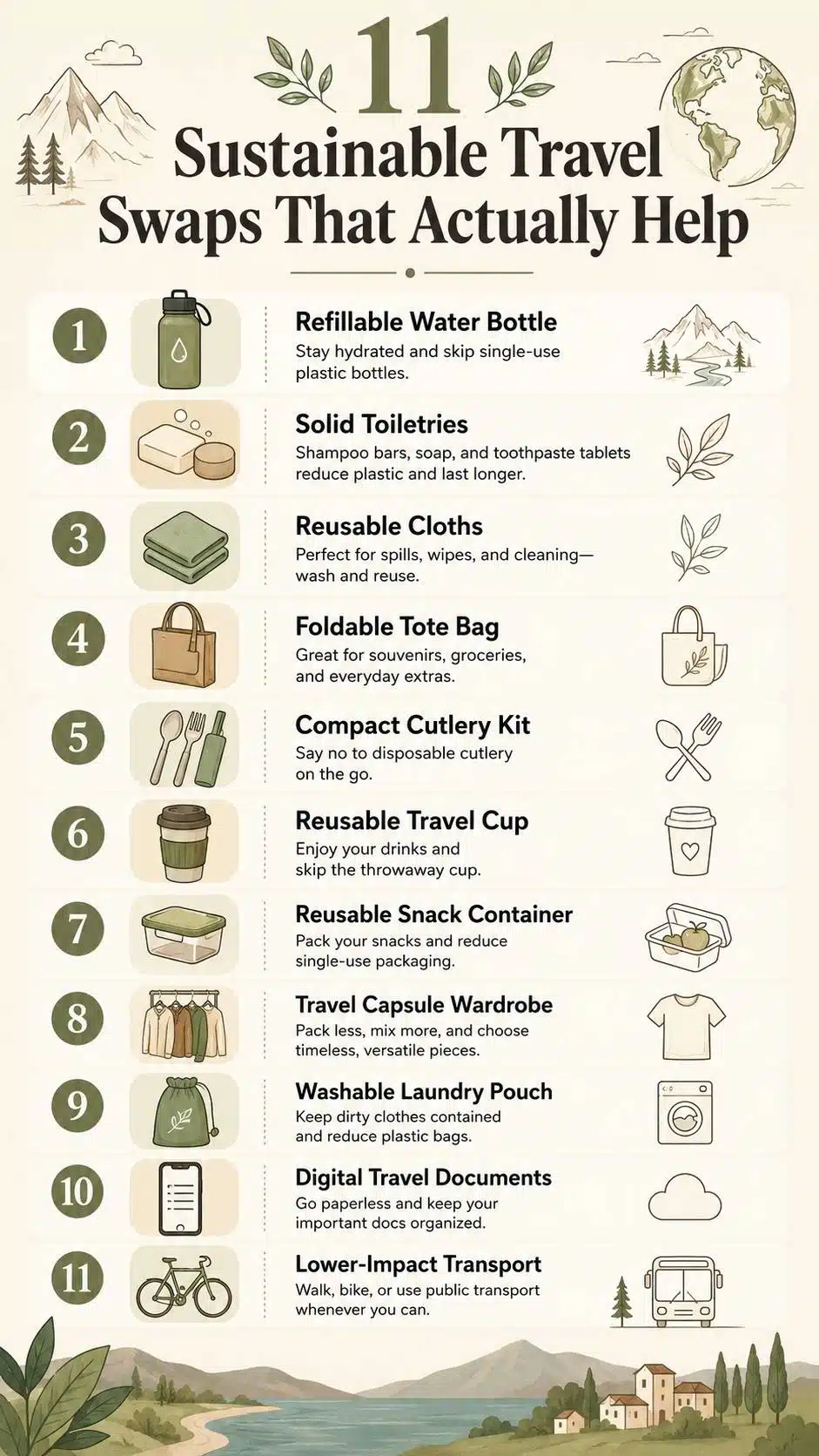
1. Swap Plastic Water Bottles for a Refillable Bottle
A refillable bottle is one of the simplest sustainable travel swaps because water is a repeated need on almost every trip. Airports, bus stations, hotels, museums, coworking spaces, gyms, and cafés often have refill points now. Even when refill stations are not everywhere, carrying your own bottle makes you less dependent on buying plastic bottles out of convenience.
The best option depends on your trip. For cities with safe tap water, a stainless steel bottle is usually enough. For hiking, long train rides, or hot destinations, an insulated bottle helps keep water cold. For places where tap water safety is uncertain, a filter bottle or purifier bottle can be more practical.
The mistake is buying an oversized bottle that is annoying to carry. A sustainable item only works if it fits your real behavior. For most travelers, a medium bottle is easier than a giant one.
Packing logic: choose a bottle that fits your backpack’s side pocket and is easy to clean.
Good trip fit: city breaks, airports, road trips, hiking, conferences, beach trips, and long sightseeing days.
What to avoid: buying a new bottle for every trip. Use the one you already own if it works.
2. Swap Hotel Mini Toiletries for Solid Toiletries
Tiny hotel shampoo bottles may feel convenient, but they are one of the most obvious sources of avoidable travel waste.
Solid toiletries are a better option for many travelers. Shampoo bars, conditioner bars, body wash bars, face cleansing bars, solid deodorant, and toothpaste tablets can reduce packaging and make carry-on packing easier.
They also avoid one common airport problem: liquids. If your toiletry routine is mostly solid, your liquids bag becomes much easier to manage.
The trick is testing products before the trip. Do not pack a new shampoo bar for a two-week holiday without trying it at home first. Hair type, water hardness, storage, and scalp sensitivity matter. Solid bars also need a dry case. A wet shampoo bar thrown into a plastic bag will become messy quickly.
Bathroom swap: replace repeat-use travel minis with solid products you already trust.
Good trip fit: carry-on travel, backpacking, weekend trips, hostel stays, camping, long-term travel.
What to avoid: assuming every solid product will suit your skin or hair. Test first.
3. Swap Disposable Wipes for Reusable Face Cloths
Disposable wipes are convenient, but they create waste fast. Travelers use wipes for makeup removal, face cleansing, spills, sweat, hand cleaning, and quick refreshes after flights. The problem is that many wipes are single-use and often come in plastic packaging.
A better swap is simple: pack two or three soft reusable face cloths, washable cotton rounds, or a small muslin cloth. Pair them with your normal cleanser or just water when appropriate.
This swap is especially useful because clothes dry quickly if you choose the right fabric. A small mesh laundry pouch helps keep used clothes separate until you wash them.
It is not about never using a wipe again. Sometimes wipes are useful in medical, baby care, or emergency situations. But they should not be the default for every face wash and spill.
Skin-care angle: reusable cloths reduce daily bathroom waste and make your routine less dependent on disposable packs.
Good trip fit: hotel stays, beach trips, long flights, skincare routines, gym days, hot-weather destinations.
What to avoid: packing thick towels that stay damp and smell bad.
4. Swap Plastic Shopping Bags for a Foldable Tote
A foldable tote is one of the most underrated eco travel essentials. It weighs almost nothing and solves many small travel problems. Groceries, souvenirs, laundry, beach items, snacks, wet clothes, market purchases, and extra layers all need somewhere to go. Without a reusable bag, you are more likely to accept plastic or paper bags again and again.
A good travel tote should be strong, washable, and small enough to live inside your day bag. Cotton is fine if you already own it, but recycled nylon or recycled polyester can be lighter and more compact for travel. The important part is reuse. A bag only becomes a better choice when you carry it often.
Everyday value: one foldable tote can replace many single-use bags across a trip.
Good trip fit: city travel, market visits, grocery runs, beach days, family travel, shopping days.
What to avoid: buying multiple “eco” bags as souvenirs and never using them again.
5. Swap Disposable Cutlery for a Compact Food Kit
Travel often means eating on the go. Street food, takeout meals, airport snacks, train station noodles, supermarket lunches, and hotel-room dinners all come with disposable forks, spoons, straws, napkins, or plastic packets. A compact food kit helps you avoid some of that waste.
You do not need a full camping kitchen. A simple spork, a small spoon, a reusable straw if you use one, a cloth napkin, and a small container can be enough.
Choose materials based on your travel style. Stainless steel is durable but may be heavier. Bamboo is light but can wear out. Titanium is light and strong, but expensive. A single spork is enough for many travelers. This swap works best when you keep the kit accessible. If it is buried at the bottom of your luggage, you will not use it.
Food-travel habit: keep one small cutlery kit in your day bag, not your suitcase.
Good trip fit: street food, food markets, road trips, train journeys, picnics, budget travel.
What to avoid: carrying sharp knives through airport security. Keep it simple.
6. Swap Takeaway Cups for a Collapsible Cup or Tumbler
Coffee, tea, juice, smoothies, and airport drinks create a lot of disposable cup waste during travel. A reusable cup can help, but only if it fits your routine. A full-size insulated tumbler is great for road trips and long walks. A collapsible cup is better for carry-on travelers who want to save space.
The practical question is this: will you actually carry it after the drink is finished?
That is why collapsible cups work well for some travelers. They shrink down, fit into small bags, and are less annoying than bulky mugs.
Still, this swap is not useful for everyone. If you rarely buy drinks outside, skip it. Sustainable travel swaps should match your habits, not create new things to carry.
Café habit: choose a reusable cup if takeaway drinks are part of your normal travel rhythm.
Good trip fit: airport travel, city breaks, road trips, conferences, work travel, early morning tours.
What to avoid: buying a beautiful reusable cup that leaks or takes too much space.
7. Swap Plastic Snack Packs for Reusable Snack Containers
Travel hunger leads to bad choices. You are between trains, stuck in traffic, waiting at the gate, or walking around a city with no good food nearby. That is when plastic-heavy convenience snacks become tempting.
A reusable snack container, silicone pouch, wax wrap, or lightweight food box gives you another option. You can carry fruit, nuts, sandwiches, leftover pastries, dry snacks, or market food without relying on single-use packaging every time.
This swap also helps reduce food waste. If you have half a sandwich or a leftover bakery item, you can save it instead of throwing it away.
For flights, keep food rules in mind. Fresh fruit, meat, dairy, and unpackaged food may be restricted across borders. Use this swap mainly for same-day eating and local movement.
Food-waste angle: reusable containers help you carry food you will actually eat instead of buying more packaged snacks.
Good trip fit: road trips, hiking, family travel, train journeys, city walks, long tours.
What to avoid: bulky containers that take up half your bag.
8. Swap Overpacked Outfits for a Versatile Travel Capsule
One of the most overlooked sustainable travel swaps is not a product. It is packing less. Overpacking increases luggage weight, encourages extra baggage, makes transit harder, and often comes from buying “trip clothes” you may not wear again. A small travel capsule helps reduce that habit.
The idea is simple: pack pieces that work together. Neutral tops, one or two bottoms, one warm layer, comfortable shoes, sleepwear, and weather-appropriate essentials. Choose clothes that can be worn more than once and washed easily.
This does not mean looking boring. It means packing intentionally. For low-impact travel, fabric choice matters too. Linen, organic cotton, TENCEL, merino, hemp, and recycled materials can all work depending on climate and use. But do not buy a new sustainable wardrobe just for one trip. Use what you already own first.
Wardrobe rule: pack repeatable outfits, not fantasy outfits.
Good trip fit: carry-on travel, long weekends, work trips, slow travel, train travel, backpacking.
What to avoid: buying new “eco travel clothes” before checking your own closet.
9. Swap Plastic Laundry Bags for a Washable Laundry System
Most hotels still use disposable plastic laundry bags. Many travelers also separate dirty clothes with plastic shopping bags. A better swap is a washable laundry bag, spare packing cube, drawstring cloth pouch, or lightweight wet bag. It keeps clean and worn clothes separate without creating plastic waste.
This swap is especially useful for longer trips. You can use one bag for laundry, one for shoes, and one for damp swimwear or workout clothes. If the bag is washable, it becomes part of your travel system for years.
It also helps you avoid overpacking. When you know you can separate laundry and wash a few items, you are less likely to pack too many clothes.
Packing system: Use washable pouches to organize laundry, shoes, and damp items.
Good trip fit: beach trips, family travel, backpacking, hiking, gym travel, long stays.
What to avoid: cheap bags with weak seams that fail after two trips.
10. Swap Printed Documents for a Digital Travel Wallet
Printing every booking, map, ticket, visa note, itinerary, and hotel confirmation creates paper waste and clutter. A better option is a digital travel wallet. Save offline copies of flight bookings, train tickets, hotel confirmations, insurance details, maps, addresses, emergency contacts, and ID backups.
This swap is not only more sustainable. It is also more practical. Your phone may lose signal, so save important files offline. Your battery may die, so carry a small power bank. Some border, visa, transport, or hotel situations may still require printed documents, so do not go fully paperless without checking destination rules.
The balanced approach is best: print only what is required, digitize the rest.
Travel-admin swap: keep key documents offline and organized before leaving home.
Good trip fit: business travel, multi-city trips, train travel, conferences, international travel.
What to avoid: relying only on cloud access in places with weak internet.
11. Swap Short Flights and Private Cars for Lower-Impact Movement
Some of the biggest travel impacts come from transport, not toiletries. Reusable bottles and solid shampoo bars are helpful, but a short flight, private transfer, or car-heavy itinerary can outweigh many small swaps. That is why low-impact travel should also include how you move.
When practical, choose trains, buses, shared transport, walking, cycling, or public transit. For city trips, staying near public transport can reduce taxi use. For regional trips, one longer train ride may be better than multiple short flights.
This does not mean every traveler can avoid flying. Geography, time, disability, safety, cost, family needs, and limited transport options all matter. But when there is a realistic choice, transport swaps can make a larger difference than many products.
A good rule: replace the easiest flight or car ride first. Not every journey needs to change.
Movement choice: choose slower, shared, or active transport when it fits your route and safety needs.
Good trip fit: Europe rail trips, city breaks, short regional routes, slow travel, urban exploring.
What to avoid: judging every traveler the same way. Sustainable travel has to work with real constraints.
Quick Comparison of the 11 Sustainable Travel Swaps
| Old Travel Habit | Better Swap | Why It Helps |
| Buying plastic water bottles | Refillable water bottle or filter bottle | Reduces single-use plastic and saves money |
| Using hotel mini toiletries | Solid toiletries or refillable containers | Cuts small plastic packaging waste |
| Packing disposable wipes | Reusable face cloths and washable rounds | Reduces bathroom and skincare waste |
| Taking plastic bags everywhere | Foldable tote and reusable pouch | Helps with shopping, laundry, and beach days |
| Accepting disposable cutlery | Compact cutlery kit or spork | Useful for takeout, markets, and street food |
| Using takeaway cups | Collapsible cup or insulated tumbler | Reduces café and airport cup waste |
| Buying overpacked snacks | Reusable snack box or food pouch | Helps avoid plastic-heavy convenience food |
| Packing too many clothes | Small, versatile capsule wardrobe | Reduces luggage weight and overbuying |
| Using plastic laundry bags | Washable laundry bag or packing cube | Keeps clothes organized without disposable bags |
| Printing every document | Offline maps and digital travel wallet | Reduces paper and improves access |
| Taking short flights by default | Train, bus, public transit, walking, or cycling | Reduces transport impact where practical |
How to Build a Sustainable Travel Kit Without Overbuying
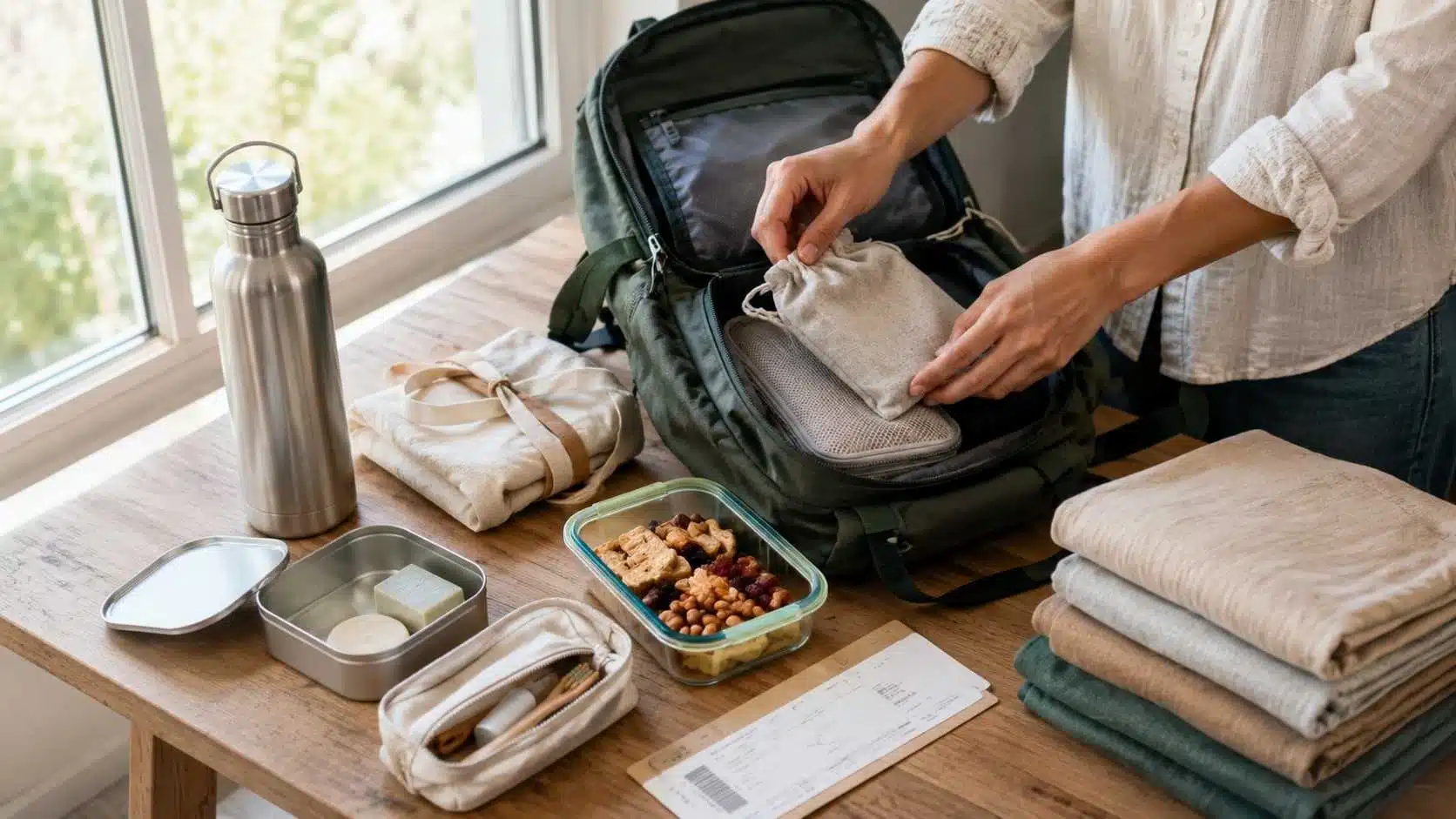
A common mistake is buying a full “zero-waste travel kit” before taking the trip. That can become wasteful, too. Start with what you already own. You may already have a water bottle, tote bag, small container, washable pouch, travel towel, or reusable cup. Use those first before buying anything new.
Then add only what solves a real problem. For example:
- If you always buy bottled water, get a better bottle.
- If you hate hotel minis, try solid toiletries.
- If you eat takeout often, pack a spork and a cloth napkin.
- If you overpack, build a capsule wardrobe.
- If you print everything, organize a digital travel folder.
- If you take many short taxis, plan public transit before arrival.
The best eco travel essentials are boring, useful, and repeated. They do not need to match. They do not need to be aesthetic. They just need to work.
Common Sustainable Travel Mistakes to Avoid
There are too many mistakes travellers make. I know it because I love to travel a lot, and initially I used to take so many unnecessary things, and most of the items remained unused on my trip. I learned from my mistakes. But you can avoid them before committing.
Mistake 01: Buying too much.
A bamboo cutlery set, collapsible cup, silicone pouch, travel towel, refillable bottle, shampoo bar, packing cube, laundry bag, soap tin, reusable straw, and digital organizer can all be useful. But you do not need everything for every trip.
Mistake 02: Packing swaps you will not use
If you never drink takeaway coffee, you probably do not need a travel cup. If your destination has unsafe water and you do not own a reliable filter, a simple bottle may not solve your problem.
Mistake 03: Ignoring local context
Some destinations have excellent refill stations and public transit. Others do not. Some places require printed documents. Some have strict food import rules. Some have limited recycling. Sustainable travel means adapting, not forcing one checklist everywhere.
Mistake 04: Focusing only on products
Low-impact travel also includes staying longer, choosing local businesses, respecting water use, avoiding wildlife harm, supporting public transport, and reducing unnecessary flights where possible.
Products help. Habits matter more.
Smarter Low-Impact Travel Starts Before You Pack
The strongest lesson from these sustainable travel swaps is simple: travel becomes lower-waste when better choices are ready before the moment of convenience.
Pack the bottle before you get thirsty. Put the tote in your day bag before shopping. Save the ticket offline before losing signal. Test the shampoo bar before the trip. Plan the train route before booking a short flight. Build outfits before stuffing the suitcase. Sustainable travel is not about guilt. It is about preparation.
You will still make imperfect choices. Everyone does. Sometimes you will buy bottled water. Sometimes you will accept a disposable fork. Sometimes the train will not work. Sometimes you will print a document because the destination requires it. That is fine.
The goal is not a perfect trip. The goal is fewer throwaway decisions, repeated across many trips. Buy less. Pack smarter. Use what you bring. Choose low-impact travel where it realistically fits. That is how sustainable travel becomes practical.
Frequently Asked Questions About Sustainable Travel Swaps
1. What are the easiest sustainable travel swaps for beginners?
The easiest sustainable travel swaps are a refillable water bottle, a foldable tote bag, solid toiletries, reusable cutlery, and a small laundry pouch. These items are simple, affordable, and useful across many types of trips.
2. Are sustainable travel products always better?
Not always. A reusable product is only better if you use it many times. Buying a new eco product for one trip and then leaving it unused is not a strong sustainability choice. Start with items you already own before buying anything new.
3. Are shampoo bars good for travel?
Shampoo bars can be excellent for travel because they reduce plastic packaging and make carry-on packing easier. But they need to work for your hair type and should be stored in a dry case. Test one at home before taking it on a long trip.
4. How can I reduce plastic while traveling?
Carry a refillable bottle, pack a tote bag, use solid toiletries, bring a small cutlery kit, choose snacks with less packaging, avoid hotel mini toiletries when possible, and say no to unnecessary bags, straws, and disposable cups.
5. What is the most sustainable way to travel?
Walking, cycling, trains, buses, and public transport are usually lower-impact than private cars and flights, especially for shorter routes. The best choice depends on distance, safety, cost, time, accessibility, and local infrastructure.
6. Do small travel swaps really make a difference?
Small swaps help most when they replace repeat habits. One reusable bottle used across many trips is more meaningful than a trendy eco item used once. The biggest impact comes when small waste-reduction habits are combined with smarter transport and packing choices.






















