Hydration science explained properly should not sound like a lecture about drinking eight glasses of water. That advice is too simple for active people. If you train, walk daily, run, lift, cycle, play sports, work long desk hours, sweat heavily, or exercise in hot weather, hydration becomes more personal. Your needs change based on body size, sweat rate, temperature, humidity, exercise duration, clothing, food intake, sodium loss, and even how much caffeine or alcohol you use.
I learned this the practical way. Some workouts feel bad because the training plan is wrong. Some feel bad because sleep was poor. But many ordinary bad sessions come from a simple issue: the person started under-hydrated, trained hard, lost sweat, and replaced only part of what the body needed.
At the same time, more water is not always the answer. Overdrinking can also create problems, especially during long endurance sessions if someone drinks large amounts of plain water while losing sodium through sweat. Hydration is not about flooding the body. It is about balance. For the corporate athlete, hydration also matters at the desk. Long work blocks, coffee, air-conditioned rooms, meetings, and delayed meals can quietly reduce fluid intake before the workout even starts. By evening, the person thinks they need motivation, but their body may simply need water, sodium, and a better daily rhythm.
This guide is educational. It is not medical advice. People with kidney disease, heart failure, liver disease, adrenal disorders, high blood pressure, fluid restrictions, medication concerns, or a history of exercise-associated hyponatremia should get medical guidance before changing fluid or electrolyte intake.
Why Hydration Science Matters for Active People?
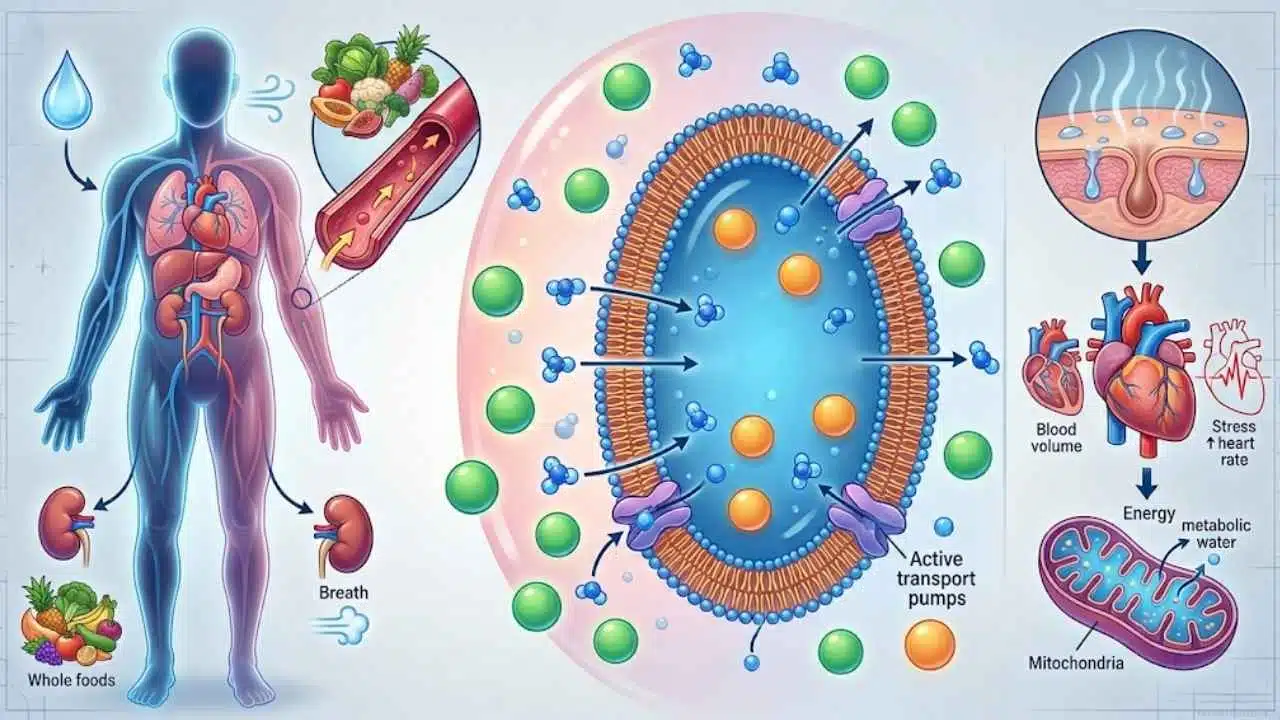
Hydration science matters because water supports almost every system that active people depend on. It helps regulate body temperature, supports blood volume, moves nutrients, assists digestion, lubricates joints, and helps the nervous system work properly. When fluid balance drops too far, exercise can feel harder even when your fitness has not changed. You may notice dry mouth, headache, low focus, dizziness, heavy legs, faster fatigue, or a workout that feels harder than it should. These signs do not always mean dehydration, but hydration is one of the first basics worth checking. Active people often lose fluids through sweat, but they also lose hydration rhythm through busy days. A desk worker may sit for six hours, drink two coffees, forget water, and then start training already behind. That is why hydration belongs inside fitness nutrition, not beside it.
Hydration also connects with food more than most beginners realize. Meals provide water, sodium, potassium, carbohydrates, and other nutrients that help fluid balance. If someone skips meals, eats very low-carb, avoids salt completely, and trains hard in heat, hydration can feel harder to manage. Carbohydrates help store water with glycogen, and sodium helps the body retain fluid where needed. This does not mean everyone should eat salty food all day. It means active people should understand that hydration is not only about plain water. A balanced nutrition plan makes hydration easier because the body receives fluid and electrolytes from both drinks and meals. That is why this article naturally supports the main pillar, Nutrition Fundamentals for Active Lifestyles.
| Hydration Area | Why It Matters | What Active People May Notice | Practical Fix |
| Body temperature | Helps release heat during activity | Overheating, early fatigue | Drink before and during sweaty sessions |
| Blood volume | Supports circulation and oxygen delivery | Dizziness, higher effort | Hydrate earlier in the day |
| Muscle function | Supports nerve signals and contraction | Weakness, poor control | Replace fluids and electrolytes when needed |
| Brain function | Supports focus and alertness | Brain fog, headache | Keep water visible near the desk |
| Digestion | Helps move food through the gut | Constipation or discomfort | Pair fluids with fiber-rich meals |
| Recovery | Restores normal balance after sweat loss | Feeling wiped out after training | Rehydrate with fluids and food |
| Performance | Supports endurance and training quality | Heavy legs, slower pace | Match fluids to sweat and conditions |
| Daily energy | Helps workday function | Afternoon fatigue | Drink steadily, not all at once |
Hydration is not a small detail. For active people, it can shape how the whole day feels.
The Biggest Hydration Mistake: Thinking More Water Always Means Better Hydration
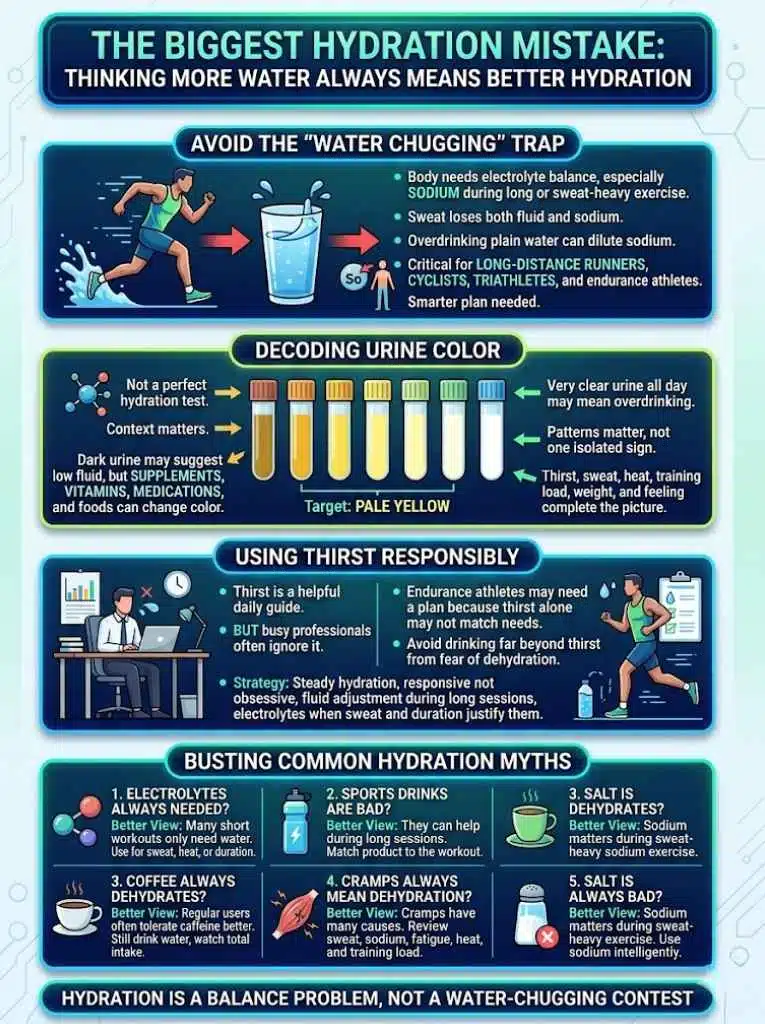
The biggest hydration mistake is thinking more water always means better hydration. This sounds harmless, but it can lead to poor decisions. Water is essential, but the body also needs electrolyte balance, especially sodium balance, during long or sweat-heavy exercise. When you sweat, you lose both fluid and sodium. If you replace a large amount of sweat loss with only plain water during prolonged exercise, sodium can become diluted. This is one reason long-distance runners, cyclists, triathletes, and endurance athletes need a smarter hydration plan than simply drinking as much as possible. For most short workouts, this is not a major issue. But for long, hot, humid, or very sweaty sessions, balance matters.
Another mistake is treating urine color like a perfect hydration test. Urine color can be useful, but it is not the whole story. Dark urine may suggest low fluid intake, but supplements, vitamins, medications, and certain foods can change color too. Very clear urine all day may mean you are drinking more than you need. A practical target for many people is pale yellow, but context still matters. Thirst, sweat, heat, training duration, body weight change, and how you feel during exercise all help complete the picture. Hydration is best understood through patterns, not one isolated sign.
The same idea applies to thirst. Thirst is useful, especially for normal daily hydration. But busy professionals often ignore thirst for hours because they are focused on work. Endurance athletes may also need a plan because thirst alone may not match fluid needs during long events. On the other side, some people drink far beyond thirst because they are afraid of dehydration. Both extremes can cause problems. A better strategy is steady hydration across the day, fluid adjustment during longer sessions, and electrolytes when sweat and duration justify them. Hydration should be responsive, not obsessive.
| Hydration Belief | Why It Can Mislead | Better View |
| More water is always better | Overdrinking can dilute sodium during long events | Drink enough, not endlessly |
| Clear urine means perfect hydration | Very clear urine may mean overdrinking | Use urine color as one clue |
| Thirst is useless | Thirst is helpful for many people | Use thirst plus context |
| Electrolytes are always needed | Many short workouts only need water | Use electrolytes for sweat, heat, or duration |
| Sports drinks are bad | They can help during long sessions | Match product to the workout |
| Coffee always dehydrates you | Regular users often tolerate caffeine better | Still drink water and watch total caffeine |
| Cramps always mean dehydration | Cramps can have many causes | Review sweat, sodium, fatigue, heat, and training load |
| Salt is always bad | Sodium matters during sweat-heavy exercise | Use sodium intelligently |
Hydration is a balance problem, not a water-chugging contest.
How Sweat Changes Hydration Needs?
Sweat is the body’s cooling system. When you exercise, your muscles create heat, and the body uses sweat to help release that heat. As sweat evaporates from the skin, it helps cool the body. This process is useful, but it also means you lose fluid and electrolytes. The hotter and more humid the environment, the harder the body has to work to manage temperature. In dry heat, sweat may evaporate quickly. In humidity, sweat may drip more and cool less efficiently because evaporation is limited. That is why the same run can feel manageable on one day and brutal on another.
Sweat rate is very personal. Two people can do the same workout in the same room and lose very different amounts of fluid. Body size, fitness level, exercise intensity, clothing, heat adaptation, genetics, and humidity all affect sweat rate. Some people finish a workout with a slightly damp shirt. Others look like they stepped into a shower. Neither person should blindly follow the other person’s hydration plan. You need to observe your own body. Your sweat pattern gives useful feedback about whether water alone is enough or whether sodium and electrolytes may deserve attention.
Sodium loss also varies from person to person. Some people are salty sweaters. They may notice white marks on dark clothing, stinging sweat in the eyes, crusty skin, or a strong craving for salty food after long sessions. These clues do not automatically mean you need a high-sodium product every day. But they do suggest that sodium replacement may matter during long, hot, or very sweaty workouts. For endurance athletes, this is especially important because sweat losses build over time. For a short indoor workout, normal meals and water may still be enough.
A practical sweat check can help. After a long sweaty workout, notice your clothing, thirst, headache, fatigue, and recovery. Advanced athletes may weigh themselves before and after long sessions to estimate fluid loss. Most beginners do not need to do this daily, but it can be helpful during hot-weather training or endurance preparation. If you consistently feel drained after sweaty workouts, hydration and sodium strategy should be reviewed. Sweat is not just an inconvenience. It is information.
| Sweat Factor | What It Means | Practical Hydration Response |
| Light sweat | Lower fluid loss | Water is usually enough |
| Heavy sweat | Higher fluid loss | Drink before, during, and after training |
| Salty sweat marks | Sodium loss may be higher | Consider sodium-containing fluids or salty foods |
| Hot weather | More heat strain and sweat | Start hydrated and drink during exercise |
| Humidity | Sweat evaporates poorly | Be cautious with pacing and fluids |
| Long sessions | More time for fluid and sodium loss | Plan water plus electrolytes |
| Multiple sessions | Less recovery time between sweat losses | Rehydrate between workouts |
| Dark clothing salt stains | Possible high sodium loss | Test electrolyte strategy during training |
Sweat is feedback. Active people should learn their own sweat pattern instead of copying generic rules.
Water for Fitness: When Plain Water Is Enough
Plain water is enough for many fitness situations. This point matters because hydration products are now marketed to almost everyone. If you are doing a short strength workout, a casual walk, a light yoga session, a mobility routine, or a moderate indoor workout under about an hour, water and normal meals usually cover your needs. You may not need a sports drink, electrolyte tablet, or hydration powder. Many beginners overcomplicate short workouts because they see endurance athletes using advanced fueling products. But a simple workout does not need a race-day hydration system. Start with water first.
Water for fitness works best when it is spread across the day. Drinking a lot right before training is not the same as staying hydrated. If you ignore fluids from morning to late afternoon, then chug water before the gym, your stomach may feel full while your body still feels flat. A better approach is to drink with meals, keep a bottle nearby, and sip regularly during work. This is especially useful for corporate athletes because their workout often happens after hours of sitting, meetings, screens, and coffee. Good hydration for an evening workout starts long before the warm-up.
Plain water also works best when food quality is decent. Regular meals provide sodium, potassium, magnesium, calcium, carbohydrates, and water from foods. Fruits, vegetables, soups, yogurt, rice dishes, oats, dairy, beans, lentils, eggs, fish, tofu, and cooked meals all contribute to hydration in different ways. If a person skips meals and only drinks water, hydration may still feel incomplete.
The practical rule is simple: use water as the default, then upgrade only when the session demands it. If your workout is short, cool, and not very sweaty, water is probably fine. If your session is long, hot, humid, or sweat-heavy, electrolytes may help. If you are doing endurance training, you may also need carbohydrates during the session. Plain water is the foundation, but it is not the only tool.
| Fitness Situation | Is Water Enough? | Why | Extra Note |
| Short walk | Yes | Low sweat loss | Drink normally |
| Light yoga | Yes | Low intensity for most people | Avoid overcomplication |
| Indoor strength session | Usually yes | Moderate sweat for many users | Sip as needed |
| Easy cycling under an hour | Usually yes | Depends on heat and sweat | Watch outdoor conditions |
| Desk workday | Yes | Steady sipping works well | Keep bottle visible |
| Mobility session | Yes | Minimal fluid loss | Normal meals help |
| Short home workout | Usually yes | Normal meals cover electrolytes | Add water before and after |
| Light recovery day | Yes | No special sports drink needed | Drink to thirst and routine |
Water is the foundation. Electrolytes are the adjustment tool.
Electrolytes Athletes Actually Need to Understand
Electrolytes are minerals that carry an electrical charge in body fluids. Active people usually hear about sodium, potassium, magnesium, calcium, chloride, and phosphate. These minerals support fluid balance, nerve signals, muscle contraction, and normal cell function. For athlete hydration, sodium gets special attention because it is the main electrolyte lost through sweat. Potassium, magnesium, and calcium matter too, but sodium is usually the key mineral during long or heavy sweating. This is why some athletes feel better with sodium-containing fluids during long sessions. It is not because electrolytes are magical. It is because sweat changes the body’s fluid and sodium balance.
Marketing can make electrolytes confusing. Some products say “electrolytes” on the front but contain very little sodium. Others include a lot of sugar but not enough sodium for serious sweat replacement. Some are made for casual flavor. Some are made for endurance events. Some include caffeine, vitamins, or extra ingredients that may not be needed. A beginner should not assume every electrolyte product does the same job. The label matters. The workout context matters more.
Electrolytes also come from food. Salted meals, soups, dairy, fruit, potatoes, beans, leafy greens, nuts, seeds, fish, eggs, tofu, and balanced meals all contribute minerals. Sports products are useful because they are convenient during exercise. But they are not the only source. A person who eats normal meals and does short workouts may not need a daily electrolyte drink. A person doing hot outdoor endurance training may need a more intentional plan.
The goal is to match electrolytes to the situation. A light desk day does not need a high-sodium sports drink for most people. A two-hour hot-weather run may need water, sodium, and carbohydrates. A short air-conditioned strength session may only need water. Electrolytes athletes use should serve the session, not become a wellness trend.
| Electrolyte | Role in Active Bodies | Food Sources | Supplement Use |
| Sodium | Fluid balance, nerve signals, sweat replacement | Salted foods, soups, bread, cheese | Useful during long or heavy-sweat sessions |
| Potassium | Muscle and nerve function | Banana, potatoes, beans, yogurt, leafy greens | Usually met through food |
| Magnesium | Muscle and nerve function | Nuts, seeds, whole grains, legumes | Not a universal cramp cure |
| Calcium | Muscle contraction and bone support | Dairy, fortified foods, tofu, greens | Useful if intake is low |
| Chloride | Fluid balance with sodium | Salted foods | Usually comes with sodium |
| Phosphate | Energy metabolism and cell function | Protein foods, dairy, legumes | Rarely a workout supplement focus |
| Mixed electrolytes | Convenient mineral replacement | Food plus drink products | Useful when sweat demands it |
Electrolytes matter, but the right electrolyte at the right time matters more.
Athlete Hydration Before, During, and After Exercise
Athlete hydration works best when it starts before the workout. Waiting until you feel terrible during training is too late. Before exercise, the goal is to start reasonably hydrated with normal electrolyte balance. That usually means drinking fluids across the day, eating meals, and checking whether the workout conditions demand extra attention. If you train early in the morning, water after waking may help. If you train after work, you need to avoid arriving at the gym under-hydrated from the desk.
During exercise, the goal is to avoid excessive fluid loss without overdrinking. For short workouts, sipping water when needed is usually enough. For longer workouts, hot conditions, endurance sessions, or heavy sweating, planned fluid intake can help maintain comfort and performance. Some people drink well by thirst. Others forget to drink during long sessions and need reminders. The right method depends on the person, the sport, and the environment. Runners and cyclists often need more planning than someone doing a short lifting session.
After exercise, the goal is to return the body toward normal. Water helps, but food matters too. A recovery meal with protein, carbohydrates, and sodium can support both rehydration and muscle recovery. If the session was very sweaty, electrolytes or salty foods may be useful. If the session was short and light, normal meals and water are usually enough. Recovery should match the workout.
For endurance athletes, practice is critical. Do not test a new hydration product on race day. The gut needs practice with fluid, sodium, and carbohydrates during movement. A drink that looks perfect on paper can still cause stomach discomfort. Training is the place to test timing, amounts, flavors, and tolerance. Athlete hydration is a skill, not just a bottle choice.
| Timing | Goal | Practical Action | Best Fit |
| Morning before workout | Replace overnight fluid loss | Drink water after waking | Early trainers |
| Several hours before | Start hydrated | Drink with meals and snacks | All active people |
| Right before | Avoid starting dry | Small fluid intake if thirsty | Short or moderate sessions |
| During short exercise | Comfort and thirst control | Sip water if needed | Gym, yoga, walking |
| During long exercise | Replace fluid and sodium | Use planned water and electrolytes | Endurance, heat, heavy sweat |
| After exercise | Restore normal balance | Drink fluids and eat a meal | All workouts |
| After heavy sweat | Replace sodium and fluid | Use electrolytes or salty food | Hot sessions |
| Before next session | Prepare recovery | Rehydrate steadily | Multiple workouts |
Good hydration starts before the workout and finishes after recovery.
How to Know If You Are Under-Hydrated?
Under-hydration does not always feel dramatic. Sometimes it shows up as a dull headache, dry mouth, low focus, heavy legs, early fatigue, or a workout that feels harder than expected. A person may think they are out of shape when they are simply low on fluids. This is especially common after a long desk day, hot weather, or a low-water morning. These signs do not prove dehydration, but they are worth noticing. Hydration is one of the easiest variables to review before changing your whole training plan.
For active people, under-hydration may show up during exercise as unusual fatigue, dizziness, poor endurance, faster heart rate during easy effort, or feeling unusually hot. It can also show up after training as headaches, strong thirst, low appetite, or feeling wiped out longer than usual. But symptoms can overlap with under-fueling, poor sleep, stress, illness, heat exposure, and overtraining. That is why context matters. Ask what happened before the session. Did you drink little all day? Did you sweat a lot? Did you skip lunch? Was it humid? Did you use more caffeine than usual?
Urine color can help, but it should not become an obsession. Pale yellow often suggests decent hydration for many people. Dark yellow may suggest you need more fluids, but supplements and medications can affect color. Clear urine all day may mean you are drinking more than needed. Use urine color with thirst, sweat, workout quality, and recovery feeling. One clue is useful. Several clues are better.
A simple hydration self-check works well for beginners. Before training, ask: when did I last drink water? Did I eat a meal with fluids and sodium? Am I thirsty? Is it hot? Am I expecting to sweat heavily? After training, ask: did I feel unusually drained? Do I have a headache? Did I lose a lot of sweat? These questions help you build personal awareness without turning hydration into a complicated tracking system.
| Possible Sign | What It May Suggest | What to Check | Beginner Action |
| Dark urine | Low fluid intake | Recent water, vitamins, medications | Drink steadily |
| Dry mouth | Low fluids or mouth breathing | Workday intake and workout conditions | Sip water |
| Headache | Dehydration, heat, stress, or sodium loss | Sweat, fluids, meals, caffeine | Rehydrate and review sodium |
| Dizziness | Fluid, blood pressure, heat, or medical issue | Stop training if serious | Rest and seek help if needed |
| Poor endurance | Low fluids, carbs, or recovery | Meal timing and hydration | Improve pre-workout routine |
| Fast fatigue | Heat, dehydration, under-fueling | Sleep, food, sweat loss | Adjust food and fluids |
| Salty cravings | Sodium loss or normal appetite | Sweat level and diet | Use salty meal or electrolyte if needed |
| Low focus | Fluid, food, sleep, stress | Desk hydration and meals | Drink earlier during work |
Hydration feedback becomes useful when you connect symptoms to context.
How to Know If You Are Overdrinking?
Overdrinking gets less attention than dehydration, but it matters. The risk becomes more serious during long endurance activity, especially when someone drinks large amounts of plain water while losing sodium through sweat. This can dilute blood sodium and create a dangerous condition called exercise-associated hyponatremia. This is not a reason to fear water. It is a reason to stop treating hydration like a contest. More is not always better.
Possible warning signs during long exercise can include bloating, nausea, headache, confusion, swelling, vomiting, or feeling worse after drinking large amounts. These symptoms deserve caution, especially during endurance events, hot conditions, or situations where someone has been drinking beyond thirst. Severe symptoms need medical attention. This is why endurance athletes should practice hydration and avoid improvising on event day. Water, sodium, carbohydrates, and gut tolerance all matter.
For normal gym users, the more common issue is drinking far beyond thirst during the day. If you are forcing water constantly, using the bathroom all the time, and your urine is clear from morning to night, you may be drinking more than your body needs. A little extra water is not usually a disaster, but constant overdrinking can be uncomfortable and unnecessary. Hydration should support your life, not interrupt it every 20 minutes.
Electrolytes can help during long sweat-heavy sessions, but they do not give permission to drink unlimited fluids. The body still needs balance. During endurance training, avoid gaining body weight from excessive fluid intake during the session. Practice your drinking plan in training, especially if you are preparing for a race. Drink according to thirst, conditions, and planned sweat replacement, not fear.
| Possible Overdrinking Clue | Why It Matters | Better Practice |
| Clear urine all day | May suggest excessive fluid intake | Drink to thirst and context |
| Frequent bathroom trips | Fluid intake may be too high | Spread intake naturally |
| Bloating during long exercise | Too much fluid or poor gut tolerance | Slow intake and review plan |
| Headache after lots of water | Possible sodium dilution in long events | Include sodium if appropriate |
| Weight gain during endurance event | Too much fluid intake | Avoid drinking beyond losses |
| Nausea and confusion | Possible serious concern | Stop and seek medical help |
| Swelling hands or fingers | Can happen during long events | Review sodium and fluid plan |
| Feeling worse after drinking | Fluid strategy may be wrong | Stop forcing fluids |
Hydration safety means avoiding both extremes.
Hydration for the Corporate Athlete

The corporate athlete often loses the hydration game before the workout begins. A desk-heavy day can quietly reduce fluid intake. Meetings run long. Coffee becomes the default drink. Water sits untouched. Lunch is rushed. Air-conditioned rooms make the mouth feel dry. By evening, the person heads to the gym already behind. Then the workout feels flat, and the blame goes to motivation, age, or the training program.
A practical corporate athlete hydration system should be visible and automatic. Keep water near the workstation. Drink with meals. Pair coffee with water. Use a bottle size that makes tracking easy without obsessing. Add electrolytes only when the workout, heat, or sweat level demands it. The goal is not to create a strict hydration schedule. The goal is to stop forgetting fluids until the body is already complaining.
Hydration also affects work performance. Many professionals notice that low fluid intake makes afternoon brain fog worse. Water will not fix every focus problem, but it is one of the easiest basics to control. If you are tired at 3 p.m., do not automatically reach for another coffee. Check water, lunch quality, movement, and sleep first. Sometimes the body needs a reset, not more stimulation.
For Editorialge Media LLC’s Corporate Athlete audience, hydration belongs beside ergonomic gear, recovery tools, desk movement, sleep routines, and practical fitness nutrition. It is not only a gym topic. It is a daily performance habit. HappinessFit.com can naturally support this with active lifestyle routines that connect hydration, meals, workouts, recovery, and habit design for busy professionals.
| Corporate Athlete Moment | Common Problem | Better Hydration Habit |
| Morning desk start | Coffee only | Drink water before or with coffee |
| Long meetings | No fluids | Keep a bottle nearby |
| Lunch rush | Low water and low food | Drink with lunch |
| Afternoon crash | Coffee instead of water | Try water plus snack first |
| Pre-workout | Starting dry | Drink steadily before leaving work |
| Post-workout | Forgetting rehydration | Drink and eat a balanced meal |
| Travel day | Low access to fluids | Carry bottle and electrolyte option |
| Late evening | Drinking too much at once | Spread fluids earlier |
For the corporate athlete, hydration is not a gym task. It is a daily rhythm.
Hydration and Pre/Post-Workout Nutrition Work Together
Hydration works better when it is connected to food. Pre-workout nutrition is not only about calories. Meals provide water, sodium, potassium, carbohydrates, and other nutrients that help fluid balance. A person who eats lunch, drinks water through the afternoon, and has a small pre-workout snack will usually feel better than someone who skips food and chugs water five minutes before training. Good workout hydration starts with the whole day, not only the bottle you carry to the gym.
Carbohydrates also affect hydration. When the body stores carbohydrate as glycogen, it stores water with it. This is one reason very low-carb eating can shift body water and make some active people feel flatter during training. It does not mean everyone needs a high-carb diet. It means active people should understand that fueling and hydration are connected. If you train hard, sweat, and under-eat carbs, your hydration and performance may both suffer.
After training, rehydration is stronger when paired with food. A recovery meal with protein, carbohydrates, vegetables, and sodium can help restore fluid balance and training fuel. Examples include rice with fish and vegetables, eggs with toast and fruit, lentil soup, yogurt with oats, tofu with noodles, or a chicken bowl with potatoes. These meals support more than muscle repair. They also help the body retain and use fluids properly.
| Nutrition Moment | Hydration Connection | Practical Example |
| Breakfast | Replaces overnight fluid and starts energy | Water, oats, fruit, yogurt |
| Lunch | Supports afternoon hydration | Rice bowl, vegetables, water |
| Pre-workout snack | Adds carbs and fluid | Banana plus water |
| During long workout | Replaces sweat | Water plus electrolytes if needed |
| Post-workout meal | Restores fluid and nutrients | Protein, carbs, vegetables, sodium |
| Meal prep | Makes hydration easier | Soups, fruit, yogurt, cooked grains |
| Hot days | More sweat loss | Extra fluids and salty foods if needed |
| Travel days | Lower fluid access | Bottle plus portable electrolyte option |
Hydration is not separate from food. It is part of the same recovery system.
Electrolyte Drinks, Sports Drinks, and Hydration Products
Hydration products can be useful, but the category is messy. Some drinks are built for endurance athletes. Some are casual flavored waters. Some are high in sugar. Some are low in sodium. Some are mostly marketing. Some include caffeine. Some add vitamins that may not meaningfully improve hydration. A beginner can easily buy the wrong product for the wrong job.
The first label detail to check is sodium. If you are buying electrolytes for sweat replacement, sodium matters. A product with tiny sodium amounts may taste refreshing, but it may not support heavy sweat replacement very well. The second detail is carbohydrate. During long endurance exercise, carbohydrate can be useful because it provides fuel. During a normal desk day or short workout, a sugary sports drink may not be needed. The third detail is caffeine. Some hydration products include caffeine, which may help before certain workouts but may hurt sleep if used late.
Taste and stomach tolerance also matter. A hydration product can have the right numbers and still upset your stomach. This is common during running because the gut is bouncing and blood flow is directed toward working muscles. Test products during training, not during an event. Also pay attention to sweetness, carbonation, artificial sweeteners, and concentration. A drink that is too strong may cause bloating or nausea for some people.
A good hydration product should match the job. Plain water works for everyday hydration and short workouts. Electrolyte tablets can help during sweat-heavy training. Sports drinks are useful when fluid, sodium, and carbohydrates are needed together. Oral rehydration solutions are for specific fluid-loss situations, such as illness-related dehydration, and should not become casual wellness drinks unless advised. Choose the product based on need, not trend.
| Product Type | Best Use | What to Check |
| Plain water | Daily hydration and short workouts | Drink consistently |
| Electrolyte tablet | Sweat replacement | Sodium amount |
| Sports drink | Long workouts or endurance sessions | Carbs plus sodium |
| Low-calorie electrolyte drink | Hot days or sweaty sessions without carb need | Sodium and sweeteners |
| Coconut water | Potassium-rich drink | Often lower sodium |
| Oral rehydration solution | Illness-related fluid loss or medical use | Use appropriately |
| Caffeinated hydration drink | Pre-workout alertness | Total caffeine and timing |
| High-sugar drink | Long training fuel if needed | Avoid casual overuse |
A hydration product is only useful when it matches the real problem.
Beginner Hydration Mistakes That Hurt Fitness Progress
Beginner hydration mistakes are usually simple, but they add up. The first mistake is waiting too long. Many people drink little all day, then try to fix it right before training. This often causes a sloshy stomach without fully solving the problem. Hydration works better when it is steady. Drink earlier, drink with meals, and drink before you feel completely dry.
The second mistake is copying endurance athletes. A casual gym user may not need gels, sports drinks, electrolyte packs, sodium capsules, and race-style hydration plans. Those tools belong to more demanding sessions. The opposite mistake also happens. Some beginners train hard in heat, sweat heavily, and refuse electrolytes because they think water should always be enough. Both extremes miss the point. Hydration should match the session.
The third mistake is ignoring heat and humidity. A workout that feels easy in cool weather can feel much harder in hot, humid conditions. Sweat loss rises. Heart rate may climb. Perceived effort increases. The body has to work harder to cool itself. If you train outdoors, hydration planning should change with the season, time of day, and weather.
The fourth mistake is forgetting food. Meals provide sodium, potassium, carbohydrates, and water. If you skip meals, drink mostly coffee, and train hard, hydration becomes harder. This is why hydration connects to the pillar article and to Meal Prep Fundamentals for Fitness. Better meals make better hydration easier. Beginners do not need a perfect system. They need fewer gaps.
| Mistake | Why It Hurts | Better Practice |
| Drinking only right before workouts | Causes sloshy stomach and late hydration | Drink earlier in the day |
| Ignoring sweat rate | Underestimates fluid loss | Notice clothing, salt marks, body weight change |
| Overusing electrolytes | May add unnecessary sodium or sugar | Use when sweat demands it |
| Avoiding sodium completely | Can hurt heavy-sweat replacement | Include sodium when appropriate |
| Copying elite athletes | May be too much for casual training | Match hydration to your session |
| Trying new products on event day | Gut problems | Practice during training |
| Forgetting food | Misses sodium, carbs, and fluid from meals | Use meals as hydration support |
| Overdrinking plain water | Can be risky in long events | Balance fluids with sodium when needed |
Hydration mistakes often come from extremes. The better answer is usually context.
A Practical Daily Hydration Workflow
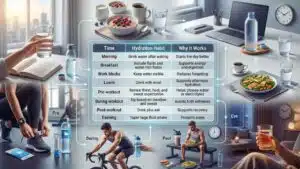
A hydration workflow should be simple enough to use on busy days. Start the morning with water, especially if you train early. You do not need to overdo it. Just replace some overnight fluid loss and begin the day with a better baseline. If you drink coffee in the morning, pair it with water. This small habit helps prevent coffee from becoming your only fluid until lunch.
During work, keep water visible. This is one of the simplest behavior tricks. If the bottle is hidden, you forget it. If it is beside your laptop, you drink more naturally. Choose a bottle size that helps you track without becoming obsessive. Some people like a large bottle. Others prefer refilling a smaller one. The best bottle is the one you actually use.
Drink with meals. This pairs hydration with habits you already have. Breakfast, lunch, dinner, and snacks can all become hydration anchors. Food also helps because meals bring sodium, potassium, carbohydrates, and water-rich ingredients. This is better than drinking a huge amount at night and waking up for bathroom trips. Steady intake usually feels better than panic drinking.
Before training, run a quick check. Did you drink enough today? Did you eat? Is it hot or humid? Will the workout be long? Do you usually sweat heavily? For short workouts, water may be enough. For long or sweaty sessions, electrolytes may help. After training, drink and eat. Rehydration should be part of recovery, not an afterthought.
| Time | Hydration Habit | Why It Works |
| Morning | Drink water after waking | Starts the day better |
| Breakfast | Include fluids and water-rich foods | Supports energy and digestion |
| Work blocks | Keep water visible | Reduces forgetting |
| Lunch | Drink with meal | Supports afternoon hydration |
| Pre-workout | Review thirst, heat, and sweat expectation | Helps choose water or electrolytes |
| During workout | Sip based on duration and sweat | Avoids both extremes |
| Post-workout | Drink plus eat | Supports recovery |
| Evening | Taper huge fluid intake | Protects sleep |
The best hydration plan is the one you can follow without turning it into a second job.
A 7-Day Hydration Reset for Active People
A 7-day hydration reset helps you understand your own patterns instead of copying generic rules. Day one is only observation. Track your normal fluid intake without changing it. Notice when you drink, what you drink, and when you forget. Many people are surprised to see that most of their water happens late in the day. Awareness comes first.
Day two is about body signs. Notice thirst, urine color, headaches, focus, energy, and workout comfort. Use these as clues, not perfect measurements. Day three connects hydration to meals. Drink with breakfast, lunch, and dinner. This is one of the easiest ways to improve consistency without using an app. Day four reviews workout hydration. Did you start hydrated? Did you sip during training? Did you drink and eat afterward?
Day five focuses on sweat. Notice how much you sweat, whether your clothes are soaked, whether salt marks appear, and how you feel after hot or long sessions. Day six tests electrolytes only if needed. Use them during a session that actually justifies them, such as hot training, long duration, heavy sweating, or multiple workouts. Do not test them randomly on a rest day and assume you learned much.
Day seven builds your personal routine. Decide what works for desk days, training days, hot days, long workout days, and travel days. This is where hydration becomes practical. You stop guessing and start using your own evidence. The reset does not need to be perfect. It just needs to reveal patterns.
| Day | Focus | What to Do |
| Day 1 | Baseline | Track normal fluid intake |
| Day 2 | Body signs | Notice thirst, urine color, headache, focus |
| Day 3 | Meal pairing | Drink with meals |
| Day 4 | Workout check | Review pre, during, and post-training fluids |
| Day 5 | Sweat pattern | Notice sweat amount and salt marks |
| Day 6 | Electrolyte test | Use only if sweat or duration justifies it |
| Day 7 | Personal plan | Build desk day and training day hydration routines |
Hydration improves fastest when you stop guessing.
Final Thoughts
Hydration science explained in real life is simple, but it is not simplistic. Water matters. Sweat matters. Sodium matters. Heat matters. Food matters. Your workout duration matters. Your personal sweat rate matters. Your workday habits matter too. For most active people, the best starting point is not a fancy product. It is drinking regularly across the day, eating balanced meals, noticing sweat, and adjusting when conditions change.
For short workouts, water usually does the job. For long, hot, humid, or sweaty sessions, electrolytes may help. For endurance training, hydration needs practice. For Corporate Athletes, the biggest win may be drinking earlier during the workday instead of trying to fix everything at 6 p.m.
This article connects back to Nutrition Fundamentals for Active Lifestyles because hydration is not separate from nutrition. It is one part of the same active living system. Drink enough. Do not overdrink. Replace what you lose. Use electrolytes when the session earns them.
That is practical hydration.
Frequently Asked Questions (FAQs) About Hydration Science Explained
What does hydration science explained mean?
Hydration science explained means understanding how water, sweat, sodium, electrolytes, temperature, exercise, food, and recovery work together. It goes beyond the simple idea of drinking more water. For active people, hydration needs can change based on sweat rate, heat, humidity, training length, intensity, meals, and sodium loss. This is why a fixed water rule does not work for everyone. The goal is to drink enough, replace what you lose, and avoid both dehydration and overdrinking.
How much water do active people need?
Active people need different amounts of water depending on body size, sweat rate, workout duration, heat, humidity, food intake, and health status. A person training indoors for 40 minutes will not need the same fluid plan as someone running for two hours in hot weather. A practical approach is to drink regularly, watch thirst, notice urine color, and adjust for sweat. Meals also count because food provides water and electrolytes. The best plan is personal, not copied from someone else.
Is plain water enough for fitness?
Plain water is enough for many short or moderate workouts, especially indoors and under about an hour. A short gym session, light yoga class, walking session, or mobility workout usually does not require a sports drink. Water plus regular meals often provides enough hydration support. Electrolytes become more useful when workouts are long, hot, humid, or very sweaty. Use water as the default and upgrade only when the session demands it.
Do athletes need electrolytes?
Athletes may need electrolytes when sweat loss is high, training lasts long, conditions are hot, or multiple sessions happen in one day. Sodium is especially important because it is the main electrolyte lost through sweat. Potassium, magnesium, and calcium matter too, but they are often covered by a balanced diet. Electrolyte drinks are tools, not daily requirements for everyone. The best choice depends on sweat, duration, heat, and personal tolerance.
Can you drink too much water during exercise?
Yes, drinking too much plain water during prolonged exercise can be risky. It can dilute sodium in the blood, especially during endurance activities where sweat losses are high. This is why long-distance athletes should avoid forcing fluids beyond need and should consider sodium when appropriate. This does not mean water is dangerous in normal amounts. It means hydration should be balanced. Drink according to thirst, context, and a practiced plan.
What are signs of dehydration during workouts?
Possible signs include thirst, dry mouth, dark urine, headache, dizziness, unusual fatigue, poor endurance, heavy legs, and trouble focusing. These signs can also come from poor sleep, low food intake, heat stress, illness, or overtraining. That is why context matters. If you drank very little, skipped meals, trained in heat, and sweated heavily, hydration is a likely factor. Review the whole day before blaming the workout plan.