
Have you ever woken up feeling tired, sluggish, or sick more often than you should? Many people do, and it can be scary to visit the doctor and hear words like diabetes, heart disease, or high blood pressure. These chronic diseases sneak up slowly. The good news is that you can stop them before they start. As a wellness coach, I have found some chronic disease prevention tactics that make all the difference.
We know that tobacco use, poor eating, and lack of exercise cause many health problems today. The choices you make right now shape your health for years to come. This article shares practical steps to prevent the most common chronic diseases. We will cover how to eat better, move your body, quit smoking, and manage stress.
Grab a cup of coffee, and let’s go through it together. I will show you exactly what you need to know.
Understanding Chronic Diseases
Chronic diseases develop slowly over time and stick around for years. Heart disease, cancer, diabetes, and lung disease top the list of conditions that affect millions of people. These illnesses build quietly in your body. Often, there are no warning signs.
A recent CDC update in 2025 revealed a startling reality. More than 194 million US adults, which is over 76 percent of the population, live with at least one chronic condition. Even more concerning, over 51 percent of adults reported having multiple chronic conditions.
Your lifestyle choices plant the seeds for your health tomorrow. Tobacco use increases your risk of cancer, heart disease, and lung disease significantly. Obesity ties directly to many conditions, too, making weight management a real priority.
Chronic conditions develop from a mix of factors working together. Your genes play a role, your environment shapes your risk, and your daily habits seal the deal. Limiting sodium intake is important for heart health. Reducing saturated fats can help lower the risk of issues across the board.
“Approximately 6 in 10 young, 8 in 10 midlife, and 9 in 10 older US adults report one or more chronic conditions.” – Centers for Disease Control and Prevention, 2025 Report
Regular physical activity is essential for maintaining health in nearly every age group. Now that you know how they develop, we can explore the lifestyle changes that actually stop them.
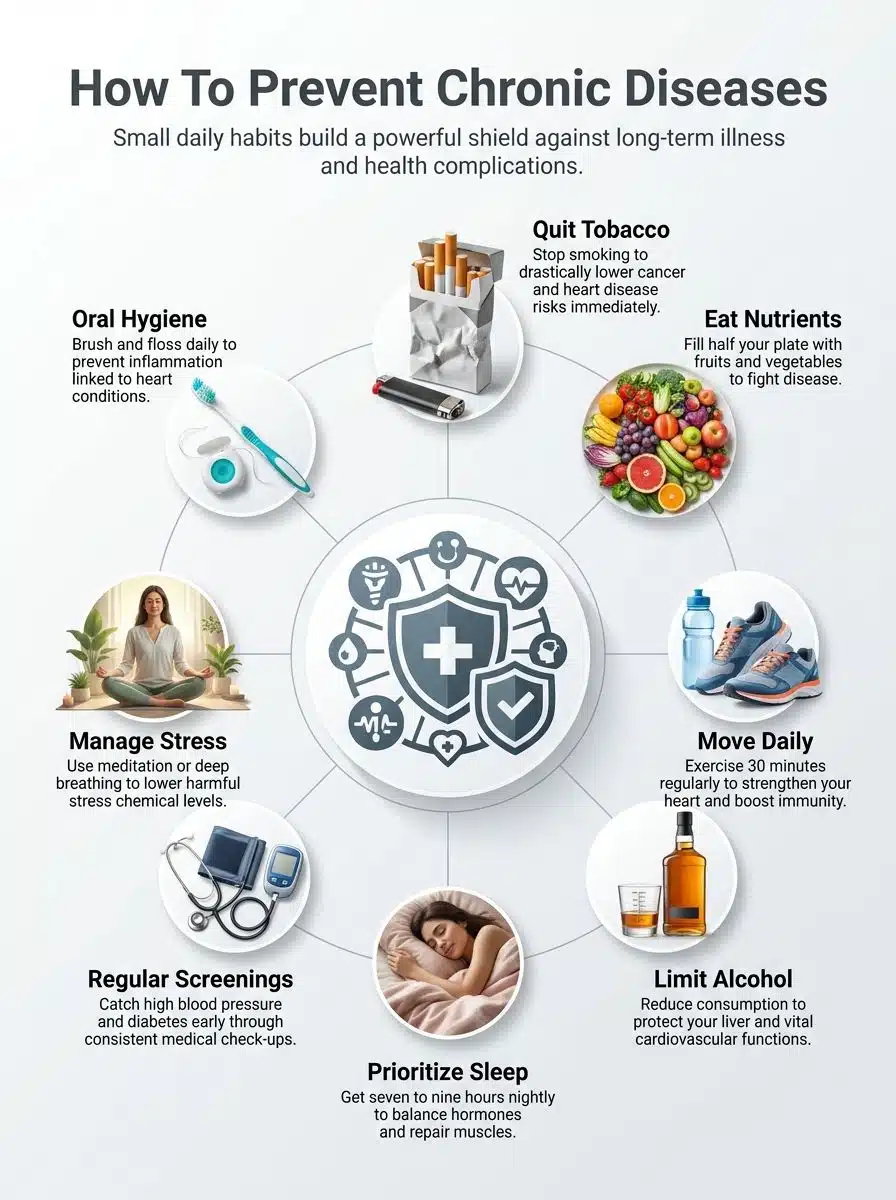
Key Lifestyle Changes to Prevent Chronic Diseases
You hold the power to stop chronic diseases before they start. Small changes in how you live today create big health wins tomorrow.
Quit Smoking and Avoid Tobacco Use
Tobacco use stands as a massive threat to your health. Quitting smoking can significantly reduce your risk of cancer, heart disease, and lung disease. Nicotine addiction grips millions of people, making cessation challenging but entirely possible.
In 2024, the adult cigarette smoking rate in the US fell to a historic low of 9.9 percent. This is fantastic news, but quitting remains tough. The CDC reported that while most adults who smoke want to quit, less than one in ten actually succeed each year.
The secret to success is getting the right help. Many folks on the r/stopsmoking Reddit forum emphasize that going “cold turkey” rarely works for the long term. Using an FDA-approved medication along with behavioral counseling provides the very best chance of quitting successfully.
- Try FDA-approved aids: Nicotine patches or prescription medications double your chances of success.
- Seek counseling: Combining medication with expert advice is the gold standard for quitting.
- Avoid secondhand smoke: Protecting yourself and those around you matters greatly for lung health.
Your body starts healing within minutes of smoking your last cigarette. Lung health strengthens as you stay smoke-free, giving you more energy.
Maintain a Healthy and Balanced Diet
Your diet shapes your health more than almost anything else you do. Fruits and vegetables pack your meals with nutrients that fight disease. Whole grains give your body fiber and energy without the crash that comes from refined carbs.
The new 2025-2030 Dietary Guidelines for Americans offer incredibly clear advice on this topic. Their main tagline is simply to “eat real food” while avoiding highly processed items. The guidelines strongly recommend limiting added sugars to less than 10 grams per meal.
They also flipped the old food pyramid on its head. The focus is now on high-quality proteins and healthy fats. Eating balanced meals means combining protein, healthy fats, and carbs at each sitting. The new guidelines recommend aiming for 1.2 to 1.6 grams of protein per kilogram of body weight each day.
- Focus on whole foods: Limit highly processed, packaged, and ready-to-eat items.
- Watch the added sugar: Check labels to ensure your meals stay under that 10-gram limit.
- Prioritize quality protein: Include a variety of sources like beans, poultry, seafood, and eggs.
- Stay hydrated: Drink water throughout the day instead of sugary drinks.
Mixing different colored vegetables ensures you get various vitamins and minerals. Small changes in what you eat add up to major health wins.
Engage in Regular Physical Activity
Good nutrition fuels your body, but movement makes it thrive. Physical activity transforms how you feel and function every single day. Regular exercise cuts your risk of chronic diseases significantly.
The CDC’s physical activity guidelines for adults are very specific. They recommend getting at least 150 minutes of moderate-intensity aerobic activity every week. You can easily break this down into just 30 minutes a day, five days a week.
You also need to include muscle-strengthening activities at least two days a week. These exercises, like lifting weights or doing push-ups, protect your bones as you age. Movement enhances your mental health by releasing chemicals in your brain that lift your mood.
| Activity Type | Weekly Goal | Examples |
|---|---|---|
| Moderate Aerobic | 150 minutes | Brisk walking, dancing, and swimming |
| Vigorous Aerobic | 75 minutes | Running, fast cycling, and intense sports |
| Muscle-Strengthening | 2+ days | Weightlifting, resistance bands, push-ups |
Adding movement into your daily routine makes fitness feel like a natural part of living. Staying active supports your wellness by improving sleep quality, digestion, and energy levels. Walking, swimming, cycling, or dancing all count as valuable forms of fitness. Start small, and you will build a successful habit.
Limit Alcohol Consumption
Excessive drinking acts like a thief, stealing away the health benefits you earn through exercise and good choices. Alcohol moderation reduces health risks and protects your vital organs from serious damage.
The 2025-2030 Dietary Guidelines for Americans made a major shift regarding alcohol. Previous versions stated men could have two drinks a day and women one. The new guidelines removed those specific daily limits entirely.
Now, the official advice simply urges everyone to “consume less alcohol for better health.” Health experts emphasize that drinking carries risk from the very first drink. Lowering your intake decreases the risk of developing heart disease and certain cancers.
- Zero drinks is safest: Public health experts note that no alcohol is the absolute safest choice for your health.
- Limit your frequency: Try to keep your drinks to just a few per week if you choose to consume alcohol.
- Avoid binge drinking: Having more than two drinks at one time increases your risk of injury and health issues.
Cutting back on drinks gives your body a real chance to heal and function properly. Making this change today means protecting your future self from preventable illnesses.
Get Enough Sleep
Your body needs sleep like a car needs fuel. Seven to nine hours of quality sleep each night keeps your immune function strong and your stress levels low. Poor sleep habits open the door to serious problems like heart disease, diabetes, and obesity.
During sleep, your brain clears out toxins, your muscles repair themselves, and your hormones balance out. Fatigue from lack of sleep makes you reach for unhealthy foods. This creates a downward spiral that feeds chronic conditions. Good sleep hygiene starts with a few simple, actionable steps.
- Set a regular bedtime and wake time, even on the weekends.
- Keep your bedroom cool, dark, and quiet to promote deep rest.
- Put away phones and screens an hour before bed. Blue light disrupts your natural sleep rhythm.
- Avoid caffeine after 2 PM and skip heavy meals right before sleep.
Your sleep habits shape your health trajectory. Stress management works hand in hand with solid sleep patterns to protect your long-term wellness.

Importance of Preventive Health Screenings
Catching health problems early makes a massive difference in your life. Regular screenings catch diseases before they turn serious.
Regular Health Check-ups
Your doctor acts as your health detective. They spot problems before they turn into big trouble. Health screenings identify risk factors before symptoms ever appear.
The US Preventive Services Task Force (USPSTF) regularly updates their screening guidelines to keep people safe. For example, in their 2025 updates, they strongly recommend breast cancer screenings via mammography every two years for women aged 40 to 74. Early detection of conditions like cancer and heart disease saves lives.
Your doctor will measure your blood pressure during visits to catch hypertension early. Blood tests reveal cholesterol levels, blood sugar, and other important markers. Preventive screenings also catch prediabetes when lifestyle changes can still reverse the condition.
“Early detection through routine screening stops disease progression and heavily reduces your need for expensive hospital care.”
A standard medical evaluation includes checking your weight and calculating your body mass index. Regular check-ups create a strong relationship with your doctor, making you more likely to stay engaged in your care.
Early Detection of Risk Factors
Spotting health problems early is like catching a small leak before it floods your house. Preventive health screenings catch risk factors before they turn into serious conditions. Your doctor runs tests that show what might go wrong down the road.
The USPSTF also recently lowered the recommended age for colorectal cancer screenings. They now recommend all adults begin screening at age 45. Catching these issues early means you can take fast, effective action.
Early intervention leads to much better management of your health. You stop small problems from becoming big ones. Risk assessment tells you which conditions you are most likely to face based on your family history.
- Check your blood pressure: Catching hypertension early protects your heart and kidneys.
- Monitor your blood sugar: A simple A1C test can warn you about prediabetes.
- Schedule cancer screenings: Follow the USPSTF timeline for colonoscopies and mammograms.
Intervention at the exact right moment can change everything about your health story. Wellness starts with knowing exactly what you are up against.
Managing Stress for Better Health
Stress acts like a silent thief that steals your health one day at a time. Chronic stress increases your risk of heart disease and other serious health issues. Your body releases harmful chemicals when you feel stressed out.
These chemicals damage your heart, blood vessels, and organs over time. According to the American Psychological Association, high stress levels are a major contributor to sleep loss and poor dietary choices. Meditation and mindfulness practices calm your nervous system fast.
Apps like Headspace or Calm offer guided ten-minute sessions that you can do right from your phone. Many users report that doing just one quick session a day lowers their resting heart rate. Exercise is also an incredibly powerful stress fighter.
| Stress Relief Method | Time Required | Expected Benefit |
|---|---|---|
| Deep Breathing | 5 minutes | Lowers immediate anxiety and heart rate |
| Brisk Walking | 15 minutes | Releases endorphins and clears the mind |
| Guided Meditation | 10 minutes | Reduces cortisol levels over time |
A nutritious diet enhances your mood and energy, giving your brain the fuel it needs. You can build resilience against daily pressures by practicing relaxation exercises daily. Getting enough rest each night helps your mind process stress and recover effectively.
Oral Health and Its Link to Chronic Diseases
Your mouth is a gateway to your whole body. Poor oral hygiene triggers systemic inflammation that spreads throughout your system. This creates a chain reaction that damages your cardiovascular health.
Gum disease is central to this major problem. The CDC notes that nearly half of adults aged 30 and older in the US have some form of periodontal disease. People with periodontal disease face a 28 percent higher likelihood of developing cardiovascular conditions.
When your gums bleed, harmful bacteria enter your bloodstream. These bacteria travel to your heart and contribute to the formation of arterial plaque. This process can ultimately lead to a heart attack or stroke.
- Brush your teeth twice a day with a fluoride toothpaste to remove daily plaque.
- Floss every single night. Brushing alone misses the bacteria hiding between your teeth.
- Visit your dentist every six months for a professional cleaning and evaluation.
- Quit using tobacco products, as they rapidly accelerate gum disease progression.
Nutrition and exercise work together to protect your dental health as well. A nutritious diet strengthens your teeth while reducing your risk of diabetes. Managing your teeth prevents complications that diabetes and heart disease can trigger.

Role of Family History in Chronic Disease Prevention
Your genes load the gun, but your lifestyle pulls the trigger. Family history strongly shapes your risk for heart disease, diabetes, and certain cancers. If your parents faced these conditions, you carry a higher chance of developing them too.
This genetic predisposition does not seal your fate. Understanding your family health history gives you a clear roadmap to take action early. Talk to your relatives about their health struggles and write down what diseases run in the family.
The US Surgeon General offers a free digital tool called “My Family Health Portrait” to help you organize this information easily. Sharing this organized data with your doctor becomes a critical tool for early detection. Doctors can watch you more closely and catch problems much sooner.
- Record ages of diagnosis: Knowing when a relative got sick helps your doctor schedule your screenings.
- Track both sides of the family: Gather medical details from both your maternal and paternal relatives.
- Share with siblings: Make sure your brothers and sisters have access to this vital health data.
Maintaining a healthy diet cuts through genetic disadvantages incredibly well. Physical fitness routines build real resilience into your system. A person with a family history of diabetes who exercises daily can often prevent the disease entirely.
Community and Public Health Initiatives
Your community shapes your health choices every single day. The food available at your local store and the parks in your area dictate your habits. Public health programs work hard to remove barriers and make healthy living easier.
Access to Healthy Foods and Safe Spaces for Exercise
Many people live in areas where fresh fruits and vegetables feel like a luxury. Community initiatives work hard to change this reality. Programs like SNAP-Ed bring nutrition education and access to healthy foods directly to underserved neighborhoods.
These programs stock local markets with nutritious options. They make it easier for families to eat well without traveling far. Public health advocates push for diets low in sodium and added sugars to prevent serious illness.
Safe spaces for exercise transform neighborhoods into places where people want to move. Parks, community centers, and walking trails give families spots to be active without fear or expense. Physical activity rapidly reduces risk factors for obesity and heart disease.
“Initiatives that combine healthy food access with safe exercise opportunities create powerful, lasting results for community health.”
These combined efforts work together perfectly. Schools, local organizations, and government agencies partner to build these spaces. Managing stress becomes much easier when people have safe places to walk, run, or play outdoors.
Education on Preventive Health Measures
Education programs in your community give you the power to make smart choices. Learning about prevention helps you avoid serious illnesses entirely.
Community outreach workers teach people how tobacco use raises the risk of lung disease. Health awareness campaigns show exactly why a diet rich in vegetables keeps your body strong. Nutritional guidance from local programs helps you limit saturated fats.
- Wellness education classes: Learn why regular physical activity is crucial for your well-being.
- Tobacco cessation programs: Get real, local support when you decide it is time to quit smoking.
- Disease prevention workshops: Learn to spot the early warning signs of a heart attack or stroke.
- Healthy cooking demos: Discover how to make affordable, nutritious meals for your family.
Lifestyle modification classes show you how small changes add up. Community education connects you with resources that make healthy living much easier. Taking advantage of these local programs is a massive step toward long-term wellness.
The Future of Chronic Disease Prevention
Technology and medicine continue to change how we stop illnesses. Smart devices and new breakthroughs give us better tools to catch problems fast.
Digital Tools and Wearable Technology
Wearable devices track your physical activity levels and push you to move more. Smartwatches and fitness bands monitor your heart rate and steps with impressive accuracy.
In 2024, the FDA approved the Apple Watch “AFib History” feature as a qualified medical device tool. This feature estimates how frequently a user shows signs of an irregular heartbeat. Users can share this specific data directly with their doctors to monitor atrial fibrillation risk.
Mobile applications provide personalized reminders for medication, so you never miss a dose. Data from wearables identify patterns in your behavior. This allows doctors to create health interventions tailored just for you.
| Digital Tool | Primary Function | Health Benefit |
|---|---|---|
| Smartwatches | Tracks heart rate and ECG | Detects irregular rhythms early |
| Fitness Trackers | Counts steps and active minutes | Encourages daily movement |
| Nutrition Apps | Logs daily food and sugar intake | Maintains diet accountability |
Digital tools assist in smoking cessation by tracking your progress and providing motivation. Virtual health platforms enable remote consultations with professionals right from your couch. These innovations put powerful health information exactly where you need it.
Advancements in Preventive Medicine
Technology now helps doctors catch diseases before they even begin to cause symptoms. Screening technologies have gotten much better over the past decade. Doctors can spot risk factors earlier than ever before.
Early detection absolutely saves lives and reduces heavy treatment costs. Preventive medicine focuses intensely on stopping illness before it takes hold. This approach works perfectly because it stops problems right at the source.
- Advanced imaging: New scanning techniques spot early signs of cancer with greater clarity.
- Genetic testing panels: Doctors can pinpoint your precise risk for hereditary conditions.
- Blood biomarker tests: Simple lab tests now reveal early indicators of heart disease and Alzheimer’s.
Public health strategies now heavily emphasize education and resources. Hospitals show patients how small choices lead to massive health wins. Insurance companies now cover many preventive screenings at no cost to you.
Disease management drastically improves when people catch problems early. Risk assessment tools help identify who needs the most help. The future of preventing chronic conditions looks incredibly bright.
Final Words
You now hold the keys to preventing chronic diseases. The path forward is simpler than you might think. Quitting tobacco, eating nutritious foods, moving your body, and sleeping well form a powerful shield against illness.
Your doctor can spot problems early through regular check-ups. Managing stress and caring for your teeth add wonderful layers of protection. Community programs and new health technology make these steps easy to follow.
Your future health depends completely on the choices you make right now. Start today, because the best time to prevent a chronic condition is before it starts. You have the tools to live a long, vibrant life.
Frequently Asked Questions (FAQs) on Chronic Disease Prevention
1. What are the most common chronic diseases, and how can I avoid them?
Heart disease, diabetes, and lung conditions affect about 6 in 10 American adults, according to the CDC. You can lower your risk by eating more fruits and veggies, moving your body most days, skipping tobacco, and keeping stress under control.
2. Can changing my eating habits really prevent long-term illnesses?
Yes, swapping junk food for whole grains and fresh produce makes a real difference. Studies show that people who eat a Mediterranean-style diet cut their heart disease risk by about 30%.
3. How does exercise play a role in stopping chronic diseases?
The American Heart Association recommends at least 150 minutes of moderate activity each week to keep your heart strong and blood sugar steady. Even a daily 20-minute walk around your neighborhood counts and helps protect you.
4. Is managing stress important for preventing these conditions?
Absolutely. Chronic stress raises your cortisol levels, which, over time, can increase inflammation and weaken your immune system. Try deep breathing or talking with someone you trust; it costs nothing and can be just as helpful as medication.