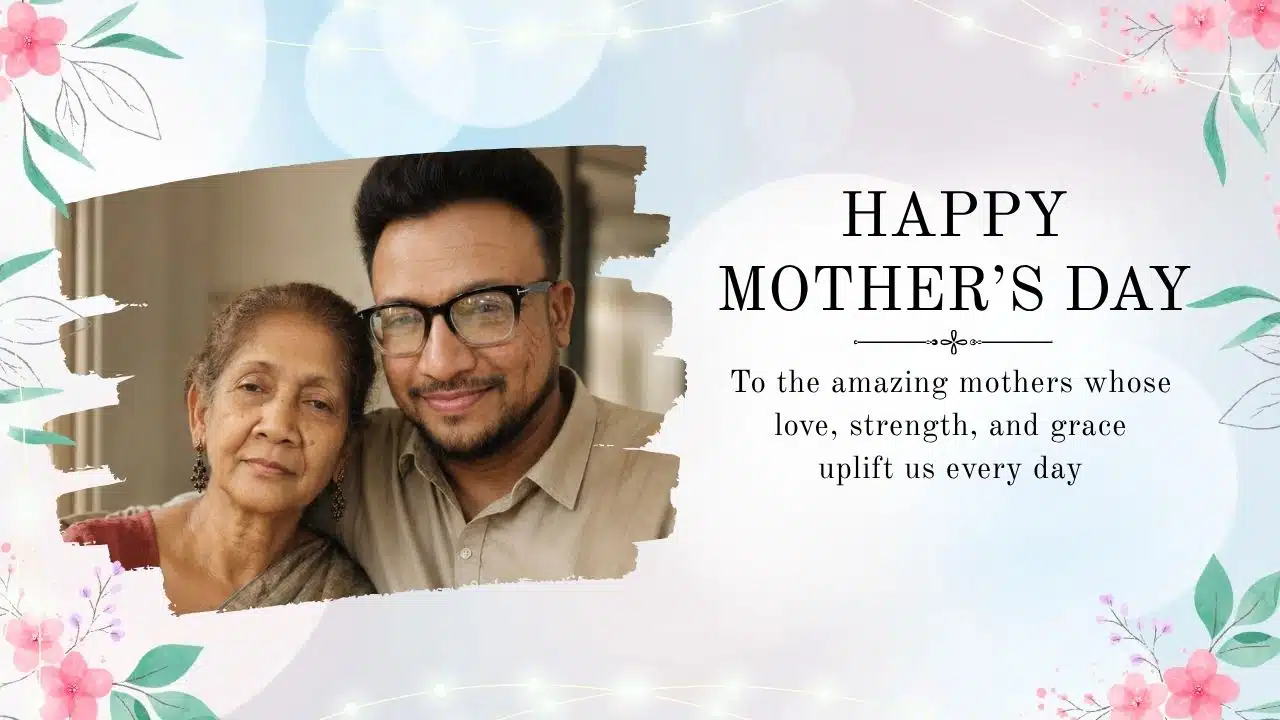
There’s a woman in Dhaka who has been waiting for me to come home for as long as I can remember. She is 63 now. She has more illnesses than I want to count. And still, every evening, she stands in our kitchen, listening for the sound of the door, deciding whether to reheat the rice or wait a little longer.
She is my mother. And the longer I live, the more I realize that everything I know about being a decent human being, I learned by watching her—not by listening to lectures she never gave.
This Mother’s Day, I want to write down five of those lessons. Not because I have mastered any of them. But because writing them down feels like the smallest possible thank-you for a debt I will never be able to repay.
1. Love is sometimes annoying. That is how you know it is real
My mother calls me too many times a day. She asks if I have eaten. She asks again twenty minutes later. She worries about traffic, about weather, about my forgetting to wear something warm on a mildly cool evening.
For years, I found it tiresome. Now I understand: this is what love looks like when it has nowhere else to go. After my father passed, I became her world. Her caring is not interference. It is the muscle of someone who has decided, every single day, that another person’s well-being matters more than her own. The annoyance is the proof.
2. Sacrifice is quietest when it is greatest
My mother used to sing. She sang well—well enough that there was a real path open to her, music lessons, a life that could have unfolded around that gift. She gave it up. For family. For us.
I have never once heard her speak of it with bitterness. Not once. She does not bring it up at family gatherings as a wound. She does not weaponize it during arguments. The sacrifice was made, and then it was simply put down, like a heavy thing carried into another room and quietly set on the floor.
This is the lesson: real sacrifice does not announce itself. It just changes the shape of a life and asks nothing in return. With limited resources, she always picked the best for us—and the leftovers for herself, without ever calling it that.
3. Showing up is the entire job
When my sister and I were small, my mother woke before the sun. She cooked breakfast. She got us ready for school. She did this for years — thousands of mornings — without applause, without overtime, without a single thank-you that came close to being enough.
She still does it. At 63, she looks after my three nephews. She cooks everything. She is, somehow, always the one in the kitchen, always the one with the answer, always the one who knows where the medicine is and which child does not like onions.
I have never — not once — seen her refuse a task asked of her. Not when she was tired, not when she was sick, not when no one would have blamed her for saying no.
Most of life, I have come to believe, is just showing up, again and again, when you do not feel like it. She taught me this without ever saying it.
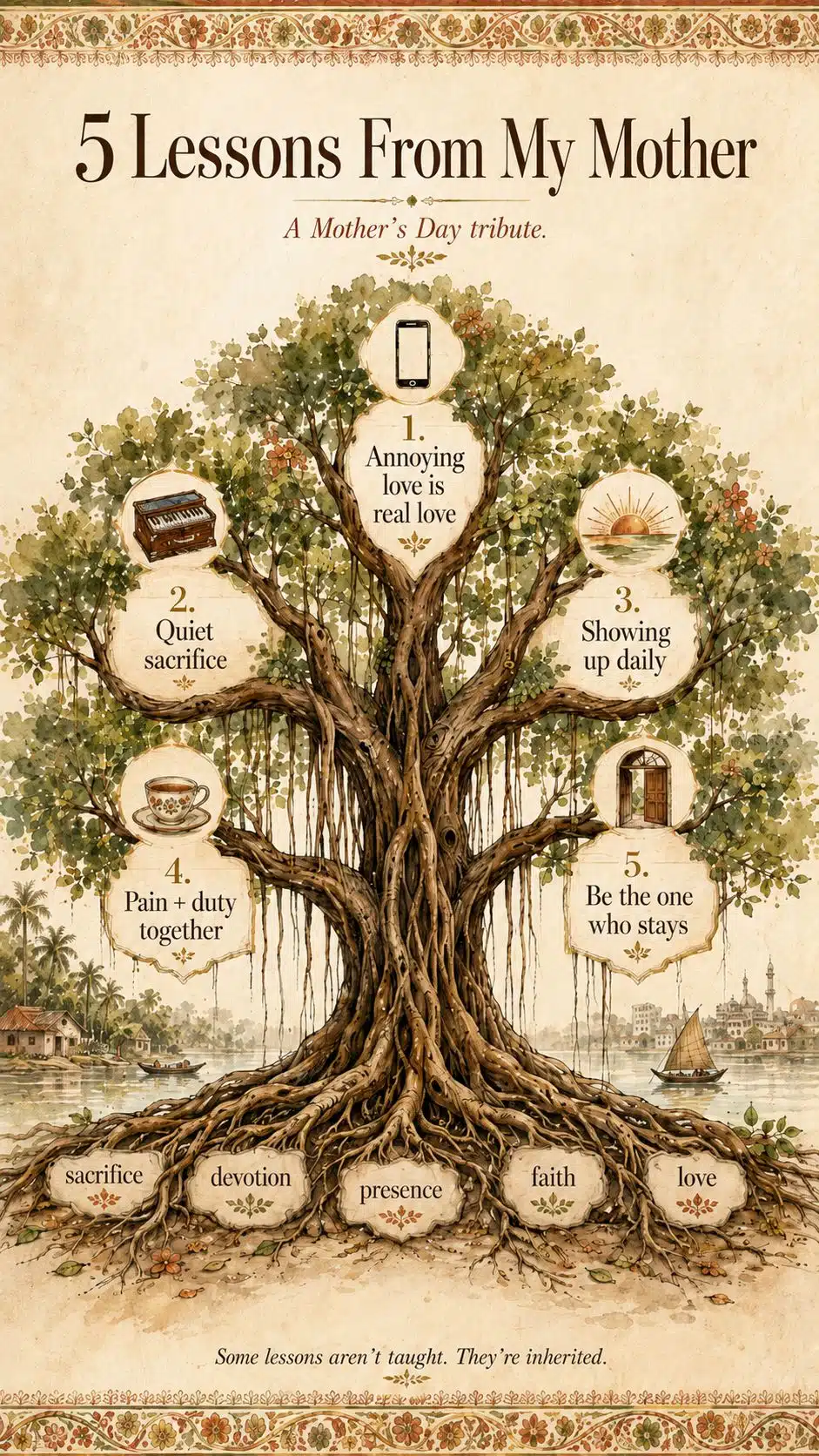
4. Pain is real. Duty is also real. They can live in the same body
My mother has carried suffering most people would buckle under. She lost her husband. She has chronic illnesses that she manages quietly, in the background of everyone else’s day. She has lived through harder years than I will ever fully know about.
None of it has ever stopped her.
I used to think strength meant not feeling pain. Watching her, I have learned the opposite: strength is feeling everything and still walking into the kitchen at six in the morning to make tea for someone you love. She is not unbreakable. She is something better — she is faithful. To her people, to her routines, to the small daily decencies that hold a household together.
When I have been sick, she has been there at the bedside. When I have been well, she has been there at the door. The constancy of it is almost supernatural. She is the magician of our family—the one who keeps making meals appear, making children laugh, and making rooms feel safe—while quietly carrying weights I am only beginning to see.
5. Be the person who is there when no one else is
This is the one I think about most.
My mother is the person who stays. Who shows up to answer the phone, who remembers the birthday and who cooks for the relative no one else wants to host. When everyone has reasons—good reasons, reasonable reasons—to be elsewhere, she is still there.
I want to inherit this. I am trying. It is harder than I expected. The world rewards being clever, being busy, and being important. It does not particularly reward being available. But I have watched, my whole life, what being available actually does for the people around you. It is not glamorous. It is everything.
Final Words
There is no neat ending to a tribute like this. My mother is still here, still cooking, still calling, still waiting at the door for me to come home for dinner. I am lucky in a way many people reading this on Mother’s Day are not, and I do not take it lightly.
If your mother is still within reach, call her. Annoy her back. Ask her about something she gave up so you could have what you have. Eat the food she cooked even if you are not hungry.
Ma, if this ever finds its way to you, thank you. For the music you set down so we could rise. For the mornings. For the waiting. For being the magician of our family.
I am still learning from you. I always will be.