You know how one label says “plant-based” and another says “non-toxic,” yet neither tells you whether it is safe around kids, pets, or asthma triggers? If you are weighing Non-Toxic Cleaning: DIY Recipes Vs. Store Bought Green Brands, the real choice is not “homemade vs. store,” it is what risk you are willing to manage yourself, and what you want tested for you.
Here is the plan: we will define “non-toxic” in practical terms, walk through safer DIY recipes, review the labels and certifications that matter in the US, then compare cost, convenience, transparency, and environmental impact so you can build a routine you will actually keep.
What Does Non-Toxic Cleaning Mean?
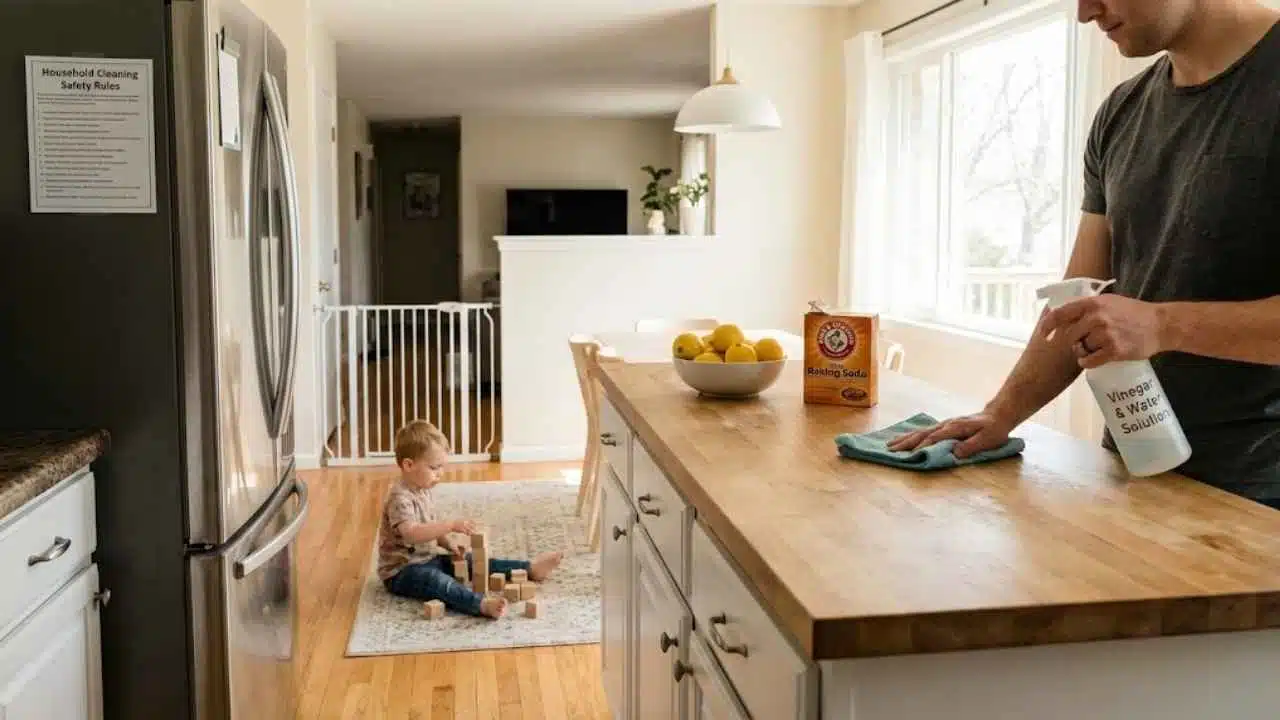
In everyday use, “non-toxic cleaning” means you are choosing products and methods that reduce poisoning risk, harsh fumes, and skin or eye irritation, while still getting reliable cleaning results.
In the US, “non-toxic” is not a single regulated standard for all household cleaners, so you need a working definition that helps you decide quickly.
America’s Poison Centers reports that in 2024, poison centers managed 87,031 cases involving household cleaning substances in children age 5 and under, which is why safe storage and simple formulas matter as much as “natural” ingredients.
Here is a practical definition you can use at home:
- Lower-toxicity formula: avoids high-risk ingredients and reduces the chance of injury if you use it as directed.
- Lower-fume use: you can clean without triggering headaches or breathing irritation, with normal ventilation.
- Clear handling rules: you know what surfaces it is safe on, how to dilute it, and how to store it away from kids and pets.
- Right tool for the job: “cleaning” removes dirt and germs from a surface, “disinfecting” is a separate step when you truly need it.
The CDC notes that in most situations, cleaning with soap and water can remove most germs, and disinfecting is usually most important when someone is sick or has recently visited.
One more important point: “natural” does not automatically mean “safe.” Borax is a common example, it comes from mineral sources, but it can still be harmful if swallowed and should be handled like any other household chemical.
DIY Recipes for Non-Toxic Cleaning
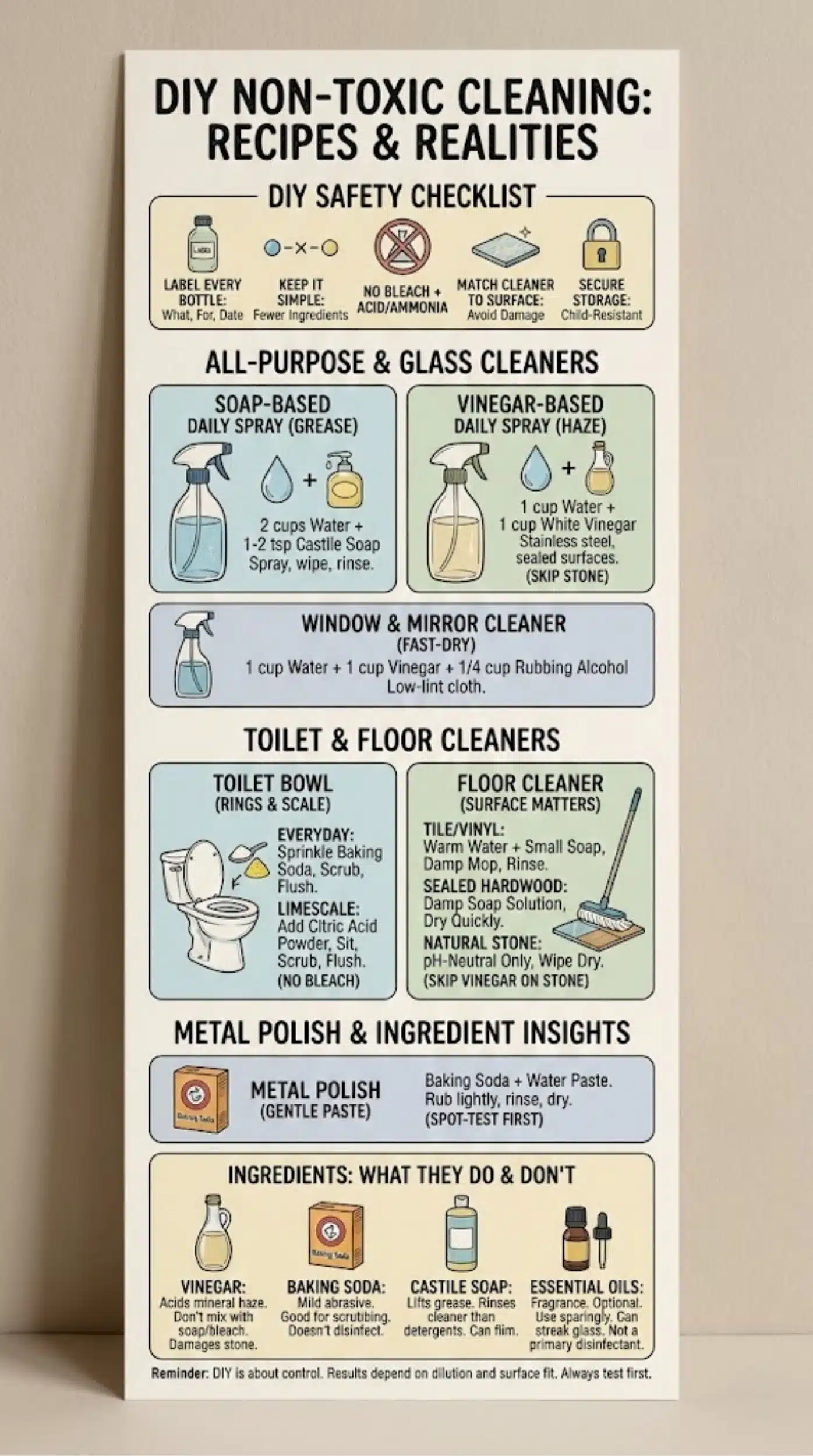
DIY recipes can be a smart move when you want ingredient control and low waste, and your cleaning needs are mostly everyday dirt, grease, and odors.
The tradeoff is that you become the formulator. That means your results depend on dilution, surface fit, and safe storage.
Use this simple DIY safety checklist before you make anything:
- Label every bottle: what it is, what it is for, and the date you mixed it.
- Keep formulas simple: fewer ingredients usually means fewer reactions, fewer allergens, and fewer “mystery failures.”
- Do not mix cleaners: especially anything with bleach, ammonia, or strong acids.
- Match the cleaner to the surface: acids can damage natural stone and some finishes.
- Store like it matters: use child-resistant storage habits, not “out of reach on the counter.”
All-Purpose Cleaner
This is the cleaner most people use the most, which is exactly why it should be boring, predictable, and safe to store.
One pro detail that saves a lot of frustration: do not combine vinegar and true soap (like Castile soap) in the same bottle. The mixture can curdle and leave a film, so use either a soap-based spray or a vinegar-based spray, not both at once.
- Soap-based daily spray (best for grease): mix 2 cups water with 1 to 2 teaspoons liquid Castile soap in a spray bottle. Spray, wipe, and rinse if the surface feels slick.
- Vinegar-based daily spray (best for mineral haze): mix 1 cup water with 1 cup white vinegar. Use on stainless steel and many sealed surfaces, but skip natural stone.
- Scrub booster: sprinkle baking soda on stuck-on grime, then scrub with a damp cloth. Use the fizz trick only as a mechanical lift, not as “extra strength chemistry.”
- Essential oils are optional: if you use them, keep it to a few drops per bottle and store the bottle like it is a fragrance concentrate, because it is.
- Storage rule: store all sprays in a labeled container area that kids cannot access, and keep triggers set to “off” if your bottle has that feature.
Window and Mirror Cleaner
Glass is a performance test. If the formula leaves streaks, you will stop using it.
Two details that change results fast: use a low-lint cloth (microfiber or a coffee filter), and use distilled water if you have hard water buildup.
- Fast-drying glass spray: mix 1 cup water, 1 cup white vinegar, and 1/4 cup rubbing alcohol in a spray bottle. Label it, and keep it away from heat or flames.
- For heavy grime: wash first with warm water plus a small amount of Castile soap, then do a second pass with the vinegar spray for the final shine.
- Avoid “too much oil” on glass: essential oils can streak, so skip them on windows and mirrors unless you are comfortable experimenting.
- Commercial shortcut: if you buy, look for EPA Safer Choice, Green Seal, or UL ECOLOGO on glass cleaners so you get tested performance plus clearer ingredient standards.
- Ventilation still matters: “nontoxic” does not mean “no fumes,” especially in small bathrooms.
Toilet Bowl Cleaner
Toilets bring two different problems: mineral scale and germs. You often need two different approaches.
For scale, acids help. For true disinfection, follow a disinfectant label, and never improvise mixtures.
- For everyday rings: sprinkle baking soda in the bowl, scrub, then flush. This is a low-fume option that still works for routine grime.
- For limescale: use citric acid (commonly sold as a powder). Add it to the bowl, let it sit, then scrub and flush. Wear gloves because acids can irritate skin.
- Do not mix bleach with acids: Poison Control notes that mixing bleach with an acid can release chlorine gas, which can irritate eyes and lungs and can become dangerous fast in a closed bathroom.
- Store-bought option: peroxide- or citric-acid-based bathroom cleaners can be a good middle ground when you want tested performance without harsh bleach fumes.
- Skip Borax in kid or pet homes: it is not worth the storage risk when baking soda and citric acid cover most needs.
Floor Cleaner
Floors are where “non-toxic” becomes real, because kids and pets live close to them.
The surface matters more than the brand. A cleaner that is safe for tile can quietly damage hardwood or natural stone over time.
| Floor type | DIY approach that usually fits | Common “don’t” |
|---|---|---|
| Sealed tile or vinyl | Warm water + a small amount of Castile soap, mop damp, then rinse | Over-soaping (it leaves a dull film that attracts dirt) |
| Sealed hardwood | Water lightly dampened with a pH-neutral soap solution, then dry quickly | Vinegar solutions that can dull finishes over time |
| Natural stone (marble, limestone, travertine) | pH-neutral cleaner only, wipe and dry | Vinegar or lemon-based mixes that can etch stone |
- Microfiber wins: it lifts grit with less chemical and less water, which helps floors dry faster.
- Choose certified products for high-traffic floors: Green Seal and UL ECOLOGO standards are commonly used in commercial settings where performance and repeat use matter.
- Pet and kid rule: keep the area off-limits until the floor is fully dry, even with mild cleaners.
Metal Polish
Metal polishing is where DIY often goes wrong, not because it is unsafe, but because it is too abrasive.
If you are polishing plated finishes, brushed stainless, or coated hardware, gentle beats aggressive.
- Gentle paste for tarnish: mix baking soda with enough water to form a paste. Rub lightly with a soft cloth, rinse, then dry to prevent water spots.
- For stainless fingerprints: a few drops of Castile soap in warm water often beats scrubbing. Wipe with the grain, rinse, and dry.
- Spot-test first: many modern fixtures have coatings that can haze if you use acids or abrasives.
- For stubborn mineral haze: use a vinegar wipe only if the metal is acid-safe, then rinse and dry right away.
- Store-bought option: a certified metal cleaner can be worth it when the finish is expensive or hard to replace.
Next, let’s get specific about the ingredients that show up in DIY cleaners and what they can, and cannot, do.
Key Ingredients in DIY Cleaners
DIY cleaning works best when you treat ingredients like tools, not like “healthy by default” substances.
These are the most common natural ingredients, what they are good at, and the mistakes that waste time or create avoidable risk.
Baking Soda
Baking soda (sodium bicarbonate) is a mild abrasive and deodorizer. It shines when the problem is stuck-on grime or odor.
- Best uses: sink scrubs, stovetop spots, deodorizing trash cans, freshening carpets before vacuuming.
- How to use: make a paste with water for scrubbing, or sprinkle dry for deodorizing.
- Common pitfall: it can scratch delicate surfaces, so avoid acrylic, soft plastics, and some glossy finishes.
- Better than the bubble hack: use baking soda to scrub first, then rinse, then use vinegar if you need to dissolve mineral residue.
Vinegar
White vinegar is an acid, which is why it works so well on mineral buildup and soap scum.
- Best uses: glass shine, descaling faucets, removing hard water spots, deodorizing some surfaces.
- Skip it on: marble, limestone, travertine, and other acid-sensitive stone, plus some wood finishes.
- Do not treat it as a disinfectant label replacement: it can be useful for cleaning, but “disinfecting” has specific label and testing expectations.
- Never mix with bleach: keep vinegar and bleach in separate routines, separate bottles, and separate storage areas.
Castile Soap
Castile soap is a true soap made from vegetable oils. It is great for lifting greasy dirt when used in the right dilution.
One detail many people miss: soap can struggle in hard water and can leave a film if you use too much.
- Best uses: greasy counters, stovetops, and general wipe-down cleaning where rinsing is possible.
- Hard-water tip: if you keep seeing haze or residue, use less soap and rinse more, or consider a plant-based detergent like Dr. Bronner’s Sal Suds for tough grease.
- Do not mix with vinegar in the bottle: the mixture can separate and leave an oily film. Use them in separate steps if you need both.
- Fragrance-free option: unscented formulas are often the easiest win for sensitive households.
Essential Oils
Essential oils can add scent and small functional benefits, but they also introduce allergy risk, and they are concentrated.
The ASPCA warns that concentrated tea tree oil can cause serious health issues for pets, even from small exposures, so treat essential oils like you would any other potent household product.
- Use them only if you have a reason: if you just want “clean smell,” consider fragrance-free cleaning and a separate ventilation plan.
- Keep amounts small: a few drops per bottle is plenty for scent.
- Never apply oils to pets: store oils and diffusers where pets cannot tip them, lick them, or walk through spills.
- Skin safety: avoid undiluted contact, wash hands after mixing, and stop using if anyone gets irritation.
Store-Bought Green Cleaning Brands
Store-bought green products are useful when you want consistent performance, clearer directions, and less trial-and-error.
You also get stability. A commercial product is formulated to sit on a shelf, survive temperature swings, and still behave the same way when you use it.
Where people get tripped up is assuming “green” always means “safe for everyone.” Scent intensity, preservatives, and surface compatibility still vary by product.
Certifications to Look For
Certifications matter because they replace vague marketing with a defined standard and third-party review.
- EPA Safer Choice: the EPA says it reviews every ingredient in a product and conducts annual audits, and it also requires ingredient disclosure in a way that is intended to be easy for consumers to find.
- Design for the Environment (DfE) logo: this EPA logo applies to certain antimicrobial products like sanitizers and disinfectants that meet DfE criteria and pesticide registration requirements.
- Green Seal: Green Seal standards cover both human health and environmental impact, and they also include performance requirements for certain cleaning categories.
- UL ECOLOGO: UL ECOLOGO standards for cleaning products set multi-attribute criteria that can include human health and environmental requirements, not just one single claim.
- USDA Certified Biobased Product: this label tells you the product has a verified percentage of biobased content, but it does not automatically mean the product is low-toxicity.
If you want one fast rule: use certifications to narrow the list, then read the fragrance and use-direction details to confirm the product fits your household.
Examples of Popular Green Brands
The brands below show up widely in US stores, and each fits a slightly different “job to be done.” The key is to buy by task, not by vibe.
| Brand example | Where it tends to fit | What to watch |
|---|---|---|
| Method | Everyday sprays for kitchens and quick wipe-downs | Some versions are strongly scented, so test if fragrance is a trigger |
| Seventh Generation | Fragrance-free options and peroxide-based cleaners | Check whether a product is a cleaner, a sanitizer, or a disinfectant |
| Mrs. Meyer’s Clean Day | Good cleaning performance with signature scents | Fragrance can be intense for sensitive households |
| Ecover | Dish and laundry categories in many retailers | Confirm surface compatibility, especially for specialty finishes |
| Dr. Bronner’s | Concentrates like Castile soap and Sal Suds for flexible dilution | Over-dilution and overuse can leave residue, measure lightly |
If you prefer low-waste packaging, also look at refill and tablet-style brands sold in the US, such as Blueland, Cleancult, and ECOS, and evaluate them the same way: task, certification, scent, and directions.
Non-Toxic Cleaning: DIY Recipes Vs. Store Bought Green Brands, A Side-by-Side Comparison
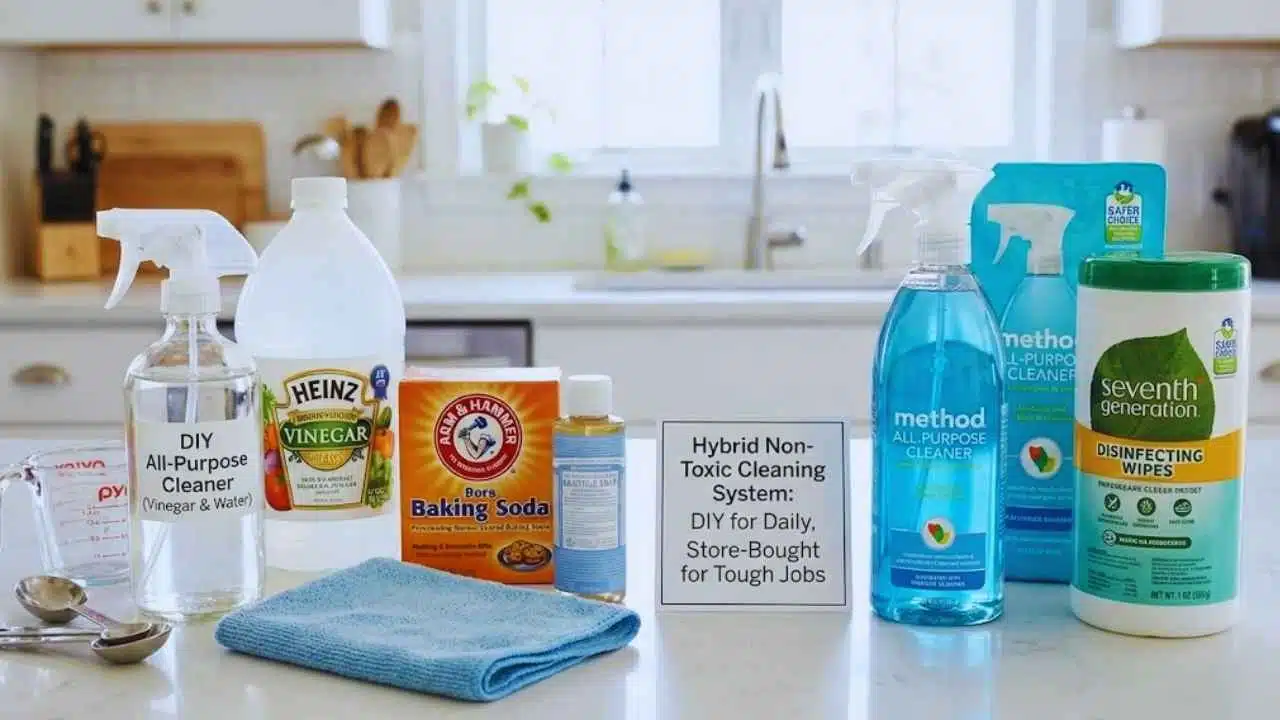
This section puts the decision on rails. You will rarely pick only one approach, most homes do best with a simple hybrid.
Cost Effectiveness
DIY usually wins on cost per bottle because vinegar, baking soda, and diluted soap stretch far.
Store-bought often wins on “cost per outcome,” meaning you spend more, but you save time, avoid failed mixes, and get predictable performance.
As of January 2026, big-box US retailers list Method all-purpose cleaner (28 fl oz) at about $4.86, and Seventh Generation disinfecting cleaner (23 fl oz) at about $4.99, which is a useful benchmark for deciding whether your DIY time is worth it.
- Use DIY for: daily wipe-downs, odors, light grease, and simple glass cleaning.
- Use store-bought for: disinfecting needs, tough bathroom scale, and surfaces where damage would be expensive.
Ingredient Transparency
DIY gives you perfect transparency because you made it. The gap is that you may not know the hazards or surface limits of every ingredient, especially fragrances and “strong vinegar” products.
Store-bought transparency varies. The best versions make ingredients easier to find and connect to a real standard.
- What to look for on bottles: full ingredient disclosure, a credible seal (EPA Safer Choice, Green Seal, UL ECOLOGO), and clear use directions.
- What to be skeptical of: vague phrases like “clean ingredients” without a seal, and heavy fragrance that can mask irritation risk.
Convenience
Convenience is not laziness. It is what determines whether your routine sticks.
| If you want… | DIY tends to fit | Store-bought tends to fit |
|---|---|---|
| Fast daily maintenance | One soap spray, one glass spray | Ready-to-use sprays with consistent results |
| Less measuring | Pre-mix small batches only | Buy concentrates or refills to cut packaging |
| Fewer “what did I mix?” moments | Use strict labeling and single-purpose bottles | Use products with clear directions and safety labeling |
Environmental Impact
DIY can reduce packaging waste because you reuse bottles and buy a few staple ingredients.
Store-bought can still be a strong environmental choice when you pick concentrates, refills, and certified formulas that consider aquatic toxicity, safer ingredients, and packaging design.
- DIY environmental win: fewer single-use bottles, fewer specialty products.
- Store-bought environmental win: certified standards, refill systems, and consistent performance that avoids “double cleaning.”
Tips for Choosing the Right Option for You
Non-toxic cleaning is easier when you stop trying to pick one “perfect” method and build a small system that fits your home.
- Start with your risk areas: kitchens, bathrooms, and floors. Choose the simplest safe cleaner for each.
- Use DIY where failure is low-stakes: counters, glass, and routine wipe-downs.
- Buy when you need certainty: disinfecting tasks, stubborn scale, and expensive surfaces like natural stone.
- Choose certifications, then confirm fit: look for EPA Safer Choice, Green Seal, UL ECOLOGO, or the EPA DfE logo for certain antimicrobials, then check scent and directions.
- Protect kids and pets with process: label bottles, store them securely, and keep floors and wet surfaces off-limits until dry.
- Do not mix products: keep acids, bleach, ammonia-based products, and disinfectants in separate routines.
- Build a small “cleaning stack”: one soap-based cleaner, one glass cleaner, one bathroom descaler, and one certified disinfectant for sick days.
Final Thoughts
This guide walked through DIY recipes, store-bought green brands, and the real-world tradeoffs between them: safety, cost, transparency, convenience, and environmental impact.
If you take one thing from Non-Toxic Cleaning: DIY Recipes Vs. Store Bought Green Brands, make it this: choose the mildest tool that solves the problem, and reserve disinfecting products for the moments you truly need them.
Landed on a hybrid routine, simple homemade cleaners for daily use, and a short list of certified green products for the jobs where testing and consistency matter. Start small, label everything, and you will feel the difference fast.