
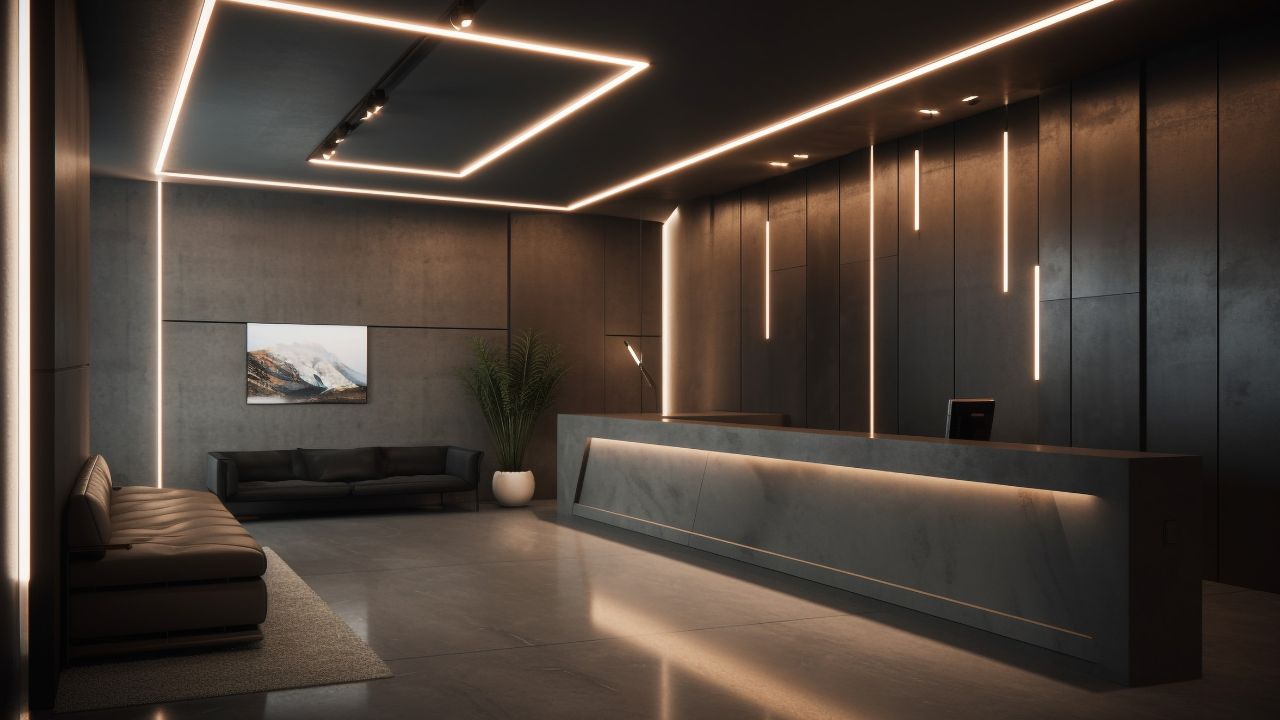
The ceilings I find most appealing are usually the ones I notice the least. There are no oversized fixtures competing for attention and no unnecessary elements breaking up the surface. The room simply feels cleaner and more organised.
This is where Wipro Consumer Lighting offers an interesting way to think about ceiling design. Different lighting formats can either blend into the architecture or sit neatly against it, allowing the light to do its job without making the ceiling feel crowded.
Minimal Does Not Have to Mean Plain
A minimalist ceiling still needs enough light to make the room comfortable and functional. The challenge is achieving that without filling the ceiling with visually heavy fixtures.
For me, three things make the biggest difference:
- Simple forms that do not dominate the ceiling
- Thoughtful placement instead of adding fixtures wherever there is space
- Consistent lighting that makes the overall arrangement feel intentional
The aim is not to remove lighting from view completely. It is to make every fixture feel like it belongs there.
Surface Lights Keep Things Simple Without Structural Changes
Not every home has a false ceiling, and I do not think a minimalist lighting plan should depend on having one.
Surface-mounted lights sit directly on the ceiling rather than needing a recessed cavity. Wipro also recommends surface ceiling lights for spaces where false ceilings are not feasible, particularly because they can maintain a compact, clutter-free appearance.
That makes ceiling lights without false ceiling useful when the goal is a clean finish without adding another architectural layer.
They can work particularly well when:
- the existing ceiling needs to remain intact,
- ceiling height is limited,
- a flush appearance is preferred, or
- broad, even illumination is the priority.
The important part is choosing a design that stays visually close to the ceiling rather than making the fixture itself the main feature.
Downlights Create a Different Kind of Minimalism
Downlights take the idea further when a recessed installation is possible.
Instead of placing a visible fixture over a large part of the ceiling, downlights can become small points within the overall layout. That gives the ceiling more uninterrupted visual space.
I find them particularly useful when the lighting needs to perform different roles.
Some downlights can provide general illumination, while more directional options can draw attention towards artwork, furniture or architectural details. A spotlight ceiling light, for example, makes more sense when the intention is to focus light rather than spread it equally across the room.
This creates hierarchy without requiring a large decorative fixture.
The Grid Matters More Than the Number of Lights
One mistake I would avoid is assuming that a minimal ceiling simply needs lots of small lights instead of a few large ones.
Too many fixtures can make even the smallest downlights look busy.
A cleaner plan starts by asking:
- Where is general illumination actually required?
- Which areas need stronger task lighting?
- Is there anything that deserves focused attention?
- Can some parts of the ceiling remain visually quiet?
Once those questions are answered, the lighting layout begins to follow the room rather than forming an arbitrary grid.
That is what makes minimalism feel deliberate rather than empty.
Surface Lights and Downlights Solve Different Problems
I would not treat these two formats as interchangeable.
Surface lights are especially practical where recessed installation is unavailable. Downlights, on the other hand, integrate more deeply into ceilings designed to accommodate them.
The difference can be understood quite simply:
- Surface lights: clean appearance with minimal structural intervention
- Recessed downlights: greater visual integration when a false ceiling is available
- Directional downlights: focused illumination for selected areas or features
A home can therefore use the format that suits its architecture rather than changing the architecture simply to accommodate a particular fixture.
Clean Design Still Depends on the Quality of Light
The appearance of the fixture is only one part of a minimalist ceiling.
The light itself needs to feel balanced.
Good LED ceiling lights should support the room without creating uncomfortable pools of excessive brightness or leaving other areas noticeably dark. The placement, spread of light and purpose of each fixture matter just as much as its shape.
For rooms without recessed ceilings, the Wipro Garnet Rimless CCT Surface Panel is one relevant example. Wipro describes the surface-panel format as sitting close to the ceiling, while this model also offers selectable colour temperatures.
The product works here because it supports the larger design idea: useful illumination without requiring a visually elaborate ceiling.
Minimalist Lighting Is Really About Restraint
I do not think a clean ceiling is created by choosing the smallest possible fixtures.
It comes from knowing what does not need to be added.
Well-planned LED ceiling lights can provide the necessary illumination while surface-mounted options make ceiling lights without false ceiling practical for simpler interiors. Where recessed installation is possible, downlights can keep much of the ceiling visually uninterrupted.
Even a spotlight ceiling light can fit into a minimalist scheme when it has a clear reason to be there.
For me, that is the real principle behind minimal ceiling design: every light should serve a purpose, and nothing should feel unnecessary.