

In today’s rapidly evolving world, why is sustainable technology important has become a pressing question for industries, governments, and individuals alike.
As environmental concerns grow, adopting sustainable technology is no longer optional but essential for ensuring a balanced and thriving future.This article delves into the significance of sustainable technology, its wide-ranging impacts, and the benefits it offers to businesses, society, and the environment.
The Growing Importance of Sustainable Technology
Sustainable technology, also known as green or clean technology, refers to innovations and practices designed to minimize negative environmental impacts, conserve resources, and promote long-term ecological balance. These technologies aim to address urgent environmental and social concerns by encouraging environmentally friendly behaviors, resource conservation, and reduced environmental damage.
The green technology and sustainability market is experiencing rapid growth, reflecting the increasing recognition of its importance. According to Vantage Market Research, this market is projected to reach $44.4 billion by 2028, up from $10.9 billion in 2021. This substantial growth underscores the growing demand for sustainable solutions across various sectors.
Key Reasons Why Sustainable Technology is Important
Environmental Protection and Resource Conservation
One of the primary reasons sustainable technology is crucial is its role in environmental protection and resource conservation. By implementing sustainable technologies, we can:
- Reduce greenhouse gas emissions
- Conserve natural resources
- Minimize pollution and waste
For instance, renewable energy technologies like solar and wind power help decrease reliance on fossil fuels, a significant source of carbon emissions. Additionally, sustainable technologies promote efficient use of resources, helping to conserve water, minerals, and other essential materials for future generations.
Economic Benefits and Cost Savings
Sustainable technology offers significant economic benefits and cost savings for businesses and individuals:
- Energy efficiency: Sustainable technologies often lead to reduced energy consumption, resulting in lower utility bills.
- Waste reduction: Implementing sustainable practices can lower disposal costs and improve resource uutilization
- Long-term savings: While initial investments may be higher, sustainable technologies often result in significant cost savings over time.
Enhanced Brand Reputation and Market Differentiation
Adopting sustainable technology can significantly improve a company’s brand reputation and differentiate it in the market:
- Consumer preference: 70% of shoppers believe brands should be sustainable and environmentally responsible, presenting an opportunity for companies embracing sustainable practices.
- Investor attraction: Companies with high Environmental, Social, and Governance (ESG) scores are more likely to attract long-term investors.
- Competitive advantage: Sustainable practices can set businesses apart in crowded marketplaces, attracting environmentally conscious customers.
Social Benefits and Quality of Life Improvements
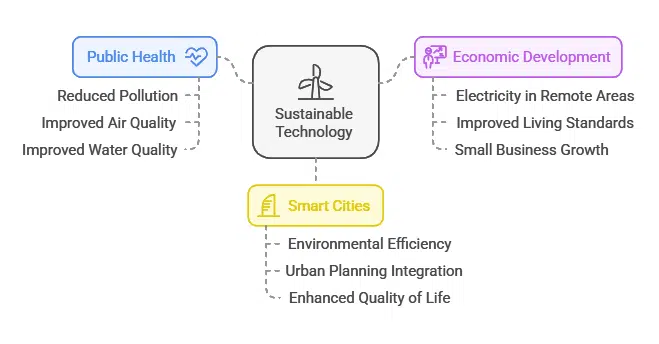
Sustainable technology contributes to various social benefits and improvements in quality of life:
- Public health: Eco-friendly technologies help reduce pollution, leading to improved air and water quality.
- Economic development: Sustainable technologies can bring electricity to remote areas, improving living standards and enabling small business growth.
- Smart cities: The integration of sustainable technologies in urban planning can enhance environmental efficiency and overall quality of life for residents.
Impact of Sustainable Technology Across Industries
Sustainable technology is transforming various sectors, driving innovation and sustainability:
Energy Sector
The energy sector has seen significant advancements in sustainable technology:
- Renewable energy: Solar, wind, and other renewable sources are reducing reliance on fossil fuels.
- Smart grids: These systems optimize energy distribution and reduce waste.
- Energy storage: Improved battery technologies are making renewable energy more reliable and accessible.
Agriculture
Sustainable technology is revolutionizing agriculture:
- Precision farming: IoT sensors and AI are optimizing resource use and crop yields.
- Vertical farming: This technique reduces land use and water consumption while increasing food production.
- Sustainable irrigation: Advanced systems minimize water waste and improve crop health.
Transportation
The transportation sector is embracing sustainable technologies:
- Electric vehicles: EVs are reducing carbon emissions and dependence on fossil fuels.
- Sustainable public transport: Cities are implementing eco-friendly public transportation systems.
- Smart traffic management: AI-powered systems are reducing congestion and emissions.
Construction and Architecture
Sustainable technology is reshaping the built environment:
- Green buildings: Sustainable construction techniques and materials reduce environmental impact.
- Smart building systems: IoT-enabled systems optimize energy use and improve occupant comfort.
- Sustainable materials: Eco-friendly building materials reduce carbon footprints and improve indoor air quality.
Challenges and Future Outlook
While the benefits of sustainable technology are clear, several challenges remain:
- Initial costs: The upfront investment for some sustainable technologies can be high, deterring adoption.
- Technological limitations: Some sustainable technologies are still in development and may have limitations in efficiency or scalability.
- Regulatory hurdles: Inconsistent policies and regulations can hinder the widespread adoption of sustainable technologies.
Despite these challenges, the future of sustainable technology looks promising. As of 2024, nearly 60% of surveyed companies expect emerging technologies to play a vital role in accelerating sustainability. This growing recognition of sustainable technology’s importance is driving innovation and investment across industries.
The Imperative of Embracing Sustainable Technology
The importance of sustainable technology cannot be overstated in our current global context. As we face unprecedented environmental challenges, sustainable technology offers a path towards a more sustainable and resilient future. By reducing environmental impact, driving economic growth, and improving quality of life, sustainable technology is not just an option but a necessity for businesses, governments, and individuals alike.
The statistics speak for themselves:
- The green technology and sustainability market is projected to grow from $20.90 billion in 2024 to $105.26 billion by 2032, exhibiting a CAGR of 22.4%.
- 48% of companies in the corporate realm are employing sustainability to enhance innovation and productivity.
- The recycling of e-waste, a crucial aspect of sustainable technology, is a growing industry valued at approximately £43 billion in 2019 and projected to reach around £50 billion by 2026.
As we move forward, embracing and investing in sustainable technology will be crucial for addressing climate change, conserving resources, and creating a more sustainable world for future generations. The importance of sustainable technology lies not just in its environmental benefits but in its potential to reshape our economies, improve our societies, and secure a more sustainable and prosperous future for all.
Takeaways
Why is sustainable technology important cannot be overstated. It holds the key to tackling environmental challenges, conserving resources, and fostering economic growth. Embracing sustainable technology is not just about protecting the planet—it’s about creating a better future for everyone. The time to act is now.





















