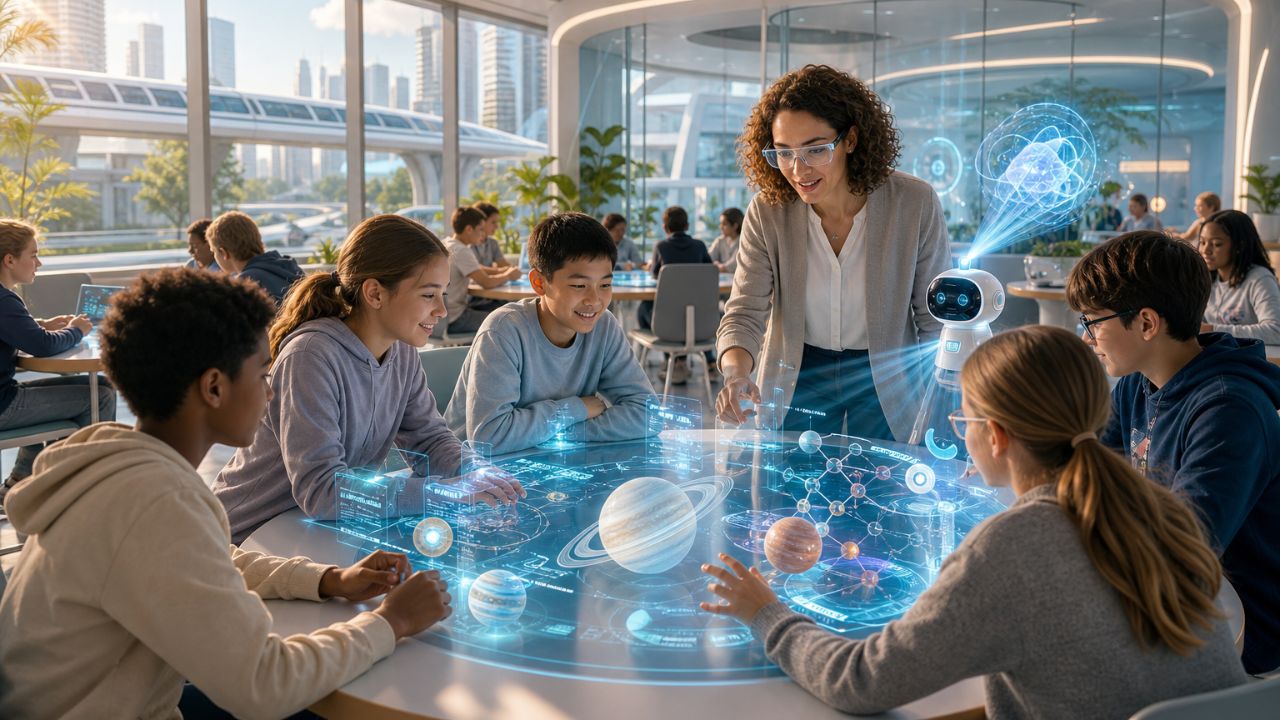
Do you feel that today’s classes lock kids into one pace, leaving them bored or lost? What Education Looks Like In 2030 shares that by 2030, school buildings will feel like coworking hubs with VR headsets, AR labs, and adaptive learning software for real-time progress checks.
You will learn how AI, virtual learning tools, and data analytics craft personalized learning, boost soft skills and critical thinking, and make remote learning engaging. Ready to peek ahead?
How AI Enables Personalized Education
AI sifts through quizzes, essays, and class data in real time, with machine learning spotting each student’s weak spots like a hawk zeroing in on prey. It then tweaks every lesson on modern learning management systems so students soar ahead at their own pace.
What Are AI-Powered Adaptive Learning Platforms?
Adaptive learning software runs on portable computing devices, using predictive analytics and data visualization dashboards to spot gaps in student skills. It tweaks lessons and content pacing in real time, so each learner moves along a path made just for them.
This system uses intelligent tutoring systems and machine learning algorithms to power project-based learning modules and remote learning sessions that match each learner’s pace.
Students log into the learning management system on their school-issued computing device for easy access to personalized learning.
Educators will guide students through customized tracks generated by the platform, shaping education in 2030. AI tutors, one of the main applications of artificial intelligence, will step in when a learner needs extra help, delivering on-demand support that adapts as fast as a tutor in a one-on-one session.
Personalized learning moves faster than traditional methods, boosting efficiency in a classroom that values both formal instruction and online learning. Schools will embed these adaptive algorithms into daily instruction by 2030, blending human capital and digital tools to spark creativity and teamwork.
How Can Real-Time Data Analytics Track Student Progress?
AI engines collect quiz scores and time stamps in real time. A data dashboard shows progress at each step. Teachers adapt lessons on the spot when a learner misses a key concept. Student pace and accuracy feed machine learning models to guide the next challenge.
A handheld LMS sends instant alerts to teachers and children in remote learning sessions. These insights drive personalized learning for children in education in 2030.
Game elements like badges and points motivate learners to stay on track. Students compare badges on a class leaderboard in project-based learning tasks. Analytics record social-emotional check-ins and flag stress signals.
A chatbot runs short polls after each lesson. Schools send custom progress notes to parents via a mobile app. This real-time feedback shapes the future of learning and supports hybrid work skills.
Enhancing Learning through Immersive Technologies
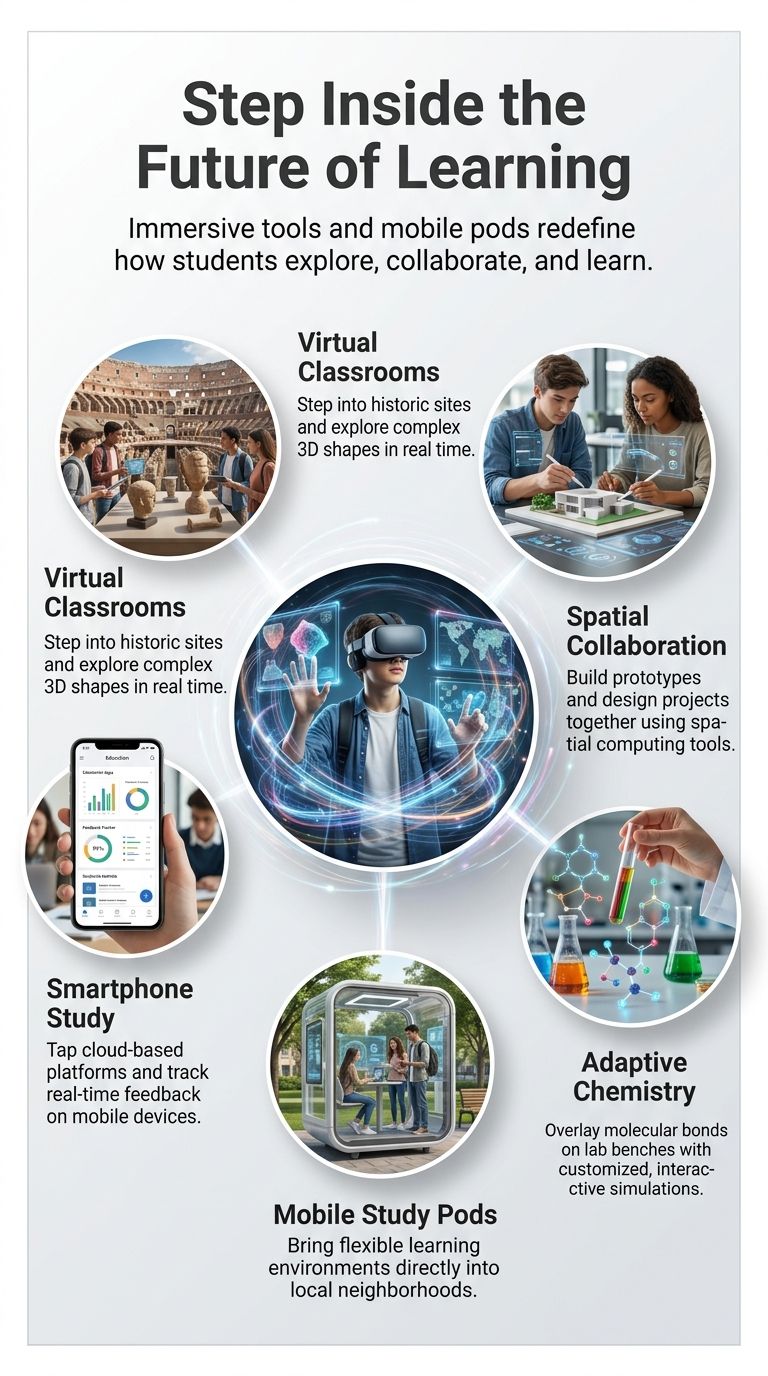
Visor devices toss students into ancient Rome and let them haggle with traders under marble arches. Portable study pods slip into backpacks, sense focus shifts, and swap in puzzles that match each learner’s mood.
How Does VR and AR Make Learning Interactive?
By 2030, VR, AR, and mixed reality will be standard in classrooms. Smart mixed reality glasses and VR headsets bring lessons to life. Math problems turn into floating 3D shapes. History lessons transform into walking tours of ancient Rome.
Students grab virtual tools and build 3D prototypes in maker spaces. These projects meet goals in project-based learning and remote learning. Collaborative designs emerge in real-time, aided by spatial computing platforms and voice-controlled assistants.
Augmented reality apps overlay data on physical objects. In chemistry classes, tablets show molecular bonds on lab benches. Each simulation customizes itself to student skill levels with personalized learning software.
Teachers track progress on dashboards via real-time analytics. Learners pick topics and explore scenarios on demand. Some tackle urban planning while others stage science fairs in flexible labs.
Hands-on work boosts engagement and readies students for the global workforce.
What Are Mobile Learning Pods and How Do They Add Flexibility?
Mobile learning pods roll into neighborhoods like ice cream trucks, but for lessons. They plug into cloud-based platforms on smartphones, so students stream videos and track grades.
Nearly 50% of learners already tap phones to study, and pods make this trend official. Classrooms shrink to mobile hubs with flexible seating and dynamic environments.
These pods power personalized learning anywhere. Students swap quick chats on social channels for peer support and real-time feedback. Teachers push quizzes through a mobile learning management system on smartphones.
Seats shift in minutes to suit project-based learning or career and technical programs. This model widens income equality and eases staff turnover, fuelling economic growth.
What Will Be the Role of Educators in 2030?
Educators will steer each learner with a learning portal and an AI analytics tool, shaping lessons to fit how they grasp ideas. They will lead activity packs, spark tough questions, and coach students in empathy through mindset circles.
How Will Educators Facilitate Personalized Learning Paths?
Students pick topics that spark their curiosity and career goals. Teachers act as coaches and curriculum designers; they set up adaptive learning software to match each student’s pace and style.
Dashboards on cloud servers give instant progress reports. Daily schedules shrink by 30% to carve out more project-based learning time.
Instruction teams use dashboards to track remote learning results and adjust lessons in a snap. Coaches use adaptive learning software and cloud analytics to spot gaps and offer supplemental instruction.
They mentor kids toward skills in CTE, vocational training, and leadership roles in commerce. Personalized learning paths feel less like chores and more like custom-fit journeys.
How Can Teachers Foster Critical Thinking and Emotional Intelligence?
In education in 2030, teachers craft project-based learning tasks with real-world cases, local volunteer work, or simulation labs. These spark curiosity and deep thinking. Teachers guide students in debates, coding sprints, or design challenges, so learners build problem-solving, collaboration, and emotional intelligence skills.
Educators embed social-emotional learning into daily lessons. They open class with reflection circles, peer feedback sessions, and mindfulness breaks to boost resilience and adaptability.
They lean on AI-driven adaptive platforms to track moods and engagement, then tweak personalized learning pathways for skill growth and learner well-being.
How Is Traditional Education Expanding Its Boundaries?
Schools stretch beyond brick walls; they use pop-up campuses in shopping centers, and they partner with makerspaces and local labs. This blend of formal classes with meet-ups at cafés lets students earn micro-credentials and community badges on real tasks.
What Are Community-Based Educational Hubs and Pop-Up Campuses?
Community hubs let towns shape education in 2030. WeWork-style spaces offer flexible seating, a maker space, and an engineering lab. Students tackle project-based learning tasks in small groups.
Local businesses host internships on site.
Schools hire private tutors, host remote learning classes, and mix in hands-on workshops. Mobile learning pods roll into parks and malls; they deliver lessons in fields and labs. Pop-up campuses fit near libraries, co-working venues, and business centers.
These venues adapt to each community, fueling personalized learning, career and technical education, and the future of learning.
How Do Informal and Formal Learning Experiences Merge?
Formal classes and home labs share credit in education in 2030. Learning analytics platforms track hiking trips and coding sprints alike. Portfolios show school grades, project-based learning badges, and remote learning scores.
Students log mentorship hours, field trips, and internships in e-portfolios. AI tutors flag skill gaps, and teachers adjust plans for personalized learning paths.
Local firms team with schools to offer real tasks through interdisciplinary projects. VR headsets and virtual labs open new sites for skill building. Project modules mix math with carpentry on factory floors.
Summer workshops earn credits just like fall semester. Educators sum informal hours from camps or at-home labs for fair admissions. This blend makes the future of learning lively and hands-on.
What Education Looks Like in 2030?
Project-based learning will blend with digital literacy, driving teamwork through cloud platforms and data analytics dashboards. Immersive wearables and digital ledgers will back each skill, whether students learn at home or on campus.
Why Is STEM and Digital Literacy Emphasized?
Schools will ramp up STEM and digital literacy by 2030. Digital learning platforms and mobile devices will serve most lessons in a modern learning environment. Engineering labs and maker spaces will host hands-on projects in programming, automation systems and data analysis.
Educators will blend these topics into project-based paths and career and technical education.
Adaptive learning software will build digital skills alongside core content, shaping the future of learning. Machine learning platforms will track progress in real time, guiding each path to fit personal goals.
Many learners will choose distance learning or CTE tracks over four-year degrees, responding to changes in the job market. Employers will prize tech fluency from employees in a global market.
How Is Social-Emotional Learning and Well-being Prioritized?
Mentors guide students through group challenges and hands-on projects. Project-based learning and teamwork build emotional intelligence. Teachers craft tasks that test resilience and adaptability.
Personalized learning plans track academic growth and well-being through LMS dashboards. Mobile apps record social-emotional scores along with grades. Students gain more autonomy and choice, boosting confidence and self-management.
Educators measure social-emotional outcomes along with test scores. A unified platform logs life skills and personal interest projects. Remote learning uses video sessions to check in on emotions.
AI-driven analytics alert teachers to struggling moods. Peer support groups meet in community hubs. This mix of SEL software, LMS tools and teacher coaching taps personalized learning and future of learning trends.
Gratitude circles open days with smiles and shared laughter.
Final Words
Future schools will look more like coffee shops than rows of desks. Educators will act as coaches who spark curiosity. AI-driven analytics and project-based learning will guide study paths.
Immersive technology such as virtual reality and augmented reality headsets will bring textbooks to life. Students will pick skills, not just facts, and own their learning. This change will spark fresh ideas, train for unknown jobs, and lift a global community.