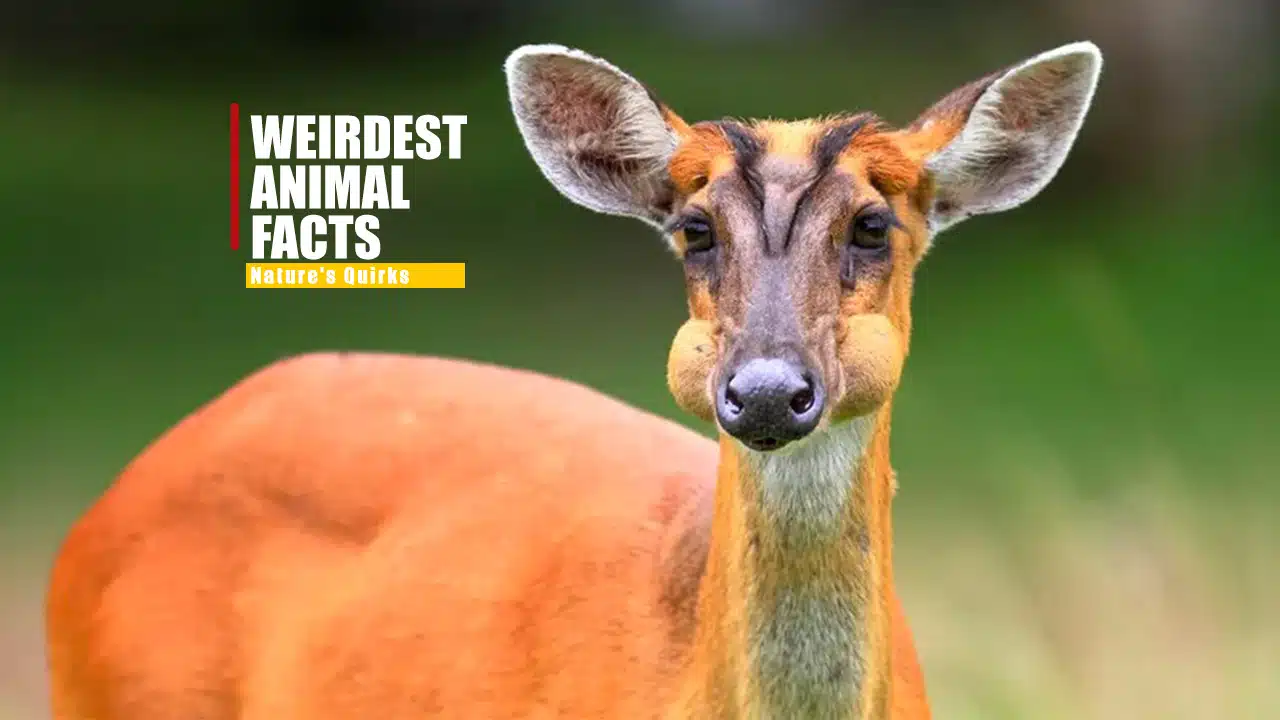
Nature is full of surprises. From the deepest oceans to the highest mountains, animals have evolved some truly bizarre traits and behaviors. This article will explore 15 of the weirdest animal facts that showcase nature’s quirky side.
Get ready to be amazed by the strange and wonderful world of animals!
Weirdest Animal Facts
The animal kingdom is vast and diverse, home to countless species with unique adaptations. While many of these adaptations serve clear survival purposes, some seem downright weird to human observers. These odd traits and behaviors remind us that evolution can take unexpected paths, resulting in creatures that often defy our expectations.
In this article, we’ll dive into 15 of the strangest animal facts you’ve probably never heard before. From immortal jellyfish to blood-sweating hippos, nature’s oddities will surprise and delight you. Let’s explore these fascinating quirks that make the animal world so wonderfully weird.
1. The Immortal Jellyfish
Imagine living forever. For the Turritopsis dohrnii, also known as the immortal jellyfish, this isn’t just a dream – it’s reality. This tiny jellyfish, no larger than your fingernail, has the amazing ability to reverse its aging process.
When faced with danger or stress, the immortal jellyfish can revert to its juvenile polyp stage. It’s like a butterfly turning back into a caterpillar. This process, called trans differentiation, allows the jellyfish to start its life cycle all over again. Theoretically, this cycle can repeat indefinitely, making the jellyfish biologically immortal.
Scientists are studying these jellyfish closely. They hope to unlock the secrets of their ‘immortality’ and apply this knowledge to human medicine, potentially revolutionizing our understanding of aging and regeneration.
2. The Platypus: Nature’s Mix-and-Match Creation
The platypus looks like it was designed by a committee that couldn’t agree on anything. This Australian mammal has a duck-like bill, webbed feet, and a beaver-like tail. But that’s just the start of its weirdness.
Platypuses are one of the few venomous mammals. Males have a sharp spur on their hind feet that can deliver a painful, venom-laced wound. The venom isn’t deadly to humans, but it can cause severe pain lasting for weeks.
Perhaps the strangest thing about platypuses is that they lay eggs. They’re one of only five mammal species that do this, making them part of a rare group called monotremes. After hatching, baby platypuses (called puggles) drink milk that their mother secretes through pores in her skin, as platypuses don’t have nipples.
3. The Axolotl’s Regenerative Superpowers
The axolotl, a salamander native to Mexico, has regenerative abilities that seem like something out of a superhero comic. These aquatic creatures can regrow lost limbs, organs, and even parts of their brain and heart.
If an axolotl loses a limb, it can regrow a perfect replacement in just a few weeks. This isn’t just healing – it’s complete regeneration, right down to new bones, muscles, and nerves. They can even regenerate their spinal cord if it’s damaged.
Scientists are deeply interested in axolotls. By studying how they regenerate, researchers hope to develop new treatments for human injuries and diseases. The axolotl’s ability to regrow brain tissue is particularly exciting, as it could lead to breakthroughs in treating brain injuries and neurodegenerative diseases.
4. The Naked Mole Rat’s Pain Resistance
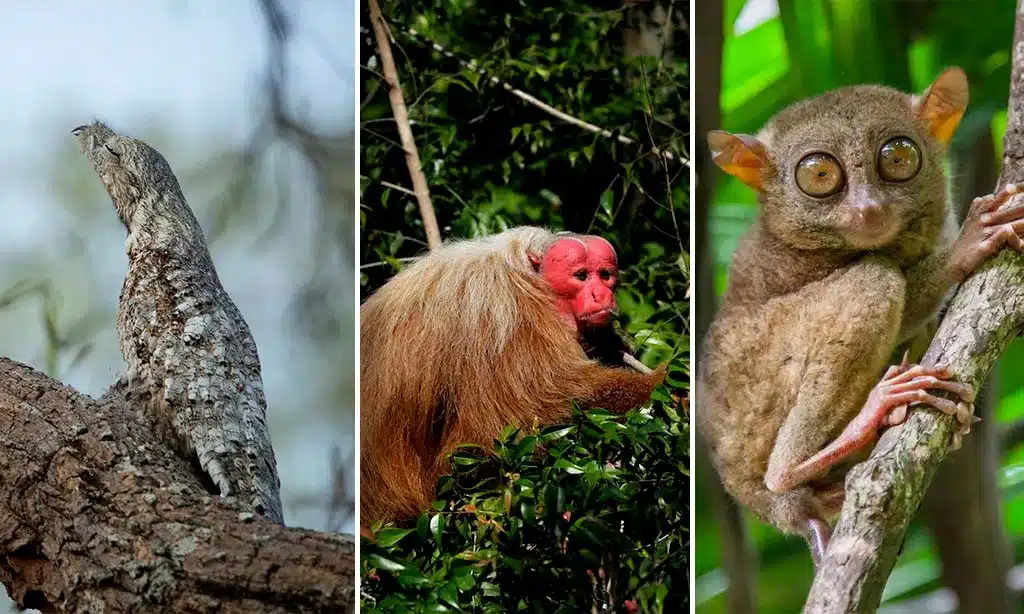
Naked mole rats might not win any beauty contests, but they have some truly remarkable traits. These wrinkly, hairless rodents are known for their resistance to cancer, but that’s not their only superpower.
Naked mole rats are almost completely insensitive to pain. They don’t feel the burn of acid or the sting of capsaicin (the compound that makes chili peppers hot). This is due to a genetic mutation that affects how their pain receptors work.
This pain resistance helps naked mole rats survive in their harsh underground environments. Scientists are studying these creatures to develop new pain medications for humans, potentially leading to more effective treatments for chronic pain conditions.
5. The Tardigrade: Earth’s Toughest Creature
Tardigrades, also known as water bears or moss piglets, are microscopic animals that can survive almost anything. These tiny creatures, usually less than a millimeter long, can withstand extreme conditions that would kill most other life forms.
Here are some of the tardigrade’s incredible survival feats:
- They can survive temperatures from near absolute zero (-272°C) to 150°C.
- They can go without food or water for up to 30 years, entering a state of cryptobiosis where their metabolism slows to 0.01% of normal.
- They can withstand pressure six times greater than that found in the deepest ocean trenches.
- They can survive radiation levels a thousand times greater than what would kill a human.
- They’ve even survived in the vacuum of space.
Scientists are studying tardigrades to understand how they achieve these feats. Their research could lead to new ways to preserve vaccines without refrigeration or protect astronauts from radiation during space travel.
6. The Pistol Shrimp’s Sonic Gun
The pistol shrimp, also known as the snapping shrimp, is a small crustacean with an oversized claw. But this isn’t just any claw – it’s a biological sonic weapon.
When the pistol shrimp snaps its claw shut, it creates a bubble that collapses with such force that it produces a sound reaching 218 decibels. That’s louder than a gunshot! The collapsing bubble also creates a flash of light and temperatures nearly as hot as the sun’s surface.
The pistol shrimp uses this ability to stun or kill prey and to communicate with other shrimp. In some parts of the ocean, colonies of pistol shrimp create such a racket that they interfere with sonar and underwater communication devices.
7. The Lyrebird: Nature’s Master Mimic
The lyrebird, native to Australia, is perhaps the world’s greatest mimic. These ground-dwelling birds can imitate an astonishing range of sounds, both natural and artificial.
Lyrebirds have been recorded mimicking:
- Other bird calls (up to 20 different species in a single performance)
- Animal sounds like dog barks and dingo howls
- Human-made sounds such as car alarms, chainsaws, and camera shutters
Male lyrebirds use their mimicry skills as part of their courtship display. They combine their imitations with dance moves and displays of their elaborate tail feathers to impress females.
The lyrebird’s ability goes beyond mere mimicry. They can recreate complex soundscapes, effectively becoming a one-bird orchestra of the forest. This skill helps them attract mates and may also serve to confuse predators.
8. The Horned Lizard’s Blood-Squirting Defense
The horned lizard, found in North and Central America, has a defense mechanism straight out of a horror movie. When threatened, some species of horned lizard can squirt blood from their eyes.
This isn’t just a trickle – the lizard can shoot blood up to 5 feet (1.5 meters) away. The blood comes from ducts near their eyes and is mixed with a foul-tasting chemical. This bizarre defense is usually used against canine predators like coyotes and foxes.
The blood-squirting serves two purposes:
- It startles and confuses the predator.
- The bad taste discourages the predator from attacking again.
While it might seem like a waste of precious blood, this defense mechanism is highly effective. Predators often leave the horned lizard alone after experiencing this gruesome surprise.
9. The Hairy Frog’s Wolverine-Like Claws
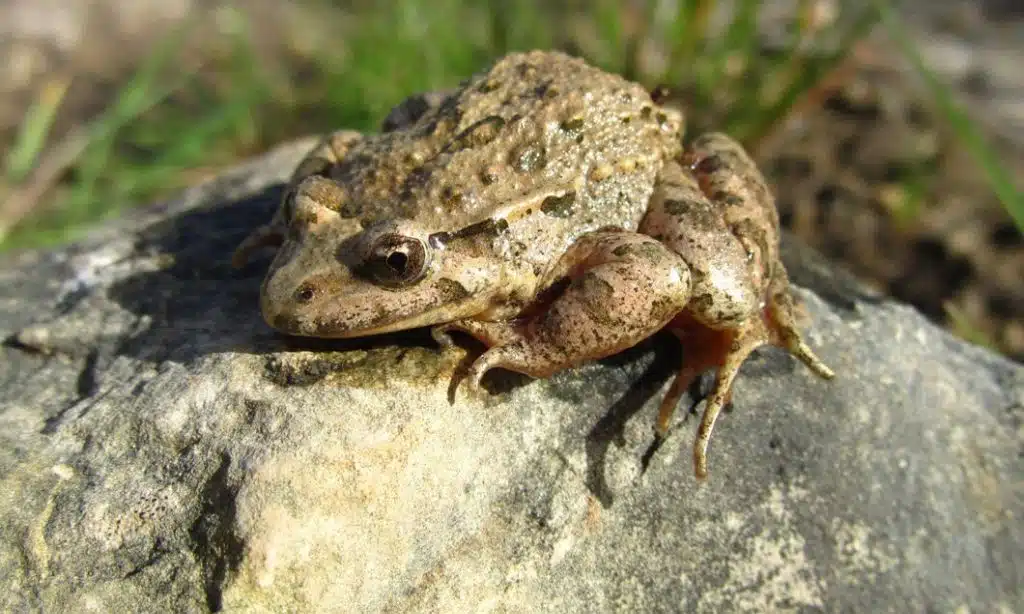
The hairy frog, also known as the horror frog or wolverine frog, has a defense mechanism that sounds like something out of an X-Men comic. When threatened, this Central African amphibian can break its own bones to produce claws.
The frog has small nodules of bone in its toes. When it feels threatened, it contracts muscles that cause these bones to break through the skin, creating sharp claws. Once the danger has passed, the bones retract and the skin heals.
This unusual defense comes at a cost – the process is likely painful and leaves the frog vulnerable to infection. However, it provides an effective last-resort defense against predators.
10. The Hippopotamus’s Blood Sweat
Hippos don’t actually sweat blood, but it sure looks like they do. These massive African mammals secrete a red, oily substance from their skin that acts as a sunscreen, moisturizer, and antibiotic.
This red substance, often called “blood sweat,” contains two pigments – red hipposudoric acid and orange norhipposudoric acid. When first secreted, the substance is colorless, but it quickly turns red when exposed to air.
The “blood sweat” serves several important functions:
- It keeps the hippo’s skin moist when out of water
- It acts as a sunscreen, protecting the hippo from harmful UV rays
- It has antibiotic properties, helping to prevent infections
- The red color may act as a warning to predators
This unique adaptation helps hippos thrive in their semi-aquatic lifestyle, allowing them to spend hours out of water without their skin drying out or getting sunburned.
11. The Greenland Shark’s Extreme Longevity
The Greenland shark holds the record for the longest-living vertebrate known to science. These cold-water sharks can live for centuries, with some individuals estimated to be over 500 years old.
Greenland sharks grow extremely slowly, only about 1 cm per year. They don’t reach sexual maturity until they’re about 150 years old. Scientists determine their age by analyzing the lenses in their eyes, which accumulate carbon-14 over time.
The oldest Greenland shark found so far was estimated to be between 272 and 512 years old. That means it could have been born as early as the year 1500, when Christopher Columbus was still exploring the Americas!
This extreme longevity is likely due to the shark’s slow metabolism, a result of living in cold, deep waters. Studying these ancient creatures could provide insights into the biology of aging and longevity.
12. The Mantis Shrimp’s Super-Powered Eyes
The mantis shrimp, despite its name, is neither a mantis nor a shrimp. It’s a type of crustacean called a stomatopod. But its confusing name is nothing compared to its incredible eyes.
Human eyes have three types of color-receptor cones, allowing us to see millions of colors. The mantis shrimp, however, has 16 color-receptor cones. This means they can see colors we can’t even imagine.
But that’s not all:
- Mantis shrimp can see different types of polarized light, including circular polarized light.
- They can detect different types of cancer by seeing the way light reflects off of cancerous cells.
- Their eyes move independently of each other, giving them “trinocular” vision – they can see 3D with each eye.
Scientists are studying mantis shrimp eyes to develop better cameras and optical devices. Their unique vision could inspire new medical imaging technologies and even help in the early detection of cancer.
13. The Suriname Toad’s Back-Birthing Babies
The Suriname toad has one of the strangest reproductive processes in the animal kingdom. During mating, the female releases her eggs, which are then fertilized by the male and embedded into the skin on her back.
Over time, the eggs develop into tadpoles within small pockets in the mother’s back. As they grow, these pockets become more pronounced, giving the mother’s back a honeycomb-like appearance.
When the time comes, fully formed baby toads burst out of these pockets in her back. This process, while effective, looks like something out of a science fiction horror movie. It ensures that the young toads are protected during their most vulnerable stage of development.
14. The Pompeii Worm’s Heat Resistance
The Pompeii worm lives in one of the most extreme environments on Earth – deep-sea hydrothermal vents. These worms can withstand temperatures that would cook most other animals alive.
Pompeii worms live in tubes near hydrothermal vents where the water can reach temperatures of 80°C (176°F). The worm’s tail, which sticks out of the tube, is exposed to these extreme temperatures, while its head remains in cooler water around 22°C (72°F).
How do they survive? Scientists believe it’s thanks to a symbiotic relationship with bacteria that live on the worm’s back. These bacteria form a fleece-like coating that may help insulate the worm from the extreme heat.
Studying the Pompeii worm and its bacterial friends could lead to new heat-resistant materials and technologies for use in extreme environments.
15. The Pearlfish’s Unusual Living Quarters
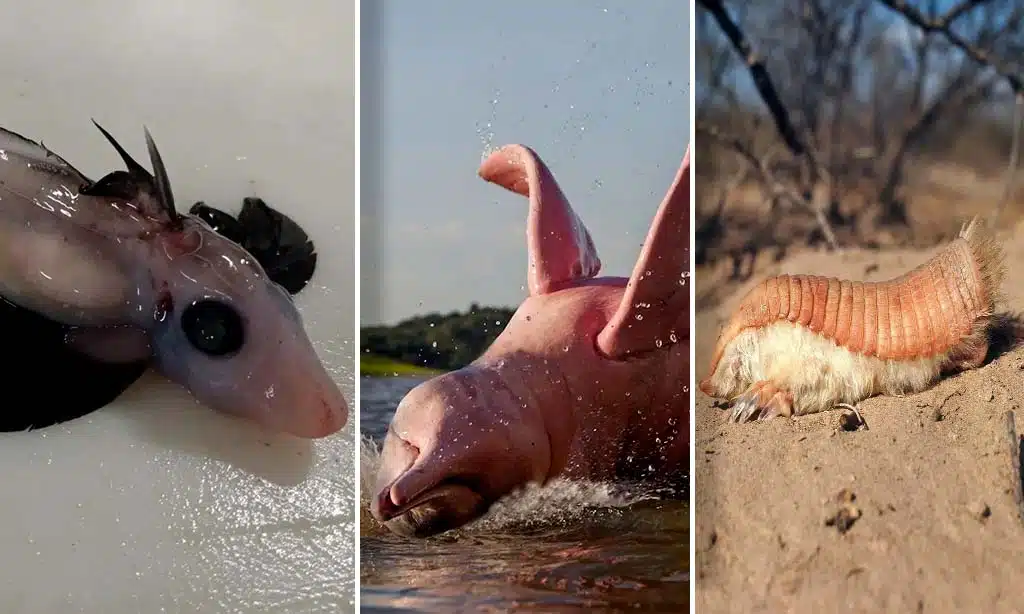
The pearlfish has found a rather unconventional – and somewhat gross – place to call home. These slender fish live inside the bodies of sea cucumbers and other invertebrates.
Pearlfish enter their living quarters through the sea cucumber’s anus, which also serves as its mouth. Once inside, the pearlfish may feed on the sea cucumber’s gonads or respiratory trees. Some species of pearlfish are parasitic, while others are commensal, meaning they benefit from the arrangement without harming their host.
This bizarre living arrangement provides the pearlfish with protection from predators and a safe place to lay their eggs. It’s a stark reminder that in nature, one creature’s body cavity is another creature’s cozy home.
Takeaway
Nature never ceases to amaze us with its ingenuity and oddity. From immortal jellyfish to blood-squirting lizards, the animal kingdom is full of creatures that challenge our understanding of what’s possible in biology.
These weird and wonderful facts remind us of the incredible diversity of life on Earth. They showcase the power of evolution to produce solutions to survival challenges that are far beyond what we might imagine.
As we continue to explore and study the natural world, we’re sure to uncover even more bizarre and fascinating animal facts. Each discovery not only increases our understanding of the world around us but also has the potential to inspire new technologies and medical treatments.