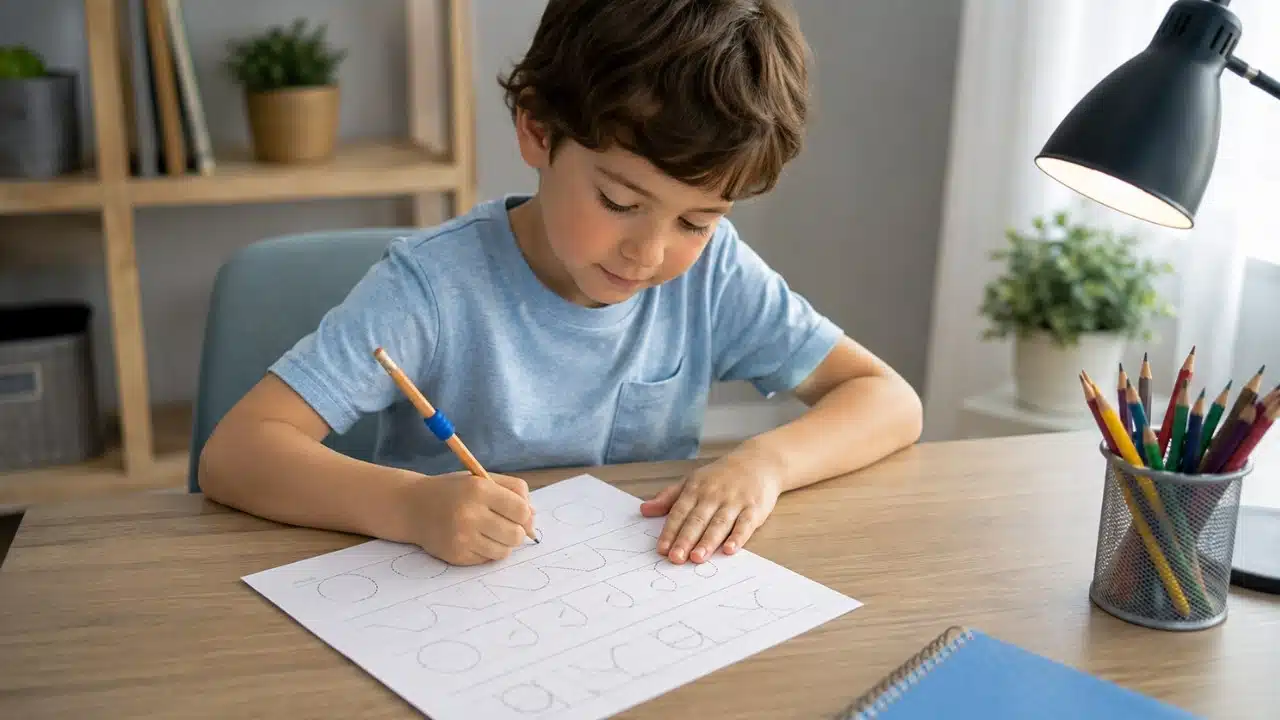
You usually do not realize that mastering tracing for a left-handed child is a hurdle until you see the side of their hand covered in a shiny layer of grey graphite. They might complain that their wrist aches after a few minutes, or they might just sigh heavily and start refusing to do their worksheets entirely.
Often, this gets mistaken for a lack of focus. In reality, it is almost entirely mechanical.
Most tracing worksheets and early handwriting guides are designed for right-handed users. When a left-handed child sits down at a standard setup, they are immediately fighting against the physical environment. Their own hand blocks the letter they are trying to trace, and the act of pushing a pencil across the page creates an uncomfortable amount of drag.
Helping them through these early writing stages does not require expensive ergonomic pens. It mostly comes down to rethinking how they approach the paper.
Why the Hook Grip Happens
Righties have a natural advantage when it comes to standard tracing. They just pull the pencil across the page, so nothing gets in their way.
Left-handed kids have to do the opposite. Because English goes from left to right, a left-handed child has to push the pencil forward. As they do, their hand just drags right over the letter they just wrote, completely blocking the dashed lines they are supposed to follow next.
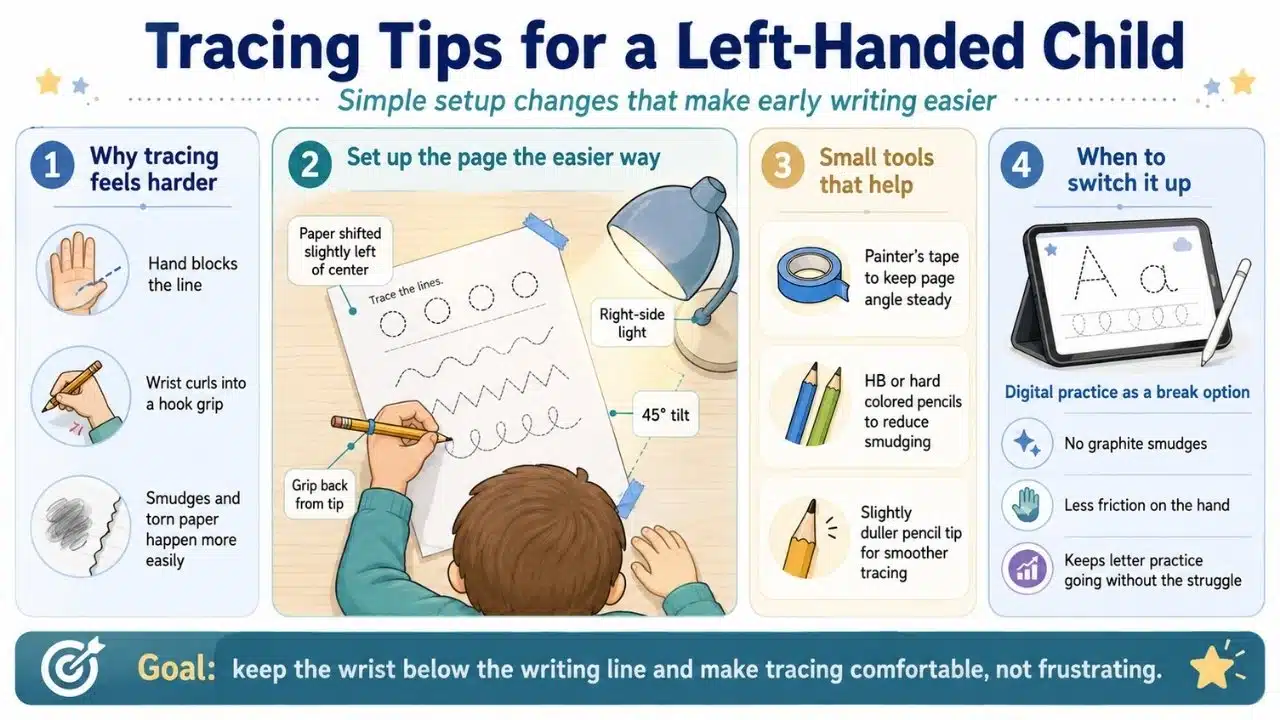
To cope with this visual block, many left-handed kids intuitively twist their wrists and curl their hands completely over the top of the writing line. Occupational therapists call this the hook grip. It is a smart, immediate fix for a kid who just wants to see what they are doing, but it forces the wrist into a strained angle. The main goal for parents and educators is to adjust the child’s desk setup early on, ensuring this painful grip never solidifies into a lifelong habit.
Checking Room Layout and Lighting for a Left-Handed Child
Before we even get into fixing the paper or the pencil grip, look at the lights in the room. This is something people almost always miss, and it causes unnecessary headaches.
If a desk lamp sits on the child’s left side, their own writing hand will cast a dark shadow directly over the exact letter they are trying to trace. Simply positioning the main light source over their right shoulder clears up the workspace. Also, if they share a table with a sibling, make sure the left-handed child sits on the far left side. Otherwise, they are just going to bump elbows every time they try to draw a circle.
Tilting the Paper
Most of us automatically place a tracing worksheet straight up and down on the table. If a left-handed child writes on vertically straight paper, they are forced to curl their wrist just to see over their own knuckles.
A much easier approach is to shift the paper slightly to the left of the child’s center, then tilt it about 45 degrees to the right. The top right corner of the page should point diagonally downward toward the child.
It looks strange at first, but this angle gives their arm a far more natural place to rest. Their forearm can lay flat on the table, and their wrist drops below the writing line rather than hooking over it.
Getting a young child to stick with this tilt, however, will take some gentle persistence. A 45-degree angle feels completely wrong to a kindergartener. Watch a left-handed six-year-old trying to trace the letter “B”—the second you look away, they will stubbornly twist the paper back to the center. Since beginners lack the coordination to hold a tilted paper still, tape the corners down with painter’s tape. It takes a little coaxing, but eventually, they stop noticing the angle and the muscle memory kicks in.
Adjusting the Pencil Distance
Right-handed kids can choke up right to the sharpened tip of the pencil. If a left-handed child does that, the fleshy side of their thumb completely hides the paper.
Having them move their fingers back about an inch (around 2.5 to 3.5cm) from the lead pulls the hand away just enough to expose the line they need to trace. Since kids naturally slide their fingers back down the barrel as they concentrate, try wrapping a small rubber band tightly around the pencil exactly where their fingers should rest. It gives them a tactile reminder of where to hold it, which means you do not have to hover over their shoulder constantly nagging them to fix their grip.
Managing Smudges and Worksheet Tears
Smudges are a constant annoyance. It is genuinely discouraging to try your absolute best to stay on the dashed lines, only to have your own palm smear the entire page into a grey blur. Left-handed kids understandably get discouraged because their tracing sheets look messy compared to their peers.
Choosing the right writing tool helps. Very soft lead pencils smudge the second a hand brushes over them. Standard HB pencils work reasonably well, but sticking to hard colored pencils during the earliest learning stages can keep the page much cleaner.
Another issue with the pushing motion is that the pencil tip digs directly into the grain of the paper. If a kid presses down too hard while pushing, the tip will catch, and they might accidentally tear the worksheet. Using a slightly duller pencil early on prevents the tip from catching and makes the entire process smoother.
Rethinking Directional Arrows
Those little numbered arrows on standard worksheets? Ignore them if they cause a struggle. They are mapped out for right-handed mechanics. For example, crossing a capital “T” is universally taught as a left-to-right horizontal stroke. For a left-handed child, pushing a pencil outward feels terrible. It is mechanically much easier for them to pull the pencil inward from right to left. If they find a comfortable way to construct a letter efficiently without hooking their wrist, let them do it. The final shape of the letter matters far more than the direction of the stroke.
Giving the Hand a Break With Digital Practice
Even with a perfect setup, physical paper can still be a hassle. Sometimes the most practical solution for a tired kid is to toss the messy physical supplies in a drawer for a few days.
Screens offer a completely smooth surface. A tablet does not care if a child pushes or pulls a stylus, and there is no physical ink to smear across the screen. If you check out an Alphabet Magic Trace & Phonics review, it highlights why this shift works so well for struggling learners: it bypasses the physical barriers of writing while keeping the brain focused on letter recognition.
When physical writing sessions start feeling like a daily chore, you can download Alphabet Magic trace & phonics to mix up their routine. Digital practice allows them to work on uppercase and lowercase letter formation through guided activities, giving their forearm muscles a much-needed break.
Final Thoughts
Early writing practice is stressful enough for a child without adding physical pain to the mix. If you want to make tracing for a left-handed child truly seamless, consistency and minor environmental tweaks are key. It will definitely take a few weeks of consistent adjustments and endless reminders not to straighten the worksheet, but the effort is entirely worth it. Eventually, they won’t even think about the desk setup, and you will not have to scrub grey pencil marks off the side of their hand with a baby wipe every single afternoon.
Frequently Asked Questions (FAQs) About Tracing for Left-Handed Children
What angle should a left-handed child tilt their paper?
Answer: You should shift the paper slightly to the left of their center and tilt it about 45 degrees to the right. This allows their forearm to rest flat and keeps their wrist safely below the writing line.
Why do left-handed kids curl their hands into a hook grip?
Answer: Children adopt this posture because standard writing from left to right forces their hand to block what they just wrote. The hook grip lets them look at the letters they are tracing, even though it strains the wrist.
How can I stop pencils from smudging their work?
Answer: Smudging happens when the palm drags over fresh graphite. Switching from soft lead pencils to hard colored pencils or standard HB pencils during practice keeps the page much cleaner.
Should I force them to follow standard worksheet arrows?
Answer: No, you can safely ignore worksheet directional arrows if they conflict with natural left-handed mechanics. It is much easier for lefties to pull strokes right-to-left rather than pushing them outward.
At what age should I correct their grip?
Answer: It is best to address grip and paper positioning early on before kindergarten writing habits solidify. Using simple adjustments like a rubber band marker helps build comfortable muscle memory naturally.