
Mental health in the workplace is more important than ever. A mentally healthy team is productive, engaged, and motivated. But when mental health issues go unnoticed, they can lead to burnout, reduced efficiency, and even high turnover.
In today’s fast-paced work culture, it’s easy for early warning signs of mental health problems among employees to go unnoticed. Yet, these subtle cues—rising absenteeism, sudden mood shifts, or declining engagement—often signal deeper struggles that can quietly erode team morale and productivity.
This article explores 10 common signs that your team may be struggling with mental health and delivers actionable solutions to address them. By recognizing and responding early, leaders can create a workplace culture that supports well-being, enhances trust, and empowers employees to perform at their best.
The Growing Concern of Mental Health in the Workplace
Workplace mental health issues are on the rise. Stress, long working hours, unrealistic expectations, and toxic work environments can contribute to declining mental health.
According to a 2023 Gallup report:
- 44% of employees experience workplace stress daily
- 67% of employees say burnout has increased in the past year
- Only 24% of employees believe their company cares about their well-being
When mental health is ignored, it can lead to absenteeism, decreased performance, and increased conflict. That’s why understanding and addressing these challenges is essential.
Team Mental Health at Work: 10 Signs Your Team Might Be Struggling
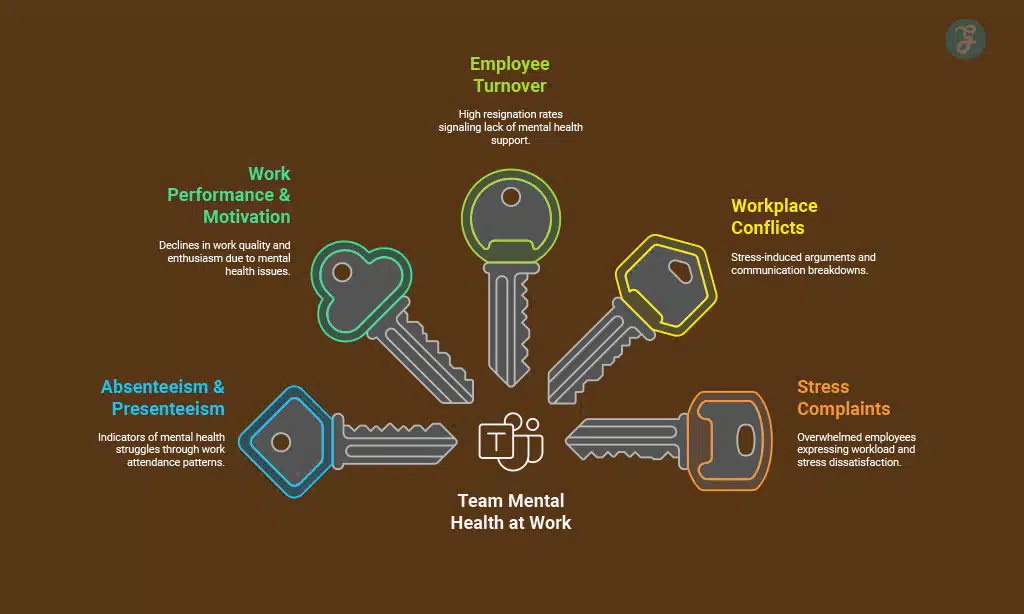
1. Increased Absenteeism and Presenteeism
When employees frequently take time off or show up but disengage, it signals deeper emotional fatigue or burnout. Absenteeism indicates they’re mentally exhausted, while presenteeism shows they’re physically present but psychologically absent. Over time, both reduce output and hurt team morale, making it crucial for leaders to recognize this dual danger early.
| Signs of Absenteeism & Presenteeism | Possible Causes |
| Frequent sick leaves | Burnout, anxiety, depression |
| Coming to work but being unproductive | Mental fatigue, stress |
| Increased tardiness | Lack of motivation, sleep disturbances |
Solution
- Encourage employees to take mental health days.
- Offer remote work flexibility.
- Provide wellness programs and mental health resources.
2. Declining Work Performance and Lack of Motivation
A sudden drop in productivity, missed deadlines, or lack of creativity often indicates emotional overload. When employees lose motivation, it’s not always about skills—it’s about psychological depletion. Left unchecked, this can spiral into chronic burnout and disengagement.
| Signs of Declining Work Performance | Possible Causes |
| Lower productivity | Depression, fatigue |
| Frequent errors | Anxiety, stress |
| Missed deadlines | Lack of motivation, burnout |
Solution
- Reduce unrealistic workload expectations.
- Set clear goals and provide support.
- Recognize and reward employees’ efforts.
3. High Employee Turnover and Resignations
A sudden rise in resignations could indicate that employees are struggling and don’t feel supported. If employees frequently leave, it might be a sign that your workplace lacks mental health support.
| Reasons for High Turnover | Impact on Business |
| Lack of mental health support | Increased hiring costs |
| Burnout and stress | Reduced team morale |
| Toxic work culture | Loss of skilled employees |
Solution
- Conduct exit interviews to understand reasons for leaving.
- Foster a supportive and inclusive workplace culture.
- Provide employee assistance programs (EAPs).
4. Frequent Conflicts and Communication Breakdowns
Teams under chronic stress lose their ability to communicate calmly. Misunderstandings, irritability, and conflicts become frequent as psychological resilience breaks down. This isn’t just “personality clashes”—it’s often a sign that emotional energy is depleted.
| Signs of Workplace Conflicts | Causes |
| Miscommunication | Anxiety, stress |
| Increased workplace arguments | Emotional exhaustion |
| Passive-aggressive behavior | Unresolved workplace stress |
Solution
- Promote a culture of open communication.
- Implement conflict resolution strategies.
- Encourage team-building activities.
5. Increased Complaints About Workload and Stress
When multiple team members express feeling overwhelmed, it’s a systemic problem, not an individual weakness. Constant workload complaints indicate that organizational pressure exceeds psychological capacity. Ignoring these warnings risks widespread burnout.
| Common Complaints | Underlying Issues |
| “I have too much to do.” | Overworked, burnout |
| “I can’t keep up with deadlines.” | Stress, anxiety |
| “I feel undervalued.” | Lack of support, mental exhaustion |
Solution
- Balance workloads fairly.
- Encourage delegation and teamwork.
- Offer stress management training.
6. Physical Symptoms of Stress Among Employees
Mental distress often manifests in the body—fatigue, insomnia, headaches, digestive issues. These “invisible injuries” reveal the toll of sustained pressure. A rise in health-related absences often masks unresolved emotional strain.
| Physical Symptoms | Possible Causes |
| Frequent headaches | Stress, anxiety |
| Chronic fatigue | Depression, burnout |
| Digestive issues | High stress levels |
Solution
- Provide wellness initiatives such as mindfulness programs.
- Encourage regular breaks and exercise.
- Offer access to mental health professionals.
7. Withdrawal from Team Activities and Social Interactions
Social disengagement is one of the earliest and clearest warning signs of mental health problems among employees. When once-collaborative individuals isolate themselves, avoid meetings, or reduce participation, it signals emotional burnout or depressive symptoms.
| Signs of Social Withdrawal | Potential Causes |
| Avoiding meetings | Anxiety, stress |
| Declining team activities | Depression, emotional exhaustion |
| Minimal engagement in conversations | Lack of motivation, social anxiety |
Solution
- Check in with employees regularly.
- Foster a culture of inclusion and support.
- Encourage peer mentorship programs.
8. Increased Mistakes and Lack of Focus

Mental fatigue directly impairs cognition—concentration dips, details are missed, and decision-making slows. Repeated small errors can reveal larger psychological strain long before burnout becomes visible.
| Signs of Poor Focus | Causes |
| Forgetfulness | Cognitive overload |
| Increased errors | Anxiety, fatigue |
| Difficulty concentrating | Stress, depression |
Solution
- Encourage focus-boosting techniques like mindfulness.
- Reduce unnecessary workload pressure.
9. Negative Attitude and Decreased Morale
A shift in overall team energy—from optimistic to cynical—signals emotional depletion. When negativity spreads, it’s often rooted in unaddressed stress or feelings of disempowerment. Over time, this attitude contagion can derail entire departments.
| Signs of Low Morale | Causes |
| Increased complaints | Burnout, dissatisfaction |
| Lack of enthusiasm | Depression, stress |
| Frequent frustration | Anxiety, pressure |
Solution
- Promote a culture of appreciation and support.
- Encourage open discussions about mental health.
10. Employees Expressing Feelings of Hopelessness
This is the most urgent signal. Statements like “I feel stuck” or “I don’t see the point” go beyond stress—they suggest acute emotional pain or potential mental health crises. Such expressions must never be ignored or brushed off as temporary frustration.
| Warning Signs | Urgency |
| “I don’t see the point anymore.” | High risk |
| “I feel completely stuck.” | Needs immediate support |
| “I’m struggling mentally.” | Urgent intervention required |
Solution
- Offer professional mental health support.
- Encourage open conversations in a safe space.
- Ensure HR has mental health policies in place.
Takeaways
Recognizing and addressing team mental health at work challenges is key to maintaining a healthy, productive team. When companies prioritize mental well-being, employees feel more valued, motivated, and engaged. A supportive work environment reduces stress, enhances collaboration, and improves overall job satisfaction. By fostering open conversations, implementing mental health programs, and providing necessary resources, employers can create a positive and thriving workplace.
Promoting team mental health at work should not be an afterthought—it should be an integral part of every organization’s strategy for success.
FAQs on Warning Signs of Mental Health Problems Among Employees
1. What are the most common warning signs of mental health problems among employees?
Key indicators include noticeable drops in performance, frequent lateness or absenteeism, irritability or emotional outbursts, withdrawal from teamwork, loss of motivation, and changes in sleep or appetite patterns. When several of these emerge simultaneously, they may reflect deeper mental health struggles.
2. Why is it important for employers to recognize these warning signs early?
Early recognition allows for timely intervention—reducing burnout, turnover, and workplace conflicts. Proactive support not only improves well-being but also protects the organization’s productivity, brand reputation, and employee engagement.
3. How can managers approach an employee who might be struggling?
Approach with empathy, privacy, and neutrality. Focus on observed behaviors (“I’ve noticed you seem stressed lately”) rather than assumptions. Offer resources—like counseling, flexible scheduling, or wellness check-ins—without forcing disclosure.
4. How can HR measure improvements in employee mental health?
Metrics can include employee-engagement surveys, reduced absenteeism, lower turnover, and participation in wellness initiatives. Qualitative feedback—like improved team morale and collaboration—also signals progress.
5. What’s the difference between stress and a mental health disorder?
Stress is a natural response to pressure and often temporary. Mental health disorders—like depression or anxiety—persist longer, disrupt daily functioning, and require professional care. Recognizing when stress crosses that line is critical for early support.