

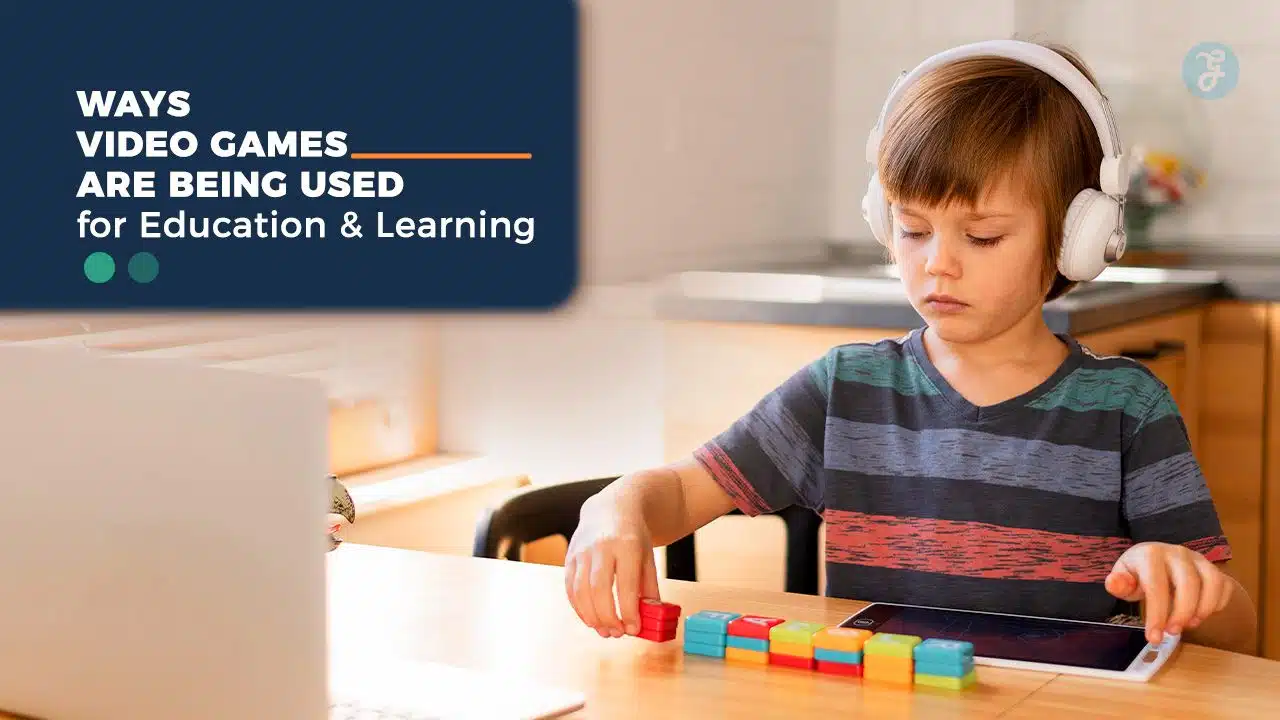
Many teachers, parents, and teens worry that video games only eat screen time, and they do not know how to use them in class. They want tools that build problem-solving skills, working memory, and critical thinking, but they fear games will distract more than teach.
I get that, and I hope to make this clear and useful.
Minecraft shows how games can teach STEM, collaboration, and ecosystems by letting players build and test ideas. This piece will show ten ways, with real tools like the space flight simulator Kerbal Space Program, the physics lab Universe Sandbox, and the city-builder Cities: Skylines, and explain how they boost interactive learning, experiential learning, resource management, spatial awareness, and personalized learning.
You will see how educational video games and serious games can improve math, science, language, and social skills. Keep reading.
Key Takeaways
- A 2022 study found gamers had better working memory, attention, spatial reasoning, and problem-solving, with games like Minecraft and Portal 2 boosting critical thinking.
- A 2021 study found teams playing Halo or Rock Band outperformed non-gamers in teamwork, and leagues like the United States Academic Esports League promote collaboration.
- Kerbal Space Program and Universe Sandbox let students test rockets, orbits, and cosmic events safely, supporting STEM, spatial skills, and experimental learning.
- A 2018 study found gamers cope better emotionally; therapists use Minecraft and Roblox for SEL, but experts advise two hours daily non-school screen time.
Teaching Language Skills Through Interactive Games
Kids build writing, reading, speaking, and listening skills inside many educational video games, a core part of language education. Games add reading and listening exercises, they present phrases in context so players repeat them, and that repetition helps long-term retention.
Augmented reality titles such as Catchy Words AR target vocabulary, they layer words over real scenes to boost interactive learning.
Teachers use free play, or guided play, to spark authentic learning that feels like play. Video games contextualize cultural aspects and reinforce grammar, they put phrases into everyday scenes, and they help learners practice foreign languages.
Adaptive edtech with personalized learning modes adjusts pace and tasks, so students with diverse abilities, including learning disabilities, can progress. This approach fits online learning and classrooms, and it keeps motivation high with learning through play.
Developing Problem-Solving and Critical Thinking Skills
Video games create safe spaces for trial and error. They let players make mistakes, retry levels, and learn from failed attempts, like a lab, not a lecture. Repeated attempts build mastery, and boost cognitive skills such as working memory.
A 2022 study found gamers had better working memory, attention, spatial reasoning, and problem-solving. Block-building sandbox Minecraft and puzzle shooter Portal 2 show how puzzles and design tasks train critical thinking.
A 2013 study linked strategic gameplay to higher grades, and more confidence in school.
Game systems force players to manage scarce resources, plan moves, and adapt. Space simulator Kerbal Space Program trains rocketry, orbital mechanics, and resource management, it also sharpens spatial awareness.
Turn-based Pokémon matches, serious simulations, and open-world games push deep thinking, creativity, and experimentation. That style of play, plus deliberate practice, improves executive function and problem-solving skills.
OECD calls for teaching innovative problem-solving to prepare learners for future jobs. Good programs mix instruction, play, and reflection, they are comprehensive, not just instructional, and educational video games tap intrinsic motivation and self-determination theory to make learning through play feel natural.
Enhancing Creativity with Open-World Exploration Games
Open-world and sandbox games spark creativity, and a 2017 study found they improve flexible thinking. The block-building game Minecraft lets players build ecosystems, test resource management, and use the Education Edition’s coding tools for hands-on interactive learning.
No Man’s Sky and Stardew Valley offer diverse worlds for environmental sustainability lessons, community design, and game-based problem-solving that sharpens critical thinking.
Roblox and Minecraft also serve therapy goals, giving anxiety-free success, boosting intrinsic motivation, and supporting social cognitive learning. The space-flight sim Kerbal Space Program and similar titles teach planetary orbits, gravity, rockets, and help build spatial awareness and working memory.
Teachers use these educational video games for play-based learning and personalized learning paths that train executive functions, motor skills, and other cognitive skills in a lively learning environment.
Simulating Real-World Scenarios for STEM Education
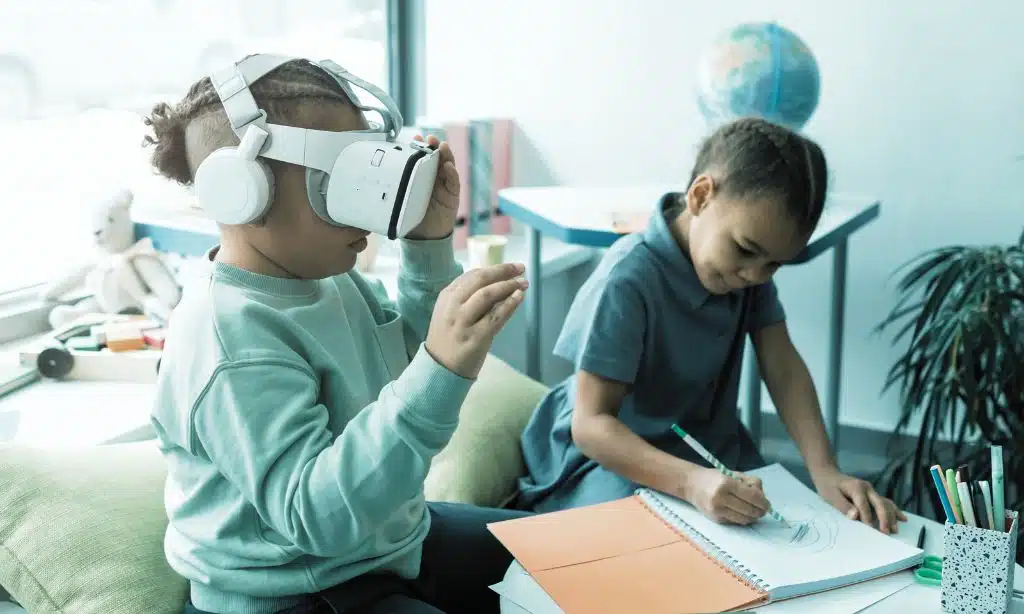
Kerbal Space Program models spacecraft design with realistic physics. Players tweak mass, thrust, and fuel, and they learn orbital math and resource management, which builds problem-solving skills and critical thinking.
Universe Sandbox acts as a virtual lab for middle and high school students. They watch comets, asteroids, black holes, star systems, and galaxies collide, then change variables to see effects across the solar system.
Teachers can track progress with timers and health systems, and students practice executive functioning, working memory, and spatial awareness.
Gamified labs let kids test chemistry and build spacecraft, without burns, spills, or real-world risk. This hands-on play mirrors museum trips and outdoor experiments, it boosts cognitive skills and motor skills, and it supports interactive learning and learning through play.
Code Ninjas uses games and apps to teach coding and STEM concepts, it links lessons to real projects and startup-style problem solving. Serious games and education video game titles turn scientific theory and advanced math into clear tasks, they make gravitational forces and mass feel tangible, and they tap intrinsic motivation under self-determination theory and social cognitive theory.
Encouraging Teamwork and Collaboration in Multiplayer Games
Multiplayer games promote collaboration, teamwork, and friendly competition among players, and they show clear benefits of video games for social learning. Rocket League emphasizes teamwork, spatial awareness, and decision-making through soccer with rocket-powered cars.
Studies back this claim, a 2021 study found teams playing Halo, a first-person shooter, or Rock Band, a rhythm game, outperformed non-gamers in teamwork skills. Research from 2013 showed collaborative and competitive math games helped middle schoolers build problem-solving skills and critical thinking.
Minecraft linked to leadership development in a 2024 study, and it also boosts peer communication and resource management during group builds. World of Warcraft and other massively multiplayer online games train players in roles, strategy, and leadership under pressure.
Leagues like the United States Academic Esports League promote teamwork, they use educational video games for interactive learning and to foster intrinsic motivation. Teachers use serious games and digital games to teach science, technology, engineering, and math, they report gains in cognitive skills and working memory through learning through play.
Peers form bonds over cooperative play, shy children can gain confidence, and classrooms grow more engaged.
Improving Memorization Through Gamified Learning Tools
Gamified learning tools boost memorization in young learners. They improve spatial awareness and working memory, two cognitive benefits seen in early education research. Games use operant conditioning, rewards, and immediate feedback to drive active practice, and that practice builds long-term memory.
Interactive exercises, like collectible quizzes inspired by Pokémon, offer repetition and quick feedback, which helps retention.
Serious games and educational video games tap self-determination theory. They motivate learners with clear goals, choice, and short trials, keeping intrinsic motivation high. A space simulation game trains sequences and facts, and it also tests spatial rules to strengthen working memory.
Teachers apply these gamified tools as alternative interventions for attention and memory challenges, and students with ADHD or dyslexia often show better attention and retention. Immediate feedback, active tasks, and repeated practice help anchor facts, making learning through play a practical path.
Promoting Experimental Learning with Sandbox Games
Sandbox games give players open-ended spaces to experiment and discover, and they make learning through play feel natural. Factorio pushes learners to design, build, and optimize factories, which grows systemic thinking and programming skills.
Players practice resource optimization and sustainability through trial and error, and they train real problem-solving skills. A farming sim like Stardew Valley lets students try community management, crop rotation, and small business choices, with low stakes and instant feedback.
Universe Sandbox lets learners alter moons, mass, and orbits, then watch cosmic outcomes, teaching space exploration and perceptual salience. Educators set up flight simulations and cosmetology training scenarios, to create scenario-based collaborative environments that build teamwork.
Kerbal Space Program teaches orbital mechanics, planning, and spatial awareness, while students learn through play, and feel intrinsic motivation, a core idea in self-determination theory.
These educational video games push critical thinking, working memory, and motor skills, and they tie into teaching methods that target the zone of proximal development.
Creating Safe Virtual Labs for Science and Engineering Practices
Teachers set up virtual labs that let students test risky ideas, without real harm. Universe Sandbox acts as a virtual lab for astronomy and physics, and fits middle and high school science lessons.
No Man’s Sky teaches space, physics, and environmental science in a safe game space. Kerbal Space Program trains resource management and flight math, students learn craft control.
Students run chemistry simulations, and they avoid real spills and burns. Curiscope Virtual Tee and Froggipedia use augmented reality, to open anatomy and biology lessons. Ocean Rift serves as an immersive lab to study aquatic life, and it boosts observational skills.
Serious games and educational video games track progress, they give immediate digital metrics and feedback.
Hands-on play builds problem-solving skills and critical thinking, and it grows spatial awareness. Games work as interactive learning tools, and they train working memory and motor skills.
Educators read digital metrics to shape personalized learning that fits each student. A student can try three rocket designs in Kerbal, crash, tweak, and try again. Learning through play lifts intrinsic motivation, and it echoes self-determination theory in class work.
Teachers praise curiosity, not perfect answers, and students feel safe to experiment. Smart simulations cut hazards, they let mind and hands practice real science.
Building Historical Awareness Through Strategy Games
Civilization VI is a real-time strategy title that teaches world history, economics, and political science. Players engage in resource management, diplomacy, and historical scenario building.
Those tasks sharpen problem-solving skills and critical thinking, they push learners to plan and trade under limits. Story-driven titles raise emotional engagement, and they help retention of people, dates, and events.
Minecraft: Education Edition offers history-focused courses, like USAEL’s “Through The Ages With Minecraft.” Cities: Skylines allows players to manage cities, balancing population, economy, and environment; it gives urban planning lessons and historical context.
Games can simulate past events and civilizations, promoting deeper understanding through interactive learning and learning through play. Serious educational video games show benefits of video games for cognitive skills, spatial awareness, and interest in environmental management.
Boosting Emotional Regulation and Resilience via Role-Playing Games
Role-playing games teach emotional regulation and resilience. A 2018 study found regular gamers cope better with emotions than non-gamers. Therapists use Roblox and Minecraft in sessions to build self-confidence and emotional control, like beating a mini-boss.
Jeff Knutson of Common Sense Media notes educational video games can promote SEL when used thoughtfully. They also offer anxiety-free success and safe experimentation with feelings.
A 2024 NYU study shows choice and self-directed play, grounded in self-determination theory, boost intrinsic motivation and a growth mindset. Serious games blend role-play, resource management, and problem-solving skills, which helps students rehearse coping moves via learning through play.
Sandbox or collectible creature games, along with simple space sims, train working memory and spatial awareness during playful practice. Parents should limit play, since excessive gaming can harm emotional health, and the American Academy of Child & Adolescent Psychiatry recommends two hours of non-school screen time for K-12.
Offering Personalized Learning Experiences with Adaptive Games
Adaptive games tailor lessons to each student. They track progress, change difficulty, and give fast feedback. The 2024 NYU study, with a PMCID, found games encourage a growth mindset and support personalized learning.
These systems use self-determination theory to raise intrinsic motivation, and boost autonomy and ownership of learning. Adaptive titles can help students with learning disabilities improve attention, working memory, and spatial awareness.
A space simulation like Kerbal Space Program trains resource management and spatial reasoning, while creature-collection games such as Pokémon help language development and decision making.
It feels like a coach in your pocket, minus the whistle.
Teachers should prepare game sessions like field trips. They should plan post-game discussion, reflection, and hands-on follow up. Adaptive play builds problem-solving skills and critical thinking, and keeps learning through play fun.
Students who use interactive learning often gain confidence, and shy learners can take part more easily. Good educational games mix learning and entertainment, and this mix makes the benefits of video games more salient.
Serious games, backed by psychology and ecological systems theory, fit inside a wider lesson plan and help startups design better tools. This approach helps teachers and lifts student ownership, it motivates learners, and it matches the learning process to each child.
Takeaways
Minecraft and a space flight sim teach STEM, and spark hands-on curiosity.
Civilization VI and Pokémon teach history, strategy, and math, they build problem-solving skills.
Stardew Valley and Cities: Skylines teach resource management and economics, students practice budgeting and planning.
Rocket League and an exploration survival game boost spatial awareness, motor skills, and quick thinking.
A cosmic simulator and a factory planner make experimental learning safe, they sharpen critical thinking and working memory.
These digital tools fuel intrinsic motivation, they turn play into focused, personalized learning.
FAQs on Video Games Are Being Used for Education & Learning
1. What are the benefits of video games for learning?
Video games and digital games can boost problem-solving skills and critical thinking. Educational video games build cognitive skills, working memory, and spatial awareness. They support interactive learning, personalized learning, and learning through play. They raise intrinsic motivation, tied to self-determination theory, so students want to learn.
2. How do games teach problem solving and resource management?
Educational games and serious games give clear goals, then force choices. Players learn resource management, plan moves, and test ideas. Games like kerbal space program show physics and systems, they push players to think, revise, and win. This trains real problem-solving skills and critical thinking.
3. Can games help motor skills and kinesthetic learners?
Yes. Many educational video games use movement, timing, and hands-on control. Kinesthetic players learn by doing, and games build motor skills and coordination. Interactive learning through play makes lessons stick, fast.
4. Do games help shy students and boost personalized learning?
They do, often in quiet, low-pressure ways. Games let shy kids try roles, talk later, or play solo. Personalized learning adapts pace and tasks, it raises intrinsic motivation. Titles that mimic pokémon style play, with collection and trade, ease social steps, and match self-determination theory ideas.
5. Can games teach real world topics like the earth, space, or animals?
Yes, they can. Games let you explore the earth, or study orcas and other wildlife up close. Space films and interstellar themes, and sim tools like kerbal space program, teach physics and spatial awareness. Resource management and strategy games model ecology and economy, they show how choices shape worlds.
























