
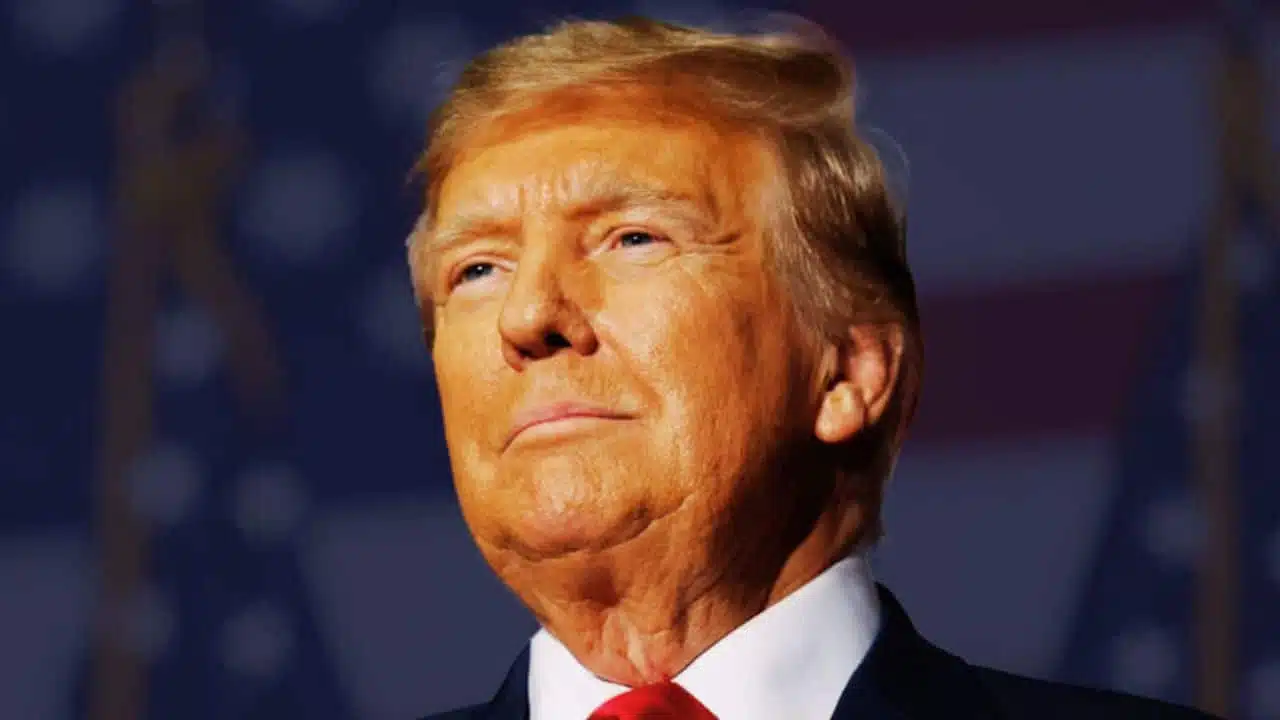
President Donald Trump’s approval rating has fallen to 40 percent, reaching the lowest level of his second term in office, according to a new Reuters/Ipsos national opinion poll. This recent drop reflects growing unease among Americans about his administration’s handling of the U.S. economy and immigration policies—two areas that have been central to his political identity since the 2016 campaign.
The poll, which spanned three days and concluded on a Monday, surveyed 1,023 adults across the United States. With a margin of error of ±3 percentage points, the data paints a picture of a sharply divided electorate—one that remains loyal in parts but increasingly critical in others.
Strong Partisan Divide Remains
The results highlight a deep political polarization among the American public. While the president continues to enjoy broad support from within his party, he struggles to appeal to voters outside the Republican base:
-
83 percent of Republican voters say they approve of Trump’s overall job performance.
-
By contrast, only 3 percent of Democrats express any approval.
-
Among independent voters, approximately one in three say they are satisfied with the way Trump is handling his role.
This stark difference in opinion demonstrates how divided the nation has become, with political identity strongly shaping perception of presidential performance.
Slight Drop from Previous Poll
Compared to the previous Reuters/Ipsos poll conducted on July 15–16, where Trump held a 41 percent approval rating, the current figure shows a one-point decrease. Although this shift is within the poll’s margin of error, it is symbolically important because it marks the lowest rating Trump has received during his second term in office.
This continued downward trajectory comes amid ongoing economic challenges and intensified scrutiny of his administration’s policies on immigration, inflation control, and international trade.
Mixed Reactions to Economic Management
The poll also gauged how Americans feel about Trump’s handling of the U.S. economy, an area he often touts as a success. According to the survey:
-
38 percent of respondents said they approve of how Trump is managing economic affairs.
-
This reflects a modest increase from the 35 percent approval seen in the mid-July survey.
However, this apparent gain may not translate to a broader recovery in public confidence. Economic data from the U.S. Bureau of Economic Analysis (BEA) shows signs of slowing growth, with GDP rising at an annual rate of 2.1 percent in the second quarter—down from 3.2 percent in the first quarter.
Further, consumer prices remain elevated, and concerns over job security and the cost of living are still widespread. These issues could be fueling public dissatisfaction, despite recent gains in some stock market indicators and employment rates.
Immigration Remains a Contentious Issue
The poll also assessed public opinion on immigration—another area central to Trump’s political platform. Here, his numbers saw a slight uptick:
-
43 percent of respondents said they approve of how the president is addressing immigration issues.
-
This is an increase from 41 percent in the prior poll.
Although the rise appears modest, it suggests a segment of the population is responding positively to the administration’s aggressive enforcement measures, including efforts to tighten border controls, restrict asylum pathways, and increase deportations.
Yet, Trump’s approach has also attracted heavy criticism. Numerous human rights organizations, including the American Civil Liberties Union (ACLU) and Human Rights Watch, have denounced policies such as family separation at the border and the expedited removal of asylum seekers without due process.
The Department of Homeland Security (DHS) and U.S. Customs and Border Protection (CBP) continue to defend the administration’s approach as necessary to protect national security and uphold immigration laws. However, public opinion remains deeply divided, with opposition often driven by concerns over human rights violations and legal protections for migrants.
Poll Shows Stability Amid Shifts Within Margin of Error
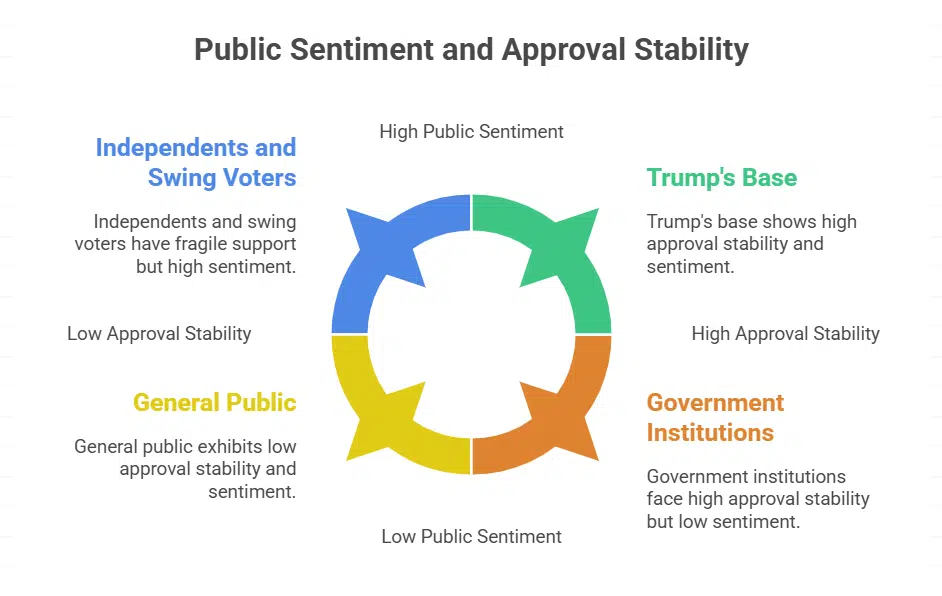
While the approval rating shifts on the economy and immigration fall within the poll’s margin of error, they provide insight into changing public sentiment. The fluctuations suggest that while Trump’s base remains firm, broader national approval is more fragile—especially among independents and swing voters, whose support is critical heading into election cycles.
It’s also worth noting that other independent polls, including those conducted by Gallup and the Pew Research Center, have shown similar patterns. These organizations report that trust in government institutions is declining and that approval ratings for federal leadership have generally trended downward in recent months.
Potential Implications Ahead of Election Season
The dip in Trump’s approval rating could carry significant implications as the country looks ahead to the 2026 midterm elections. With only four in ten Americans approving of his job performance—and especially low support among Democrats and independents—the president may face challenges in expanding his electoral coalition.
Moreover, Trump’s reliance on economic success stories and strict immigration enforcement may no longer be sufficient to galvanize widespread public support, especially as economic volatility and border-related controversies continue to dominate national headlines.
In light of these trends, political analysts suggest that Trump’s strategy moving forward must adapt to address growing public concerns while working to preserve loyalty within his party’s core voting bloc.
Americans Growing Wary of Key Issues
The latest Reuters/Ipsos poll underscores a nation increasingly concerned about how its leadership is handling two of the most important issues facing the country—economic stability and immigration reform. Although there are signs of slight improvement in public approval on those fronts, the overall trend points to waning confidence in the president’s ability to unify and lead the nation.
With Trump’s approval at the lowest point of his second term, and public skepticism growing, the coming months will likely prove pivotal—not only for his administration but for the broader political landscape heading into the next election cycle.