
Many leaders feel stressed. They struggle to balance work and life. Are you one of them? Learning to lead in a healthy way is key. It helps you and your team.
Did you know open communication can lower stress? It can also build trust. These are important for a thriving workplace. The following tips for mentally healthy leadership can show you how.
These tips offer useful ways to boost your mental health. You will learn to support your team better. You can create a happier, more productive work environment. So continue reading to learn more!
Importance of Mentally Healthy Leadership
Leaders who focus on mental health create better workplaces. Mentally healthy leadership improves job satisfaction and productivity. When senior leaders prioritize employee mental health, teams become stronger.
A mentally healthy workplace also helps reduce stress. Open communication reduces stress and helps build trust. Strong leadership in this area is crucial for workplace culture.
Great leaders understand the benefits of mental well-being. Leaders should also increase their knowledge about mental health. Do you want to be a better leader? If yes, promote personal scaffolding and supportive relationships.
Leaders must take care of themselves and their teams. They should be aware of available mental health resources. Employee mental health is a key factor, so focus on it.
10 Tips for Mentally Healthy Leadership
Want to improve your team’s mental health? These ten tips can help leaders like you boost well-being with collaboration, mental fortitude, and self-regulation. Consider putting these leadership skills into practice to provide unwavering support for your entire team.
Foster open and transparent communication
Good leaders know talking is key. Open talks can cut stress. It builds trust on the team. Regular talks are vital. A team will do better.
Leaders should talk clearly. Try to share info freely. Do not hide things from your people. Being open creates a safe environment. People can share thoughts. They can share ideas with you.
This way, you build better bonds. Plus, you grow a healthy workplace culture.
Lead by example with work-life balance
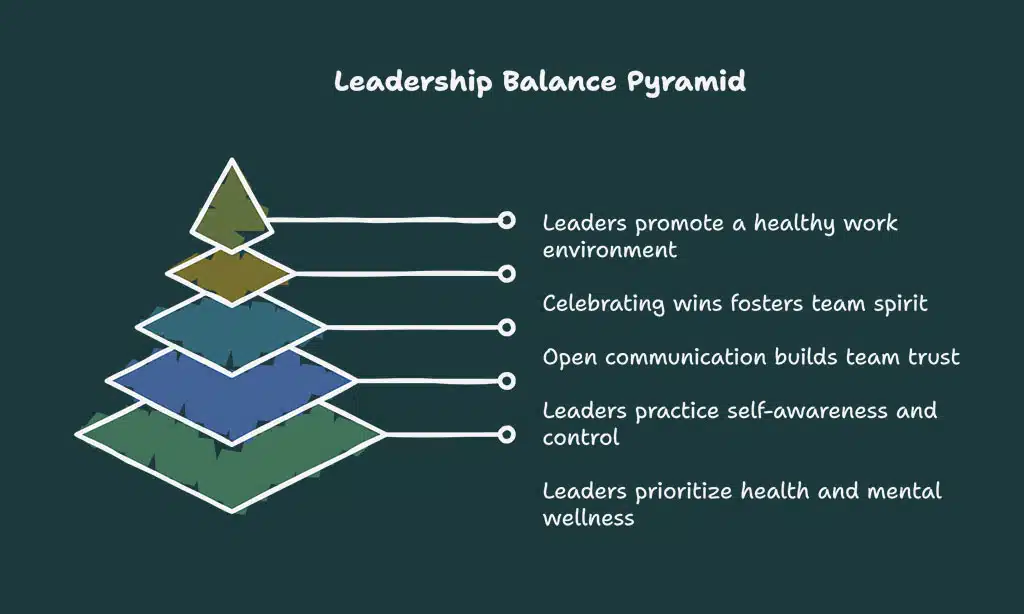
Leaders show the way. They set the tone for their teams. Work-life balance matters. Leaders show it is okay to have a life outside work. Such an attitude can boost the team’s mental health. Leaders who take care of themselves set a standard.
Eating well helps. Regular exercise matters too. Getting enough sleep is vital for mental well-being. Limiting media use also helps.
Self-awareness is key for leaders. Self-regulation is important. Learning to say no helps, too. Open communication can lower stress. It builds trust. Leaders must adapt and learn new things.
Celebrate wins with your team. Ask for help when needed. Leaders who model positive work-life balance help promote workplace well-being.
Promote a culture of trust and vulnerability
Want to boost workplace mental health? Then, foster a culture of trust. Open communication helps build this culture. Regular talks ease stress and create cohesion. Staff will be more willing to share ideas.
They can also admit mistakes safely. Such transparency builds stronger teams.
Furthermore, supporting supportive relationships is key. Creating a psychologically safe space lets people open up. Celebrating wins is very important. It also shows people you value their work.
Asking for help is okay. Showing vulnerability makes it easier for others to do the same. It all helps to promote mental wellness.
Encourage mindfulness and self-care practices
Self-care practices and mindfulness are important. Leaders must take care of themselves. Eating well helps. Exercising regularly also helps mental health. Getting enough sleep matters for well-being.
Limit media use. Limit technology use, too. Both can help your mental health.
Also, focus on friends. Doing fun things is great for mental well-being. Self-awareness matters. Self-regulation is also key. Learn to say no. These things can improve your mental health.
Mindfulness tools like meditation and deep breathing can reduce stress. They help leaders stay calm and focused. Mindfulness-based stress reduction programs can also help.
Provide mental health resources and training
Make sure your team knows where to get help. Mental health resources are key. Training can improve awareness. Do you know about employee assistance programs? These programs offer confidential support.
Many companies have resources for mental health support. Leaders should promote these options. Increase your knowledge about mental health and be aware of the support available.
Consider offering mental health training. Training sessions can reduce stigma. They can also teach employees how to support each other. The National Mental Health Commission has useful information.
Workplace mental health should be a priority. Make resources easily accessible. Create a supportive workplace culture with good mental health policies.
Recognize and reward team contributions
Showing appreciation matters. People feel valued when you notice their hard work. It boosts morale. Acknowledging good work helps grow a positive workplace culture.
Do you know how to show you care? Celebrate wins, big and small. Reward your team’s efforts. Recognize achievements to foster supportive relationships. This builds trust and strengthens your team.
Don’t underestimate the power of saying, “Thank you.” Be sure to recognize contributions regularly.

Good relationships boost mental health. Strong bonds make a team better. People want to feel connected at work. Teams work best when people know each other.
Team-building activities can help. Encourage communication in every group. Mentoring improves team relationships. Celebrating wins is a great tool. Leaders must foster a safe social environment.
Having friends and having some fun is important.
Develop emotional intelligence and self-awareness
Knowing feelings is key for mental health. It also helps you lead better. Leaders should boost their emotional intelligence. They also need to increase their self-awareness. Self-awareness, self-regulation, and saying no matter.
It is important for mental fitness. Leaders must look within. Leaders also need to understand their reactions. They can use reflection for these abilities. Reflective practice helps leaders grow.
It helps them support their team.
Leaders can develop their emotional quotient. It is done through training. One can improve emotional intelligence with professional development. Human resources can offer support.
Understand your emotional triggers. Learn how they impact your behavior. Know how your actions affect others. This awareness allows for better choices. It also allows for stronger employee mental health.
Regularly check in with employees individually
Checking in with each employee matters. Open talks can ease stress. They also build team trust. Leaders should know about mental health support. Knowing the support helps you help others.
Regular check-ins show you care.
Talk to employees one-on-one. Be sure to ask, “Are you ok?” Such questions are key. Show you are present. Listen to their worries. Offer mental health resources. You can help them find the support.
Leaders need to take care of themselves. Leaders also must promote mental health. Self-awareness is vital. Learn to say no to help your health. Celebrating wins can boost your well-being.
Asking for help matters too.
Stay adaptable and embrace a growth mindset
Leaders require a willingness to try new ideas. They also need to keep learning. A growth mindset means you see problems as chances to grow. Stay open to change. Be ready to adjust your tactics.
Leaders must embrace this mindset. It can improve their own wellness. It also helps their teams.
Your knowledge about mental health can increase with learning. Also, be aware of the available backing. Leaders must adapt to new ways of working. Resistance to change is a common problem.
Be ready to support flexible working arrangements. This includes working remotely. Leaders who embrace change tend to do better. They also promote better workplace well-being.
Takeaways
These tips offer simple ways to improve leadership and mental health. Open communication and a strong work-life balance are key. You can use these ideas to build a better workplace.
Support employee well-being by using mental health resources. A mentally healthy leader makes a happy, successful team.
FAQs on Tips For Mentally Healthy Leadership
1. What is mentally healthy leadership?
It means leaders care about workplace well-being and mental health support. They make a safe space—psychological safety—for all.
2. How can leaders help employee mental health?
Leaders can offer flexible working arrangements. They can also share mental health resources, like Employee Assistance Programs.
3. What is “R U OK?” and why is it important?
“R U OK?” is asking if someone is okay—showing you care. It helps build supportive relationships at work.
These are things at work that hurt your mind. Fix them by making changes—like better organizational justice.
5. Why is self-care important for leaders?
Leaders need self-care, too! It helps them stay strong and lead well—setting good goals and mindsets.
6. Where can leaders find mental health resources?
The National Mental Health Commission has resources. Also, look into professional development for mental health strategy. Graeme Cowan also has great advice—plus, think about peer support!