

Investing in sustainable real estate is becoming increasingly popular in the UK. As the country aims to meet ambitious environmental targets, both individuals and businesses are seeking opportunities to align their financial goals with sustainability.
Tax incentives for investing in sustainable real estate in UK provide a significant advantage, helping investors reduce costs while contributing to eco-friendly development. These incentives are part of a broader strategy to promote green initiatives and make sustainable investments financially viable for everyone.
In this article, we will explore the various tax incentives for investing in sustainable real estate in UK. From capital allowances to reduced VAT rates, understanding these incentives can help you maximize returns while making a positive impact.
What Are Tax Incentives for Sustainable Real Estate?
Tax incentives are financial benefits offered by the government to encourage specific behaviors or investments. In the context of sustainable real estate, these incentives aim to promote eco-friendly practices and green developments.
Tax incentives for investing in sustainable real estate in UK are part of the government’s strategy to reduce carbon emissions and foster environmentally responsible construction.
These incentives not only provide financial relief but also support the UK’s commitment to achieving Net Zero targets by 2050.
By leveraging tax incentives, investors can offset some of the costs associated with implementing energy-efficient technologies and sustainable building practices, making it a win-win for both profitability and the planet.
The 8 Tax Incentives for Sustainable Real Estate in UK
1. Capital Allowances for Energy-Efficient Assets
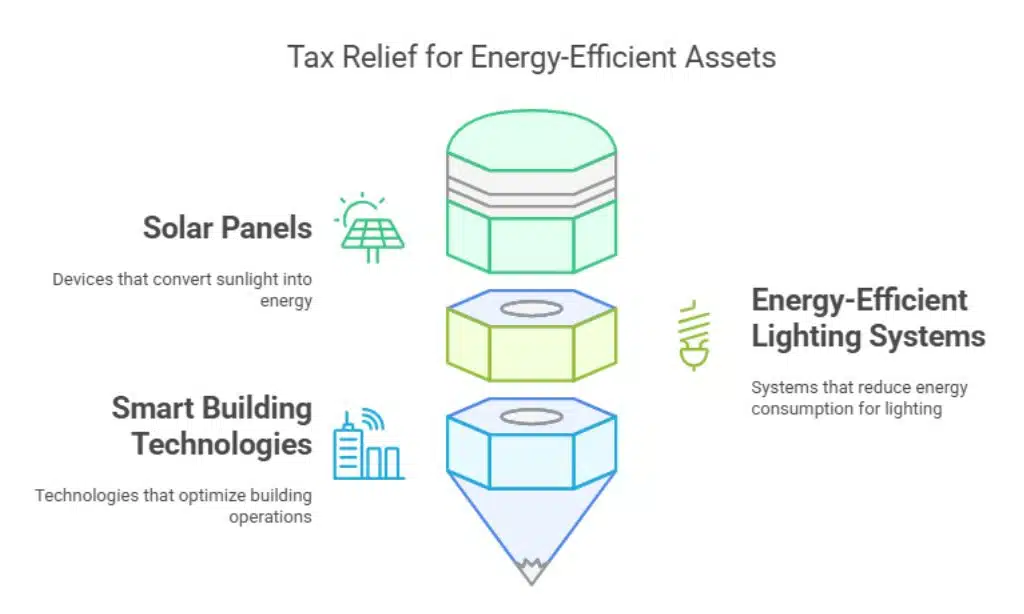
Capital allowances provide tax relief for the purchase of energy-efficient equipment and assets.
This includes items such as:
- Solar panels
- Energy-efficient lighting systems
- Smart building technologies
How It Works: Investors can deduct the cost of qualifying energy-efficient assets from their taxable profits, reducing their overall tax liability. For example, installing solar panels in a commercial property can result in significant savings over time.
| Example Investment | Cost (£) | Tax Relief (£) |
| Solar Panels | 50,000 | 50,000 |
| Energy-Efficient Lighting | 30,000 | 30,000 |
| Smart Thermostats | 10,000 | 10,000 |
Practical Tip: Pairing capital allowances with other incentives such as green financing can compound savings and improve cash flow for businesses. This is a crucial strategy when utilizing tax incentives for investing in sustainable real estate in UK.
2. Stamp Duty Land Tax (SDLT) Relief
Stamp Duty Land Tax (SDLT) relief is available for certain sustainable property transactions. This incentive reduces the upfront tax burden when purchasing eco-friendly real estate.
Key Criteria:
- The property must meet specific energy performance standards.
- Buyers may qualify for relief if the property includes renewable energy systems.
| Property Type | Energy Efficiency Requirement | Potential SDLT Savings |
| Residential | EPC rating of A or B | Up to 2% of property value |
| Commercial | Renewable energy integration | Significant upfront relief |
Case Study: A buyer purchasing a residential property valued at £500,000 with an EPC rating of A could save up to £10,000 in SDLT fees. This saving can then be reinvested in further energy-efficient upgrades, demonstrating the tangible benefits of tax incentives for investing in sustainable real estate in UK.
3. Enhanced Capital Allowances (ECAs)
Enhanced Capital Allowances (ECAs) support businesses that invest in energy-saving equipment and water-efficient technologies. This program incentivizes the adoption of sustainable practices by offering 100% first-year tax relief on qualifying expenditures.
Benefits:
- Immediate tax savings in the first year.
- Encourages businesses to invest in green infrastructure.
| Eligible Technology | Potential Savings |
| High-efficiency heating systems | 100% of cost |
| Advanced water treatment systems | Full tax relief |
| Insulated building materials | Full tax relief |
Real-World Insight: Companies integrating ECAs into their energy-efficiency strategies often report lower utility bills, making this incentive a dual financial benefit. Such initiatives underscore the financial and environmental advantages of tax incentives for investing in sustainable real estate in UK.
4. VAT Reduction on Energy-Saving Measures

The UK government offers reduced VAT rates on the installation of energy-saving measures, making it more affordable to implement sustainable upgrades.
Examples of Eligible Measures:
- Insulation
- Heat pumps
- Solar thermal panels
| Energy-Saving Measure | Standard VAT Rate | Reduced VAT Rate |
| Insulation | 20% | 5% |
| Heat Pumps | 20% | 5% |
| Solar Thermal Panels | 20% | 5% |
Example Application: Installing a solar thermal panel system costing £20,000 would save £3,000 in VAT costs, reducing the overall expense to £17,000. This illustrates how tax incentives for investing in sustainable real estate in UK can significantly reduce upfront costs for eco-friendly projects.
5. Green Finance Grants and Loans
Green finance initiatives provide additional tax advantages when paired with government grants and loans for sustainable projects.
How It Helps: Investors can benefit from tax breaks tied to:
- Green mortgages
- Government-backed low-interest loans for energy-efficient renovations
Programs to Explore:
- Green Homes Grant (subject to availability)
- Low Carbon Infrastructure Transition Programme
| Type of Grant/Loan | Benefit |
| Green Mortgage | Lower interest rates |
| Energy Renovation Loan | Reduced upfront costs |
Example: A developer securing a green mortgage at a reduced interest rate for a sustainable housing project can pair the financial savings with tax relief on green technologies used in construction. These programs exemplify how tax incentives for investing in sustainable real estate in UK can drive cost-effective green projects.
6. Renewable Heat Incentive (RHI)
The Renewable Heat Incentive (RHI) offers financial rewards to property owners who adopt renewable heating technologies such as biomass boilers and ground-source heat pumps.
Eligibility:
- Both residential and commercial properties qualify.
- Payments are made over several years based on the amount of renewable heat generated.
| Technology | Annual RHI Payment (£) |
| Biomass Boiler | 1,200 |
| Ground-Source Heat Pump | 1,800 |
Case Study: A landlord who installs a ground-source heat pump in a residential building can receive up to £9,000 in RHI payments over five years, covering installation costs and reducing heating expenses. This demonstrates the real-world benefits of tax incentives for investing in sustainable real estate in UK.
7. Land Remediation Relief
Land Remediation Relief provides tax incentives for developers who clean up contaminated or derelict land for sustainable development.
Key Details:
- Up to 150% tax relief on qualifying remediation costs.
- Encourages the redevelopment of brownfield sites into green, sustainable projects.
| Remediation Activity | Tax Relief Available |
| Contaminated soil removal | 150% of cost |
| Groundwater treatment | 150% of cost |
Practical Insight: Developers can reclaim substantial costs, making it feasible to transform neglected areas into valuable real estate. These savings are a prime example of how tax incentives for investing in sustainable real estate in UK can drive urban renewal projects.
8. Enterprise Zones and Tax Reliefs
Enterprise Zones are designated areas that offer tax incentives to attract investment. Sustainable projects within these zones can benefit from:
- Reduced business rates
- Enhanced capital allowances
- Support for renewable energy initiatives
| Benefit Type | Potential Saving (£) |
| Reduced Business Rates | Up to 100% for 5 years |
| Enhanced Capital Allowances | Full relief |
Example: An investor developing an eco-friendly office space in an Enterprise Zone may receive substantial tax benefits, improving the project’s profitability. This highlights the importance of understanding tax incentives for investing in sustainable real estate in UK.
How to Maximize Tax Savings While Investing Sustainably
Consult with Tax Professionals
Navigating tax incentives for investing in sustainable real estate in UK can be complex. Consulting with tax professionals ensures that you take full advantage of available benefits while complying with regulations.
Stay Updated on Policies
Tax laws and incentives evolve over time. Staying informed about changes in sustainability policies helps investors remain eligible for new opportunities.
Integrate Sustainability from the Start
Planning for sustainability during the design and construction phases maximizes the potential for tax savings. For instance, incorporating energy-efficient systems early can qualify for multiple incentives.
The Long-Term Benefits of Sustainable Real Estate Investment
Investing in sustainable real estate offers numerous long-term advantages, including:
- Increased Property Value: Eco-friendly buildings are highly sought after in the market.
- Reduced Operating Costs: Energy-efficient systems lower utility expenses.
- Environmental Impact: Contributing to the UK’s Net Zero goals.
Takeaways
Tax incentives for investing in sustainable real estate in UK are a powerful tool for aligning financial and environmental goals. By leveraging these incentives, investors can reduce costs, increase property value, and support the transition to a greener future.
Whether you’re a developer, landlord, or business owner, sustainable real estate offers a path to profitable and responsible investment. Start exploring these opportunities today and make a positive impact on both your portfolio and the planet.





















