

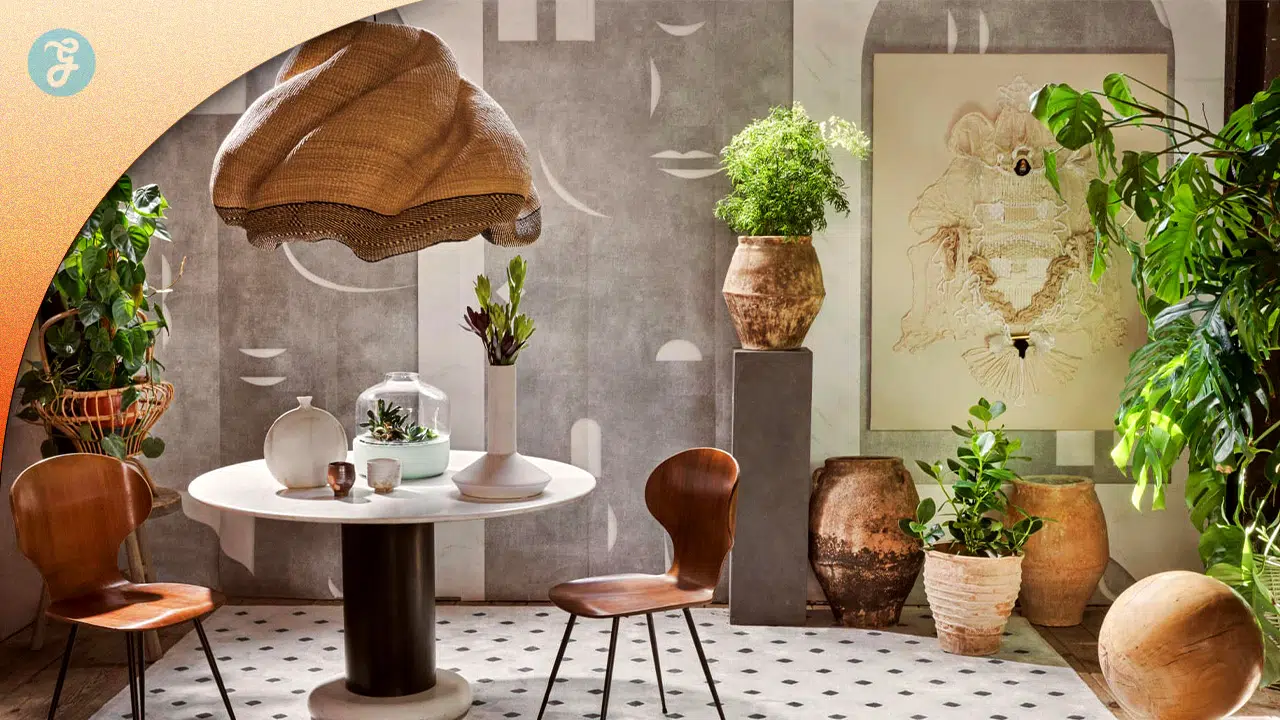
Tired of home décor that harms the planet? Many homeowners struggle to find stylish options that don’t contribute to pollution, waste, or poor indoor air quality. Popular design choices often release VOCs (volatile organic compounds), creating hidden health risks inside modern living spaces.
This ongoing challenge highlights the clash between aesthetics and sustainability. In fact, studies reveal that interior design can sometimes generate a larger carbon footprint than the building’s construction itself—making eco-conscious choices more important than ever.
This guide explores the best Sustainable Materials for Interior Design, from reclaimed wood to innovative solutions like mycelium leather. It also covers practical tips for selecting low-VOC paints to create healthier, greener interiors. Discover how to design a space that looks beautiful while supporting a more sustainable future.
Understanding Sustainable Interior Design
Green initiatives drive change in many fields, and interior design leads the pack. Organizations push for sustainability and environmental protection, making eco-friendly choices essential.
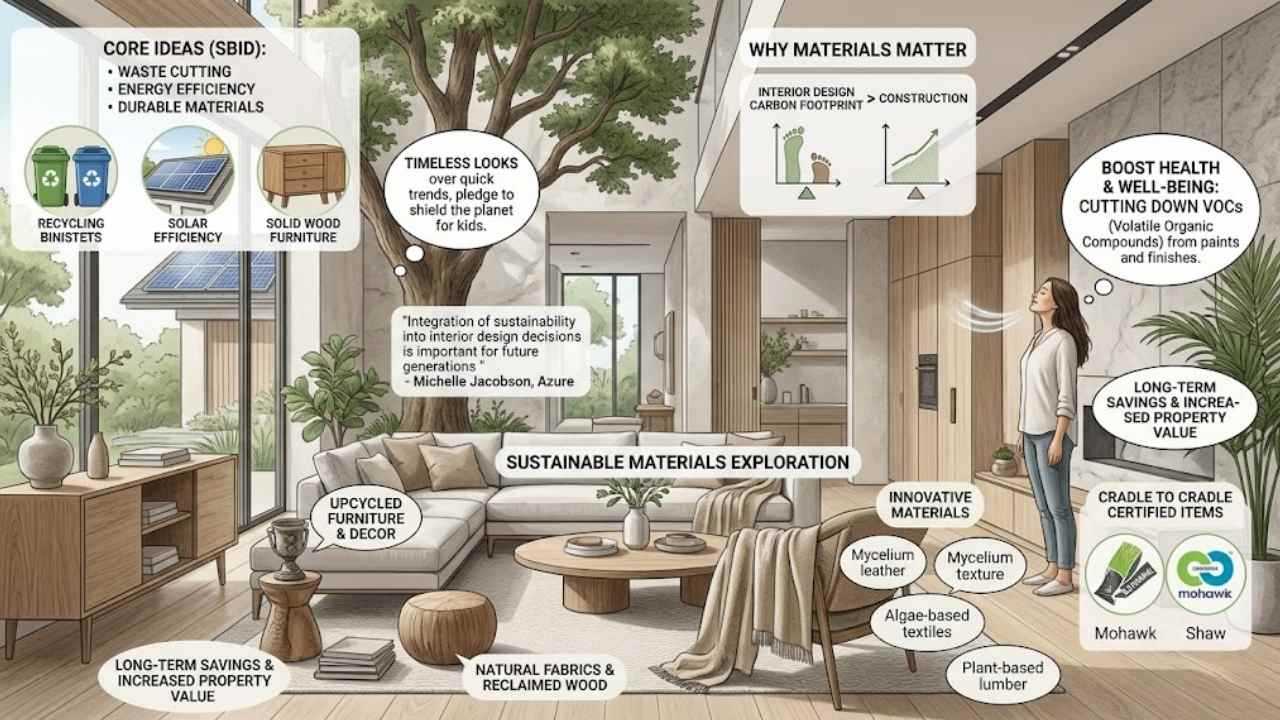
Aspiring interior designers see green interior design as the new standard, not some passing fad. This approach cuts down environmental impact and saves global resources. The Society of British & International Interior Design points out core ideas, like cutting waste, boosting energy efficiency, and picking durable materials.
Think of it as building a home that lasts, like a sturdy oak tree standing tall through storms.
Sustainable interiors favor timeless looks over quick trends, so you invest in furniture from green building materials and soft neutral colors. Designers team up with clients who crave green lifestyles to slash waste reduction and fight climate change.
This whole philosophy roots in ethics, with a pledge to shield the planet for kids down the line. Picture your space as a cozy nest that treads lightly on Earth, blending beauty with smart, renewable resources.
Why Sustainable Materials Matter in Interior Design
Sustainable materials make a big difference in interior design, folks. Recent research shows the carbon footprint of a building’s interior design can top that of its construction. Imagine that, your choices inside might harm the planet more than the walls themselves.
People live and breathe in these spaces, so sustainable materials boost health and well-being for occupants. They cut down on VOCs, those volatile organic compounds that sneak into the air from paints and finishes.
Think of it like picking fresh apples over junk food; it feels good and keeps you strong. Designers at places like NYSID and ASID push for this shift in residential projects. Upcycled furniture and decor gain fans fast, slashing waste while adding charm.
Repurposing recycled materials fits the trend, turning old into new with style. Natural fabrics and reclaimed wood furniture shine here, blending beauty with function. You save money long-term too, as these options last and hike property value.
Sustainable design practices reduce environmental impact, no doubt about it. Picture a home that whispers care for the earth, not shouts waste.
Integration of sustainability into interior design decisions is important for future generations, says Michelle Jacobson from Azure.
Folks often overlook how eco-friendly building materials like bamboo and stone amp up aesthetic appeal. Trends lean hard on natural picks for their green edge and visual pop. Luxury eco-friendly materials from brands like Carnegie Textiles or Interface prove you don’t sacrifice style.
Sustainable textiles, free of flame retardants, keep spaces safe and cozy. Cradle to Cradle certified items from Mohawk or Shaw lead the pack. Energy-efficiency ties in, cutting costs while you enjoy the vibe.
Innovative materials, think mycelium leather from Mylo Unleather, push boundaries. Plant-based lumber and algae-based textiles join the mix, fresh from labs like Healthy Materials Lab at Parsons.
Recycled metal and glass from Cosentino add sparkle without guilt. Upcycling hits big in places like Toronto or Cornwall, where designers craft from waste. Sustainable home decor from West Elm or Pottery Barn shows it’s doable.
These choices foster well-being, like a warm hug from nature itself. You weave in low-VOC paints from Sherwin Williams or Benjamin Moore for cleaner air. Eco-materials declare labels boast transparency, guiding smart picks.
Architects at LMN and the Carbon Leadership Forum back this move.
Popular Sustainable Materials for Interior Design
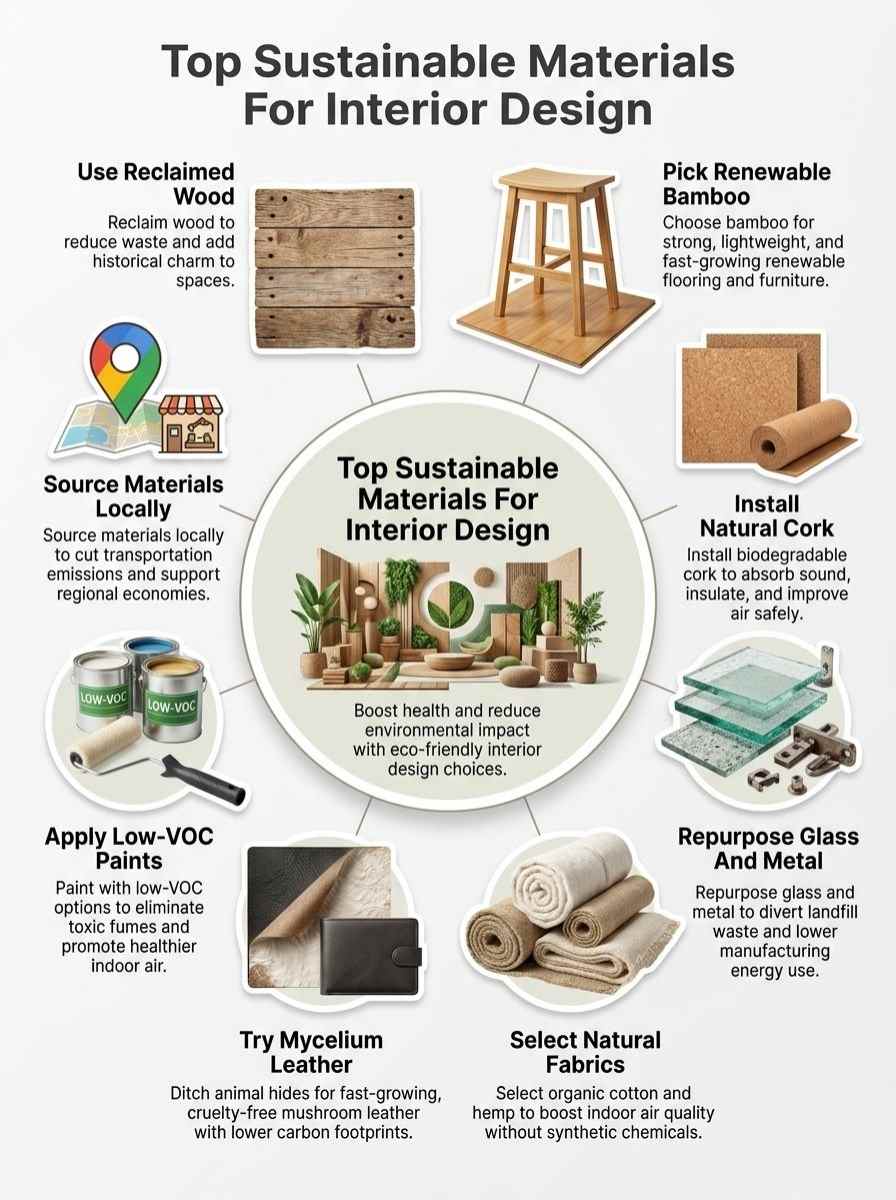
Popular sustainable materials, like Caesarstone premium quartz and Xorel, act as game-changers in interior design, blending style with planet-friendly vibes that feel like a breath of fresh air in your space, so keep reading to see why they rock.
Reclaimed Wood
Designers source reclaimed wood from old structures. They repurpose it for furniture and decor. This choice reduces waste and adds character to flooring, walls, and furniture. Imagine giving new life to beams from a forgotten barn, that’s the magic here.
Sourcing reclaimed wood aligns with reducing environmental impact. It supports waste reduction techniques essential for green design. Libby Langdon uses reclaimed wood in her sustainable projects.
She brings historical charm to interior spaces. Consumers seek eco-friendly and stylish options more than ever. Reclaimed wood fits that bill perfectly, like a hidden gem from the past.
Using reclaimed wood helps minimize landfill waste in sustainable interior design. Think of it as turning wasted treasure into something special. Brands like Circon and Matek highlight this trend in their collections.
Reclaimed wood gains popularity as folks chase sustainable vibes. It adds that special touch without harming the planet. Designers repurpose it to create warm, inviting rooms. This material stands out in projects certified with Greenguard Gold.
Parsons at the New School’s Healthy Material Lab promotes such choices. They focus on low-VOCs for better air quality. Reclaimed wood pairs well with natural fabrics from House of Hackney.
It works in designs by LMN Architects too. You see it in creative matters from Momentum Textiles & Wallcovering. This approach cuts down on new logging. It feels good to choose materials that last.
Bamboo
Bamboo stands out as a lightweight, strong, and durable choice for your home. It grows fast, making it a renewable resource that fits flooring, furniture, and cabinetry perfectly. Libby Langdon, a top designer, loves adding bamboo to create eco-friendly spaces.
This material acts like a green hero, biodegradable and kind to the planet, cutting down on harm. People pick it over old-school wood because you harvest it without harming the plant itself.
That boosts its sustainability big time.
Local sourcing of bamboo products slashes transportation emissions, a smart move for the environment. You see it pop up in sustainable furniture and decor all the time. Imagine crafting a cozy room that feels good and does good, like giving Mother Earth a high-five.
Brands like William-Sonoma Home feature bamboo items with Greenguard Gold certification, ensuring low VOCs for healthier air. It pairs well with ideas from the Master of Professional Studies in Sustainable Interior Environments, keeping your design fresh and responsible.
Cork
Cork comes from harvested bark that’s fully renewable. Builders strip it without harming the tree at all. This makes cork a smart choice for eco-friendly homes. Picture a material that regrows every few years, like nature’s quick comeback kid.
People love it for flooring and wall coverings because it’s biodegradable and natural.
Designers flock to cork for its sound-absorbing magic, which quiets noisy rooms fast. It also fights microbes on its own, boosting indoor air quality without harsh chemicals. Plus, cork insulates well, cutting down on energy use in your space.
Groups like the Environmental Working Group highlight its low-VOC perks, fitting right into green standards. Sustainable pros, from Formafantasma to the Green Science Policy Institute, praise cork’s rise in popularity for these standout traits.
Recycled Metal and Glass
Recycled glass comes from old jars and bottles. People turn it into stunning decor and countertops. This material diverts waste from landfills, just like giving trash a second life.
It needs less energy to make than new glass, and boy, does it last. Picture a kitchen counter that sparkles with that one-of-a-kind look, all while saving raw materials. Designers love it in green-certified projects.
Recycled metal gets repurposed for furniture and fixtures too. Folks craft it into pieces that scream industrial chic or sleek modern vibes. This stuff stays tough over time and cuts energy use compared to fresh metal.
You cut down on landfill junk by choosing it. Imagine a coffee table from old cans, adding edge to your space. Products like the polygood translucent collection show how recycled bits shine in design.
Check out daltile’s panoramic porcelain surfaces for more eco twists, or email orders@swatchbox.com for samples. Brands such as the good plastic company push similar ideas, blending in quartz sand for that earthy feel.
Think about low-VOCs in these picks, like ecos by imperial paint for a fresh coat without the fumes. Recycled glass and metal fit right into sustainable spots, offering durability that stands up to daily wear.
They reduce the call for virgin stuff, keeping things green. Ceramica vogue tiles pair well with them, boosting that modern edge. Pfister faucets made from recycled metal add function with flair.
Atelier workshops often highlight these in custom work. Even sherwin williams promar© 200 line complements the look, low on VOCs (volatile organic compounds) for healthier air. Earthic and ecoax fabrics weave in nicely too, tying the room together.
Alkemis paint brings zero-VOC options to match. Using these materials feels like a smart win for the planet, huh?
Natural Fabrics
Designers love natural fabrics for their green appeal. Think organic cotton, linen, and hemp as top eco-friendly decor options. Libby Langdon uses organic cotton in her sustainable interiors, and you can too.
These fabrics break down naturally, cutting back on chemicals unlike synthetic textiles. They boost indoor air quality with their natural fibers. Plus, they ditch petroleum-based stuff, easing our oil dependence.
Source them locally to slash transportation emissions, a smart move for the planet. Natural fiber textiles fit right into wellness trends for calmer spaces. Groups that push sustainable farming often certify these fabrics, so you know they’re legit.
Wrapping your room in hemp curtains, like a cozy hug from nature itself. Go for durable picks that last, blending style with earth-friendly vibes.
Innovative Eco-Friendly Materials
Swapping old fabrics for mushroom-grown hides or sea-plant cloths that cut waste and boost your home’s green vibe, all while keeping things stylish and fresh—stick around to see how these game-changers fit into your next project!
Mycelium Leather
Mycelium leather comes from fungi roots. It serves as a leather alternative, both sustainable and visually appealing. Brands create Mylo Unleather from mycelium, a type of fungus that resembles leather.
Lululemon, Stella McCartney, and Adidas use Mylo Unleather in their Mylo product line. They finish it with polyurethane for weather resistance, which boosts durability. Imagine ditching cowhide for something grown in weeks, like a speedy garden harvest.
This material renews rapidly and biodegrades easily.
Mycelium-based products gain popularity in the sustainable luxury market. They offer a cruelty-free option compared to animal leather. Production of mycelium leather leaves a lower carbon footprint than traditional methods.
Picture high-end bags that feel luxurious but harm no animals, a real game-changer for eco-conscious folks. Designers love how it blends style with planet-friendly vibes.
Plant-Based Lumber
Plant-based lumber comes from companies like The True Green in Poland. They use fast-growing plants, such as hemp and flax, to make it. This approach cuts down on tree felling, and it absorbs a lot of CO2.
Think swapping out old wood habits for something that grows back quick, like a weed in your garden. Designers love it for projects, take Husarska Design Studio’s HempStool as an example.
That stool shows how this material fits right into furniture. It acts as a renewable choice, and it helps with carbon sequestration too. Production eases our need for traditional timber sources.
Plus, it works great for structural components in homes.
You can source plant-based lumber locally, which boosts sustainability. It draws on rapidly renewable resources, keeping things eco-friendly. This stuff supports waste reduction by using agricultural byproducts, you know, turning leftovers into something useful.
Think of it as giving scraps a second life, like recycling your kitchen compost into gold. Builders apply it in various ways, from chairs to beams. Folks in interior design find it perfect for green practices.
It contributes to less environmental harm in general. Designers incorporate it to create spaces that feel good and do good.
Quartz Sand
Quartz sand shines as an innovative eco-material for furniture and decorative surfaces. Designers love how it mimics the elegance of natural stone. Take the Contourage table, for example.
Johan Wiln from Studio TOOJ created it with locally sourced quartz sand and green 3D printing methods. This approach cuts down on waste, like using a smart shortcut in a busy kitchen.
The table mixes in furan-based binders from farm scraps, slashing the eco-footprint big time. You get sturdy quartz sand-based pieces that fit all sorts of rooms, from cozy dens to sleek offices.
Sourcing it nearby boosts local jobs and trims travel fumes, like keeping your shopping close to home. Plus, these products adapt to any style you dream up, adding that custom spark without harming the planet.
Algae-Based Textiles
Algae-based textiles come from kelp. They break down naturally and producers make them in sustainable ways. Imagine turning ocean plants into cozy fabrics, like a wave of green innovation hitting your home decor.
These materials get used in fresh wallcoverings and soft furnishings, adding a touch of nature to rooms. Production cuts down on fossil fuel use, which helps the planet breathe easier.
Plus, they bring special textures and colors to interior spots, making designs pop with eco-charm.
Circon stands out as a star here. Makers craft it from 70% bio-sourced, fast-growing resources, including algae-like stuff that traps carbon. Its special backing soaks up carbon while growing, acting like a tiny environmental hero.
Algae-based materials recycle easily and fit into a full-circle life cycle, keeping waste low. Products like these grab eyes for their green perks and style wins, proving sustainability can look great too.
Key Principles for Choosing Sustainable Materials
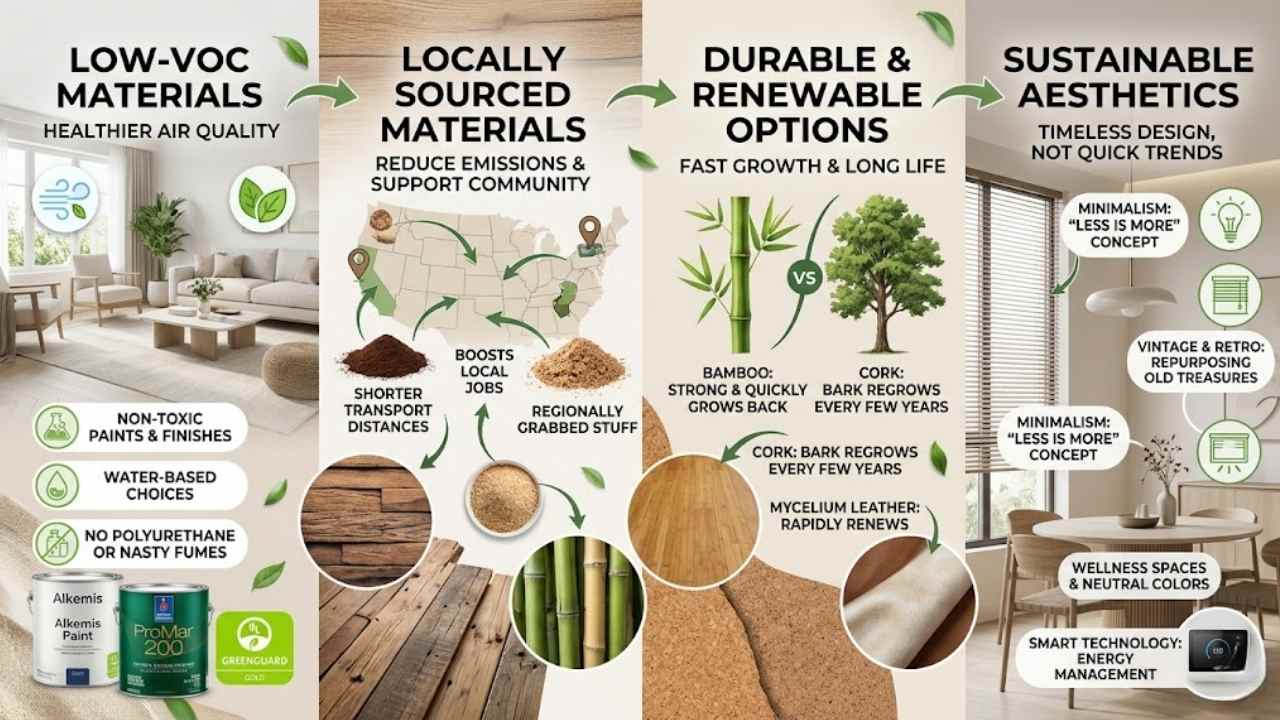
You want your space to feel good and do good for the planet, right? Think of these guidelines as your trusty map, pointing you to choices like paints with fewer chemicals, supplies from nearby spots, and stuff that lasts without harming nature, sparking ideas for your next project.
Low-VOC Materials
Low-VOC paints and finishes boost healthier indoor air quality, and that’s a big win for your home. Think about it, you spend tons of time inside, so why not pick options that cut down on nasty fumes? Ecos by Imperial Paint fits the bill perfectly.
This water-based choice skips polyurethane and VOCs altogether. Workers produce it right here in the U.S., which shrinks the carbon footprint. Plus, it comes in a wide range of colors and finishes, complete with a Healthy Product Declaration.
Sherwin Williams ProMar 200 Line steps up too. These interior latex paints stay VOC-free and hold GREENGUARD Gold Certified status. They also carry an Environment Product Declaration that confirms low embodied carbon.
House of Hackney brings flair with over 40 color selections. This B Corp certified brand keeps VOC levels low, making it a smart pick for eco-conscious folks. Alkemis Paint shines by ditching toxic synthetic pigments, VOCs, and hazardous pollutants.
It stays water vapor-permeable, which stops mold and fungus from growing. Imagine slapping on a fresh coat that feels good for the planet and your lungs, like a breath of fresh air in your living room.
Choices like these turn sustainable design into something you can touch and feel every day.
Locally Sourced Materials
You know, picking materials from nearby spots cuts down on truck fumes and boosts jobs in your area. Libby Langdon pushes for these natural picks in her green setups. Take Matek from Copenhagen’s Mater, it mixes coffee husks and sawdust with sugarcane plastic to mimic stone looks and last longer.
The Contourage table uses quartz sand from close by. This choice shrinks the carbon mess in your home projects. Plant-based lumber pulls in quick growers like hemp and flax from local fields.
Regionally grabbed stuff follows smart sourcing rules. Folks love locally pulled reclaimed wood and bamboo for eco-approved builds, it’s like giving your space a hometown hug that helps the planet.
Durable and Renewable Options
Pick materials that last long and renew fast, folks. Bamboo stands out as lightweight, strong, and durable. It grows back quickly, making it a smart choice for floors or furniture.
Cork comes from bark that regrows every few years, so trees stay healthy. Think of it like nature’s gift that keeps on giving. Mycelium leather renews rapidly and breaks down naturally, perfect for upholstery.
Plant-based lumber draws from fast-growing sources like hemp and flax. These options cut waste and boost your space’s eco-friendliness.
Go for CornWall in vertical spots; it’s super durable and repels moisture, plus it comes with a demountable anchoring system for easy swaps. EcoAx offers a jute backing that decomposes in 12 months, enriching the soil as it goes, and swaps out synthetics like nylon.
Circon wallcoverings use 70% bio-sourced, rapidly renewable resources, and you can recycle them fully. Caesarstone Premium Quartz delivers durability with low maintenance, certified Greenguard Gold for low emissions.
These picks blend toughness with green vibes, like a sturdy bridge to a better planet.
Integrating Sustainability into Design Aesthetics
Sustainable interiors focus on timeless designs, not those quick trends that fade fast. They push you to invest in furniture from green building materials, paired with neutral colors that last.
Think of minimalism as your best friend here, it lives by “less is more,” and crafts spaces that feel clean, bright, and oh-so-relaxing. This approach fights back against endless buying, like a quiet rebellion in your living room.
Vintage and retro styles let you repurpose old treasures, blending fresh looks with those classic vibes you love. Wellness spaces step in to boost your mood and mind, using designs that nurture and refresh, almost like a hug from your home.
Smart technology jumps aboard with clever algorithms that tweak energy use based on how you move through the space, saving power without a fuss.
Picture adding LED light fixtures to slash energy use, they light up your eco-friendly haven just right. Energy-efficient blinds and curtains help control room temps, keeping things cozy and green.
Biodegradable picks like bamboo and cork tie it all together, they boost your style while helping the planet. Imagine chatting with a friend, “Hey, this bamboo floor feels amazing, and it’s kind to Earth too.” These choices turn sustainability into a seamless part of your aesthetic, making every corner count.
Final Thoughts
You’ve explored top sustainable materials like reclaimed wood and bamboo that cut waste and boost eco-friendliness in your home. These choices prove simple to add, they fit any budget, and they deliver quick wins for greener living.
Think about the big difference, swapping old habits for low-VOC paints slashes harmful emissions and lifts your family’s health. Check out the Society of British & International Interior Designers for more tips, or follow pros like Libby Langdon to spark your next project.
Go ahead, pick one material today and watch your space transform into a planet-friendly haven.
Frequently Asked Questions (FAQs) About Sustainable Materials for Interior Design
1. What makes bamboo a top pick for sustainable interior design?
Bamboo grows fast, like a weed in your backyard, and it helps cut down on deforestation. You can use it for floors or furniture without feeling guilty about the planet. Plus, it’s tough as nails and adds a warm vibe to any room.
2. How does cork fit into eco-friendly home decor?
Cork comes from tree bark that regrows, so harvesting it doesn’t kill the tree. It’s perfect for walls or floors, keeping things quiet and comfy.
3. Why go for recycled wood in your living space?
Recycled wood gives old timber a second life, reducing waste in landfills. It brings character to shelves or tables, like telling a story from the past. And hey, it saves trees while making your home feel cozy and green.
4. Can natural wool rugs boost sustainable style?
Yes, wool from sheep is renewable and biodegradable, a smart choice over synthetic stuff. It insulates well, cuts energy bills, and feels soft underfoot, like walking on clouds.






















