Stress is an unavoidable part of modern professional life. Deadlines, meetings, emails, and the constant demand to perform can take a toll on mental and physical well-being. High stress levels can lead to burnout, decreased productivity, and even long-term health problems like anxiety and heart disease.
The good news? There are quick and effective ways to reduce stress without disrupting your busy schedule.
In this guide, we’ll explore stress relief techniques for busy professionals that can help stay calm, focused, and productive. These methods are simple, require minimal effort, and can be practiced anytime, anywhere.
Stress Relief Techniques for Busy Professionals
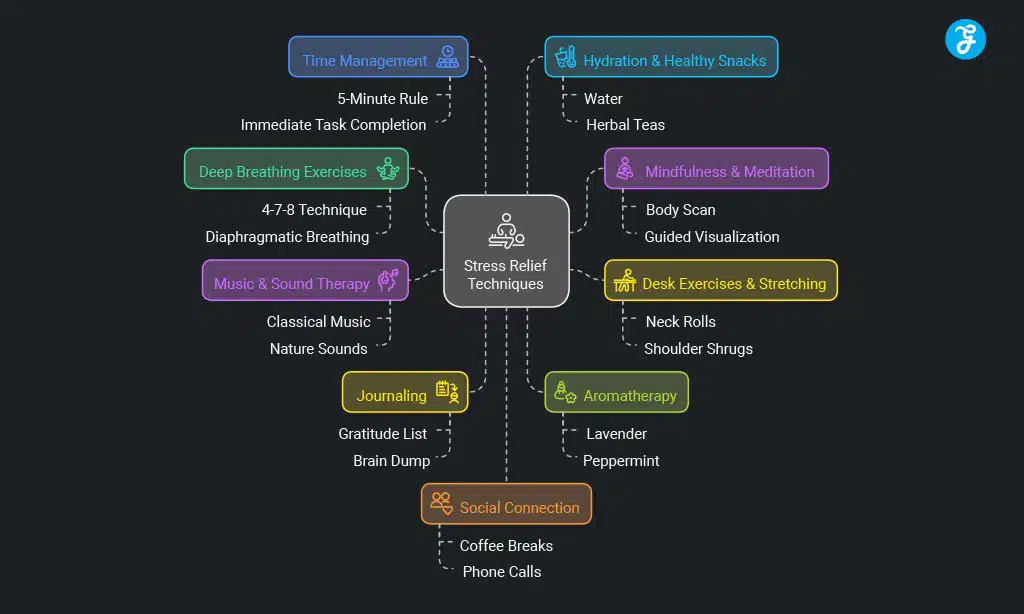
In today’s fast-paced work environment, managing stress effectively is essential for maintaining productivity and overall well-being. Stress relief techniques for busy professionals provide practical ways to stay calm, focused, and energized. By incorporating these simple yet powerful strategies into your daily routine, you can reduce anxiety, boost performance, and improve your quality of life.
1. Deep Breathing Exercises (Instant Relaxation)
Deep breathing is one of the easiest and fastest ways to calm your nervous system. It activates the parasympathetic nervous system, which reduces stress and promotes relaxation.
How to Practice Deep Breathing?
- 4-7-8 Breathing Technique: Inhale for 4 seconds, hold for 7 seconds, exhale for 8 seconds.
- Diaphragmatic Breathing: Breathe deeply from the belly rather than the chest.
- Box Breathing: Inhale for 4 seconds, hold for 4 seconds, exhale for 4 seconds, hold again for 4 seconds.
Benefits of Deep Breathing:
| Benefit | Explanation |
| Lowers cortisol levels | Reduces the stress hormone, cortisol |
| Improves focus | Enhances cognitive function and decision-making |
| Promotes relaxation | Helps induce a state of calmness |
| Reduces anxiety | Helps manage work-related anxiety and panic attacks |
Pro Tip: Take a few deep breaths before an important meeting or stressful situation to stay composed.
2. The Power of Mindfulness & Meditation
Mindfulness is about staying present in the moment without judgment. Studies show that mindfulness meditation can reduce stress by 30-40% in just a few weeks.
Simple Mindfulness Techniques for Professionals:
- Body Scan Meditation: Focus on different parts of your body and relax each one.
- Guided Visualization: Imagine a peaceful place like a beach or forest.
- Mindful Walking: Pay attention to each step and breath while walking.
- Use Meditation Apps: Apps like Calm, Headspace, and Insight Timer offer guided meditations.
Benefits of Mindfulness & Meditation:
| Benefit | Explanation |
| Enhances focus | Helps professionals concentrate better |
| Reduces workplace stress | Encourages a calm and composed mindset |
| Improves emotional intelligence | Helps regulate emotions and improve interactions |
| Promotes better sleep | Reduces insomnia and improves sleep quality |
Pro Tip: Start with 5 minutes of meditation daily and gradually increase the time.
3. Desk Exercises & Stretching (Physical Release of Tension)
Sitting for long hours can cause muscle tension, leading to stress and discomfort. Desk exercises help improve circulation and reduce stress.
Quick Desk Stretches:
- Neck Rolls: Slowly roll your neck from side to side.
- Shoulder Shrugs: Lift your shoulders up and down to release tension.
- Seated Spinal Twist: Sit straight, twist your torso to one side, hold for a few seconds, then switch.
- Wrist Stretches: Extend your arms and gently pull back on your fingers.
Benefits of Desk Exercises:
| Benefit | Explanation |
| Relieves muscle tension | Eases stiffness caused by prolonged sitting |
| Improves circulation | Helps blood flow, reducing fatigue |
| Boosts energy levels | Keeps the body active and prevents lethargy |
| Enhances mood | Movement releases endorphins, improving mood |
Pro Tip: Set a reminder to stretch every 30-60 minutes.
4. Music & Sound Therapy (Instant Mood Booster)
Music has a powerful impact on the brain and can significantly reduce stress levels.
Best Music for Stress Relief:
- Classical Music: Slows heart rate and lowers blood pressure.
- Lo-Fi Beats: Enhances focus and relaxation.
- Nature Sounds: Ocean waves, rain, and birdsongs can be incredibly soothing.
Benefits of Music Therapy:
| Benefit | Explanation |
| Reduces stress hormones | Lowers cortisol and adrenaline levels |
| Improves concentration | Helps professionals stay focused |
| Enhances mood | Releases dopamine and serotonin |
| Aids relaxation | Helps the mind unwind after a long day |
Pro Tip: Create a stress-relief playlist with calming tunes.
5. The 5-Minute Journaling Technique (Declutter Your Mind)
Journaling helps organize thoughts, relieve anxiety, and boost clarity.
Easy Journaling Prompts:
- Gratitude List: Write 3 things you’re grateful for.
- Brain Dump: Write whatever is on your mind to clear mental clutter.
- Daily Reflection: Summarize key moments of your day.
Benefits of Journaling:
| Benefit | Explanation |
| Reduces mental clutter | Helps clear overwhelming thoughts |
| Enhances self-awareness | Improves emotional intelligence |
| Provides stress relief | Writing about feelings can be therapeutic |
| Boosts problem-solving skills | Helps analyze and resolve issues effectively |
Pro Tip: Keep a small notebook or use digital journaling apps like Day One or Notion.
6. Aromatherapy & Essential Oils (Science-Backed Relaxation)
Aromatherapy is a natural stress reliever that promotes relaxation through scent.
Best Essential Oils for Stress Relief:
- Lavender: Calms anxiety and promotes sleep.
- Peppermint: Boosts energy and reduces headaches.
- Citrus (Lemon/Orange): Enhances mood and alertness.
Benefits of Aromatherapy:
| Benefit | Explanation |
| Reduces stress and anxiety | Aromas influence brain chemistry |
| Enhances relaxation | Helps create a calming environment |
| Boosts focus and energy | Certain scents improve concentration |
Pro Tip: Use a roll-on essential oil for quick relief during work hours.
7. The 5-Minute Rule for Time Management (Reduce Overwhelm)

Time management plays a huge role in reducing stress. The 5-minute rule is a simple trick to break procrastination.
How It Works:
- If a task takes less than 5 minutes, do it immediately.
- If a task is overwhelming, work on it for just 5 minutes to get started.
Benefits of the 5-Minute Rule:
| Benefit | Explanation |
| Reduces procrastination | Makes tasks feel less daunting |
| Improves productivity | Encourages quick decision-making |
| Lowers stress levels | Prevents last-minute pressure |
Pro Tip: Use a timer to stay focused.
8. Hydration and Healthy Snacks
Dehydration can increase stress levels and fatigue. Keeping yourself hydrated and consuming healthy snacks can improve your mood and productivity.
Best Hydration & Snacks for Stress Relief:
- Water: Aim for 8 glasses per day.
- Herbal Teas: Chamomile, green tea, or peppermint tea.
- Healthy Snacks: Nuts, dark chocolate, and fresh fruits.
Benefits of Hydration & Healthy Snacking:
| Benefit | Explanation |
| Reduces fatigue | Keeps energy levels stable throughout the day |
| Enhances mood | Helps regulate stress hormones |
| Supports brain function | Keeps the mind alert and focused |
9. Social Connection & Support
Talking to a friend or colleague can help reduce stress levels and provide emotional support.
Ways to Connect:
- Quick Coffee Breaks: Catch up with a coworker.
- Phone Call to a Loved One: A short call can boost your mood.
- Workplace Social Groups: Join office wellness programs or hobby groups.
Benefits of Social Connection:
| Benefit | Explanation |
| Reduces stress | Talking to someone can be therapeutic |
| Boosts happiness | Encourages positive interactions |
| Strengthens relationships | Builds stronger professional and personal connections |
10. Laughter Therapy
Laughter is a natural stress reliever and releases feel-good endorphins.
Ways to Incorporate Laughter:
- Watch a Funny Video: Short comedy clips can lighten your mood.
- Follow a Humor Page: Keep humor in your daily feed.
- Engage in Playful Conversations: Light-hearted talks with colleagues.
Benefits of Laughter Therapy:
| Benefit | Explanation |
| Lowers stress hormones | Reduces cortisol and increases serotonin |
| Enhances social bonds | Strengthens connections with others |
| Boosts mood and productivity | Keeps work enjoyable and engaging |
Takeaways
Stress management doesn’t have to be complicated. These stress relief techniques for busy professionals can help you stay calm, focused, and productive without taking much time.
By incorporating at least one of these techniques daily, you can significantly improve your ability to manage stress effectively. Remember, small changes lead to big results when it comes to reducing work stress and improving overall well-being.
FAQs on Stress Relief Techniques for Busy Professionals
1. What are the most effective stress relief techniques for busy professionals?
The most effective methods include deep breathing, mindfulness, short stretching breaks, journaling, aromatherapy, and social connection. These techniques lower cortisol levels, calm the nervous system, and help maintain focus without disrupting a busy workday.
2. How can I manage stress when I don’t have time for long breaks?
Use micro-practices that take under five minutes—like the 4-7-8 breathing method, mindful pauses between meetings, or quick desk stretches. Even one minute of conscious breathing can significantly reduce stress and reset your focus.
3. Can meditation really help reduce workplace stress?
Yes. Regular mindfulness or meditation practice can reduce stress by up to 40%, improve concentration, and enhance emotional regulation. You can start with short guided sessions using apps like Calm, Headspace, or Insight Timer.
4. How does journaling help with stress relief?
Journaling declutters the mind by transferring worries from your thoughts to paper. It promotes self-reflection, improves emotional clarity, and reduces anxiety. Writing for even five minutes a day—using gratitude lists or brain dumps—can have measurable mental health benefits.
5. Are there quick physical exercises I can do at my desk to reduce stress?
Yes. Try neck rolls, shoulder shrugs, and seated spinal twists to relieve tension from sitting long hours. These movements increase circulation, reduce muscle tightness, and boost energy without leaving your desk.