

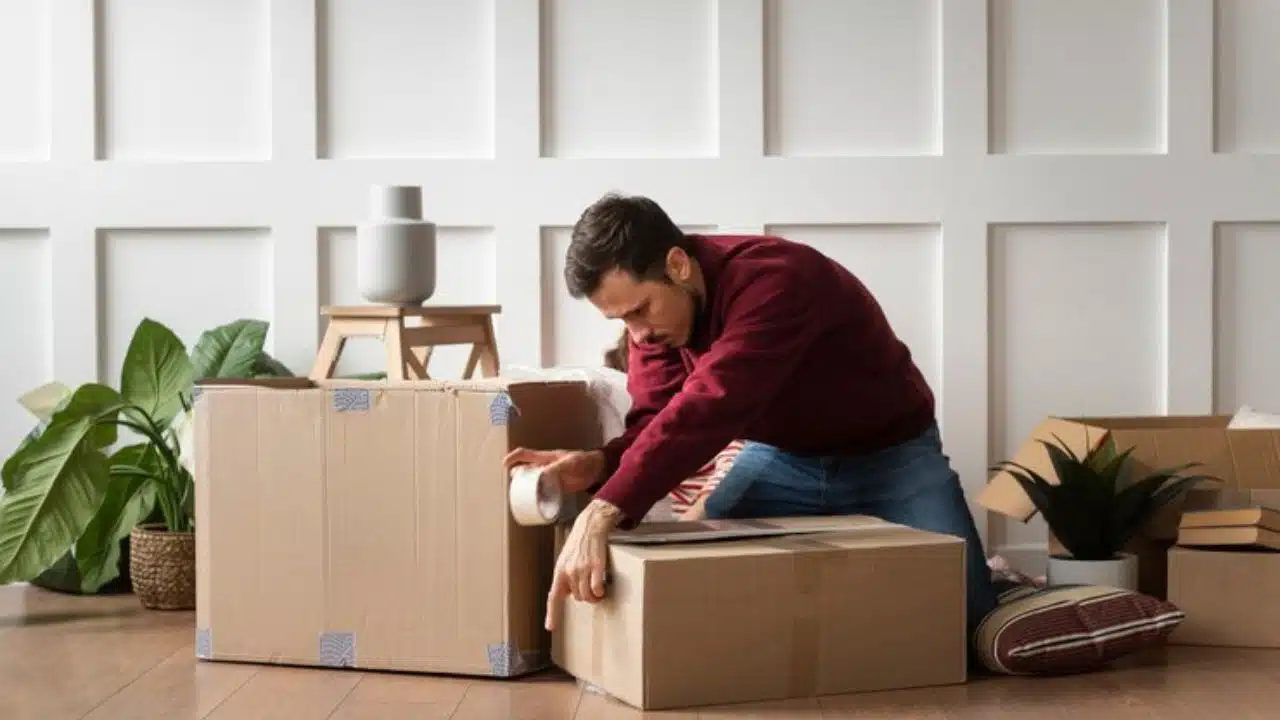
Moving requires meticulous planning and organisation, whether you’re moving out of a small apartment or a multistory house. This guide provides moving hacks that can make the process less stressful.
Whether you need specific tips on how to pack, ideas for eliminating clutter, or ways to reduce the risk of injury, these tips will help you feel like an expert in no time.
Step-by-Step Packing Process
Step 1: Gather Your Moving Supplies
Before packing your belongings into boxes, ensure you have all the necessary materials and supplies for a smooth move. This preparation will help you avoid multiple trips to the store, which can delay your packing and increase costs.
To save money on moving supplies, ask neighbours and friends if they have any spare boxes from their recent moves or large deliveries. You can also use social media platforms like Facebook and Nextdoor to find free or inexpensive boxes. If you work in an office, check the mailroom for leftover boxes from large shipments.
Though gathering free boxes may take some time, it’s a cost-effective and environmentally friendly alternative to buying new ones.
In addition to boxes, you’ll need packing tape to secure them, markers to label each box or container, and protective materials such as newspapers, grocery bags, or towels for fragile items. Consider using wardrobe boxes for hanging clothes and special boxes for dishes and glassware.
Organise all your supplies in one place to keep track of what you have and to ensure you have enough. You might also need to borrow or purchase a dolly, hand truck, or moving straps to help lift and transport heavier boxes and furniture.
Step 2: Create an Inventory of the Items You Plan to Pack
Go through each room and compile a list of the items you plan to pack. This room-by-room inventory will help you stay organised and make the unpacking process quicker and more efficient.
To further streamline the process, consider assigning a specific colour to each room and using coloured tape or markers to label the boxes and more oversized items. This will make it easier to identify where everything belongs when you move into your new home.
Remember to include less obvious items such as mattresses, blinds, curtains, and other things that must be labelled and packed.
While you’re creating your inventory, take the opportunity to identify items that are unused or have lost their value. These can be set aside in piles or baskets to be donated, sold, or discarded later. Decluttering before you start packing ensures you won’t waste time and effort moving items only to get rid of them once you arrive.
Having a family member review your inventory list is also a good idea to ensure nothing has been overlooked or unnecessarily included. This extra check can help you stay organised and avoid mistakes.
Step 3: Pack Essential Personal Items for Each Family Member in Suitcases
Moving can result in being separated from your belongings for a day to several weeks. Regardless of the move’s duration, ensure each family member has a suitcase packed with all the necessities for the transition period.
Each suitcase should include essentials like a toothbrush, toothpaste, skincare products, a hairbrush, and other personal toiletries. Ensure that at least one suitcase contains shampoo, conditioner, and body wash for the family.
These items will be handy if you stay in a hotel or want to shower on the first night in your new home without searching through boxes.
Include personal items that hold sentimental value for each family member, such as a cherished blanket, a favourite stuffed animal, or a family heirloom necklace.
This ensures that these essential items are safeguarded and not at risk of being lost or damaged if a moving truck is delayed or items get buried in a storage facility.
Pack critical documents and information in these suitcases, including social security cards, birth certificates, medical records, and other important papers you want to keep secure.
If you’re driving to your new home, keep these suitcases in your vehicle. If you’re flying, ensure the suitcases are small enough to be used as carry-ons and that all liquids comply with TSA regulations. This approach keeps essential items accessible and safe throughout the move.
Step 4: Pack Items Room by Room and Clearly Label Everything
One of the best moving packing strategies is to pack each room separately, labelling all boxes clearly. This method will save you a lot of time when unpacking. Start by filling each room, ensuring only items from that room are placed in the corresponding boxes.
Label each box with its contents and the room it belongs to, and keep them grouped to simplify unpacking. For instance, all kitchen items such as small appliances, silverware, cookware, bakeware, and glassware should be packed in boxes marked “kitchen.”
Avoid mixing items from different rooms, even if there’s extra space in a box. For example, don’t pack a hand mixer with a video game console; it will create confusion when you start unpacking. However, you can use soft items like pillows, blankets, or towels to cushion fragile items like TVs or picture frames.
Keeping all items from bedrooms together can also help children feel secure during the move, as they’ll be able to find their boxes and know their belongings are safe.
This organised approach also aids professional movers in placing boxes in the correct rooms, preventing mix-ups such as bathroom boxes ending up in the basement.
Step 5: Disassemble Any Large Items
Oversized pieces like dressers and cabinets become more manageable when broken down into smaller parts.
For instance, an eight-drawer dresser is significantly more straightforward if the drawers are removed and packed separately, avoiding the drawers sliding around during transport.
Other significant items, such as bed frames, bookshelves, and cabinets, can also be disassembled to make moving more efficient and compact. Protecting each shelf, drawer, or storage piece can prevent the unwanted scratches or marks that often happen during moves.
Bed frames, in particular, must be removed since they are typically too large to fit into a standard moving van or truck bed.
As you disassemble furniture, keep all nuts, bolts, and screws in a labelled bag. This ensures that you won’t be missing any parts when it’s time to reassemble the furniture. Consider taping these labelled bags to the corresponding pieces of furniture for easy identification.
Step 6: Donate or Discard Items You Don’t Plan to Move
As you sort through and pack belongings from closets and other areas, create separate piles for items you want to donate or discard. Your donation pile can include everything from unworn clothes to housewares you no longer need.
Before you take bags of items to donation centres, check if local charities offer pickup services. In some regions, you can schedule a specific date and time for a truck to come and collect your donations. This saves you the trouble of packing your car and driving to multiple drop-off locations.
Step 7: Pack an “Essentials” Box for Immediate Use
Creating an “open first” box can significantly reduce stress when transitioning from one place to another. While a clear container can help you quickly identify contents, a regular moving box marked “open first” works just as well.
This box should contain toilet paper, towels, dish soap, and utensils to make your first days more comfortable. Additionally, include items like a power strip, phone chargers, a flashlight, and essential tools such as a screwdriver or an Allen wrench for reassembling furniture.
Whether you use a backpack, a clear tote, or a labelled box, ensure it travels with you in your car or is otherwise accessible when you arrive at your new home.
How to Pack for Moving, Room by Room
Packing the Kitchen
- Pack the kitchen last: You can tuck away less frequently used appliances early, but leave everyday items like plates and utensils for last.
- Pack liquids together in plastic bins: Secure the openings of bottles with plastic wrap to prevent leaks, and use plastic bins to contain spills.
- Pack glasses and stemware into boxes with dividers: Wrap each glass in packing paper and don’t stack anything on top of them.
- Defrost and clean your fridge: Do this a day or two before the move.
- Prep your large appliances: Unplug them, remove hoses, and tape doors shut.
- Use pots to hold small items: Fill large pots with small kitchen items to save space.
- Pack plates vertically: This reduces the risk of breaking.
- Put essential appliances in laundry baskets: Keep small, essential appliances handy for immediate use.
Packing the Dining Room
- Disassemble furniture: Take legs off tables and chairs, wrap the legs, and pack hardware in labelled bags.
- Get the right boxes for your art: Use speciality boxes for statues, mirrors, and paintings.
- Disassemble lamps: Remove bulbs, wrap bases separately, and use soft shade packing materials.
- Roll area rugs: Clean, roll, and secure them for easy moving.
Packing the Living Room and Den
- Remove fixtures or accessories from large items: Take off cushions and pillows from the couch and wrap furniture in blankets.
- Empty and secure all drawers: Use masking tape to secure them.
- Label cords for electronics: Take pictures of the back of your TV and label cords for easy reassembly.
- Back up your computer’s hard drive: Protect your data before moving.
- Use plenty of protective materials for fragile items: Blankets, towels, and bubble wrap.
Packing the Bedrooms
- Pack guest bedrooms first: Pack items you won’t need until after the move.
- Disassemble furniture: Take apart beds and other large items.
- Leave your clothes on hangers: Pack them in wardrobe boxes or large garbage bags.
- Roll, don’t fold clothes: This saves space.
- Use large garbage bags for linens: They are sturdy and can hold a lot.
- Pack valuable jewellery separately: Keep them with you for safety.
Packing the Bathrooms
- Purge unused items: Throw out or donate unused toiletries and cosmetics.
- Pack essentials last: Include everyday items in your moving essentials bag.
- Keep a first aid kit handy: Injuries can happen, so be prepared.
- Wrap items that might spill: Use plastic wrap to secure lids.
- Pack small items in sealable bags: This keeps them organised.
- Line boxes with towels or garbage bags For extra protection.
- Use towels to wrap fragile items: Towels provide good cushioning.
Packing the Laundry Room
- Decide what to move: Evaluate large installed items and decide if they’re worth moving.
- Wrap sharp objects: Use old towels or bubble wrap for safety.
- Remove parts from power tools: Store removable parts separately.
- Bundle long-handled items: Secure them with rope or twine.
- Drain appliances: Empty liquids from washers and dryers.
- Prepare the washer and dryer: Clean and secure them for moving.
Packing the Garage and Storage Shed
- Don’t procrastinate: Tackle the garage early to avoid last-minute stress.
- Wrap sharp objects: Use old towels or bubble wrap.
- Remove detachable parts from power tools: Store them safely.
- Use moving blankets for odd-shaped items: Secure them for transport.
- Keep essentials with you: Pack a moving essentials bag and box.
General Moving and Packing Tips
1. Use the Right-Size Boxes
Using boxes designed for moving ensures they can hold the weight of your items. Speciality boxes add extra protection for specific items.
2. Put Heavier Items on the Bottom
Lighter items can be crushed if placed under heavier ones. Keeping heavier items on the bottom also makes boxes more stable.
3. Don’t Leave Empty Spaces in Boxes
Empty spaces allow items to shift and get damaged. Fill gaps with towels, blankets, or packing paper.
4. Avoid Mixing Items from Different Rooms
Packing items from different rooms in the same box makes unpacking more difficult. Keep items from the same room together.
5. Label Each Box Clearly
Label each box with the room it’s destined for and a description of its contents. Use different coloured markers for each room for added clarity.
6. Tape Boxes Well
Use multiple layers of tape to secure boxes and prevent them from falling apart during the move.
7. Special Care for Expensive Art
Use crating services for valuable art. Professional movers can provide the necessary protection for these items.
Wrap up
Regardless of your life stage, you’ll likely encounter a move at some point. Whether moving out of a college dorm or a family home, packing everything you own and moving it into a different location can cause stress and anxiety.
The good news is that some of the best moving companies, such as United Van Li, also offer packing services, which can alleviate some of the stress of moving over and leave more of the logistics and planning to you.
This way, you can focus on coordinating the move instead of packing yourself, which can be time-consuming. Professional movers have the expertise and skill set to pack in an organised and efficient way and load a moving truck in a way that provides the most space for all your items.
If you’re overwhelmed by the magnitude of items you have or the manual labour required to move, hiring packing and moving services may be your best bet.
Preparing to move into a home brings excitement and happiness, but packing can be stressful. Figuring out where to begin, knowing what to pack and which room to start with can be overwhelming.
Beginning with a week-by-week packing checklist can make this process less stressful and help answer the question of how to pack for a move.
























