

In today’s ever-evolving professional landscape, challenges are inevitable. From navigating tight deadlines to adapting to unexpected changes, the workplace often demands resilience. Resilience is the ability to adapt, recover, and thrive amidst adversity—a skill that can transform not just your professional life but your personal well-being.
Developing this skill involves cultivating the right mindset, building strong support systems, and adopting practical strategies to stay resilient in a work environment.
This article delves into actionable ways to help you overcome obstacles and maintain peak performance, even in challenging situations. By applying these strategies to stay resilient in a work environment, you’ll position yourself for long-term success.
Strategy 1: Cultivate a Growth Mindset
Embrace Challenges as Opportunities
A growth mindset, a concept popularized by psychologist Carol Dweck, revolves around the belief that abilities can be developed through dedication and hard work. In a work environment, this mindset enables you to see challenges not as threats but as opportunities to grow. These strategies to stay resilient in a work environment will help you build the confidence to handle adversity effectively.
Practical Examples:
- Reframing setbacks as learning experiences: If a project fails, analyze what went wrong and use those insights for future endeavors.
- Viewing feedback as constructive: Embrace critiques as tools for improvement rather than personal attacks.
- Adopting the “not yet” approach: Instead of saying “I can’t do this,” say “I can’t do this yet,” signaling progress is possible.
Characteristics of a Growth Mindset vs. Fixed Mindset
| Mindset Type | Key Beliefs | Approach to Challenges |
| Growth Mindset | Abilities can improve with effort | Sees challenges as opportunities |
| Fixed Mindset | Abilities are innate and unchangeable | Avoids challenges due to fear of failure |
Focus on Continuous Learning
Continuous learning is the cornerstone of resilience. It ensures you remain adaptable and equipped to handle new challenges. These strategies to stay resilient in a work environment emphasize the importance of skill enhancement.
Suggestions:
- Enroll in online courses or certifications relevant to your field.
- Seek mentorship from experienced colleagues to gain insights and broaden your perspective.
- Stay updated with industry trends through webinars, podcasts, or trade publications.
Platforms for Continuous Learning
| Platform | Key Features | Best For |
| LinkedIn Learning | Professional skill-building videos | Industry-specific training |
| Coursera | Courses from top universities | Comprehensive learning paths |
| Skillshare | Creative and entrepreneurial topics | Personal and creative growth |
Strategy 2: Develop Strong Emotional Intelligence
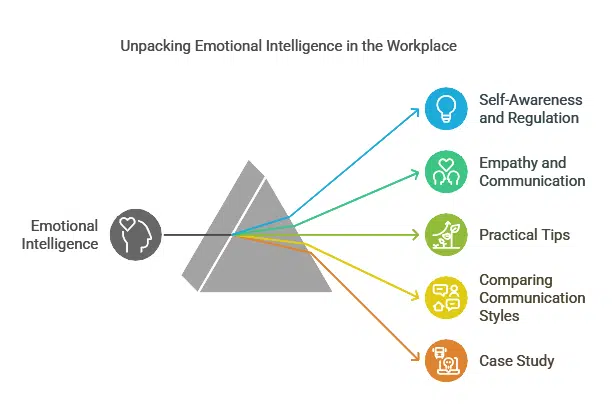
Self-Awareness and Regulation
Emotional intelligence (EQ) is the ability to recognize and manage your emotions while understanding those of others. High EQ is crucial for implementing strategies to stay resilient in a work environment, as it enhances workplace relationships and decision-making.
Practical Tips:
- Journaling: Reflect on your emotions and triggers to better understand them.
- Mindfulness Practices: Techniques like meditation can help you remain calm under pressure and make more rational decisions.
- Pause and Process: Before reacting emotionally, take a moment to assess the situation logically.
Strengthening Empathy and Communication
Empathy fosters understanding and collaboration, while effective communication reduces workplace conflicts. When combined, these qualities reinforce strategies to stay resilient in a work environment.
Comparing Communication Styles
| Style | Description | Example |
| Passive | Avoids expressing needs | “It’s fine, I don’t mind.” |
| Aggressive | Pushes needs forcefully | “Do it my way or else.” |
| Assertive | Balances needs respectfully | “I’d like us to discuss this.” |
Case Study: High EQ in Action
A team leader with high EQ noticed a drop in team morale. By conducting one-on-one meetings, actively listening to concerns, and implementing team suggestions, they improved engagement and productivity by 20% in three months.
Strategy 3: Build a Support Network
Leveraging Professional Relationships
A strong support network can provide guidance, encouragement, and resources during tough times. Building meaningful connections is one of the most effective strategies to stay resilient in a work environment.
Pointers:
- Attend networking events to expand your professional connections.
- Join industry-specific forums or LinkedIn groups to engage with like-minded professionals.
- Foster meaningful relationships by offering help or advice before seeking support.
Seeking Peer Support
Having a trusted circle of colleagues can make a significant difference. Peer support systems are vital components of strategies to stay resilient in a work environment.
Actionable Tip:
- Create or join a work buddy system where team members share challenges and celebrate successes together.
Benefits of a Support Network
| Benefit | Example Scenario |
| Emotional Support | Discussing challenges with a trusted peer |
| Knowledge Sharing | Learning best practices from colleagues |
| Increased Opportunities | Gaining referrals for new projects |
| Stress Reduction | Feeling less isolated during tough times |
Strategy 4: Prioritize Mental and Physical Health
Stress Management Techniques
Stress is a common workplace issue, but effective management can mitigate its impact. By focusing on strategies to stay resilient in a work environment, you can handle stress constructively.
Examples:
- Practice deep breathing exercises to calm your nervous system.
- Use meditation apps like Calm or Headspace for guided sessions.
- Engage in time-blocking to prioritize tasks and reduce overwhelm.
Maintaining a Healthy Lifestyle
Your physical health is directly linked to your resilience. Strategies to stay resilient in a work environment should always include health-focused practices.
List:
- Eat a balanced diet rich in whole foods and nutrients.
- Engage in regular physical activities, such as yoga or jogging.
- Ensure you get 7-9 hours of quality sleep every night.
- Stay hydrated throughout the day.
Key Habits for Mental and Physical Wellness
| Habit | Benefit |
| Balanced Nutrition | Improves energy and cognitive function |
| Regular Exercise | Reduces stress and boosts mood |
| Quality Sleep | Enhances focus and emotional stability |
| Hydration | Supports brain function and energy |
Strategy 5: Set Realistic Goals and Expectations
Breaking Down Long-Term Goals
Large goals can feel overwhelming, but breaking them into smaller, manageable steps makes them more achievable. Effective goal-setting is a cornerstone of strategies to stay resilient in a work environment.
Interactive Element: Checklist Template
- Define the ultimate goal.
- Break it into monthly objectives.
- Identify daily tasks that contribute to the goal.
- Celebrate milestones to stay motivated.
Managing Time Effectively
Efficient time management prevents burnout and enhances productivity. These strategies to stay resilient in a work environment ensure you use time wisely.
Suggestions:
- Use tools like Trello, Asana, or Notion to organize tasks.
- Implement the Pomodoro Technique, working in 25-minute focused intervals with 5-minute breaks.
- Schedule “deep work” sessions for high-priority tasks.
Productivity Tools Comparison
| Tool | Features | Best For |
| Trello | Kanban boards, task tracking | Visual project management |
| Asana | Advanced team collaboration | Complex team projects |
| Notion | All-in-one workspace, note-taking | Personal organization |
Strategy 6: Practice Gratitude and Positivity
Benefits of Gratitude in the Workplace
Gratitude promotes a positive work culture and improves mental health. Incorporating gratitude is one of the simplest yet most effective strategies to stay resilient in a work environment.
Case Study:
A sales team that incorporated daily gratitude practices saw increased collaboration and a 15% rise in performance metrics within six months.
Techniques for Daily Positivity
Small practices can make a big difference in cultivating a positive mindset. These strategies to stay resilient in a work environment emphasize fostering optimism.
Examples:
- Maintain a gratitude journal to note three things you’re thankful for each day.
- Share daily wins or achievements during team meetings to foster camaraderie.
- Send appreciation emails to colleagues for their contributions.
Positive Practices for Teams
| Practice | Outcome |
| Gratitude Journaling | Boosts individual morale |
| Celebrating Milestones | Strengthens team unity |
| Positive Feedback | Enhances motivation and engagement |
| Acts of Kindness | Encourages a supportive work environment |
Strategy 7: Embrace Adaptability and Flexibility
Adaptability is about focusing on solutions rather than problems, especially during periods of change. Adopting flexible approaches is integral to strategies to stay resilient in a work environment.
Practical Tips:
- Prioritize what you can control and let go of what you cannot.
- Use scenario planning to prepare for potential challenges.
- Practice “mental rehearsals” for possible workplace changes to build confidence.
Staying Open to Change
Being open-minded can help you thrive in evolving industries and environments. These strategies to stay resilient in a work environment encourage embracing change.
Examples:
- Embrace new tools and technologies, such as AI-driven platforms.
- Volunteer for cross-departmental projects to gain diverse experiences.
- Seek feedback on how to improve adaptability during performance reviews.
Strategies for Adaptability
| Strategy | Implementation Tip |
| Scenario Planning | Outline potential challenges and solutions |
| Learning New Tools | Dedicate time weekly to explore updates |
| Collaboration Across Teams | Seek out cross-functional opportunities |
| Feedback Integration | Use feedback to refine skills and behavior |
Wrap Up
Resilience in a challenging work environment is a skill that can be developed with consistent effort and the right mindset. By implementing these strategies to stay resilient in a work environment, you’ll not only navigate workplace challenges effectively but also thrive in your professional journey.
Remember, resilience is a journey, not a destination—each step you take brings you closer to becoming the best version of yourself.
What strategies have worked for you to stay resilient in a challenging work environment? Share your experiences and tips in the comments below!
























