

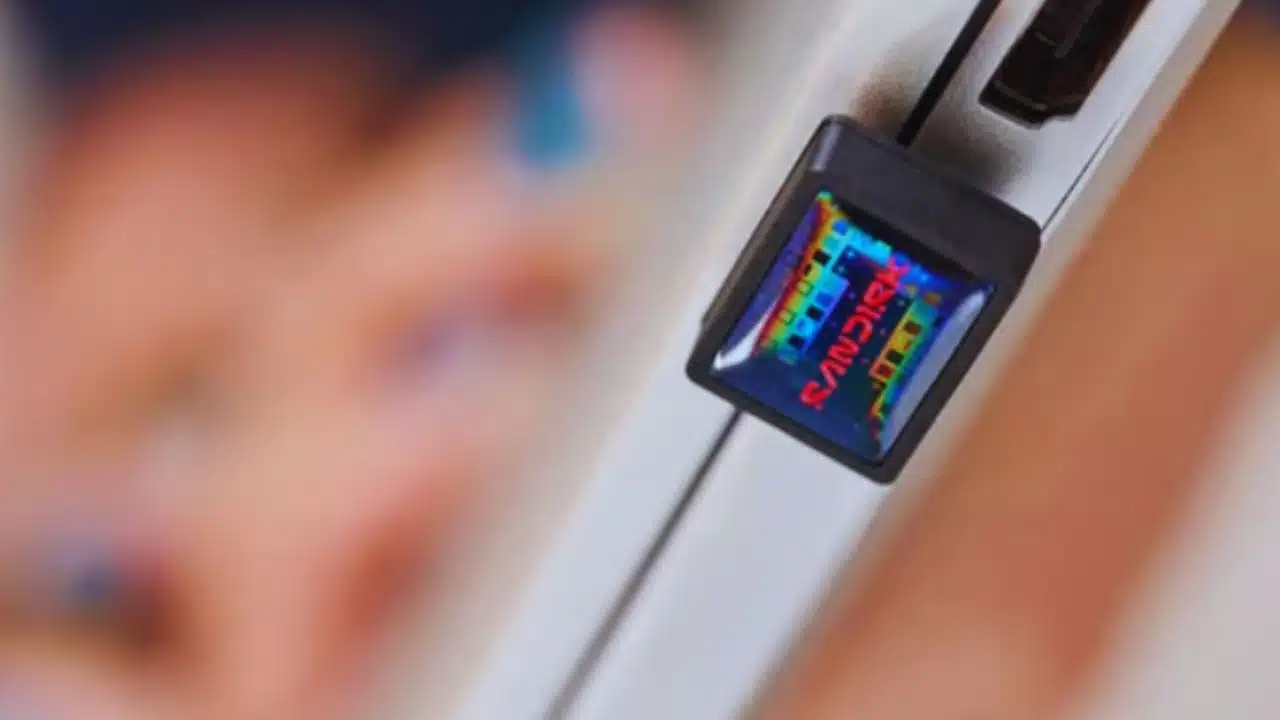
SanDisk has taken another bold step in portable storage innovation by unveiling what it calls the world’s smallest 1TB USB-C flash drive, designed for modern devices that demand both compactness and high-speed performance. The newly launched SanDisk Extreme Fit USB-C Flash Drive is the company’s latest addition to its premium lineup of flash storage solutions. It combines impressive capacity with a minimalistic design, addressing the needs of laptop, tablet, and smartphone users who require fast data transfers without sacrificing portability.
Priced at $119.99 for the 1TB model, the flash drive is now available in select global markets. SanDisk is positioning this product as the ideal choice for professionals, students, photographers, and digital creators who work across multiple devices and want quick, reliable access to large files such as videos, photos, and design projects. The compact design not only ensures convenience but also reduces the likelihood of the drive being accidentally damaged while connected to a laptop or tablet.
The SanDisk Extreme Fit USB-C Flash Drive adopts a plug-and-stay design, meaning it can remain attached to devices like the MacBook Air, MacBook Pro, or USB-C iPad models without obstructing their sleek form factors. Measuring only 18.50 x 15.70 x 13.60 mm and weighing a mere 3 grams, it practically disappears into the side of a laptop, allowing users to move freely or carry their devices in bags without worrying about the drive snagging or breaking. The ultra-compact build is one of the smallest ever engineered by SanDisk for a full 1TB capacity, showcasing how far flash storage technology has advanced in density and thermal efficiency.
Beyond its physical design, performance remains a major highlight. The drive supports USB 3.2 Gen 1 connectivity, offering read speeds up to 400MB/s across its higher-capacity variants. This level of speed means users can transfer hundreds of photos, gigabytes of video content, or massive documents in seconds. The performance places it well above standard USB 2.0 or entry-level USB 3.0 drives, making it a strong option for professionals handling large data files or working in creative industries where quick backups and project migrations are essential. However, while it delivers rapid read speeds, SanDisk clarifies that this drive is not intended for sustained, high-bitrate video recording such as 4K 120fps ProRes capture on iPhones or cinema-grade cameras. The flash memory architecture is optimized for fast file access and data transport, not continuous high-speed video write operations.
Compatibility is equally extensive. The SanDisk Extreme Fit USB-C Flash Drive works seamlessly with Windows 10 and later, macOS 12 and later, and iPadOS 15 and up, making it a universal plug-and-play tool for nearly all modern USB-C devices. This broad support ensures that users across ecosystems — from Mac users to PC professionals and tablet creators — can rely on the same drive for everyday storage needs. The device also features backward compatibility with USB 2.0 ports through adapters, ensuring versatility even in mixed device environments.
SanDisk has enhanced the experience further by including support for its Memory Zone software, available for both Windows and Mac platforms. The app helps users organize their digital files efficiently, automate data backups, and free up valuable device storage space. With the Memory Zone integration, users can schedule automatic backups, manage large libraries, and even monitor available drive capacity in real time — an important convenience for those managing data across multiple projects or clients.
The flash drive is available in several storage options — 64GB, 128GB, 256GB, 512GB, and 1TB — giving consumers flexibility according to their needs and budgets. All versions are backed by a five-year limited warranty, reaffirming SanDisk’s confidence in its reliability and durability. The company has long maintained a reputation for producing robust flash memory products, and the warranty coverage reinforces that commitment to long-term performance.
SanDisk is marketing this drive as a perfect solution for users who want high-speed external storage without the bulk of traditional portable SSDs. For ultrabook and tablet owners, the Extreme Fit offers the convenience of “always-on” storage that doesn’t compromise portability. It can act as an extension of internal storage for content libraries, a quick-access backup solution, or a transfer bridge between devices. With more laptops — particularly the latest MacBooks and Chromebooks — reducing built-in ports and limiting internal storage upgrades, compact USB-C drives like this are becoming indispensable accessories.
In a rapidly evolving market for portable storage, SanDisk’s latest release underscores the industry’s trend toward high-capacity miniaturization. Consumers now expect flash drives that not only hold terabytes of data but also integrate smoothly into daily workflows without clutter. The Extreme Fit delivers on these expectations by blending minimal size, respectable transfer speeds, and user-centric software support.
SanDisk’s new drive enters a competitive landscape alongside similar products from brands like Lexar, Kingston, and Corsair, which have also introduced high-speed USB-C drives and portable SSDs. However, SanDisk’s claim of producing the world’s smallest 1TB USB-C flash drive gives it a distinct edge in the marketing narrative — a claim strengthened by its legacy in flash innovation under the Western Digital umbrella.
For consumers balancing portability, speed, and storage capacity, the SanDisk Extreme Fit USB-C Flash Drive offers a rare combination of all three. It symbolizes how far flash memory has evolved — from bulky USB sticks of the past to fingertip-sized devices capable of holding entire creative portfolios or media libraries. For digital nomads, students, and professionals alike, this latest innovation stands as a reminder that the future of storage is not just about terabytes — it’s about performance in the smallest possible form.
High-Speed Storage Redefined for Modern Devices
With the Extreme Fit USB-C Flash Drive, SanDisk is directly addressing the growing need for compact, fast, and reliable storage in a digital ecosystem dominated by thin laptops and mobile-first workflows. The emphasis on portability without performance loss is a clear reflection of modern consumer expectations — where minimalism meets functionality.
At a time when even smartphones and tablets are producing enormous volumes of high-resolution media, external storage must keep pace. This drive enables users to offload large files from limited-capacity devices quickly, ensuring smoother performance for tasks like video editing, media playback, and project archiving. Its 400MB/s read speed allows fast retrieval of large data sets, while its rugged design means it can safely remain plugged in, ready for instant access.
Moreover, the 1TB capacity brings enterprise-level storage into the hands of everyday consumers. Whether used for backing up a personal photo archive, running portable applications, or transferring raw media between teams, it bridges the gap between convenience and capability. In environments like classrooms, studios, and corporate offices, this drive can serve as a personal data vault — compact enough to fit in a pocket, yet powerful enough to store an entire workspace.
SanDisk’s engineering team has clearly focused on maintaining balance — ensuring heat dissipation, read/write efficiency, and energy management in such a small form factor. These technical considerations allow the drive to deliver stable performance even during prolonged use, something that many compact drives struggle to achieve.
Ultimately, this release reinforces SanDisk’s leadership in flash innovation. The Extreme Fit USB-C Flash Drive is not merely a gadget; it represents a milestone in portable data design — a seamless blend of speed, space, and sophistication that transforms how users think about external storage. For anyone seeking performance without bulk, this drive sets a new benchmark for what a truly “fit” flash drive can be.
The Information is Collected from Gizmochin and SanDisk.





















