

You struggle to find new tech startups that really shake up the global market. The top three software and data startups in Russia have raised over $1.33 billion. You will see ten startups, from chat apps to self-driving vehicles, and learn how they tap corporate venture capital and the skolkovo innovation center to go global.
Read on.
Key Takeaways
- Russia’s top three software startups raised $1.33 billion. Two became decacorns: Miro at $17.5 billion and Telegram at over $30 billion.
- Miro spun out of the Skolkovo Innovation Center. It runs AI mind maps with OpenAI GPT and Nvidia GPUs. Playground Global backs it.
- Pavel Durov launched Telegram in 2013. It serves 500 million channel users, locks chats with end-to-end encryption, and runs bots for Gazprom and Trafigura.
- Revolut, founded by Nikolay Storonsky in 2015, hit a $30 billion valuation by 2021. It uses a z-pinch security model and funds green causes via its open API.
- inDriver uses peer-to-peer fare bidding. Skolkovo, Almaz Capital, Gagarin Capital, and Runa Capital back it. It helped lift Russia to #34 in global startup rankings.
Miro: Revolutionizing Online Collaboration
Miro uses a digital board to sketch ideas, map plans, pin notes. It fights inbox clutter and cuts long email chains. This platform spun out of the Skolkovo innovation center and joined a vast innovation ecosystem.
Russian entrepreneurs founded it, earning a spot among notable unicorns. Investors like Playground Global poured funds into its venture capital fund. Miro reached decacorn status with a $17.5 billion valuation.
The platform links with OpenAI’s GPT and taps Nvidia GPUs for AI-driven mind maps. It fuels new work modes across enterprise Singapore and the Skolkovo foundation. Users praise its smooth Kanban board, interactive flowcharts, AI sticky note prompts.
Russian-speaking entrepreneurs form the third-largest ethnic business community in the U.S., backing many such startups.
Telegram: Transforming Global Messaging Platforms
Pavel Durov launched Telegram in 2013 and he built a fast chat application. It roots trace to skolkovo innovation center and a young innovation ecosystem. Investors peg its value at over 30 billion dollars.
That makes it one of Russia’s decacorns. Developers tap an open API and chat agents to add new tools. Users swap text, images, voice notes and emails at speed. Channels host half a billion global members in groups and feeds.
Zero trust security locks all content under end to end encryption.
Teams in global tech hubs build bots for ElevenLabs voice output. A precision medicine lab posts mammogram scans in private chats. Gazprom tags joint stock updates in its news channel.
Traders at Trafigura and Vitol catch cargo alerts on their phones. Fans follow autonomous driving trials and drones from Varda Space. Researchers share XAI tips and grok hacks. Energy firms push Zap Energy reports on fusion power and z pinch experiments.
A compliance bot pulls NIS bulletins when regulators update rules. A stock feed tracks NYSE: MBT trades hour by hour.
Revolut: Redefining Financial Technology
Nikolay Storonsky built Revolut in 2015 as a mobile wallet that shook banks. Investors valued the startup at over $30 billion by 2021, placing it among Russian decacorns. The company taps into the skolkovo innovation center network, blending that spark into a global innovation ecosystem.
It rolls out mtss for secure transfers, and uses a z-pinch style security model, like a digital seat belt for your cash. Its open API lets developers craft new features for crypto trades or budgeting tools.
Revolut even rivals legacy firms like mufg bank, and it backs green causes, such as forest stewardship council projects. Fans of elon musk’s style might spot a bit of audacity in its fee-free crypto swaps.
The app links to fervo energy startups, letting users fund green wells in minutes.
inDriver: Innovating Ride-Hailing Services
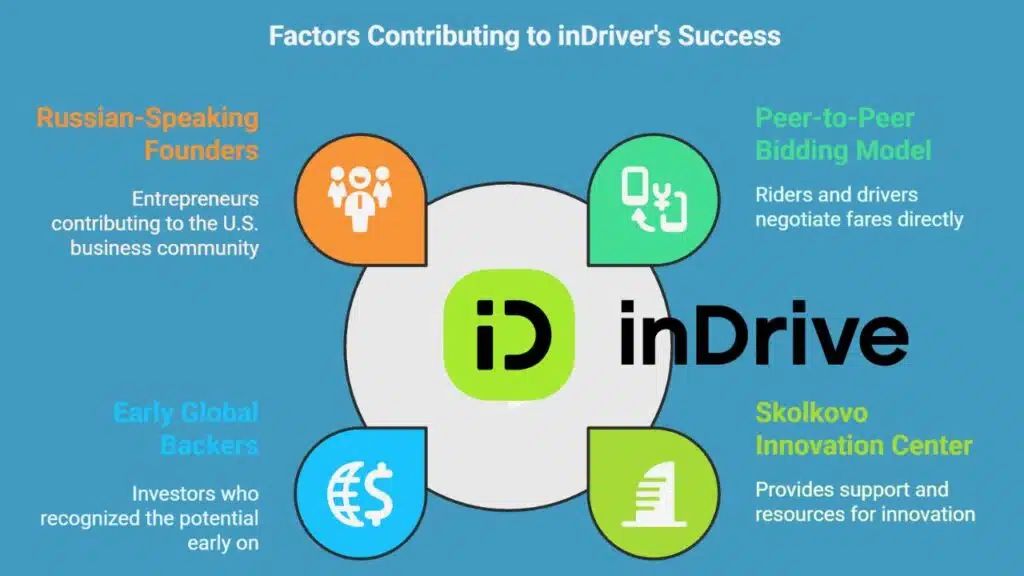
inDriver shakes up ride-hailing markets with a peer-to-peer bidding model. Riders name a fare in the mobile app, drivers reply in seconds. Skolkovo innovation center backed the platform, fuelling Russia’s innovation ecosystem.
Almaz Capital, Gagarin Capital Partners and Runa Capital joined global backers early on. The firm earned a unicorn tag and helped push Russia to 34 in global startup rankings and 5 in Eastern Europe.
A wave of Russian-speaking founders now forms the third-largest ethnic business community in the U.S.
Takeaways
Russia’s ten startups show strong tech power. They tap machine learning, distributed networks, and cloud platforms. Some firms use blockchain tech to shake banks. Teams chat with end-to-end encryption and rich media on a secure app.
Creators draw on a collaboration tool that works across browsers. Fresh talent joins from Skolkovo innovation center and global labs. Bold moves from these firms will shape the global tech stage.
FAQs
1. What makes Russian tech startups stand out in the global market?
They spot gaps, move fast, adapt, and punch above their weight. I once read how a small group in a city garage turned a bare idea into a global hit. They bring fresh code, bold moves, and a dash of daring.
2. Which fields do these startups tackle?
They work in finance tech, life science, network defense, and energy platforms. Some craft smart AI tools. Each draws on deep data, and each aims to shake up old rules.
3. How do they disrupt the global market?
They launch fresh ideas at low cost, they tap global talent pools, they ship solutions across borders in days not years. One went from basement lab to a live service in months, fast as a click, and just as smooth.
4. How can global firms partner with them?
You can meet them at major tech fairs, scan startup hubs, or join investor circles. Drop a note, request a demo, and see if you click. A little chat can spark a big deal.





















