


Portugal is rapidly becoming a haven for digital nomads, offering a perfect blend of stunning landscapes, rich culture, and a cost-effective lifestyle. To cater to this growing trend, Portugal introduced the Digital Nomad (D8) Visa, making it easier for remote workers to live and thrive in this beautiful country. In 2025, this visa continues to be a top choice for professionals seeking flexibility, access to Europe, and a high quality of life.
This comprehensive guide will walk you through everything you need to know about the D8 Visa, including requirements, application steps, costs, and benefits, ensuring you’re fully equipped to start your journey in Portugal.
What is the Portugal Digital Nomad (D8) Visa?
The Digital Nomad (D8) Visa is a specialized visa designed for non-EU/EEA citizens who want to reside in Portugal while working remotely for foreign employers or clients.
It offers two main options:
- Temporary Stay Visa: Valid for up to one year, ideal for short-term experiences.
- Residence Visa: A long-term option, allowing holders to apply for a residence permit. This visa is valid for two years, renewable for additional three-year periods, and leads to permanent residency or citizenship after five years.
Benefits of the Digital Nomad Visa
- Legal Residency: Permission to live and work in Portugal.
- Schengen Area Access: Visa-free travel to 26 European countries.
- Pathway to Citizenship: Eligibility for permanent residency or Portuguese citizenship after five years.
- Family Reunification: The ability to bring dependents, provided you meet the income requirements.
- Affordable Cost of Living: Portugal is known for its relatively low cost of living compared to other European destinations.
- Digital Nomad-Friendly Communities: Vibrant cities like Lisbon, Porto, and Madeira host thriving coworking spaces and remote worker networks.
Who is Eligible for the D8 Visa?
To qualify, applicants must meet the following criteria:
- Non-EU/EEA Citizenship: The visa is exclusive to those outside the EU/EEA.
- Remote Work Proof: Evidence of remote work arrangements, either as a freelancer, self-employed individual, or employee of a foreign company.
- Income Requirements: A minimum monthly income of €3,280 (four times the Portuguese minimum wage).
- Age Requirement: Applicants must be at least 18 years old.
- Clean Background: A clean criminal record from the country of residence.
Documents Needed to Apply
Ensure you have the following documents ready:
- Passport: Valid for at least six months beyond your intended stay.
- Proof of Remote Work: Employment contract, freelance agreement, or proof of self-employment.
- Income Statements: Bank statements from the last three months showing the required income.
- Accommodation Proof: Rental agreement or other housing arrangements in Portugal.
- Health Insurance: Comprehensive coverage for the Schengen area.
- Criminal Record Certificate: Issued by your home country or country of residence.
- Cover Letter: Explaining your intention to reside in Portugal and how you meet the eligibility criteria.
Step-by-Step Application Process
- Gather Documents: Compile all required documents as outlined above.
- Submit Application: Apply at a Portuguese embassy or consulate in your home country.
- Await Processing: Visa processing typically takes 3-6 months.
- Post-Arrival Steps:
- Schedule an appointment with SEF (Immigration and Borders Service).
- Apply for a residence permit.
Costs Associated with the D8 Visa
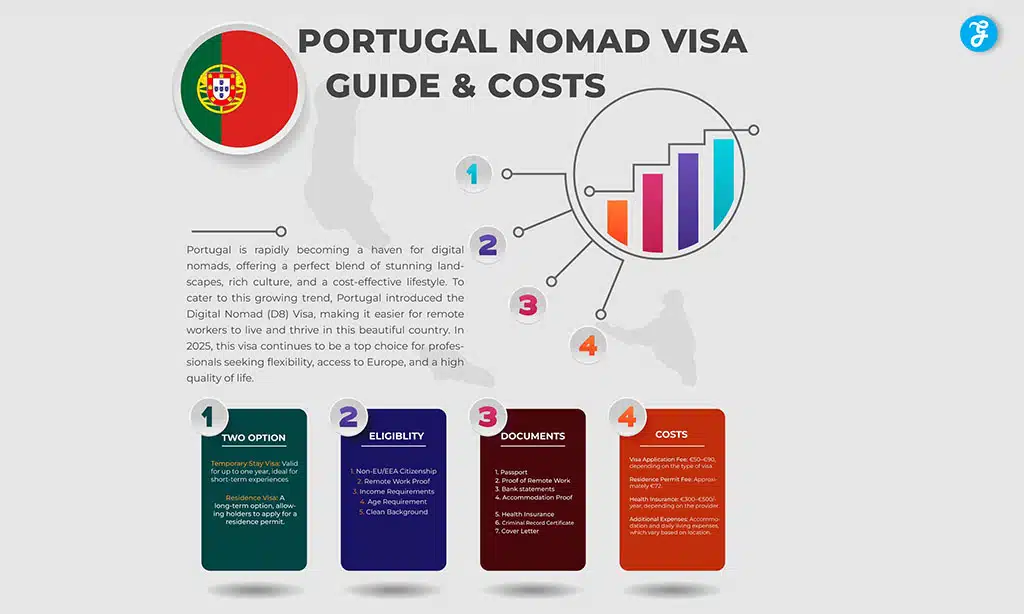
Here’s a breakdown of the costs:
- Visa Application Fee: €50–€90, depending on the type of visa.
- Residence Permit Fee: Approximately €72.
- Health Insurance: €300–€500/year, depending on the provider.
- Additional Expenses: Accommodation and daily living expenses, which vary based on location.
Income Requirements and How to Prove Them
The 2025 income threshold is €3,280/month. To prove this
- Submit bank statements showing consistent income.
- Include employment contracts or invoices if self-employed.
- Provide tax returns or accountant-certified income proof.
When applying for a digital nomad visa and including family members, it is essential to meet specific financial requirements. Below is a summary of the key considerations:
Financial Requirements
- Individual Applicant: Minimum recommended savings of €9,840, confirmed through a valid bank statement.
- Additional Dependents:
- €2,460 for each minor child.
- €4,920 for every adult dependent.
Banking Requirements
- No Obligation for a Local Account: Digital nomads do not need to open a bank account in Portugal.
- SEPA Payment System: An account with any bank operating within the Single Euro Payments Area (SEPA) is sufficient to meet financial criteria. This ensures seamless cross-border transactions within Europe.
Additional Considerations
- Living Costs: Applicants should account for:
- Accommodation expenses based on family size.
- Health insurance for all family members, which is mandatory in most cases.
- Daily living costs, which vary by region and lifestyle.
- Documentation: Clear evidence of savings or income is required to satisfy immigration authorities.
Recommendations for Smooth Application
- Plan savings to cover both the visa requirements and additional family-related expenses.
- Consult an immigration expert for guidance on documentation and compliance with Portuguese visa policies.
- Ensure that the chosen bank account supports SEPA transactions for easier payment proof and fund transfers.
Proper financial planning and preparation will make the application process seamless, ensuring a smooth transition for you and your family to Portugal.
How Long Does the Process Take?
Expect the visa process to take 3–6 months, depending on the consulate’s workload. Scheduling your SEF appointment early can help expedite the residence permit application.
Tax Implications for Digital Nomads in Portugal
Portugal’s non-habitual resident (NHR) tax regime offers significant tax benefits:
- Reduced income tax rates for foreign-earned income.
- Potential tax exemptions on specific income types for up to 10 years. Consult a tax advisor to fully understand your obligations and opportunities.
Living in Portugal as a Digital Nomad

Portugal offers a favorable environment for remote workers:
- Cost of Living: Average monthly expenses range from €1,200–€2,500, depending on lifestyle and location.
- Top Cities:
- Lisbon: Bustling capital with a thriving tech scene.
- Porto: Affordable and charming with a slower pace.
- Madeira: Known for its Digital Nomad Village.
- Connectivity: High-speed internet and abundant coworking spaces.
Here’s a comparative overview of the cost of living in various Portuguese cities, highlighting key expenses to assist in budgeting:
| City | Average Monthly Rent (1-Bedroom Apartment in City Center) | Utilities (Electricity, Heating, Cooling, Water, Garbage) | Internet (60 Mbps or More, Unlimited Data) | Meal at an Inexpensive Restaurant | Public Transportation Monthly Pass |
| Lisbon | €1,000 | €100 | €30 | €12 | €40 |
| Porto | €800 | €90 | €25 | €10 | €35 |
| Faro | €700 | €85 | €25 | €10 | €30 |
| Coimbra | €600 | €80 | €25 | €9 | €30 |
| Braga | €550 | €75 | €20 | €8 | €25 |
Note: These figures are approximate averages as of November 2024 and can vary based on specific locations within each city and individual lifestyles.
Common Challenges and How to Overcome Them
- Processing Delays: Start your application early and ensure all documents are complete.
- Housing Availability: Use trusted real estate agents or platforms like Idealista for rentals.
- Tax Complexity: Seek professional advice on tax residency and obligations.
Frequently Asked Questions
- Can I bring my family? Yes, dependents can join you, provided you meet the financial requirements.
- Do I need a Portuguese bank account? It’s not mandatory but can be helpful for transactions.
- What if my income drops? You must consistently meet the income threshold to maintain your visa status.
Alternatives to the D8 Visa
- Golden Visa: For investors purchasing property or contributing to the Portuguese economy.
- D7 Visa: For individuals with passive income, such as retirees.
- Entrepreneur Visa: For those planning to establish a business in Portugal.
Takeaway
Portugal’s Digital Nomad (D8) Visa offers a golden opportunity to experience the charm of Europe while working remotely. From its picturesque landscapes to its welcoming communities, Portugal has everything a digital nomad could ask for. Start preparing your application today to embark on a new chapter in this beautiful country.
























