


The real estate sector is undergoing a transformation, driven by the urgent need for sustainability. As we step into 2025, policy changes for green real estate are at the forefront of this shift.
These policies aim to mitigate climate change, promote energy efficiency, and foster sustainable urban development. This ultimate guide explores the ten most impactful policy changes for green real estate, providing insights into how they shape the industry’s future and benefit communities worldwide.
With practical examples, visual aids, and actionable insights, this comprehensive guide will empower stakeholders to embrace sustainability with confidence.
The Current Landscape of Green Real Estate
Why Green Real Estate Matters
Green real estate is more than just a trend—it’s a necessity. As environmental concerns escalate, adopting sustainable practices in real estate becomes imperative. Below are the key benefits:
Environmental Benefits
- Reduction in carbon emissions through energy-efficient designs.
- Conservation of natural resources with eco-friendly materials.
- Promotion of biodiversity in urban developments.
| Benefit | Impact |
| Reduced emissions | Less pollution and improved air quality |
| Natural resources | Sustainable material usage |
| Biodiversity | Enhanced ecosystems in urban areas |
Economic Impact
- Increased property value for green-certified buildings.
- Long-term cost savings on energy and water usage.
- Creation of jobs in the renewable energy and construction sectors.
Social Value and Community Benefits
- Improved health and well-being through better indoor air quality.
- Enhanced community engagement with sustainable urban designs.
- Greater resilience against climate-related challenges.
Key Challenges in 2025
While the potential is immense, several hurdles hinder the adoption of policy changes for green real estate:
Financial Barriers
- High upfront costs of sustainable technologies.
- Limited access to green financing options.
| Challenge | Description |
| High costs | Expensive green tech investments |
| Financing gaps | Lack of affordable green loans |
Regulatory Inconsistencies
- Variability in green building codes across regions.
- Lack of standardized enforcement mechanisms.
Awareness and Adoption Issues
- Limited knowledge among stakeholders about sustainability benefits.
- Resistance to change due to perceived complexities.
10 Policy Changes for Green Real Estate Growth
Let’s take a look!
1. Incentives for Renewable Energy Integration
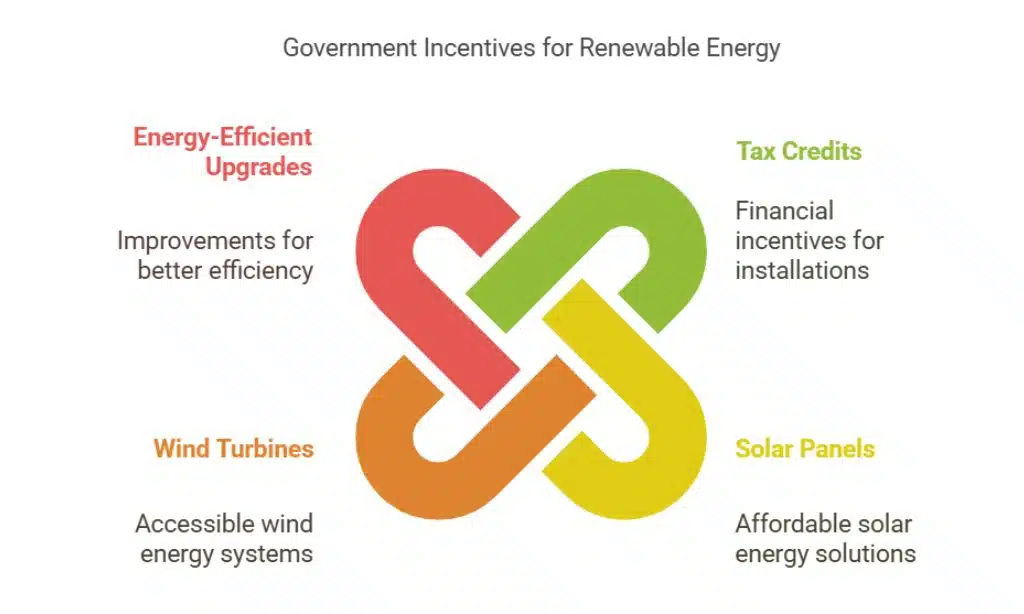
Governments worldwide are introducing incentives to make renewable energy adoption more accessible for property developers and homeowners. These incentives are reshaping the industry, making solar panels, wind turbines, and energy-efficient upgrades more affordable and widespread.
Tax Credits for Solar and Wind Installations
- Federal and state tax breaks for installing renewable energy systems.
- Case study: Solar Investment Tax Credit (ITC) in the U.S., which has boosted solar installations by 42% since its inception.
Subsidies for Energy-Efficient Upgrades
- Grants for retrofitting existing buildings with energy-efficient technologies.
- Example: UK’s Green Homes Grant providing vouchers for insulation and heating improvements.
| Program/Policy | Description |
| ITC (US) | Solar tax credit boosting installations |
| Green Homes Grant | Grants for sustainable retrofitting |
2. Strengthening Building Codes for Sustainability
Stricter building codes are crucial for enforcing sustainable construction practices. Updated codes ensure that new buildings are designed with future-focused efficiency and sustainability in mind.
Mandates for Net-Zero Energy Standards
- Requirement for new constructions to generate as much energy as they consume.
- Example: California’s Title 24 energy standards for net-zero residential buildings.
Enforcing Green Certifications
- Mandatory certifications like LEED or BREEAM for large developments.
- Benefits: Higher tenant satisfaction and reduced operational costs.
| Certification | Key Benefits |
| LEED | Recognized globally, increases value |
| BREEAM | Focuses on holistic sustainability |
3. Expansion of Green Financing Programs
Access to financing is critical for accelerating the adoption of policy changes for green real estate. These programs provide necessary capital to developers and homeowners alike.
Low-Interest Loans for Eco-Friendly Projects
- Government-backed loans for green construction projects.
- Example: India’s State Bank Green Fund offering subsidized interest rates.
Green Bonds and Investment Opportunities
- Increased issuance of green bonds to fund sustainable projects.
- Example: The global green bond market surpassed $500 billion in 2023.
| Financing Mechanism | Key Features |
| Low-interest loans | Affordable credit for green projects |
| Green bonds | Funding large-scale sustainable efforts |
4. Carbon Taxation Policies
Carbon taxation serves as both a deterrent for polluters and an incentive for sustainable practices. This policy ensures businesses prioritize low-carbon alternatives.
Penalties for High Carbon Emissions
- Increased taxes on companies exceeding carbon emission limits.
- Example: EU’s Emissions Trading System imposing higher costs on carbon-intensive industries.
Benefits for Low-Carbon Initiatives
- Tax rebates for projects with minimal carbon footprints.
- Encouragement for adopting green building materials and practices.
| Policy Element | Impact |
| Carbon taxes | Reduces emissions, drives innovation |
| Low-carbon rewards | Promotes sustainable practices |
5. Urban Planning for Sustainable Communities

Sustainable urban planning is pivotal for holistic development. Policies are focusing on creating vibrant, efficient, and green communities.
Incentivizing Mixed-Use Development
- Zoning laws encouraging mixed-use developments to reduce urban sprawl.
- Benefits: Walkable neighborhoods and reduced reliance on cars.
Promoting Public Transportation Accessibility
- Policies linking new developments with public transit networks.
- Example: Singapore’s Transit-Oriented Development (TOD) strategy.
| Urban Planning Feature | Description |
| Mixed-use zoning | Combines residential, retail, offices |
| TOD strategy | Reduces commuting times, emissions |
6. Enhanced Waste Management Regulations
Efficient waste management practices are integral to sustainable construction. These policies target reduction, recycling, and reuse.
Incentives for Construction Waste Recycling
- Grants for recycling construction and demolition waste.
- Example: Japan’s Construction Material Recycling Law.
Mandates for Circular Economy Practices
- Encouraging the use of recyclable and biodegradable materials.
- Case study: The Ellen MacArthur Foundation’s circular economy model.
| Waste Management Policy | Benefits |
| Recycling grants | Reduces landfill burden |
| Circular economy | Promotes resource efficiency |
7. Water Efficiency Standards
Water conservation remains a critical priority in policy changes for green real estate, addressing increasing global water scarcity. These policies enforce efficient water management practices to reduce consumption and waste.
Regulations for Rainwater Harvesting
- Mandates requiring the installation of rainwater harvesting systems in residential and commercial buildings.
- Example: India’s Chennai Rainwater Harvesting mandate resulted in a 50% increase in groundwater recharge.
Mandates on Low-Flow Fixtures
- Regulations enforcing the use of low-flow faucets, showerheads, and toilets in new construction projects.
- Benefits: Significant water savings and reduced utility costs for homeowners.
| Policy Initiative | Impact |
| Rainwater harvesting | Groundwater recharge and savings |
| Low-flow fixture mandates | Lower water bills and usage |
8. Renewable Energy Microgrid Policies
Microgrids offer localized, renewable energy solutions, reducing reliance on traditional grids and enhancing energy resilience.
Support for Community-Based Energy Projects
- Governments funding renewable energy microgrids for neighborhoods and communities.
- Example: Australia’s community battery projects that store excess solar energy for local use.
Reducing Grid Dependency for Buildings
- Policies incentivizing energy self-sufficiency through on-site renewable energy production.
- Benefits: Lower operational costs and enhanced energy security.
| Feature | Benefit |
| Community microgrids | Localized renewable energy access |
| Grid independence | Lower costs and improved resilience |
9. Education and Awareness Campaigns
Public awareness and professional training are crucial to implementing policy changes for green real estate effectively. These campaigns ensure a widespread understanding of the benefits and processes of sustainable practices.
Training for Real Estate Professionals
- Programs designed to educate developers, architects, and agents on green certifications and sustainable construction techniques.
- Example: The U.S. Green Building Council’s LEED training programs.
Public Awareness on Sustainable Living
- Nationwide campaigns highlighting the environmental, economic, and social benefits of adopting green practices.
- Example: The EU’s Sustainable Energy Week promoting renewable energy solutions.
| Campaign Type | Target Audience |
| Professional training | Real estate developers, architects |
| Public awareness | Homeowners, tenants, general public |
10. Technological Innovation Support
Innovation drives progress in policy changes for green real estate, with emerging technologies transforming how we design, build, and manage buildings.
Funding for Green Tech Startups
- Governments and private entities investing in startups focusing on green construction technologies.
- Example: Breakthrough Energy Ventures’ investments in energy-efficient building materials.
Incentives for Smart Building Technologies
- Policies offering tax breaks for implementing IoT-based energy management systems.
- Benefits: Enhanced energy savings and operational efficiency for building owners.
| Innovation Area | Example |
| Green tech startups | Energy-efficient building materials |
| Smart building tech | IoT energy management systems |
Interactive Tools and Resources
Green Real Estate Policy Tracker
A centralized tool providing up-to-date information on policy changes for green real estate by region.
| Region | Key Policy | Impact |
| North America | Renewable energy incentives | Lower emissions, higher adoption |
| Europe | Carbon taxation policies | Encouraged innovation |
Cost-Benefit Analysis Tool
An interactive calculator allowing stakeholders to evaluate the financial and environmental benefits of green investments.
Case Studies Library
A curated collection of real-world examples illustrating successful implementation of policy changes for green real estate.
- Case Study 1: California’s Net-Zero Homes initiative.
- Case Study 2: Singapore’s Green Mark Certification Scheme.
Takeaways
In 2025, policy changes for green real estate are revolutionizing the industry. By addressing environmental, economic, and social challenges, these policies pave the way for a sustainable future.
Collective efforts from governments, businesses, and individuals are essential to ensure these changes have a lasting impact. Let’s champion sustainable practices and create a greener, more resilient world together.
























