

Organic farming has gained significant momentum in the USA over the last decade as farmers and consumers recognize its benefits for health, the environment, and sustainability. By avoiding synthetic chemicals and emphasizing natural processes, organic farming promotes biodiversity, soil health, and long-term productivity.
However, the challenge lies in maintaining high yields while adhering to organic principles. This article explores 10 proven organic farming techniques that can help farmers in the USA boost productivity while staying environmentally conscious.
Why Organic Farming is Essential in the USA?
Organic farming isn’t just a trend—it’s a necessity for building a sustainable agricultural future. The U.S. is the world’s leading agricultural producer, but conventional farming practices have taken a toll on soil health, water quality, and ecosystems.
Organic farming provides a solution by emphasizing natural inputs, enhancing biodiversity, and addressing climate change concerns. However, many farmers struggle with lower yields and pest control in organic systems. This article outlines 10 techniques that can address these challenges while increasing productivity for organic farmers across the country.
Comparison of Organic Farming Techniques in the USA
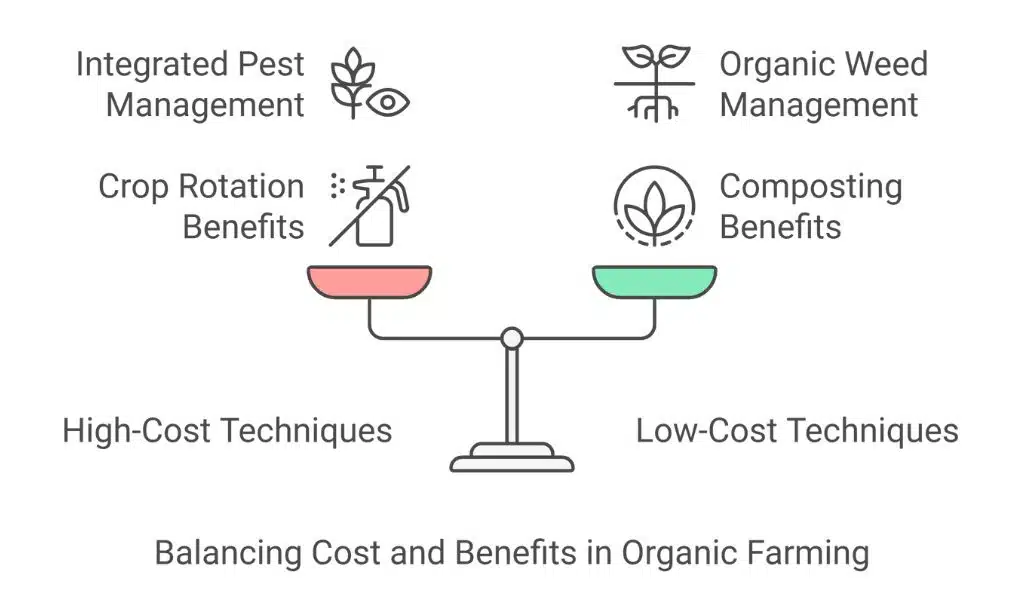
Here is a detailed table showing the best regions with cost efficiency and benefits for various organic farming techniques in the USA.
| Technique | Key Benefit | Best Regions | Cost Efficiency |
| Crop Rotation | Improves soil nutrients | Midwest | High |
| Composting | Adds organic matter | Nationwide | Low |
| Cover Cropping | Prevents soil erosion | Midwest, Northeast | Medium |
| Integrated Pest Management | Reduces pest damage naturally | Pacific Northwest | High |
| Mulching | Conserves water and suppresses weeds | Southeast | Low |
| Drip Irrigation | Efficient water use | Arid regions | Medium |
| Organic Weed Management | Suppresses weeds organically | Nationwide | Low |
| Agroforestry | Diversifies income streams | Southern USA | High |
| No-Till Farming | Preserves soil structure | Great Plains | High |
| Biodynamic Farming | Promotes ecosystem health | Nationwide | Medium |
Proven Organic Farming Techniques to Boost Productivity
Organic farming represents a holistic approach to agriculture that focuses on producing healthy food while maintaining ecological balance and environmental sustainability.
This farming method excludes the use of synthetic fertilizers, pesticides, growth regulators, and livestock feed additives, instead relying on natural processes and inputs to enhance agricultural productivity.
1. Crop Rotation for Soil Fertility and Pest Control
Crop rotation involves planting different crops in a planned sequence across seasons to prevent soil depletion and disrupt pest cycles.
- Benefits: Improves soil fertility by replenishing nutrients, particularly nitrogen, when legumes are included. It also breaks pest and disease cycles that target specific crops.
- Example: Rotating corn, wheat, and soybeans with cover crops like clover has shown remarkable results in Midwest farms.
How to Implement
- Plan a rotation schedule, alternating between nitrogen-fixing crops (e.g., legumes) and nutrient-demanding crops (e.g., corn).
- Monitor soil health after each cycle to fine-tune the rotation.
2. Composting for Natural Fertilization
Composting converts organic waste into nutrient-rich fertilizer. It’s an affordable way to improve soil structure and microbial activity.
- Benefits: Reduces reliance on chemical fertilizers, enhances water retention, and promotes beneficial microorganisms.
- Example: In California, many vineyards use compost to boost grape yields organically.
How to Implement
- Gather organic matter like food scraps, yard waste, and manure.
- Maintain a balance of green (nitrogen-rich) and brown (carbon-rich) materials.
- Turn the pile regularly for aeration.
3. Cover Cropping to Enrich Soil
Cover crops, such as rye, clover, or vetch, are grown between harvests to protect the soil.
- Benefits: Prevents erosion, adds organic matter, and suppresses weeds. Certain cover crops like clover also fix nitrogen in the soil.
- Example: Midwest farmers use winter rye to protect fields during off-seasons.
How to Implement
- Plant cover crops immediately after harvesting the main crop.
- Mow or till the cover crop into the soil before planting the next crop.
4. Integrated Pest Management (IPM)
IPM combines various natural pest control strategies, including biological controls, habitat manipulation, and resistant varieties.
- Benefits: Minimizes chemical use and preserves beneficial insects.
- Example: Farmers in the Pacific Northwest use ladybugs to combat aphids in organic apple orchards.
How to Implement
- Monitor fields regularly for pest populations.
- Use natural predators or traps to target pests.
- Rotate crops to disrupt pest lifecycles.
5. Mulching to Retain Moisture and Suppress Weeds
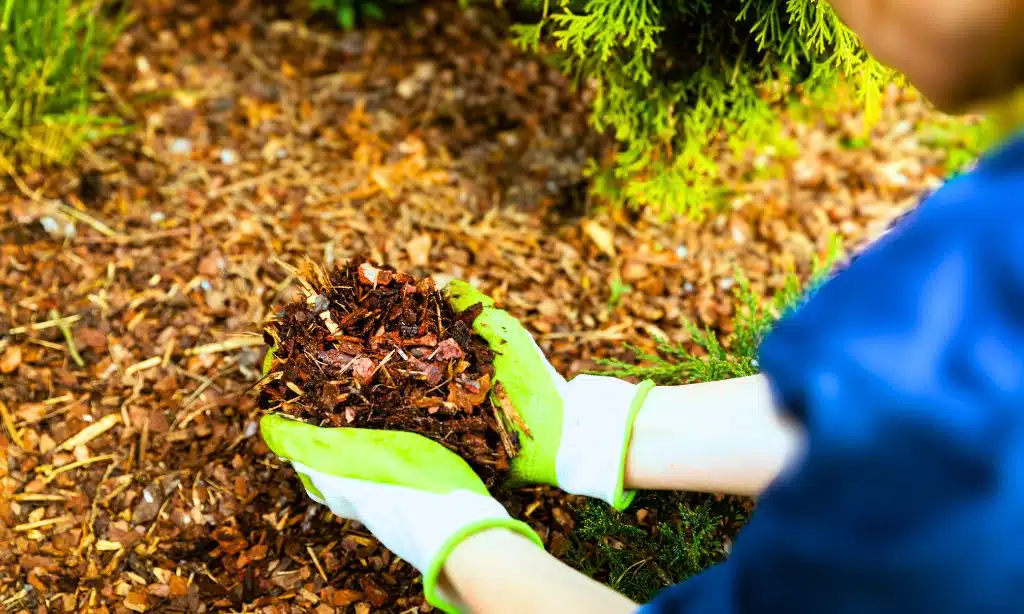
Mulching involves covering soil with organic material like straw or wood chips.
- Benefits: Conserves moisture, regulates soil temperature, and suppresses weeds without chemicals.
- Example: Organic vegetable growers in Florida report reduced irrigation needs with straw mulch.
How to Implement
- Spread a 2-3 inch layer of mulch around plants after sowing.
- Replenish mulch as it decomposes.
6. Drip Irrigation for Water Efficiency
Drip irrigation delivers water directly to plant roots, minimizing evaporation and runoff.
- Benefits: Reduces water usage by up to 70% compared to traditional irrigation.
- Example: Organic tomato farms in Arizona have increased yields with drip systems.
How to Implement
- Install drip lines along plant rows.
- Use timers to optimize watering schedules.
7. Organic Weed Management with Natural Techniques
Weeds compete for nutrients and water, but chemical herbicides are not an option for organic farmers.
- Techniques: Flame weeding, manual weeding, and organic herbicides made from natural oils.
- Example: Organic soybean growers in Iowa use flame weeding successfully.
How to Implement
- Identify the most persistent weeds.
- Use targeted flame weeding or cover cropping to suppress growth.
8. Agroforestry for Diversified Farming Systems
Agroforestry integrates trees with crops or livestock, creating a diverse ecosystem.
- Benefits: Enhances biodiversity, provides shade, and improves soil health.
- Example: Farmers in Georgia combine pecan trees with vegetable crops for dual income.
How to Implement
- Plant trees strategically around fields or between crop rows.
- Use tree species that enhance soil fertility, like nitrogen-fixing trees.
9. No-Till Farming for Soil Preservation
No-till farming minimizes soil disturbance, preserving its structure and organic matter.
- Benefits: Reduces erosion, improves water retention, and lowers fuel costs.
- Example: Organic wheat farms in Montana have seen improved yields with no-till practices.
How to Implement
- Use a no-till drill to plant seeds directly into the soil.
- Incorporate cover cropping to maintain soil health.
10. Biodynamic Farming for Holistic Soil Health
Biodynamic farming treats the farm as a self-sustaining ecosystem, using compost, manure, and plant-based preparations.
- Benefits: Enhances soil vitality and promotes ecological balance.
- Example: Organic vineyards in Oregon use biodynamic principles for superior grape quality.
How to Implement
- Incorporate compost and organic preparations.
- Follow lunar and seasonal cycles for planting and harvesting.
Takeaways
Organic farming is more than a method; it’s a commitment to sustainable agriculture that benefits both the environment and society. By adopting these 10 techniques, farmers in the USA can improve soil health, protect ecosystems, and achieve higher yields without compromising organic principles.
As the demand for organic produce grows, implementing these practices will not only boost productivity but also contribute to a healthier planet.






















