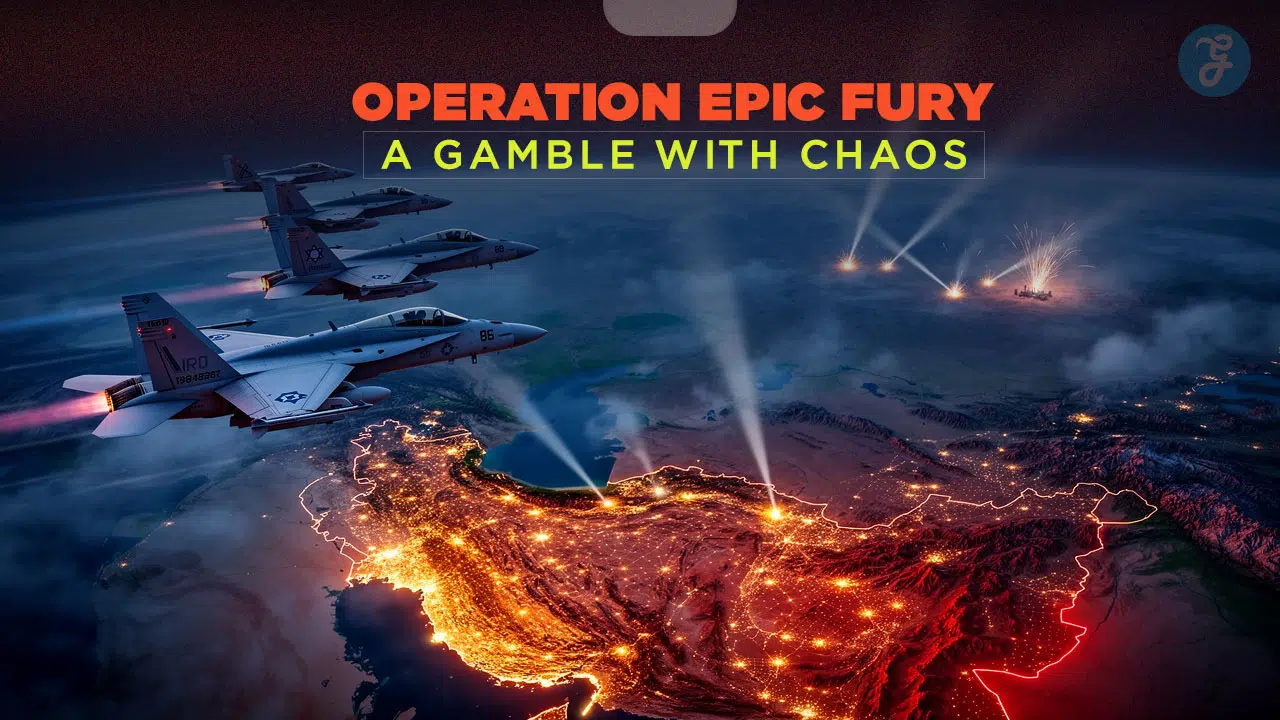
The geopolitical floor beneath the Middle East did not just shift; it vanished. In the early hours of Saturday, February 28, a massive joint American-Israeli strike transformed a year of simmering tensions into a total regional conflagration. This was Operation Epic Fury. It was never about mere supply lines or tactical points on a map. It was a decapitation. By sunrise, Iran’s Supreme Leader Ayatollah Ali Khamenei, who had led the Islamic Republic since 1989, was reported killed following a major airstrike on Tehran, a development confirmed by Iranian state media.
Now, as the acrid scent of wreckage drifts through the streets of Tehran, the world stares into the void. The question is whether this “Epic Fury” has cleared a path toward something better, or has kicked open the doors to a permanent howling chaos.
The Execution of Strategy
For years, the shadow war between the West and the Islamic Republic was defined by proxy battles in Lebanon, Yemen, and Gaza. That era is over. The Saturday morning raids utilised cutting-edge stealth technology and coordinated intelligence to bypass Iranian air defences, striking at the very heart of the clerical establishment.
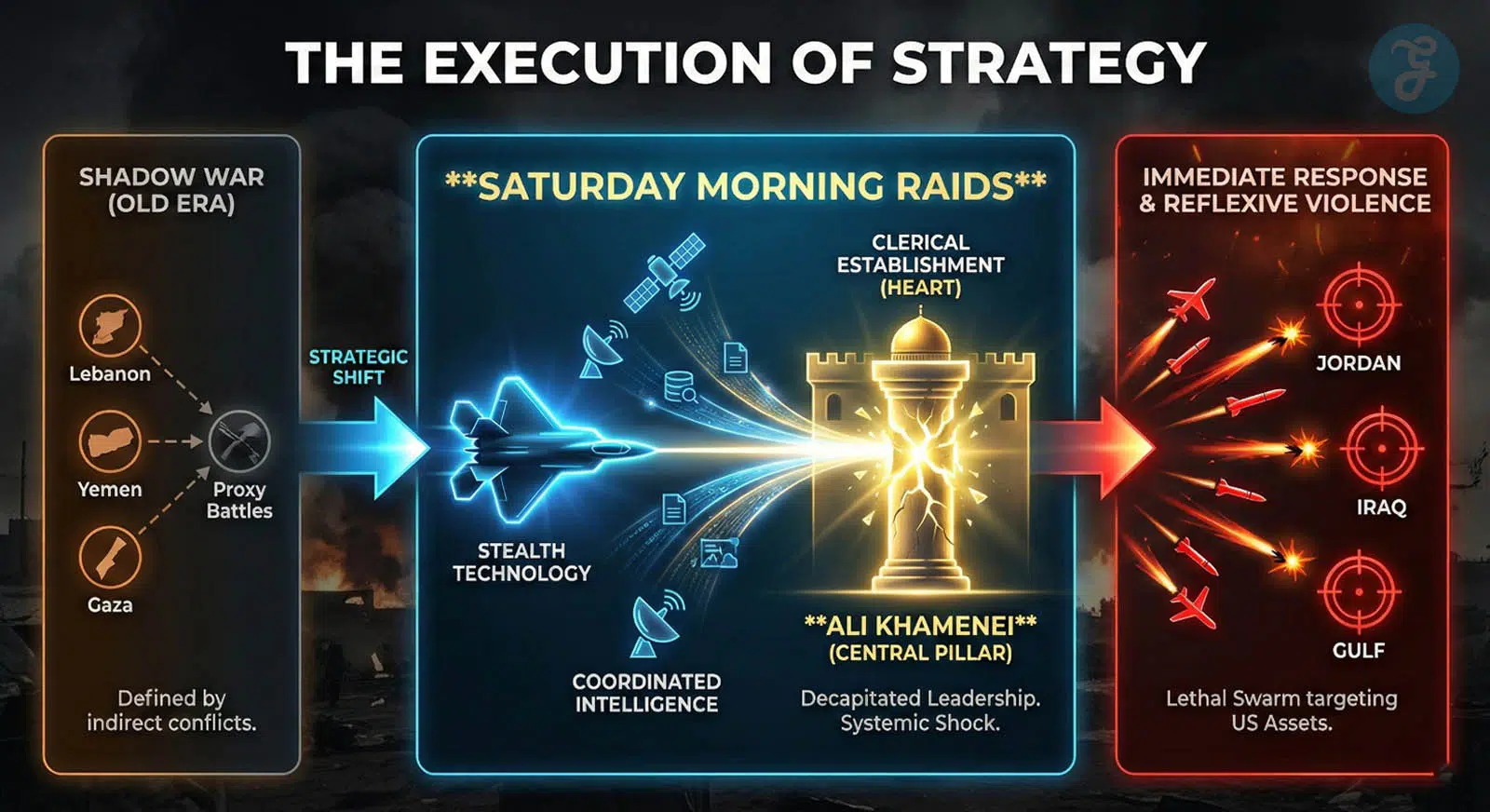 The most significant reported casualty was Ayatollah Ali Khamenei, whose decades-long rule shaped the country’s domestic and foreign policy.
The American president was quick to claim victory in the information space. Donald Trump marked his demise with a post saying “one of the most evil people in history” was dead, adding: “This is not only justice for the people of Iran, but for all Great Americans.”
Parallel reports from Israeli intelligence suggest the devastation within the upper echelons of the Islamic Revolutionary Guard Corps (IRGC) is near total. Figures like Mohammad Pakpour and Aziz Nasirzadeh are reportedly among the fallen. This isn’t just a tactical victory; it is a systemic shock intended to paralyse the Iranian state. However, the immediate response was a swarm of drones and ballistic missiles targeting US assets in Jordan, Iraq, and the Gulf, suggesting that while the head may be severed, the body remains capable of lethal, reflexive violence.
The Cost of Containment
The gamble of Operation Epic Fury was built on the hope of a contained, internal Iranian collapse. That hope died at the gates of Dubai International Airport. In the retaliatory “True Promise 4” wave, Iranian drones and missiles breached the sophisticated air defences of the Gulf, striking a terminal at DXB and injuring four staff members. This was not a military error; it was a message. By targeting the linchpin of global aviation, Tehran proved that no corner of the region remains a safe haven for Western interests. The subsequent grounding of nearly 2,000 flights and the closure of Emirati airspace have done more than strand travellers. They have shattered the image of Gulf stability that underpins the global economy. As smoke rose over the Burj Al Arab and Jebel Ali Port, the true price of this decapitation became clear. The war is no longer confined to Tehran; it has officially arrived at the world’s doorstep.
The Motivation Behind the Gamble
President Trump’s approach to this conflict has been characterised by a total rejection of the “strategic patience” practised by his predecessors. He viewed the previous years of nuclear diplomacy not as a path to stability, but as a period of Iranian enrichment and deception. Even as regional partners were attempting to broker a new nuclear framework, the White House shifted toward a policy of maximum kinetic pressure.
The timing appears to have been dictated by a perception of Iranian fragility. Hemmed in by internal protests, economic decay, and the degradation of its “Axis of Resistance” over the last two years, Tehran was viewed as a cornered tiger. Trump, encouraged by Prime Minister Benjamin Netanyahu, decided to pull the trigger. On Truth Social, the President framed the violence as a liberation movement, posting: “This is the single greatest chance for the Iranian people to take back their country.”
The Stolen Revolution of the Iranian Street
Behind the satellite imagery of precision strikes and the triumphalist rhetoric from Washington lies a far more harrowing reality for the 85 million people who call Iran home. For the students in Tehran who only days ago were risking their lives in university squares to demand “Woman, Life, Freedom,” this sudden, explosive intervention from above feels less like a rescue and more like a hijacking of their own domestic struggle.
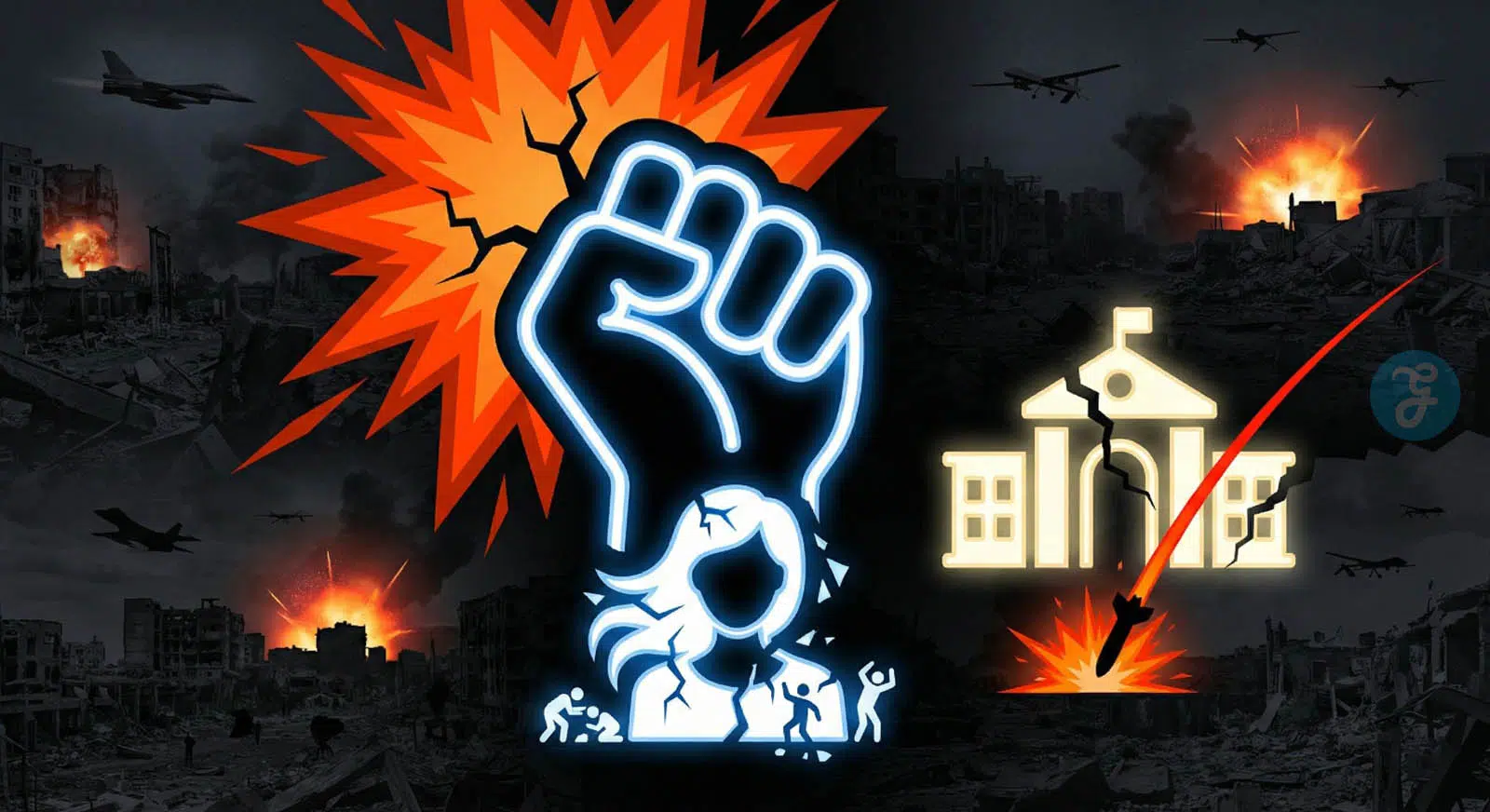 Early reports from the ground describe chilling scenes in residential neighbourhoods: the terrifying hum of drones followed by the inevitable, deafening roar of impact, with at least one strike reportedly hitting a girls’ primary school in the south. By choosing to “decapitate” the state at the height of its internal fragility, the US and Israel have not only dismantled a regime; they have shattered the very social fabric that the Iranian people were trying to mend on their own terms. It is a grim paradox that the West’s most violent attempt to “save” Iran may be the very thing that finally unites its people, not in democracy, but in a shared, desperate grief.
The Flaw in the “Clean Break” Theory
The primary reason Operation Epic Fury is a reckless gamble lies in the assumption that decapitation leads to democratisation. History suggests otherwise. When an authoritarian state is suddenly stripped of its leadership, the result is rarely a smooth transition to a pro-Western republic. Instead, it often creates a power vacuum filled by the most radical elements of the security apparatus.
While the US and Israel have achieved the immediate goal of neutralising key threats, the secondary effects are spiralling out of control. Iran’s military doctrine has always prioritised asymmetric warfare. They cannot win a dogfight against an F-35, but they can set the global oil market on fire by mining the Strait of Hormuz or levelling desalination plants in the Gulf. This widening of the theatre is Iran’s only survival mechanism, and it places every US ally in the region in the direct line of fire.
Three Actors, Three Divergent Goals
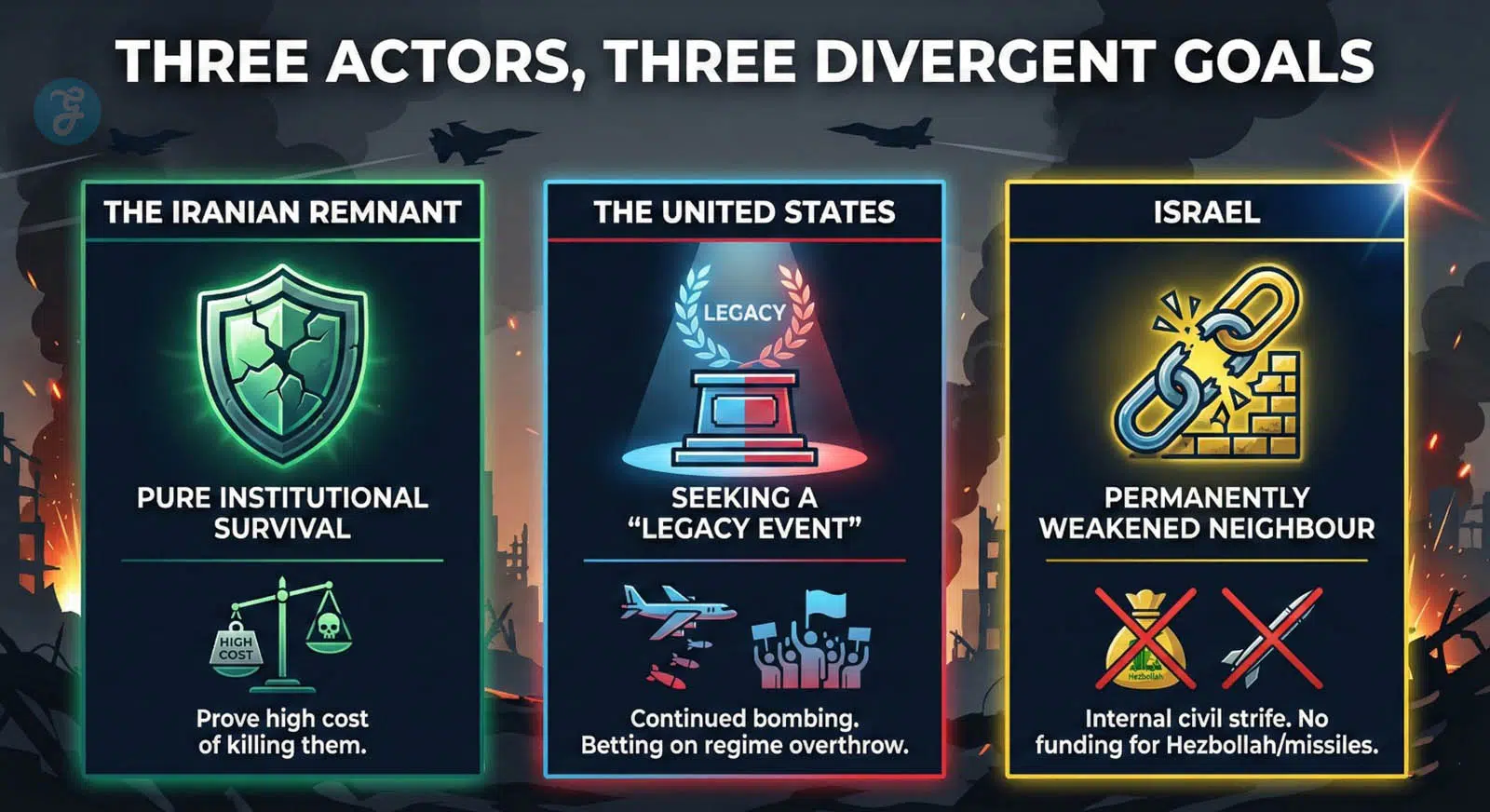
The danger of this miscalculation is exacerbated by the fact that the three main protagonists are playing different games:
- The Iranian Remnant: Their goal is pure institutional survival. They are not looking for a conventional “win” but are instead trying to prove that the cost of killing them is higher than the West can afford to pay.
- The United States: Trump is seeking a “Legacy Event.” He has promised that the bombing “will continue, uninterrupted throughout the week or, as long as necessary to achieve our objective.” He is betting that the Iranian people will choose this moment to overthrow the remaining IRGC structures.
- Israel: Jerusalem’s focus is more pragmatic but equally risky. They want a permanently weakened neighbour, one so consumed by internal civil strife that it can no longer fund Hezbollah or develop long-range missiles.
A Masterclass in Diplomatic Betrayal
There is a growing, stinging critique that Operation Epic Fury represents a supreme act of diplomatic bad faith. The argument, gaining traction in influential circles this weekend, is that the White House used the cover of renewed nuclear negotiations not as a path to peace, but as a tactical distraction. By allowing regional mediators to believe a deal was within reach while simultaneously positioning carrier strike groups, the administration has effectively torched the very concept of the “Grand Bargain.” This isn’t just a breach of trust; it is a fundamental demolition of the tools of de-escalation. When a superpower signals that it will use the negotiation table as a staging ground for leadership decapitation, it tells every other “rogue” state that diplomacy is merely a death trap. The provocation here isn’t just with Iranian missiles, but with the future of international law itself, as the world moves into a colder, more predatory era where the handshake is nothing more than a prelude to the strike.
The Shadows of the Past
The most haunting spectre over this operation is the memory of Libya in 2011. The removal of a dictator was celebrated as a victory for human rights, yet it led to a decade of slave markets, militia rule, and a fractured state that became a breeding ground for terror. Iran is far larger, more populous, and more ideologically complex than Libya. If the “Epic Fury” leads to an uncontrolled fragmentation of the Iranian state, the US will find itself responsible for a humanitarian and security disaster that dwarfs the Iraq war.
The Volatility of the Global Energy Arteries
The immediate consequence of the strikes on Tehran has been an instantaneous surge in Brent Crude prices, as traders factor in a geopolitical risk premium that had been largely dormant. Iran produces approximately 3 million barrels of oil per day, but its true leverage lies in its proximity to the Strait of Hormuz. This narrow waterway is the transit point for 20% of the world’s liquid petroleum consumption, according to the US Energy Information Administration.
Any Iranian retaliatory effort to mine these waters or harass tankers would create a global supply shock that no Strategic Petroleum Reserve could fully mitigate. Unlike previous cycles where US shale could act as a swing producer, the sheer volume of Gulf oil at risk means a prolonged blockade would likely push prices into uncharted territory, potentially exceeding $150 a barrel.
Secondary Shocks to Natural Gas Markets
The secondary shock involves natural gas markets. As the IRGC targets infrastructure in the Gulf, the safety of Liquefied Natural Gas (LNG) terminals in Qatar and the UAE becomes a primary concern. Europe, still sensitive to energy shifts following the transition away from Russian gas, is particularly vulnerable to these disruptions. If the conflict persists, the cost of heating and industrial production in the EU will skyrocket, potentially triggering a synchronized global recession. The strategic risk of Operation Epic Fury assumes that the decisive blow will prevent a long war, but the energy market is currently pricing in the opposite: a messy, multi-theatre escalation that threatens the basic flow of global commerce.
The Infrastructure Vulnerability Paradox
Modern energy markets rely on highly centralised, technologically integrated infrastructure that is notoriously difficult to defend against asymmetric drone warfare. While the US-Israel coalition maintains air superiority, Iran’s capability to launch suicide drones in massive swarms presents a nightmare scenario for regional refineries. The 2019 Abqaiq-Khurais attack demonstrated how a single coordinated strike could take half of Saudi Arabia’s oil production offline in a matter of hours. In the wake of Khamenei’s death, the remnants of the Iranian military may view the destruction of neighbouring oil fields as their only remaining nuclear option to force a Western retreat.
Logistics Bottlenecks and Inflationary Pressure
Furthermore, the insurance costs for maritime shipping in the Middle East have already begun to quintuple. Shipping giants are rerouting vessels around the Cape of Good Hope to avoid the Persian Gulf and the Red Sea, adding weeks to delivery times and massive fuel surcharges to global trade.
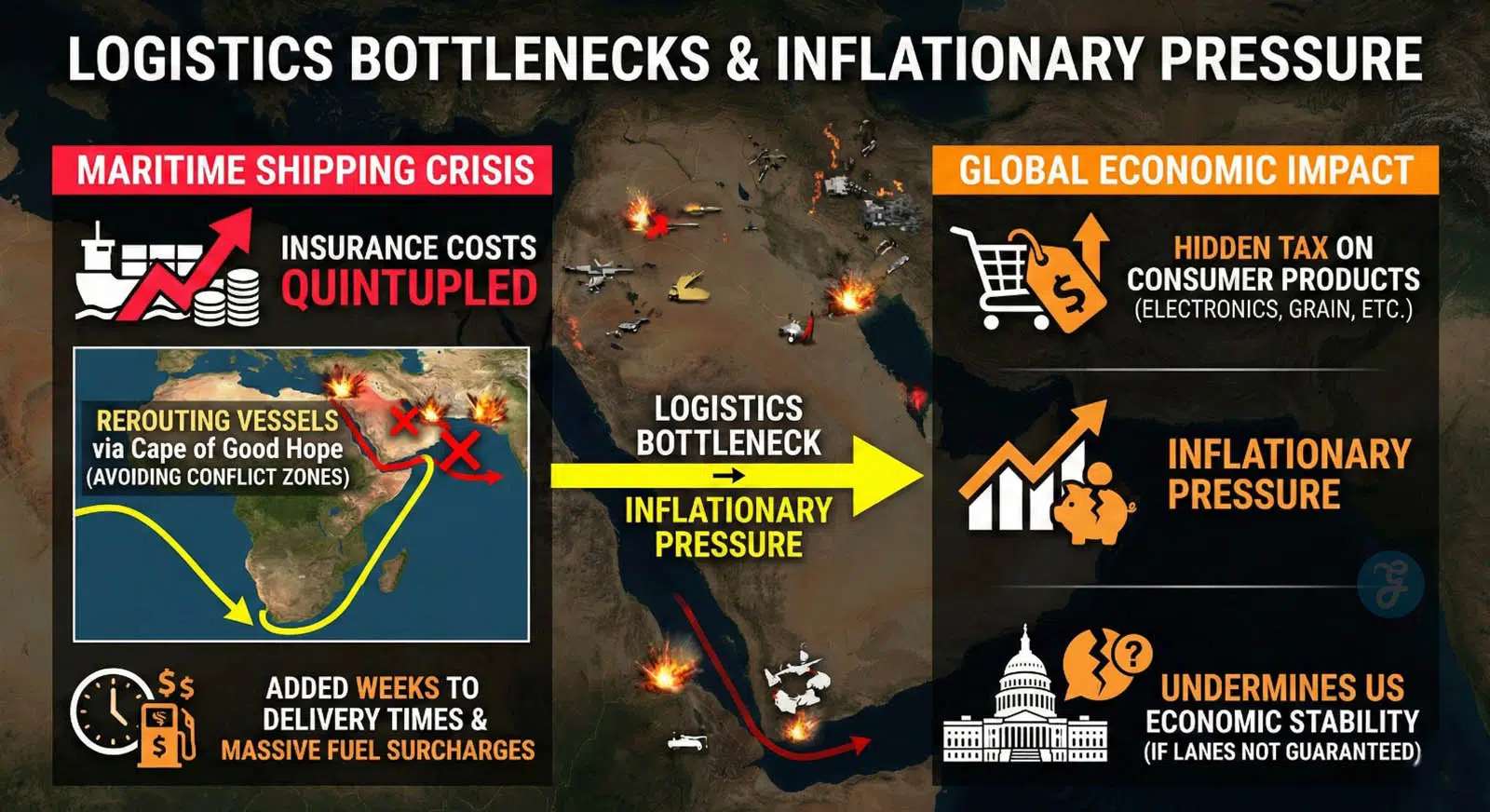 This logistics bottleneck acts as a hidden tax on every consumer product, from electronics to grain. If the US cannot guarantee the safety of these lanes within the first week of the campaign, the resulting inflationary pressure could undermine the very economic stability that the Trump administration seeks to project at home.
Operation Epic Fury: The Weekend Timeline
-
- The Decapitation Strike: Saturday, February 28. In the early hours, a joint US-Israeli daylight air campaign targeted the Pasteur district in Tehran, resulting in the confirmed death of 86-year-old Supreme Leader Ayatollah Ali Khamenei and his inner circle.
- The School Tragedy: A missile strike destroyed the Shajareh Tayyebeh girls’ primary school in Minab. The death toll has risen to 165 victims, primarily female students, with nearly a hundred more injured.
- The Dubai Escalation: Sunday, March 1. Iranian drones and missiles breached Gulf air defences to strike a terminal at Dubai International Airport. The resulting closure of Emirati airspace grounded 2,000 flights and shattered the image of regional stability.
- Regional Retaliation: Tehran launched “Operation True Promise 4,” targeting US assets across the Middle East. CENTCOM has confirmed the first three American service members killed in action and five others seriously wounded.
- Market Shock: Monday morning, March 2. Brent crude surged over 8 percent, testing the 80 dollar mark as global markets react to the largest military campaign in the region since 2003.
- Succession Crisis: Iran has activated an interim leadership council under Article 111. Senior cleric Ayatollah Alireza Arafi has been appointed to this body alongside the President and Chief Justice.
The Uncertain Horizon
As the “success” of the initial strikes fades into the reality of a prolonged conflict, the US must face the possibility that it has traded a known enemy for an unknown chaos. The constitutional succession in Tehran will likely see the Assembly of Experts appoint a placeholder, but the real power will migrate to the shadows, to the generals and the intelligence officers who have nothing left to lose.
The gamble of Operation Epic Fury was based on the idea that force could bring clarity. Instead, it has introduced a level of volatility the Middle East hasn’t seen in a century. The US may have ended the reign of a supreme leader, but it has yet to prove it can survive the aftermath of the void it created.
Disclaimer: Editorialge maintains a steadfast commitment to responsible reporting on the evolving conflicts in West Asia involving Israel, Iran, U.S., Gulf nations and non-state actors like Hezbollah, Hamas, Houthis, Islamic State, and others. In an environment where digital disinformation is widespread, we cannot independently verify every social media post or claim involving national and non-state actors. Our priority remains factual accuracy and the exercise of extreme caution when documenting all regional media.