Maintaining a clean home is one of the highest priorities for families, particularly those with young children. A spotless environment not only keeps your home looking its best but also promotes the health and safety of your loved ones. However, the cleaning products we often rely on can be filled with harsh chemicals like ammonia, bleach, and phthalates. These substances might leave your home sparkling, but they also expose your family to potential health risks such as allergies, respiratory issues, and skin irritation.
That’s where non-toxic cleaning hacks for families come in. These simple, cost-effective, and environmentally friendly solutions are a game changer for maintaining a healthy home.
By using natural ingredients such as vinegar, baking soda, and lemon juice, you can achieve the same level of cleanliness without exposing your family to harmful toxins. This guide will walk you through some of the best non-toxic cleaning tips to keep your home safe, fresh, and green.
Why Choose Non-Toxic Cleaning Products?
The Hidden Dangers of Chemical Cleaners
Traditional cleaning products often contain chemicals such as ammonia, bleach, and phthalates, which can irritate the skin, eyes, and respiratory system. Prolonged exposure to these substances may lead to long-term health issues, including hormone disruption and allergies.
| Common Harmful Chemicals | Potential Health Risks |
| Ammonia | Respiratory issues |
| Bleach | Skin and eye irritation |
| Phthalates | Hormonal imbalances |
| Formaldehyde | Carcinogenic risks |
According to the Environmental Working Group (EWG), many cleaning products release volatile organic compounds (VOCs) that contribute to indoor air pollution, posing a risk to children’s developing immune systems.
Benefits of Non-Toxic Cleaning Solutions
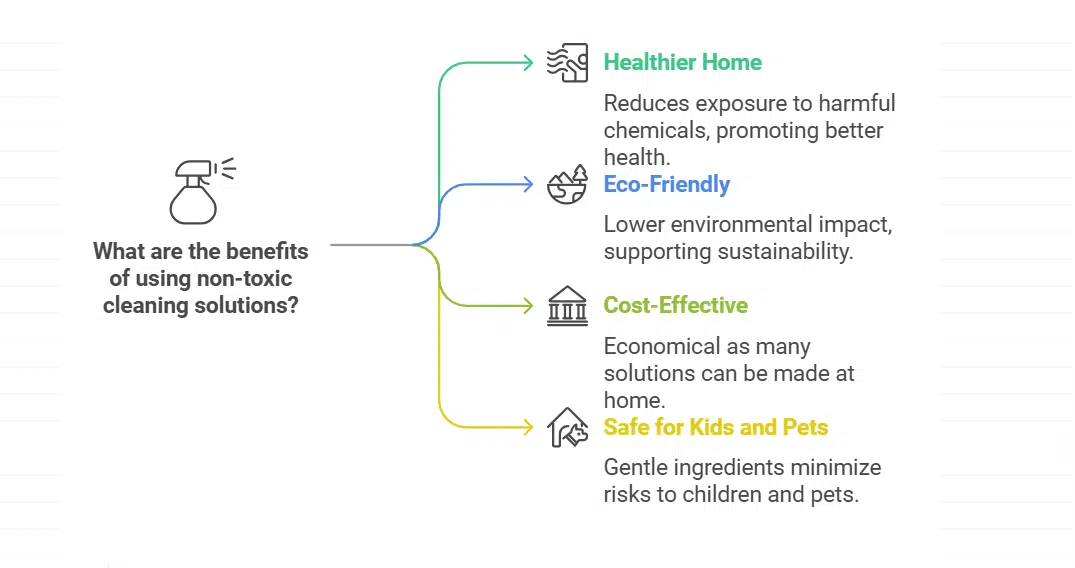
Switching to non-toxic cleaning solutions offers multiple benefits:
- Healthier Home: Reduced exposure to harmful chemicals.
- Eco-Friendly: Lower environmental impact.
- Cost-Effective: Many non-toxic solutions can be made at home with simple ingredients like vinegar and baking soda.
- Safe for Kids and Pets: Gentle ingredients reduce risks to your little ones and furry friends.
7 Simple and Effective Non Toxic Cleaning Hacks for Families
Switching to non toxic cleaning hacks for families offers numerous benefits, from improved health to cost savings. These methods utilize safe, affordable ingredients you can easily find at home. Below are the hacks:
1. All-Purpose Cleaner with Vinegar and Baking Soda
Vinegar and baking soda are a powerful duo for tackling dirt and grime around the house. This all-purpose cleaner is perfect for countertops, bathrooms, and more.
Recipe:
- 1 cup white vinegar
- 1 cup water
- 2 tablespoons baking soda
- Optional: A few drops of essential oil (e.g., lemon or lavender)
Instructions:
- Mix the vinegar and water in a spray bottle.
- Add baking soda carefully to avoid fizzing over.
- Shake gently to mix.
- Spray onto the desired surface and wipe clean with a microfiber cloth.
| Best For | Benefits |
| Kitchen counters | Removes grease |
| Bathroom tiles | Cleans mold and mildew |
| Glass surfaces | Streak-free shine |
Safety Note: While vinegar is a natural disinfectant, avoid using it on natural stone surfaces like granite or marble, as its acidity can damage them.
2. Lemon Juice for Stain Removal
Lemon juice is a natural bleaching agent, making it ideal for removing stains and odors.
Applications:
- For Fabric Stains: Apply lemon juice directly to the stain, let it sit in the sun for an hour, then rinse.
- For Cutting Boards: Rub half a lemon over the surface to remove stains and odors, then rinse with warm water.
- For Microwave Odors: Place a bowl with equal parts water and lemon juice in the microwave, heat for 3 minutes, let it sit for 5 minutes, and wipe clean.
| Best For | Benefits |
| White clothes | Removes yellow stains |
| Wooden cutting boards | Neutralizes odors |
| Microwaves | Loosens grime |
Safety Note: Always test lemon juice on a small, inconspicuous area first, as its acidity may affect certain materials.
3. Hydrogen Peroxide as a Disinfectant

Hydrogen peroxide is a safe alternative to chemical disinfectants. It kills germs without leaving harmful residues.
How to Use:
- For Toys: Mix equal parts water and hydrogen peroxide. Spray on toys, let it sit for 5 minutes, then rinse.
- For Bathroom Surfaces: Spray directly on sinks and toilets, let it sit for 10 minutes, and wipe clean.
- For Mold and Mildew: Spray undiluted hydrogen peroxide onto the affected areas, let it sit for 10 minutes, scrub with a brush, and rinse.
| Best For | Benefits |
| Plastic toys | Kills bacteria safely |
| Toilet bowls | Disinfects effectively |
| Moldy surfaces | Eradicates fungal growth |
Safety Note: Store hydrogen peroxide in its original dark container to maintain effectiveness, as light degrades the solution.
4. Castile Soap for Laundry and Dishes
Castile soap, made from plant-based oils, is a versatile cleaning agent that’s gentle on skin and the environment.
Applications:
- For Laundry: Add 1/4 cup of liquid castile soap to your washing machine for a chemical-free clean. Add 1/2 cup of white vinegar during the rinse cycle for a natural fabric softener.
- For Dishes: Mix 1 tablespoon of castile soap with 2 cups of water for a non-toxic dish soap.
- For Floors: Add 1/4 cup of castile soap to a bucket of warm water and mop floors as usual.
| Best For | Benefits |
| Baby clothes | Gentle on sensitive skin |
| Dishes | Cuts grease effectively |
| Floors | Safe for mopping |
Safety Note: Avoid mixing castile soap with acidic substances like vinegar or lemon juice in the same solution, as this can cause unsaponified residues.
5. Essential Oils for Fresh Scents
Essential oils not only add a pleasant fragrance but also have natural antibacterial properties.
Suggested Oils:
- Lavender: Calming and antibacterial.
- Tea Tree: Antifungal and antimicrobial.
- Lemon: Fresh scent and grease-cutting properties.
How to Use:
- Add 10-15 drops of essential oil to your homemade cleaners for added benefits.
- Mix with water in a spray bottle to create a room freshener.
| Best For | Benefits |
| Air fresheners | Eliminates odors |
| Kitchen counters | Antibacterial cleaning |
| Bathrooms | Fresh and clean scent |
Safety Note: Use essential oils sparingly around pets and young children, as some oils may cause sensitivities.
6. Cornstarch for Glass and Mirrors
Cornstarch creates a streak-free shine on glass surfaces without harsh chemicals.
Recipe:
- 1 tablespoon cornstarch
- 1 cup water
- 1 cup vinegar
Instructions:
- Mix all ingredients in a spray bottle.
- Shake well and spray on glass.
- Wipe with a clean microfiber cloth for a streak-free finish.
| Best For | Benefits |
| Windows | Streak-free cleaning |
| Mirrors | Removes smudges |
| Glass furniture | Shiny, residue-free look |
7. Activated Charcoal for Odor Absorption
Activated charcoal is a natural deodorizer that absorbs odors rather than masking them.
How to Use:
- Place small bowls of activated charcoal in areas prone to odors, such as refrigerators, closets, or shoe racks.
- Replace charcoal every 2-4 weeks for maximum effectiveness.
| Best For | Benefits |
| Refrigerators | Absorbs food odors |
| Shoe racks | Neutralizes smells |
| Pet areas | Reduces pet-related odors |
FAQs About Non-Toxic Cleaning
Are Non-Toxic Cleaners as Effective as Chemical Ones?
Yes, non-toxic cleaners can be just as effective when used correctly. Ingredients like vinegar, baking soda, and hydrogen peroxide have proven cleaning power comparable to many chemical alternatives.
Can I Use These Hacks for Pets Too?
Most of these solutions are safe for pets. However, avoid essential oils like tea tree or eucalyptus if you have cats, as they can be toxic to them.
How to Transition Gradually to Non-Toxic Cleaning?
Start by replacing one chemical cleaner at a time with a non-toxic alternative. Experiment with DIY recipes to find what works best for your household.
Tips for Maintaining a Safe and Clean Environment
Proper Storage of DIY Cleaners
- Store homemade cleaning solutions in labeled bottles.
- Keep all cleaning products out of reach of children.
Cleaning Schedule for Families with Young Kids
- Daily: Wipe down high-touch surfaces (e.g., doorknobs, countertops).
- Weekly: Deep clean bathrooms and kitchens.
- Monthly: Wash windows and clean behind furniture.
Takeaway
Switching to non-toxic cleaning hacks for families is not just a small step; it’s a powerful commitment to the well-being of your loved ones and the planet. By making these changes, you’re ensuring your home is not only clean but also free of toxins that could harm your family’s health. Each hack, from using vinegar and baking soda for all-purpose cleaning to harnessing the natural power of lemon juice, brings you closer to a healthier, more sustainable lifestyle.
The best part? These hacks are easy to implement, cost-effective, and just as effective as conventional cleaning methods. Start by incorporating one or two of these tips into your cleaning routine, and before you know it, you’ll have a home that’s safe, fresh, and truly non-toxic. Remember, every small step counts, and by adopting these methods, you’re creating a safer and happier environment for your family to thrive.