
Do you ever look out your window and see nothing but streaks and smudges? It’s frustrating, isn’t it? You try hard to keep your glass clean, but those store-bought cleaners just don’t seem to cut it.
Plus, they can get pretty costly over time. Here’s something interesting: a lot of people are turning back to homemade solutions for sparkling windows. Do you know What is the best homemade window cleaning solution?
One popular recipe includes dish soap and distilled white vinegar—simple ingredients that you probably already have at home. This blog post will guide you through making this effective cleaning agent yourself.
It promises clear views without the need for harsh chemicals found in commercial cleaning products. Ready for spotless windows? Keep reading!
What Is the Best Homemade Window Cleaning Solution?
Want clean windows? Try making your own cleaner and see the difference!
You can also read about choosing the best window replace units for your home.
Ingredients for the Homemade Cleaner
Making your own window cleaner is easy and effective. You can whip up a batch with common items from your kitchen. Here’s what you’ll need:
- Rubbing alcohol: Acts as a disinfectant and helps the cleaning solution dry faster, preventing streaks.
- White vinegar: Cuts through dirt and grime due to its acetic acid content, leaving windows shining.
- Dishwashing liquid: Just a few drops break down greasy fingerprints and common household stains on glass.
- Cornstarch: A scant 1/8 teaspoon polishes windows to a streak-free shine by acting as a mild abrasive.
- Distilled water: Using distilled water instead of tap water avoids spots caused by minerals in hard water.
- Essential oils (optional): Add a few drops for a pleasant scent; lemon or lavender oil also have natural antibacterial properties.
I once tried cleaning my exterior windows with just dish soap and water, but they ended up full of streaks. Adding alcohol and vinegar to the mix, based on this recipe, made an enormous difference—my windows have never looked clearer! Plus, the hint of lemon essential oil left my house smelling clean and fresh without the harsh scent of chemical cleaners.
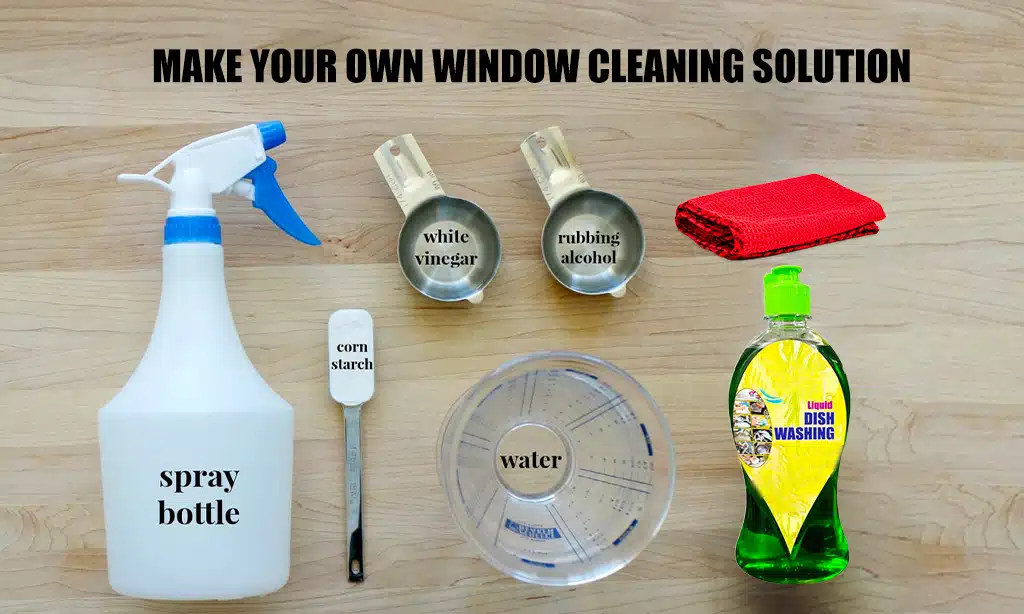
Pour these ingredients into a spray bottle, give it a good shake to mix everything evenly, and your homemade glass cleaner is ready to tackle dirty windows with ease! Use it alongside a microfiber cloth for best results; these cloths grab onto dirt without leaving lint behind like paper towels might.
For larger exterior windows, equip yourself with a squeegee—it makes quick work of rinsing off your DIY cleaner and leaves the glass sparkling clean without any laborious scrubbing.
Steps to Make the Homemade Cleaner
Creating a homemade window cleaner is easy and cost-effective. It helps you achieve streak-free windows without the harsh chemicals found in store-bought cleaners. Here’s how to do it:
- Grab a clean, empty spray bottle from your cupboard.
- Pour 2 cups of water into the spray bottle. Tap water works fine, but for an even clearer shine, use distilled water.
- Add 1/4 cup of white vinegar to the mix; vinegar is a powerful all-purpose cleaner that cuts through dirt without leaving residues.
- Include 1/2 teaspoon of liquid dish soap to break down greasy fingerprints and outdoor grime.
- If your windows are really grimy, add a teaspoon of cornstarch as a gentle abrasive—it helps scrub away tough spots without scratching the glass.
- Screw the lid onto your spray bottle and shake well to mix everything together before each use.
This simple DIY glass cleaner recipe has been a game changer in my house for tackling household chores, especially cleaning windows and mirrors. The beauty of using this homemade solution is not just its effectiveness but also knowing exactly what’s in it—no hidden nasties! Plus, it’s safer for your family than many commercial products.
Using this mixture alongside a good-quality squeegee ensures those streaky windows turn sparkling in no time. After spraying the solution on the glass, I wipe it off using circular motions with a soft cloth or newspaper before finishing off with the squeegee for that professional touch.
From my first-hand experience, adding that bit of cornstarch makes all the difference on dirtier windows; you’ll see how it effortlessly lifts away stubborn marks without any extra elbow grease needed!
So there you have it: your blueprint for making an effective, eco-friendly homemade window cleaner that promises gleaming results every time—happy cleaning!
Instructions for Using the DIY Window Cleaner
Cleaning windows does not have to be a chore. With the right homemade solution, you can get your windows sparkling in no time. Here’s how to do it:
- Gather all your tools before you start. You’ll need a microfiber cloth, a window squeegee, and your DIY window cleaner.
- Spray the homemade cleaner generously on the window. Make sure to cover the entire surface.
- Wait a moment for the solution to work on the dirt and grime.
- Take the microfiber cloth and scrub the window gently. This helps remove all the dirt without scratching the glass.
- Use the squeegee, starting from the top of the window. Pull down firmly in a straight line.
- Wipe off any liquid that drips with a clean cloth or towel.
- Repeat with the squeegee but now move horizontally across to catch any missed spots.
- Once done, dry off any spills on the sill or trim immediately to prevent water marks.
Safety note: Always follow safety precautions when cleaning windows to avoid accidents, especially when working with solutions like chlorine bleach or sodium hypochlorite, which can release dangerous chlorine gas if not handled correctly.
Using these steps will help ensure your windows look clear and spotless without much fuss!
Cautionary Note for Window Cleaning
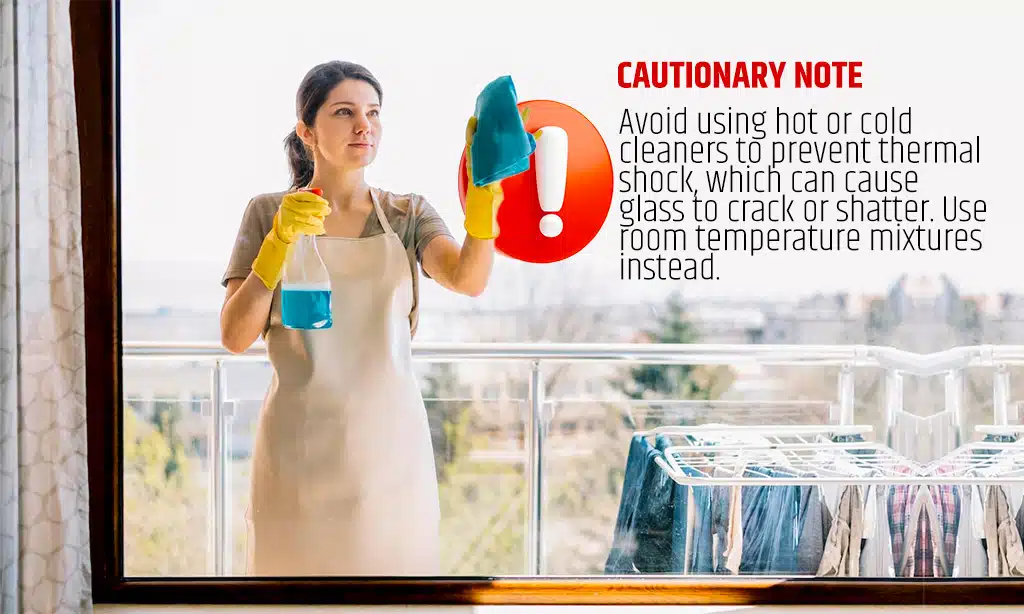
Be careful when cleaning windows on sunny days. Hot glass and cold cleaners can crack your window.
Potential Dangers of Thermal Shock to Glass
Glass can break if it goes from cold to hot too quickly. This sudden change is called thermal shock. Imagine pouring hot water on a frosty window. The glass might crack or even shatter.
I learned this the hard way when trying to clean my windows in the winter with warm water.
To avoid thermal shock, don’t use hot solutions on chilly glass surfaces. In window cleaning, sticking to room-temperature mixtures is best. Mixing lemon juice or vinegar with water creates an effective cleaner without risking damage from heat changes.
This method keeps your windows safe and sparkling without needing harsh chemicals like sodium lauryl sulfate found in some detergents and dish soaps.
Takeaways
Making your own window cleaner is a smart choice. It’s easy, effective, and safe if you follow the right steps. You need simple ingredients like rubbing alcohol, white vinegar, dishwashing soap, and cornstarch.
These items work together to cut through grime and leave windows shining without streaks.
Use this DIY mix with tools like microfiber cloths and squeegees for the best results. Remember not to use hot water on cold glass to avoid breaking it. Store your homemade cleaner in a place that is cool and dark.
This way, you can clean safely while saving money on expensive cleaners from the store.