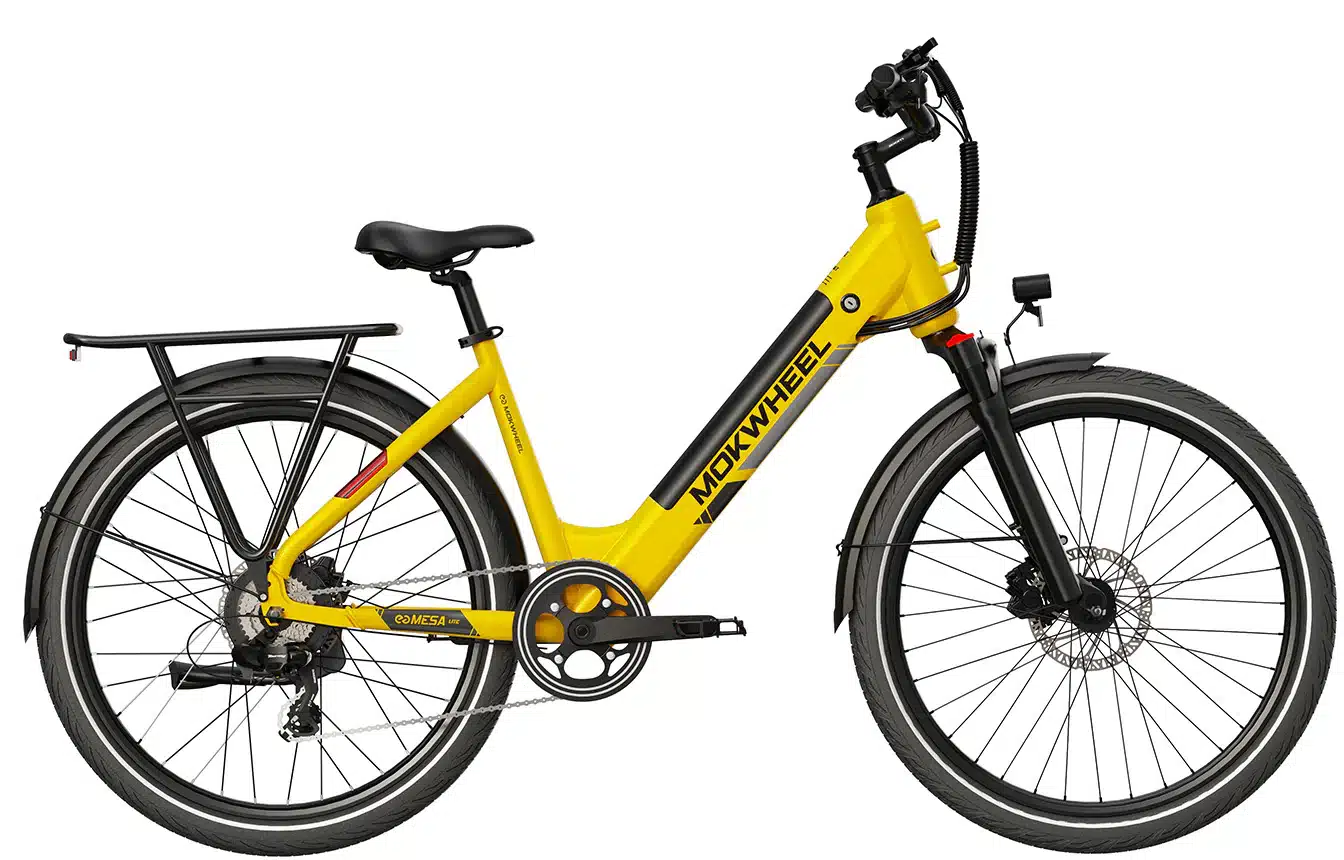
In electric commuter bike reviews, we will be reviewing the Mokwheel Mesa Lite 2.0, a latest ebike model that’s been generating some serious buzz. In it, the company has taken a significant stride in enhancing the product’s performance by upgrading from a rigid fork to a superior suspension fork. This advancement is a direct response to customer feedback, aiming to elevate the riding experience to new heights.
Part 1: First Impressions
Mesa Lite 2.0 has been selling like hotcakes, thanks to Mokwheel’s recent deals. This high demand meant slightly longer delivery times for some colors. When it finally arrived, the ebike came neatly packed in a compact box, with each component snugly secured to avoid any wear and tear.
Part 2: Mokwheel Mesa Lite 2.0 Reviews: Design and Technical Rundown
Mokwheel’s e-bikes have maintained a distinct philosophy in their design; each e-bike targets a particular audience with its style. With Mesa Lite 2.0, Mokwheel has prioritized simplicity.
Like other reviews of commuter electric bikes, let’s delve into Mesa Lite 2.0 by understanding its technical components.
The incorporation of the suspension fork offers numerous benefits, setting this model apart in terms of comfort and control. It excels in absorbing shocks and reducing vibrations, particularly on uneven terrains, resulting in a smoother, more comfortable ride. This feature not only alleviates stress on the rider’s arms and hands but also minimizes fatigue, enabling longer and more enjoyable journeys.
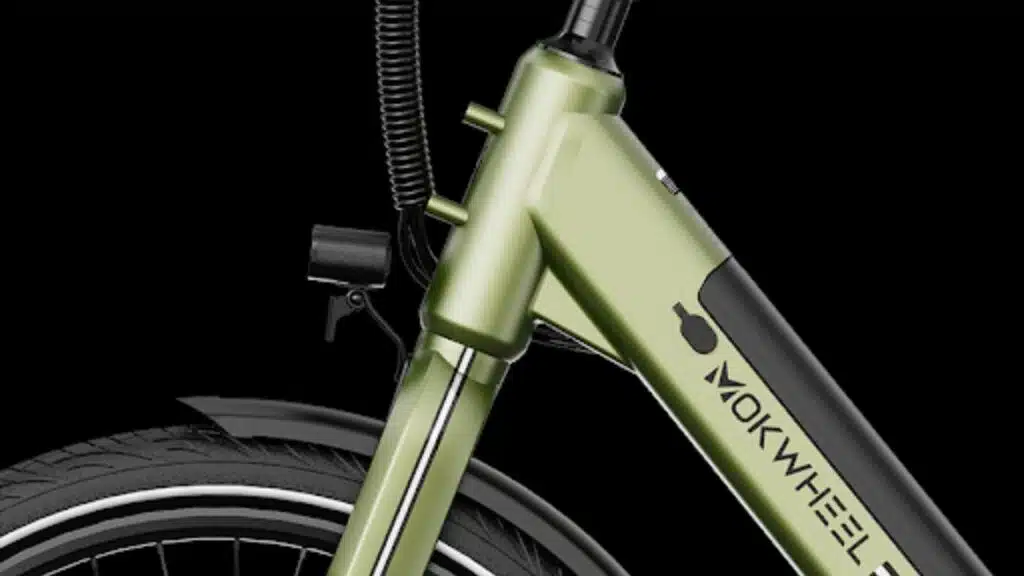
The e-bike comes with a 350 rear hub motor, providing 95 Nm of torque; Mesa Lite 2.0 also has 5 pedal-assist levels with cadence sensors, offering gauged assistance during your ride. Hence, you will enjoy racing the e-bike with your friends or dashing across the crowd in style. It also has a thumb-throttle, allowing you to power up to 20 mph in an impressive 20 seconds.
Mokwheel has impressed us with their battery choice; Mesa Lite 2.0 has an LG 530Wh battery, which can power you to a maximum range of 50 miles.
Mesa Lite offered a range of 40 miles on regular everyday trips with an average speed of 19 mph at PAS 3. The e-bike comes with a 2.0 A charger, which takes up to 5-6 hours to fully charge the battery.
Part 3: Mokwheel Mesa Lite 2.0 Reviews: The Riding Experience
Mesa Lite features Zoom’s mechanical brakes, Shimano’s 7-speed gearing and derailleur, a KMC crankset, and an Aluminum 6061 frame. From a brief feature analysis, the e-bike has the potential to be your partner, but let’s delve deeper into how it actually performed.
An electric bike’s best reviews should test how the e-bike performs in its habitat, which in our case is the urban setting. Surprisingly, Mesa Lite 2.0 offered a comfortable and smooth ride with the suspension front fork.
After positive results in urban settings, the Mesa Lite 2.0 had a tougher challenge in the woods, where it had to fight for its victory. If we start with the positives, the rear hub motor is quick at powering through hills; as Mesa Lite 2.0 doesn’t have a suspension system, most of the motor strength is quickly converted and energy loss is minimal.
Part 4: Pros and Cons
Electric bike reviews in 2023 are hard to remember, so here are the summarized pros and cons of the Mesa Lite 2.0, which you can take as notes from this review.
Pros
Smooth Ride: The e-bike offers a comfortable and smooth urban riding experience with the suspension front fork
Motor Power: The 350 W rear hub motor provides impressive torque (95 Nm), making it suitable for dynamic urban commuting.
Battery Durability: Mesa Lite 2.0 features an LG 530Wh battery, offering a maximum range of 50 miles and higher durability with LG cells.
Braking System: Mesa Lite 2.0 features Zoom’s mechanical brakes, providing good responsiveness and control.
Cons
Assembly Manual: The included assembly manual is considered generic, lacking detailed guidance, prompting users to seek external tutorials for proper assembly.
Conclusion: Is It Worth the Ride?
Overall, we regard this bike as ‘worth the ride’. Its motor, battery, the suspension front fork, and customer support are some of the standout positives that put it ahead of other e-bikes.
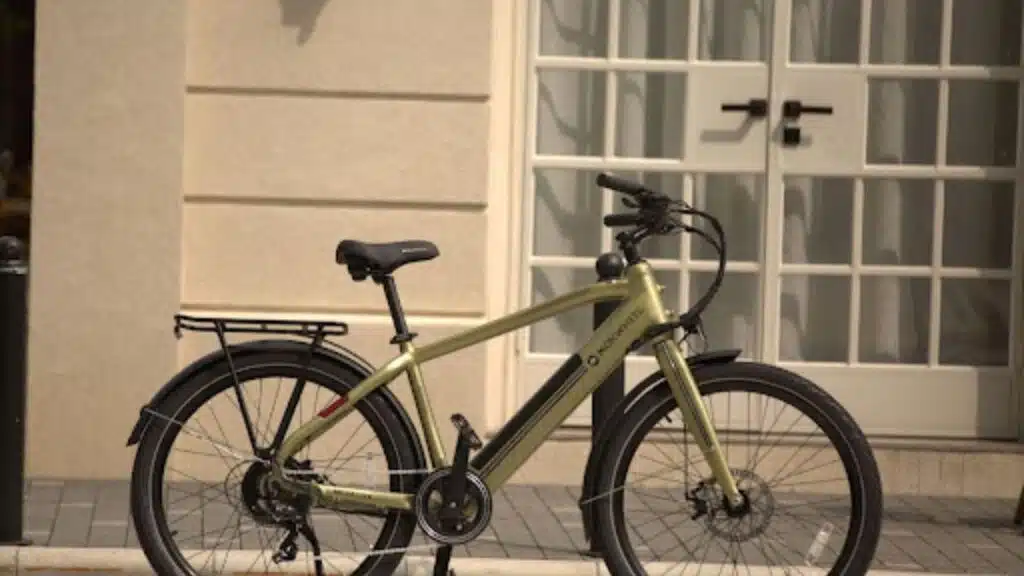
It retails for a discounted price under $1000, which makes it a no-brainer. Head to Mokwheel’s website today and get your hands on your brand new bike.