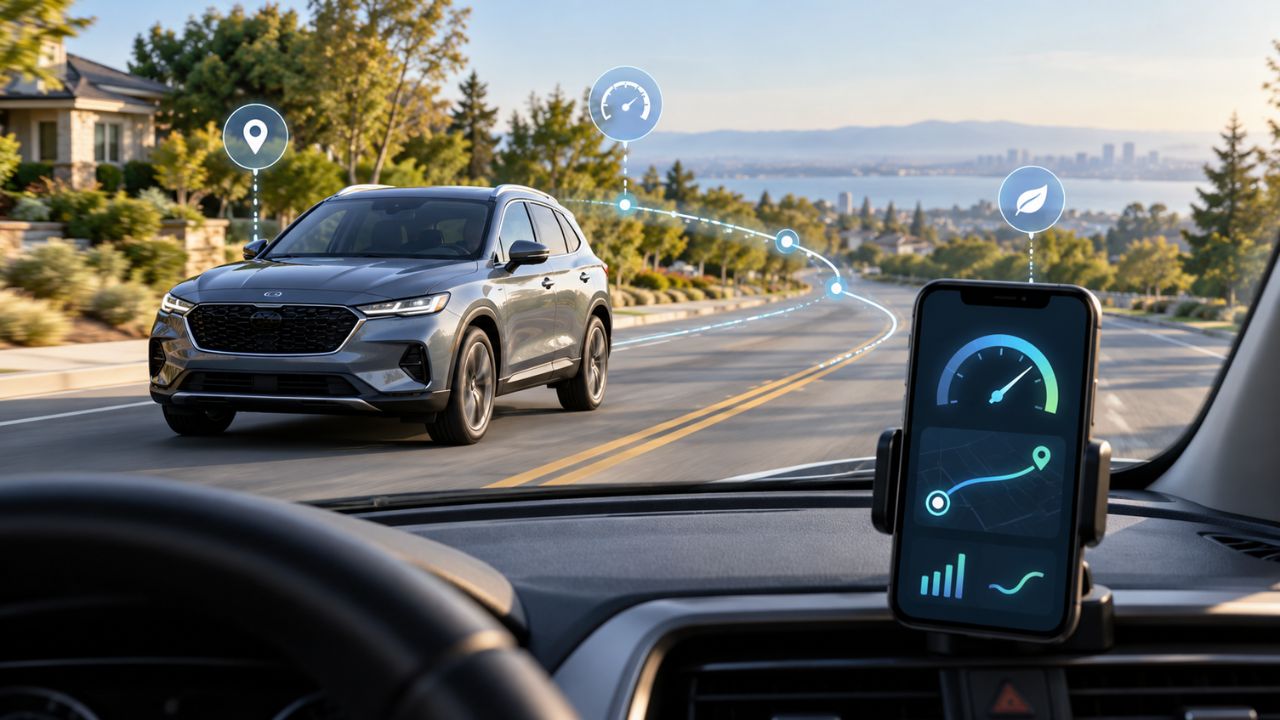
Usage-based auto insurance is a flexible car insurance option that calculates premiums based partly on how much, how often, or how safely you drive. Unlike traditional auto insurance, which typically considers factors such as age, location, vehicle type, and driving history, usage-based auto insurance uses telematics technology, mobile apps, or connected devices to monitor driving behavior and mileage.
This approach can help low-mileage drivers and safe motorists qualify for potential savings while encouraging more responsible driving habits. Understanding how usage-based auto insurance works can help you compare policy options, evaluate privacy considerations, and decide whether this personalized coverage fits your driving needs and budget.
What Is Usage-Based Auto Insurance and How Does It Actually Work?
Usage-based auto insurance is a pricing model where the insurance company charges premiums based on how, when, and how much someone drives, rather than relying only on static factors like age or zip code. The definition centers on a simple trade: drivers share driving data in exchange for a chance at lower-based insurance pricing.
Here is the basic process:
- A driver enrolls in a UBI program through an app, plug-in device, or built-in vehicle telematics system.
- The insurance company collects data on mileage, speed, braking, acceleration, and the time of day a car is driven.
- An algorithm, sometimes called a rating engine, scores the driver based on these inputs.
- The score adjusts the premium, often during a trial period, then at renewal.
This differs from traditional auto insurance, which prices a policy mostly from historical factors like credit, claims history, and vehicle type, without factoring in real-time driving habits. Usage-based insurance usage-based pricing models have grown because telematics technology got cheaper and smartphone apps made data collection simple.
How Do Insurance Companies Track Your Driving With Usage-Based Programs?
Insurance companies track driving through a smartphone app, a plug-in OBD-II device, or a factory-installed telematics system already built into the car. Each method sends driving data back to the insurance company so it can calculate a UBI score and adjust pricing.
Common tracking methods include:
- Smartphone apps that use the phone’s GPS and accelerometer to log trips, speed, and phone handling while driving.
- Plug-in devices that connect to a car’s diagnostic port and collect mileage, speed, and braking data directly from the vehicle.
- Embedded telematics already built into newer vehicles, which some automakers and insurance companies now use without extra hardware.
Data collected typically includes time of day driven, total mileage, hard braking events, rapid acceleration, and sometimes cornering speed. Companies like Root Insurance expanded their entire telematics rollout around exactly this kind of smartphone-based score instead of standard underwriting factors, which shows how far UBI technology has moved from pilot programs into mainstream pricing tools.
A common mistake drivers make is assuming the app only tracks miles. In reality, most pay-how-you-drive programs also weigh speed, braking habits, and even phone distraction during a drive.
What Discounts Can You Really Get With Usage-Based Insurance?
Discounts from usage-based insurance programs commonly range from about 5% to 40%, depending on the insurance company, driving record, and how much mileage a driver logs. There is no guaranteed number, since every rating engine weighs factors differently.
Factors that influence the size of a discount include:
- Total miles driven per month or year
- Number of hard-braking or rapid-acceleration events
- Time of day driven (late-night driving often scores worse)
- Consistency of safe habits over the monitoring period
- Whether the driver has any at-fault accidents during enrollment
While discounts are common, they are not guaranteed. Some drivers enroll expecting instant pricing, premium reductions and instead see smaller savings, or in rare cases, a slight increase if driving habits score poorly during the trial window.
Is Usage-Based Insurance Worth It Compared to Traditional Insurance?
Usage-based insurance is often worth it for low-mileage, cautious drivers who want proof-based pricing instead of relying only on demographic factors. It is less valuable for high-mileage drivers or anyone uncomfortable sharing continuous driving data with an insurance company.
| Factor | Usage-Based Insurance | Traditional Auto Insurance |
|---|---|---|
| Pricing basis | Driving data, mileage, habits | Credit, age, location, claims history |
| Best for | Low-mileage, safe drivers | Drivers who dislike tracking |
| Discount potential | Often higher for good habits | Fixed, less flexible |
| Privacy tradeoff | Requires data sharing | No tracking required |
| Rate volatility | Can change with habits | More stable, slower to change |
Choose usage-based insurance if the driver logs under roughly 10,000 miles a year, avoids hard braking, and rarely drives late at night. Choose traditional auto insurance if privacy concerns outweigh potential savings, or if driving habits are inconsistent and might raise rates instead of lowering them.
Which Insurance Companies Offer Usage-Based or Telematics Programs?
Several major insurance companies now offer usage-based or telematics-based programs, including Progressive, Mapfre Insurance, and Root Insurance, along with many regional carriers. Each company runs its own version of a UBI score, so results differ by provider.
- Progressive runs one of the longest-running pay-how-you-drive programs in the industry, tracking braking, mileage, and time of day.
- Mapfre Insurance offers telematics options in several of its markets, tying pricing partly to mileage and habits.
- Root Insurance built its entire pricing model around a smartphone-based driving test before even quoting a policy, an example of how far telematics-based underwriting has expanded.
Other insurance companies, including several national and regional carriers, have added similar app-based or plug-in programs as usage-based insurance has moved from a niche offering to a standard product option across most of the auto insurance market.
Does Usage-Based Insurance Rate You Higher If You Drive a Lot?
Usage-based insurance can rate a driver higher if they log a lot of miles, since more time on the road generally means more exposure to risk. Pay-as-you-drive programs are built specifically around this principle: more mileage, higher premium exposure.
That said, mileage alone is not the whole story. A high-mileage driver with excellent braking habits and no late-night driving might still see a smaller increase than a low-mileage driver with frequent hard stops. This is why pay-how-you-drive and pay-as-you-drive insurance programs are often combined into one score rather than kept separate.
Edge case: commercial auto drivers or rideshare drivers who log heavy daily mileage are usually not good candidates for standard UBI programs, since most retail usage-based insurance products are built around private passenger driving, not commercial auto use.
What Driving Behaviors Get Rewarded With Usage-Based Insurance Discounts?
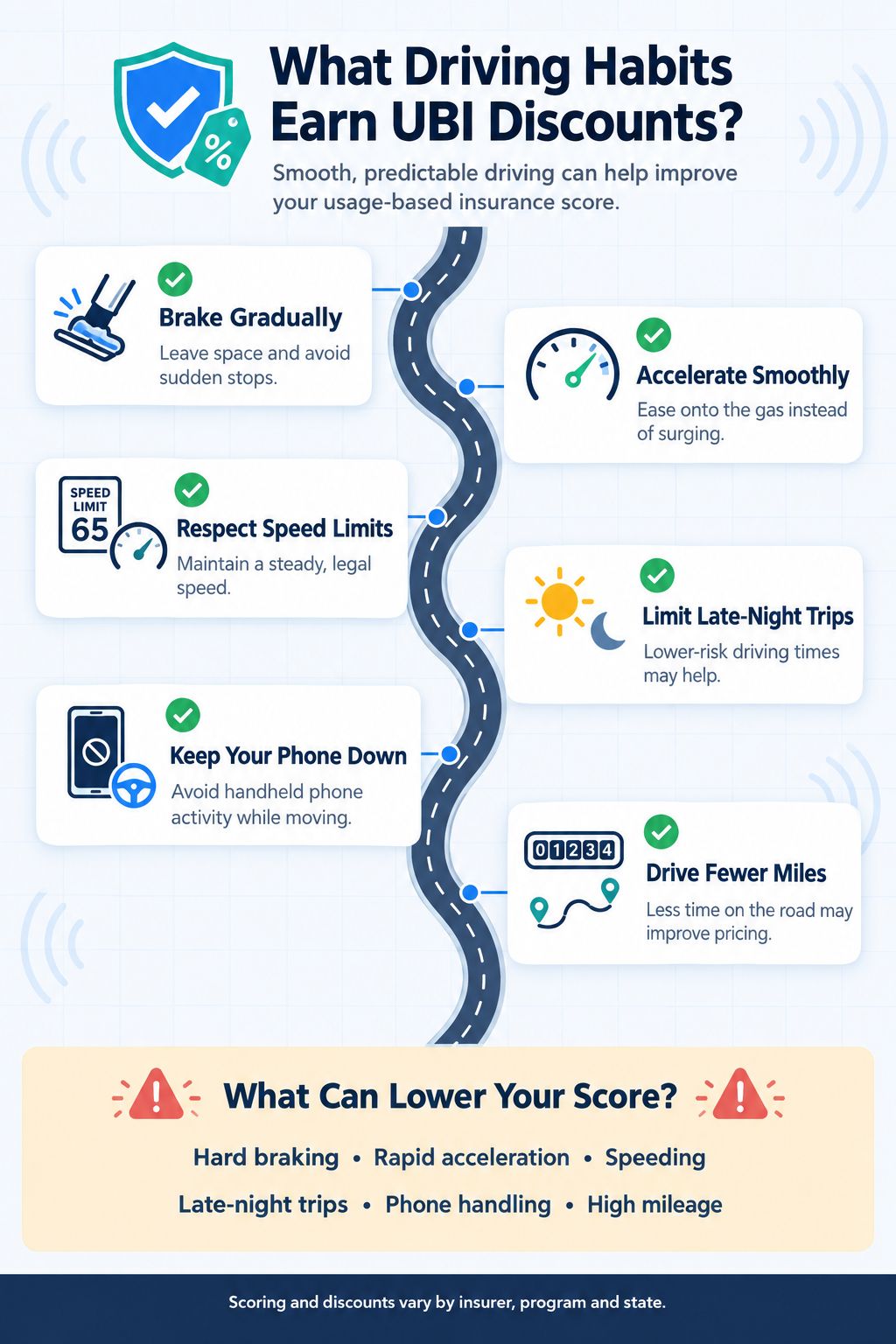
Usage-based insurance programs reward smooth, consistent, and predictable driving behaviors most heavily. Hard braking, rapid acceleration, and late-night trips typically lower a score, while steady speeds and daytime driving usually help it.
Behaviors that commonly earn better pricing:
- Gradual braking instead of sudden stops
- Staying near posted speed limits
- Driving mostly during daytime hours
- Avoiding phone handling while the car is moving
- Logging lower overall mileage
What Happens to Your Rates if You Get in an Accident With Usage-Based Insurance?
An accident still affects usage-based insurance rates largely the same way it affects traditional auto insurance rates, through a claim on the driving record. The usage-based score adds another layer, but it does not replace standard claims-based rating.
If the telematics data shows hard braking right before a collision, that data could also factor into how the claim is reviewed, though insurance companies vary in how directly they use telematics data as at-fault evidence. Drivers should check their specific policy and privacy policy language to understand how accident data interacts with the usage-based score.
Can You Opt Out or Pause a Usage-Based Insurance Program?
Most insurance companies allow drivers to opt out of a usage-based insurance program without canceling the full policy, though the discount or trial pricing usually disappears once a driver opts out. Rules and processes vary by company and state.
Common opt-out situations:
- A driver dislikes the tracking and removes the app or device.
- A driver’s habits during the trial period score worse than expected, so they cancel before the discount locks in.
- A driver sells the car being monitored and needs to reset the program on a new vehicle.
Choose to opt out if continuous tracking feels invasive or if early data suggests the final discount, premium will be smaller than expected.
Do You Need to Buy Special Equipment for Usage-Based Auto Insurance?
In most cases, no special equipment purchase is required, since many usage-based insurance programs now run through a smartphone app instead of hardware. Some older or specific programs still use a small plug-in device supplied free by the insurance company.
- App-based programs: No equipment needed beyond the driver’s existing smartphone.
- Plug-in device programs: The insurance company typically mails a free OBD-II device that plugs into the car’s diagnostic port.
- Embedded telematics: Built into some newer vehicles directly, with no extra device needed.
What Happens If I Unplug the Tracking Device?
Unplugging a usage-based insurance tracking device usually stops data collection and can end any discount or trigger the standard non-UBI rate. Some insurance companies may interpret repeated unplugging as an attempt to hide poor driving habits, which could affect eligibility for future telematics discounts.
If the plug-in device is unplugged for a short trip (for example, moving it to a different car temporarily), most programs simply log a data gap rather than penalizing the driver. Long-term or repeated unplugging is treated differently and can void program benefits.
Is My Driving Data Private With Usage-Based Insurance Tracking?
Driving data collected through usage-based insurance programs is stored and used according to each company’s privacy policy and terms of service, and privacy protections vary significantly between providers. Consumers should review these documents before enrolling, since not all companies handle data the same way.
Privacy concerns are not new to connected-vehicle insurance. The GM and OnStar telematics controversy raised public concern years ago when drivers learned their vehicle data had been shared with third parties without clear consent. More recently, Tesla Insurance has faced regulatory scrutiny in New York over how connected-car data factors into its usage-based pricing model. These cases show why reading the privacy policy, not just skimming the app’s permissions screen, matters before signing up for data-based pricing.
California remains a notable exception in the regulatory landscape. The state has long banned telematics-based rating for personal auto insurance, and a 2023 bill, AB 311, failed to change that restriction. This means usage-based insurance programs common in other states are simply not available in California in the same form.
Who Should Actually Get Usage-Based Insurance and Who Shouldn’t?
Usage-based insurance works best for low-mileage, safety-conscious drivers who want their premium tied to actual habits rather than demographic averages. It works poorly for drivers who dislike being monitored or who have inconsistent, high-risk driving patterns.
Good candidates include:
- Low-mileage drivers, including retirees or remote workers
- Younger drivers trying to prove safe habits despite limited credit or driving history
- Drivers with strong safety habits but average credit scores
Poor candidates include:
- High-mileage commuters or delivery drivers
- Drivers uncomfortable sharing continuous location and speed data
- Drivers with frequent late-night driving schedules that can’t change
What Are Common Mistakes People Make With Usage-Based Insurance?
The most common mistake is enrolling without checking how the specific program scores driving, since pay-as-you-drive and pay-how-you-drive models weigh factors very differently. Another frequent mistake is assuming the discount is locked in immediately rather than earned over a monitoring period.
Other mistakes include:
- Letting someone else drive the monitored car frequently, which can skew the score
- Ignoring the privacy policy and being surprised later by data-sharing terms
- Assuming all usage-based insurance programs work the same way across different insurance companies
- Expecting instant premium savings instead of waiting through the full trial or monitoring window
Final Thoughts
Usage-based auto insurance ties pricing to real driving data instead of static profile factors, and understanding how usage-based auto insurance works helps drivers decide if it fits their habits and comfort level with data sharing. Low-mileage, careful drivers often find real savings, while high-mileage or privacy-conscious drivers may prefer traditional auto insurance. Before enrolling, compare at least two insurance company programs, read the privacy policy and terms of service closely, and track personal driving habits for a few weeks to estimate likely results. For drivers also managing other financial products like credit cards, personal loans, or auto loans, remember that insurance pricing is just one piece of the larger cost of owning and driving a car.
Frequently Asked Questions
How does usage-based insurance work?
Usage-based insurance works by collecting driving data through an app or device, then using that data to adjust auto insurance premiums based on mileage and driving habits instead of relying only on traditional rating factors.
What are the different types of usage-based insurance?
The two main types are pay-as-you-drive, which charges based on mileage, and pay-how-you-drive, which charges based on behaviors like braking, speed, and time of day driven.
Pay-how-you-drive insurance programs: what do they track?
Pay-how-you-drive programs track behaviors such as hard braking, rapid acceleration, speed relative to limits, and the time of day a car is driven, then score the driver accordingly.
Pay-as-you-drive insurance programs: how are they priced?
Pay-as-you-drive programs price premiums mainly on total mileage, charging less for drivers who log fewer miles and more for drivers who log high mileage.
What companies offer usage-based insurance?
Companies offering usage-based insurance include Progressive, Mapfre Insurance, Root Insurance, and various regional and national carriers, each with its own scoring method.