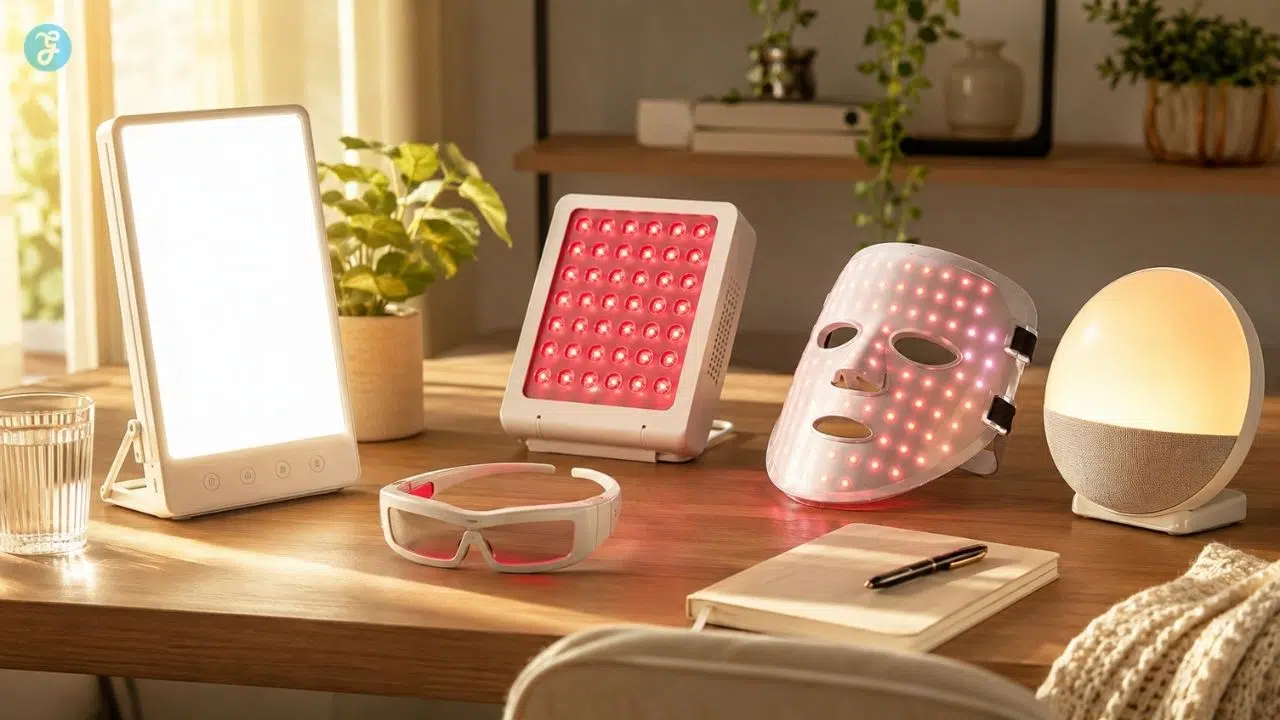
Finding light therapy products worth trying is not as simple as buying the brightest lamp or the most viral red light mask. That is where people get stuck. One product promises a better winter mood. Another promises smoother-looking skin. Another says it can support recovery. Another looks like an alarm clock but calls itself light therapy.
Then red light panels, SAD lamps, wake-up lights, LED masks, and wearable light glasses all get thrown into the same shopping category as if they do the same job. They do not.
A SAD lamp is usually meant for bright morning light exposure. A sunrise alarm is mainly for gentler waking and circadian rhythm support. Red light therapy devices use different wavelengths, usually for skin appearance, recovery, or wellness routines. LED face masks are more skincare-focused. Wearable light therapy glasses are built for people who want bright-light exposure without sitting in front of a box.
The right product depends on your goal, your routine, and your tolerance for bright light, not just the product with the nicest marketing photo. This guide compares 9 light therapy products worth trying in 2026, with clear use cases, buying notes, and practical cautions.
What to Know Before Buying Light Therapy Products
Light therapy is not one single thing. Different devices use different light intensities, wavelengths, distances, and use cases.
A traditional SAD lamp usually focuses on bright white light, often around 10,000 lux, used in the morning for a set period. A wake-up light gradually brightens before your alarm but is usually much less intense than a SAD lamp. Red light therapy and near-infrared devices use specific wavelengths and are usually marketed for skin appearance, muscle recovery, or wellness routines. LED masks are typically skincare devices that use red, near-infrared, blue, or multiple wavelengths.
That difference matters because buying the wrong type can lead to disappointment. A sunrise alarm is not the same as a clinical-style SAD lamp. A red light mask is not meant to replace morning bright light. A large red light panel is not the same as a desk lamp.
Also, light therapy is not for everyone without caution. People with bipolar disorder, certain eye conditions, migraine sensitivity, photosensitive skin conditions, or medications that increase light sensitivity should speak with a qualified health professional before using light therapy products.
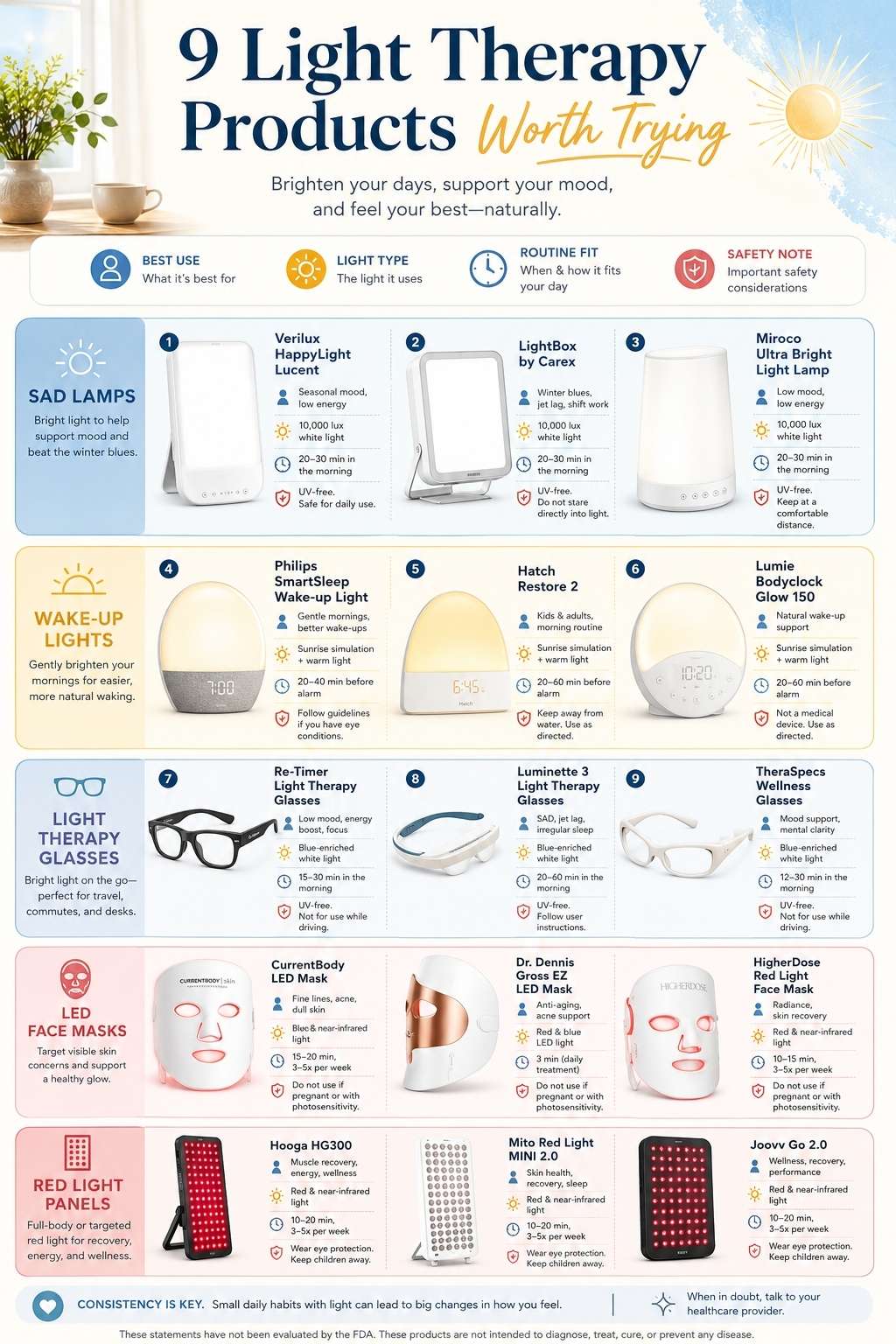
9 Light Therapy Products Worth Trying
The best choice depends on what you want light therapy to do. Start with your goal first: winter mood support, morning energy, sleep-wake routine, skincare, recovery, or low-distraction daily use.
1. Carex Day-Light Classic Plus
Carex Day-Light Classic Plus is one of the strongest picks for people who want a traditional SAD lamp rather than a small decorative desk light.
It offers a larger light surface than many compact lamps and is designed for 10,000-lux bright light therapy at a practical sitting distance. That matters because many small lamps advertise impressive numbers but require you to sit very close to get the stated intensity. A larger lamp can feel more comfortable for morning use at a desk, breakfast table, or reading area.
This product is best for people who are serious about a consistent morning light routine during darker months. It is not the most stylish or compact option, but that is not really the point. It is more of a purpose-built therapy-style lamp.
A strong match for: People who want a full-size SAD lamp for morning use.
Best feature: Large therapy-style design with 10,000-lux bright light.
Worth considering: It takes more space than compact lamps, so it is better for a dedicated desk, table, or routine spot.
2. Verilux HappyLight Luxe
Verilux HappyLight Luxe is a better fit for readers who want a smaller and more portable SAD lamp.
It delivers up to 10,000 lux of UV-free LED light and offers adjustable brightness and color temperature settings. That makes it easier to use at a desk, on a nightstand, or in a small workspace. If someone is new to SAD lamps and does not want a large clinical-looking device, this is a more approachable place to start.
Its biggest advantage is convenience. It is light, compact, and simple enough for everyday use. It also looks less intense than larger therapy boxes, which matters if the lamp will sit in a shared living space or office.
Ideal for: Beginners, apartment dwellers, desk workers, and people who want a compact SAD lamp.
Best feature: Adjustable light settings in a smaller, more portable format.
Before buying: Compact lamps may require closer positioning than larger lamps. Follow the manufacturer’s distance and timing instructions.
3. Luminette 3 Light Therapy Glasses
Luminette 3 is for people who want morning light therapy without sitting still in front of a lamp.
These light therapy glasses sit above the eyes and deliver blue-enriched white light while leaving your field of vision mostly open. That means you can read, eat breakfast, make coffee, work, or move around while using them. For people who struggle to stay in front of a SAD lamp consistently, that convenience may make a real difference.
Luminette is not the same as a 10,000-lux lamp shining across a desk. It uses a different wearable format and lower-intensity blue-enriched light. The benefit is practicality, not raw lamp size.
Works well for: Busy mornings, small spaces, travel, and people who dislike sitting in front of a lamp.
Best feature: Hands-free light therapy while doing other morning tasks.
Practical note: Because this is light directed near the eyes, people with eye conditions or light sensitivity should be extra cautious and ask a professional before use.
4. Philips SmartSleep Wake-Up Light HF3520/60
Philips SmartSleep HF3520/60 is not a classic SAD lamp, and that distinction matters.
This product is mainly a sunrise alarm clock. It gradually brightens before your wake time, shifting through warm sunrise colors, and includes sunset simulation, natural wake sounds, FM radio, and 20 brightness settings. It is designed to make waking feel gentler, especially during dark mornings.
The official specs list 300 lux, which is far below the 10,000 lux often associated with SAD lamps. That does not make it useless. It just means it should be judged as a wake-up light, not as a replacement for a proper SAD light box.
Best suited to: People who struggle with harsh alarms and dark mornings.
Best feature: Gradual colored sunrise simulation with customizable brightness.
One thing to note: Choose this for a gentler wake routine, not for full bright-light therapy.
5. Lumie Bodyclock Luxe 750DAB
Lumie Bodyclock Luxe 750DAB is a premium wake-up light for people who want a more complete sleep-wake routine.
It includes a gradual sunrise, a fading sunset, DAB radio, Bluetooth speakers, and 30+ sleep and wake sounds. Compared with simpler wake-up lights, it feels more like a bedside routine device than a basic alarm clock. It is especially useful for people who want to reduce jarring phone alarms and build a calmer evening-to-morning rhythm.
This is not the cheapest light therapy product. It is also not a compact travel device. Its value is in routine design: wake, wind down, audio, and light in one product.
Great match for: People who want a premium bedside wake-up and wind-down system.
Best feature: Sunrise and sunset simulation with strong audio options.
Worth knowing: Like Philips SmartSleep, this belongs more in the sleep-wake light category than the medical-style SAD lamp category.
6. Omnilux Contour Face
Omnilux Contour Face is one of the most recognized red light therapy masks for at-home skincare.
It uses red and near-infrared LED light and is listed as FDA-cleared for the treatment of full-face wrinkles. That makes it a more credible option than many cheaper LED masks with vague wavelength claims and no clear regulatory language.
This device is best for people interested in skin appearance, fine lines, and a consistent at-home skincare routine. It is not a mood lamp, and it is not meant for SAD. It belongs in a different light therapy category.
The main issue is consistency. LED masks usually require repeated sessions over weeks. If someone buys one expecting dramatic overnight results, they will probably be disappointed.
A smart pick for: Skincare-focused users who want a red and near-infrared LED face mask.
Best feature: FDA-cleared full-face red light therapy mask from an established LED brand.
Before buying: Check the contraindications and follow the timing instructions exactly, especially around eye protection and photosensitivity.
7. CurrentBody Skin LED Light Therapy Mask Series 2
CurrentBody Skin LED Light Therapy Mask Series 2 is another strong option in the premium LED mask category.
It uses three wavelengths: red at 633 nm, near-infrared at 830 nm, and deep near-infrared at 1072 nm. The Series 2 design is aimed at better face coverage and more advanced anti-aging-focused light delivery compared with simpler LED masks.
This product is best for readers who want a higher-end beauty-tech device and care about specific wavelengths. It competes directly with Omnilux, but the buying choice may come down to fit, comfort, price, availability, warranty, and preferred treatment routine.
Recommended for: Skincare users comparing premium LED face masks.
Best feature: Three-wavelength LED setup with red, near-infrared, and deep near-infrared light.
Practical note: LED masks are not miracle devices. They require consistent use, and results are usually gradual.
8. Joovv Solo 3.0
Joovv Solo 3.0 is a premium red light therapy panel for people who want a larger treatment area than a face mask.
Instead of sitting directly on the face, a panel is used at a distance for broader exposure. Joovv positions its Generation 3.0 devices around premium build quality, modular expansion, and independent certification to medical electrical equipment safety standards.
This product makes more sense for serious red light therapy users than casual buyers. It is larger, more expensive, and more involved than a small mask or lamp. But for people interested in red and near-infrared panels for wellness routines, Joovv is one of the major names.
Best for: Users who want a premium red light therapy panel rather than a wearable mask.
Best feature: Larger panel format with modular expansion options.
Worth considering: Panels require space, setup, eye-safety habits, and realistic expectations.
9. Mito Red Light MitoPRO 300X
Mito Red Light MitoPRO 300X is a strong tabletop red light panel for people who want more wavelength variety in a smaller panel format.
The MitoPRO X series lists six wavelengths: 590 nm, 630 nm, 660 nm, 810 nm, 830 nm, and 850 nm. It also includes features like touchscreen controls, brightness control, app compatibility, and third-party testing language. For users who want more customization than a basic red/NIR panel, this is the appeal.
This product is best for buyers who have already decided they want a red light panel and are comparing wavelength mix, build quality, size, warranty, and budget.
Best suited to: Red light therapy users who want a compact but feature-rich panel.
Best feature: Six-wavelength setup in the MitoPRO X line.
Final buying note: More wavelengths do not automatically mean better results for every person. Use the device according to the manufacturer’s guidance and avoid exaggerated expectations.
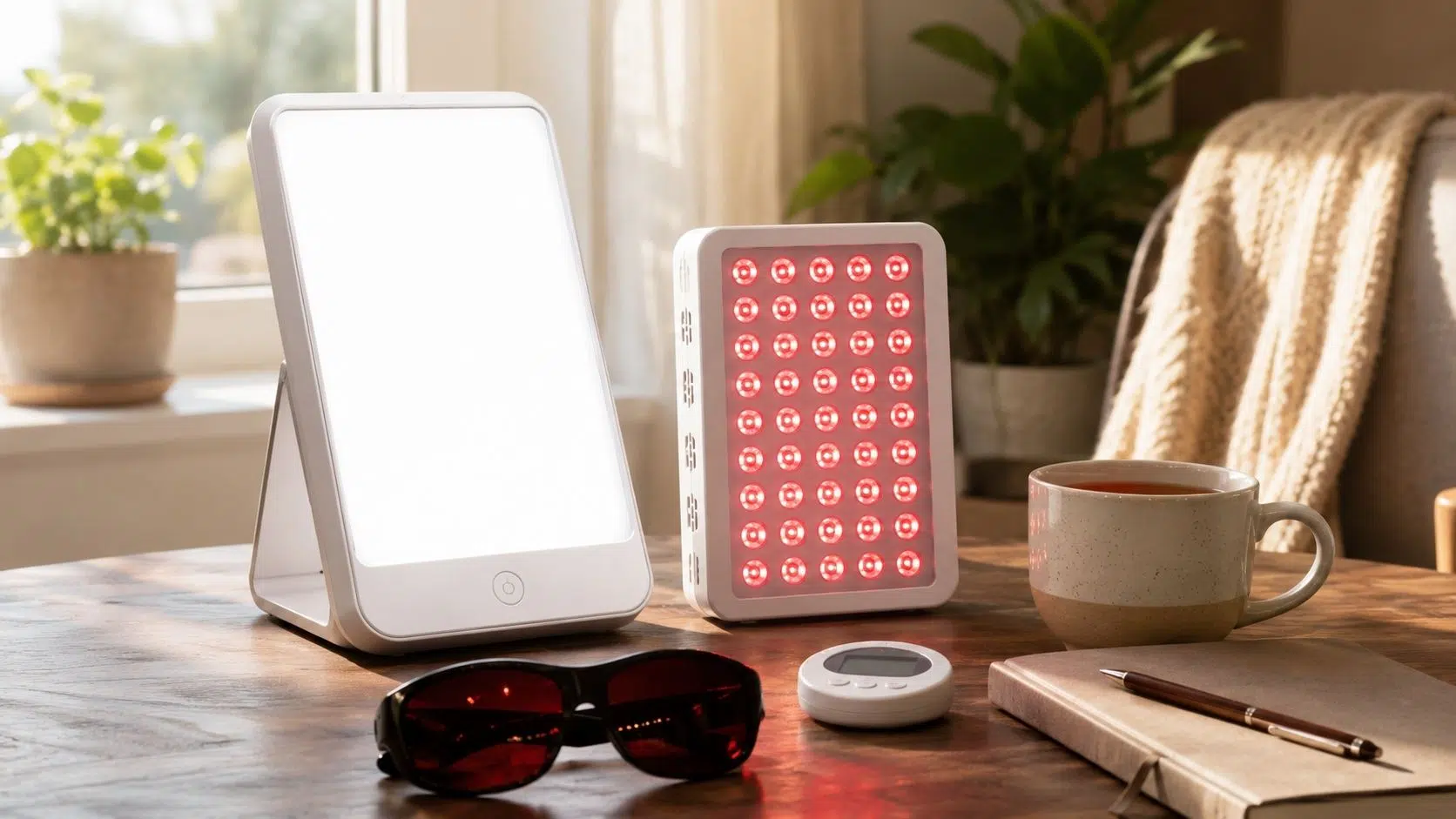
Quick Comparison: 9 Light Therapy Products Worth Trying
| Product | Best For | Product Type | Main Strength |
| Carex Day-Light Classic Plus | Serious morning bright light therapy | SAD lamp | Large 10,000-lux therapy-style lamp |
| Verilux HappyLight Luxe | Portable desk use | SAD lamp | Compact, adjustable, user-friendly, bright light |
| Luminette 3 | Hands-free light therapy | Light therapy glasses | Wearable morning light exposure |
| Philips SmartSleep HF3520/60 | Gentle waking | Sunrise wake-up light | Colored sunrise and sunset simulation |
| Lumie Bodyclock Luxe 750DAB | Premium sleep-wake routine | Wake-up light | Sunrise, sunset, sounds, radio, Bluetooth |
| Omnilux Contour Face | Skincare-focused red light | LED face mask | FDA-cleared red and near-infrared mask |
| CurrentBody Skin LED Mask Series 2 | Advanced LED skincare | LED face mask | Red, near-infrared, and deep near-infrared wavelengths |
| Joovv Solo 3.0 | Premium red light panel | Red/NIR panel | Modular, certified red light therapy panel |
| Mito Red Light MitoPRO 300X | Multi-wavelength tabletop red light | Red/NIR panel | Six-wavelength red and near-infrared panel |
Best Light Therapy Products by Goal
| Goal | Best Product Fit |
| Serious SAD lamp routine | Carex Day-Light Classic Plus |
| Compact desk SAD lamp | Verilux HappyLight Luxe |
| Hands-free morning light | Luminette 3 |
| Gentle wake-up routine | Philips SmartSleep HF3520/60 |
| Premium bedside sleep-wake routine | Lumie Bodyclock Luxe 750DAB |
| Red light skincare mask | Omnilux Contour Face |
| Advanced LED mask comparison | CurrentBody Skin LED Mask Series 2 |
| Premium red light panel | Joovv Solo 3.0 |
| Multi-wavelength tabletop red light | MitoPRO 300X |
SAD Lamps vs Red Light Therapy Devices
This is where many buyers get confused.
- SAD lamps usually use bright white light and are commonly used in the morning. Their job is to mimic outdoor brightness and support seasonal mood and circadian rhythm routines. They are typically measured in lux.
- Red light therapy devices use red and near-infrared wavelengths, often measured in nanometers. They are usually marketed for skin appearance, recovery routines, and wellness support. They are not used like SAD lamps and should not be treated as substitutes for morning bright light therapy.
- Wake-up lights gradually brighten before your alarm. They can support gentler mornings, but most are not bright enough to replace a proper 10,000-lux SAD lamp.
So the buying question is not “Which light therapy device is best?” It is “Which type of light therapy product matches my actual goal?”
What to Check Before Buying
Before buying any light therapy product, check:
- What type of light does it use
- Brightness or wavelength specifications
- Whether it is UV-free
- Recommended distance and session time
- Eye safety instructions
- Whether it is FDA-cleared, registered, or only marketed as wellness
- Whether it fits your routine realistically
- Warranty and return policy
- Contraindications for eye conditions, bipolar disorder, migraines, photosensitivity, or medications
- Whether the product makes realistic claims
A good product should explain how to use it, how far away to sit or stand, how long a session should last, and who should avoid it.
Common Mistakes People Make With Light Therapy Products
- Buying a sunrise alarm when they actually need a SAD lamp.
- Buying a red light mask for mood support. Red light therapy and SAD light therapy are not the same thing.
- Ignoring distance. A lamp may claim 10,000 lux, but the useful brightness depends on how far you sit from it.
- Expecting instant results. Many light therapy routines require consistent use.
- Using devices too long, too close, or at the wrong time of day. Morning bright light can support a routine, but bright light late in the day may disrupt sleep for some people.
- Skipping medical advice when risk factors exist. Light therapy may not be suitable for everyone.
Wrapping Up
The best light therapy products are useful only when they match the problem you are trying to solve.
Choose Carex Day-Light Classic Plus if you want a full-size SAD lamp. Choose Verilux HappyLight Luxe if you want a compact desk-friendly light. Choose Luminette 3 if you want hands-free morning light therapy. Choose Philips SmartSleep or Lumie Bodyclock if your main issue is waking more gently. Choose Omnilux or CurrentBody if you want a skincare-focused LED mask. Choose Joovv or MitoPRO 300X if you want a red light therapy panel.
Do not buy based on hype alone. Buy based on light type, use case, safety, routine fit, and realistic expectations.
Frequently Asked Questions About Light Therapy Products
1. What are light therapy products?
Light therapy products are devices that use specific types of light for wellness, sleep, mood, skincare, or recovery routines. They include SAD lamps, wake-up lights, light therapy glasses, red light therapy panels, and LED face masks.
2. Are SAD lamps and red light therapy devices the same?
No. SAD lamps usually use bright white light and are often used in the morning for seasonal mood and circadian rhythm routines. Red light therapy devices use red and near-infrared wavelengths and are usually marketed for skincare, recovery, or general wellness.
3. What should I look for in a SAD lamp?
Look for a bright, UV-free lamp with clear instructions, ideally around 10,000 lux at a practical distance. Also check size, glare control, adjustable brightness, return policy, and whether it fits your morning routine.
4. Is red light therapy safe at home?
Red light therapy is generally considered low-risk when used correctly, but users should follow manufacturer instructions, protect their eyes when recommended, and avoid overuse. People with photosensitivity, eye disease, skin conditions, or certain medications should ask a professional before using it.
5. Do wake-up lights help with SAD?
Wake-up lights may help some people wake more gently and support a better morning routine, especially in dark months. However, most wake-up lights are not as bright as SAD lamps and should not be treated as direct replacements for bright light therapy boxes.
6. Which light therapy product is best for beginners?
For beginners, Verilux HappyLight Luxe is a practical compact SAD lamp, while Philips SmartSleep HF3520/60 is a gentler option for wake-up support. For skincare, Omnilux Contour Face is a more established LED mask option. The best beginner product depends on whether the goal is mood, sleep, or skin.