

New Zealand has long been a global leader in agriculture, renowned for its commitment to sustainability and innovation. As the world grapples with climate change and resource scarcity, New Zealand’s farmers are turning to advanced technologies to maintain their competitive edge.
These innovative tools and techniques not only enhance productivity but also ensure environmentally friendly practices.
This article explores ten cutting-edge farming technologies revolutionizing New Zealand’s agriculture in 2025.
1. Precision Agriculture Tools
Precision agriculture uses advanced technologies to optimize farming practices. By employing tools such as GPS-guided tractors and variable rate technology, farmers can maximize efficiency while minimizing waste.
These tools ensure precise application of inputs like fertilizers and water, leading to significant cost savings.
Additionally, they help in reducing environmental impact by minimizing runoff and overuse of resources.
Key Benefits of Precision Agriculture:
- Optimized Inputs: Farmers can apply fertilizers, pesticides, and water precisely where needed.
- Reduced Costs: Minimizing resource wastage lowers overall expenses.
- Environmental Sustainability: Precision agriculture reduces the environmental footprint.
Examples in New Zealand:
| Technology | Application | Region |
| GPS-Guided Tractors | Accurate field navigation | Canterbury |
| Variable Rate Technology | Precision application of fertilizers | Hawke’s Bay |
2. Drones for Crop Monitoring and Management
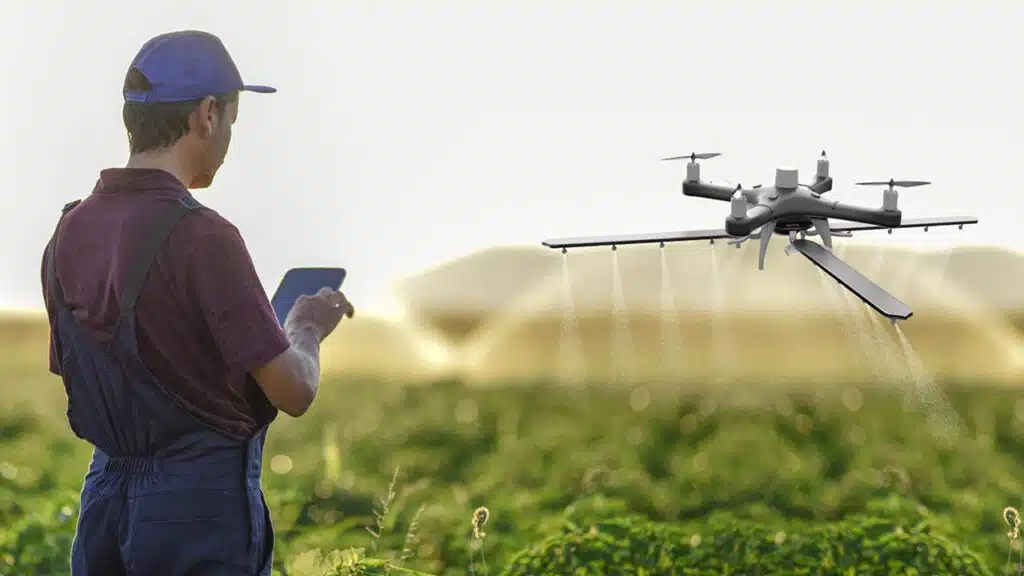
Drones are transforming agriculture with their ability to monitor large areas quickly and efficiently.
They’re used to assess crop health, detect pests, and even apply fertilizers or pesticides.
Equipped with advanced sensors and cameras, drones provide farmers with actionable insights to address potential problems before they escalate.
Additionally, drones contribute to sustainable farming by minimizing resource usage and reducing the need for heavy machinery.
Advantages of Using Drones:
- Time-Saving: Cover vast areas in minutes.
- Cost-Efficient: Reduce the need for manual labor.
- Enhanced Accuracy: Provide detailed aerial views for better decision-making.
Examples in New Zealand:
| Drone Application | Benefit | Region |
| Vineyard Monitoring | Improved grape quality | Marlborough |
| Pest Detection | Early identification of infestations | Bay of Plenty |
3. IoT-Based Smart Farming Solutions
The Internet of Things (IoT) is making farms smarter by connecting devices and sensors. These systems provide real-time data on soil conditions, weather, and crop health, allowing farmers to monitor and optimize their operations seamlessly.
This connectivity also enables predictive maintenance of equipment, ensuring fewer breakdowns and uninterrupted productivity.
Additionally, IoT solutions contribute to environmental sustainability by optimizing resource usage and reducing wastage.
How IoT Enhances Farming:
- Data-Driven Decisions: Farmers can make informed choices using accurate data.
- Efficient Resource Use: Optimize water, energy, and fertilizer usage.
- Improved Yields: Monitor crops and soil to prevent issues before they escalate.
Examples in New Zealand:
| IoT Technology | Use Case | Region |
| Soil Moisture Sensors | Smart irrigation management | Waikato |
| Weather Monitoring Systems | Real-time climate data | Taranaki |
4. Robotic Farming Equipment
Robotics is reshaping labor-intensive tasks in agriculture. Automated machines, such as robotic weeders and harvesters, boost productivity and reduce reliance on manual labor.
These machines also enable farmers to perform tasks with greater precision, ensuring minimal crop damage and maximizing efficiency.
Additionally, robotic technology supports sustainable practices by optimizing resource usage and reducing waste, making it a critical innovation in modern farming.
Benefits of Robotic Farming:
- Labor Efficiency: Perform repetitive tasks faster and more consistently.
- Cost Savings: Reduce labor costs significantly.
- Precision Operations: Ensure minimal crop damage.
Examples in New Zealand:
| Robotic Equipment | Application | Region |
| Robotic Harvesters | Automated fruit and vegetable picking | Auckland |
| Robotic Weed Control | Precision weeding | Canterbury |
5. Vertical Farming Innovations
Vertical farming involves growing crops in stacked layers, often indoors. This method is highly efficient, using less land and water than traditional farming.
By incorporating controlled environments, vertical farming minimizes the risk of pests and diseases, allowing for the use of fewer pesticides.
Additionally, it supports year-round production, ensuring a consistent food supply even in urban areas or regions with limited arable land.
Features of Vertical Farming:
- Space-Efficient: Ideal for urban areas.
- Year-Round Production: Controlled environments ensure consistent yields.
- Sustainable: Uses hydroponics and aeroponics to save resources.
Examples in New Zealand:
| Technology | Benefit | Region |
| Hydroponics | Soil-less, water-efficient farming | Wellington |
| LED Grow Lights | Enhanced photosynthesis | Christchurch |
6. Blockchain for Supply Chain Transparency
Blockchain technology ensures transparency and traceability in the agricultural supply chain.
By recording transactions securely, it builds trust between farmers, suppliers, and consumers.
This technology also enhances operational efficiency by streamlining processes and reducing administrative overheads.
Moreover, it empowers consumers by providing verifiable data about the origin and quality of agricultural products, fostering stronger connections between producers and end-users.
Benefits of Blockchain in Agriculture:
- Traceability: Track produce from farm to table.
- Secure Transactions: Prevent fraud and ensure fair payments.
- Consumer Trust: Transparency enhances brand reputation.
Examples in New Zealand:
|
Blockchain Use Case |
Benefit |
Region |
| Traceable Dairy Products | Improved product credibility | Waikato |
| Transparent Produce Supply | Enhanced trust in organic products | Otago |
7. Artificial Intelligence (AI) in Farming
AI-powered systems help farmers predict outcomes, detect diseases, and optimize operations.
Predictive analytics and image recognition are key applications. These systems leverage vast datasets to offer actionable insights, enabling farmers to address challenges proactively.
For example, AI algorithms can analyze weather patterns and recommend optimal planting times.
Furthermore, they can identify nutrient deficiencies or pest infestations at early stages, improving overall crop health and minimizing losses.
Advantages of AI:
- Improved Productivity: Identify potential issues early.
- Cost-Effective Solutions: Automate complex processes.
- Enhanced Crop Health: AI systems detect diseases with precision.
Examples in New Zealand:
| AI Application | Benefit | Region |
| Disease Detection Systems | Early pest and disease intervention | Nelson |
| Yield Prediction Tools | Improved planning and efficiency | Canterbury |
8. Renewable Energy-Powered Farming
Farmers in New Zealand are increasingly adopting renewable energy solutions such as solar and wind power to reduce their carbon footprint.
These renewable sources not only lower greenhouse gas emissions but also provide cost-effective energy solutions for long-term farming operations.
With rising energy costs, solar panels and wind turbines are becoming essential investments, helping farmers achieve greater energy independence while supporting sustainable farming practices.
Key Benefits:
- Sustainability: Reduced reliance on fossil fuels.
- Cost Savings: Lower energy bills over time.
- Energy Independence: Reliable power sources for remote farms.
Examples in New Zealand:
| Renewable Energy Type | Application | Region |
| Solar-Powered Irrigation | Sustainable water management | Northland |
| Wind Energy | Power for dairy farms | Taranaki |
9. Biotech and Genetically Modified Crops
Biotechnology offers solutions for higher yields, pest resistance, and climate adaptation. By leveraging advanced genetic engineering and crop breeding techniques, farmers can develop plants better suited to New Zealand’s unique climate challenges.
Additionally, biotechnology supports sustainable farming by reducing the need for chemical fertilizers and pesticides.
New Zealand carefully adopts these technologies to balance innovation with ethical and environmental considerations, ensuring long-term benefits for both farmers and ecosystems.
Advantages of Biotech in Farming:
- Increased Yields: Produce more food with less land.
- Resilience: Crops resistant to diseases and pests.
- Sustainability: Reduced need for chemical inputs.
Examples in New Zealand:
| Biotech Application | Benefit | Region |
| Pest-Resistant Crops | Reduced pesticide use | Waikato |
| Climate-Resilient Varieties | Adaptation to changing weather patterns | Otago |
10. Water-Saving Irrigation Technologies
Innovative irrigation systems are essential for water conservation in agriculture. Drip and sprinkler systems allow precise water application to crops, significantly improving efficiency and reducing water wastage.
These systems also enable farmers to maintain consistent soil moisture levels, which is critical for optimal crop growth.
Furthermore, advanced smart irrigation technologies can be integrated with IoT sensors to automate watering schedules based on real-time soil and weather data, enhancing both productivity and sustainability.
Benefits of Water-Saving Irrigation:
- Efficiency: Reduces water waste.
- Cost-Effective: Saves money on water usage.
- Improved Yields: Ensures crops get the right amount of water.
Examples in New Zealand:
| Irrigation Technology | Benefit | Region |
| Drip Irrigation | Precise water delivery | Hawke’s Bay |
| Smart Sprinkler Systems | Automated and efficient watering | Marlborough |
Takeaways
New Zealand’s agriculture sector continues to set an example for the world by embracing cutting-edge technologies.
From precision tools to renewable energy, these innovations are transforming farming practices, making them more sustainable and productive.
By adopting these technologies, farmers can ensure long-term success while protecting the environment.
Whether you are a farmer, policymaker, or consumer, supporting these advancements will contribute to a brighter future for agriculture.





















