
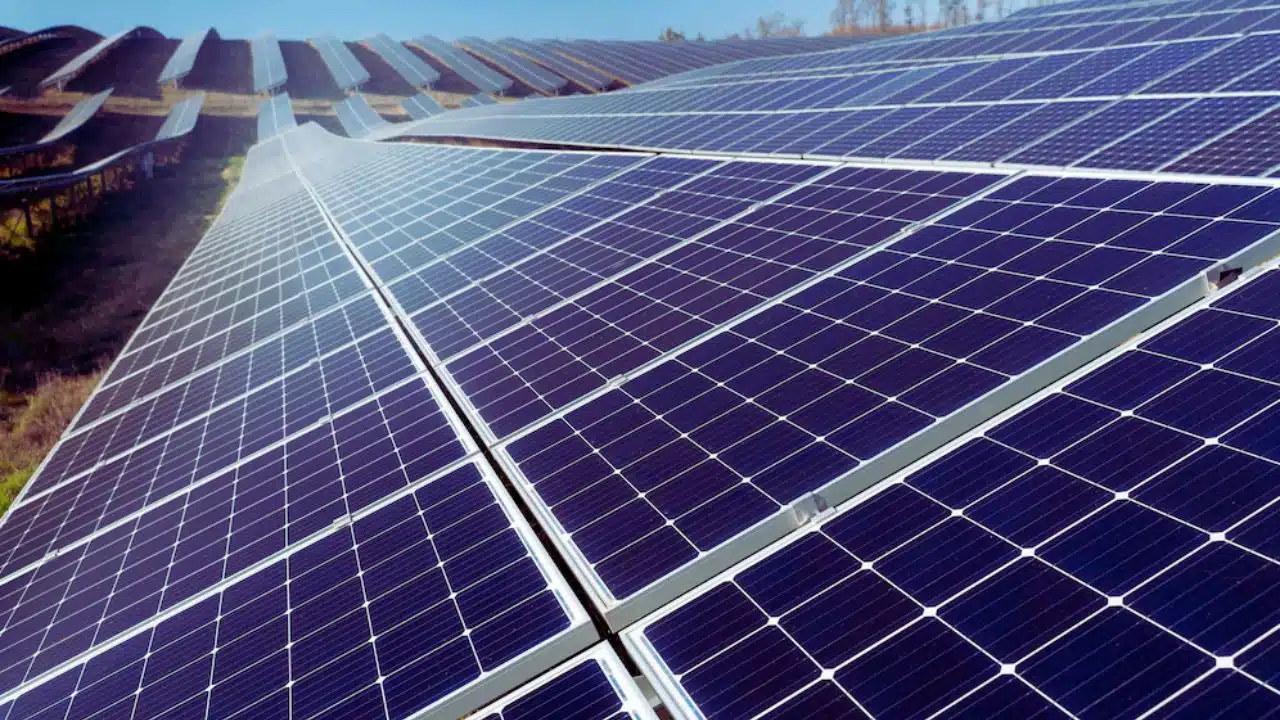
In a remote and barren expanse of land situated in Gujarat’s Kutch district, bordering the neighboring country of Pakistan, the Adani Group is in the process of developing the world’s largest renewable energy park. The Khavda renewable energy park, which spans an impressive 538 square kilometers, is set to generate a staggering 30 gigawatts (GW) of clean electricity with an investment of approximately ₹ 1.5 lakh crore by Adani Green Energy Ltd (AGEL), India’s largest renewable energy company.
The site, which is characterized by its lack of basic infrastructure and highly saline soil, was strategically chosen for its exceptional solar radiation and wind speeds, making it an ideal location for harnessing renewable energy. Gautam Adani, the head of the Adani Group and formerly the second richest person in the world, first visited the site in December 2022, arriving on a small aircraft that landed on a narrow airstrip devoid of air traffic control and boasting only a portable toilet and a makeshift office in a container as its infrastructure.
Since that initial visit, the company has made remarkable progress in transforming the barren landscape into a hub of renewable energy generation. Solar panels have been installed to convert the abundant sunlight into electricity, while wind mills have been erected to harness the power of the wind, which blows at an impressive speed of 8 meters per second in the area. To support the workforce, the Adani Group has constructed colonies for workers along with desalination plants to make the saline groundwater, pumped from a depth of 700 meters, suitable for consumption. Additionally, utility services such as mobile phone repair shops have been established to cater to the needs of the employees.
AGEL has already commissioned an impressive 2 GW of capacity at Khavda and has ambitious plans to add an additional 4 GW in the current fiscal year, which ends in March 2025. Furthermore, the company aims to install 5 GW of capacity every year thereafter, showcasing their unwavering commitment to the project. Upon completion, the Khavda renewable energy park will boast an impressive 26 GW of solar capacity and 4 GW of wind capacity, enabling it to generate an astonishing 81 billion units of electricity annually. To put this into perspective, the electricity generated by the park will be sufficient to power entire nations such as Belgium, Chile, and Switzerland.
The construction of the park commenced in 2022, following an extensive five-year period during which the Adani Group conducted thorough studies and assessments to ensure the project’s feasibility and sustainability. These studies included geotechnical investigations, seismic studies, a centrifuge study by Cambridge, resource assessments, land studies, Environment and Social Impact Assessments (ESIA), Environmental and Social Due Diligence (ESDD), and detailed feasibility studies.
The comprehensive infrastructure development undertaken by the Adani Group is a testament to their dedication to the project. The construction efforts include the building of 100 km of roads and 50 km of drainage systems; the establishment of desalination and three reverse osmosis (RO) plants with a combined capacity of 70 cubic meters per hour to meet the drinking water requirements of the project staff; the laying of 180 km of optical fiber cables for connectivity; and the installation of concrete batching plants.
Despite the numerous challenges posed by the site, such as frequent sandstorms, a lack of communication and transport infrastructure, the nearest habitable area being 80 km away, water not seeping under the soil during the rainy season, and the site being a restricted zone due to its proximity to the international border, the Adani Group remains steadfast in its pursuit of its ambitious renewable energy plans. The Khavda renewable energy park is a significant step towards India’s goal of generating 500 GW of electricity from non-fossil sources by 2030 and achieving net-zero emissions by 2070.
The Adani Group’s unwavering commitment to the development of the Khavda renewable energy park is not only a testament to their dedication to sustainable energy but also a significant contribution to India’s fight against climate change. The park’s successful completion will not only provide clean energy to millions of households but also create numerous employment opportunities, boosting the local economy and improving the lives of the people in the region.
As the world grapples with the urgent need to transition to cleaner energy sources, projects like the Khavda renewable energy park serve as a beacon of hope, demonstrating that with determination, innovation, and investment, it is possible to harness the power of nature to meet our energy needs while protecting the environment for future generations.