


A clogged drain can feel like a nightmare. Water pools in your sink or shower, and no amount of waiting makes it go away. Calling a plumber costs money, and harsh chemical drain cleaners aren’t great for your pipes—or the planet.
The good news? There are safe, simple fixes you can try first. With common items like baking soda, vinegar, hot water, or a trusty plunger, you might clear that stubborn clog yourself.
Want easy tips to get started? Keep reading!
Use a Plunger
A plunger is a great tool for fixing a clogged drain. It’s simple, cheap, and works fast without cleaning products.
- Pick the right plunger. A sink plunger has a flat bottom, while a toilet plunger has a flange. Use the correct one for your drain.
- Cover any overflow holes in the sink with duct tape or a cloth. This helps create better suction.
- Push the plunger over the drain to form a tight seal with no gaps.
- Press down firmly, then pull up quickly but don’t lift it off the surface completely. Repeat this motion 10–15 times. It creates pressure to push out blockages like hair clogs or soap scum.
- Check if water drains smoothly after plunging. If not, try again or move to another method like using baking soda and vinegar.
Baking Soda and Boiling Water
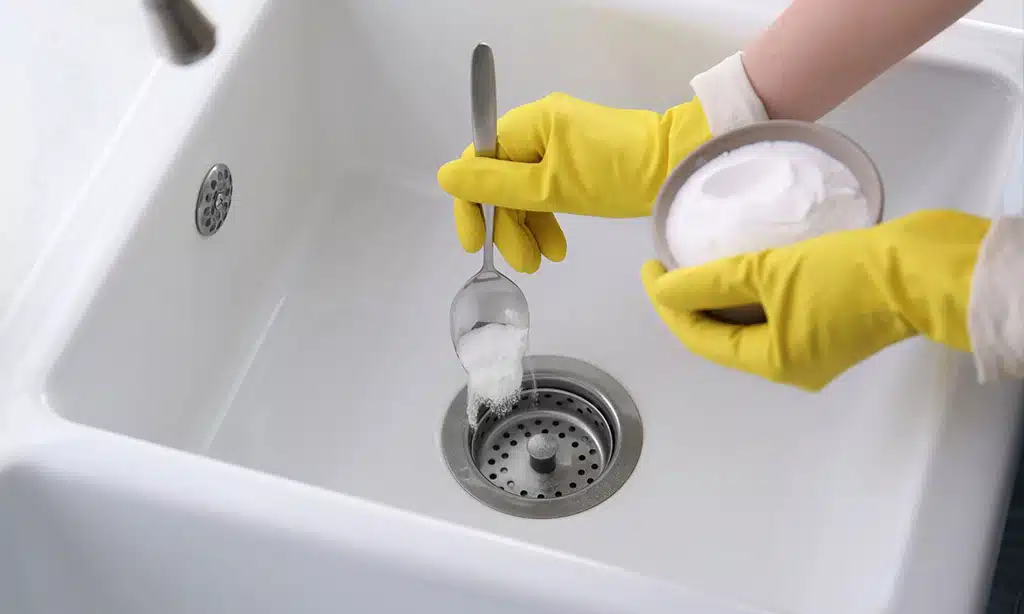
Baking soda and boiling water can clear a clogged drain fast. This natural method is safe and chemical-free.
- Pour 1 cup of baking soda down the clogged drain. Sprinkle it evenly to cover the pipe walls.
- Heat 4 cups of water until it boils. Use a kettle or pot for this step.
- Slowly pour the boiling water into the drain over the baking soda. Do this carefully to avoid splashes.
- Let it sit for about 10 minutes. The hot water will activate the baking soda, breaking down buildup like hair clogs and soap scum.
- Repeat the steps if needed for stubborn clogs in sinks or slow drains.
Baking Soda and Vinegar
This method is cheap, safe, and works like magic on clogged drains. It is eco-friendly and uses things you likely have in your kitchen.
- Pour 1/2 cup of baking soda down the clogged drain. Baking soda helps break down soap scum and grease.
- Follow it with 1 cup of white vinegar. This creates a fizzing reaction that loosens hair clogs or gunk stuck inside the pipe.
- Wait 10-15 minutes for the mix to bubble and work through the clog. You might hear it fizzing—this shows it’s working!
- Boil 4 cups of water while waiting, then slowly pour it into the drain after the bubbling stops. Hot water washes away the loosened blockage.
- If needed, repeat these steps until the water goes down smoothly again.
Make sure to do this for slow drains or regular maintenance too!
Use a Drain Snake
A drain snake is a handy tool for tough clogs. It can pull out hair, soap scum, and other blockages with ease.
- Start by putting on gloves to keep your hands clean.
- Insert the snake into the clogged drain slowly. Turn its handle to push it further down.
- Twist it gently when you feel resistance. This helps grab onto the clog.
- Pull the snake out carefully once you’ve hooked the blockage. Check if there’s still a slow drain or not.
- Repeat the process if needed until water flows smoothly again.
A plumbing snake works well for hair clogs in bathroom sinks and tubs!
A Wire Hanger
A wire hanger can be a handy tool for clearing clogs. Straighten it and use it like a hook.
- Bend one end into a small hook shape.
- Push the hooked end into the clogged drain gently.
- Pull out hair clog, soap scum, or other debris stuck in the pipe.
- Repeat this step until the clog is cleared.
- Run hot water to flush any remaining bits down the drain.
Dish Soap and Hot Water
Dish soap and hot water can work wonders on stubborn drain clogs. This method is safe, simple, and uses items already in your kitchen.
- Pour a generous amount of dish soap into the clogged drain. Use any liquid dish soap you have at home. The grease-cutting kind works best.
- Heat a pot of water until boiling. You need at least 4 cups of fully boiled water for this step.
- Slowly pour the boiling water into the drain over the dish soap. The mixture will dissolve grease, soap scum, and other build-ups causing the blockage.
- Let it sit for about 10-15 minutes to loosen the clog further.
- Test the flow by running more hot water from your faucet directly into the drain for a couple of minutes.
- Repeat these steps if needed to remove tough clogs like hair clumps or hardened residue.
- If all else fails, try pairing this with a plunger or use baking soda afterward for extra power!
Wet and Dry Vacuum
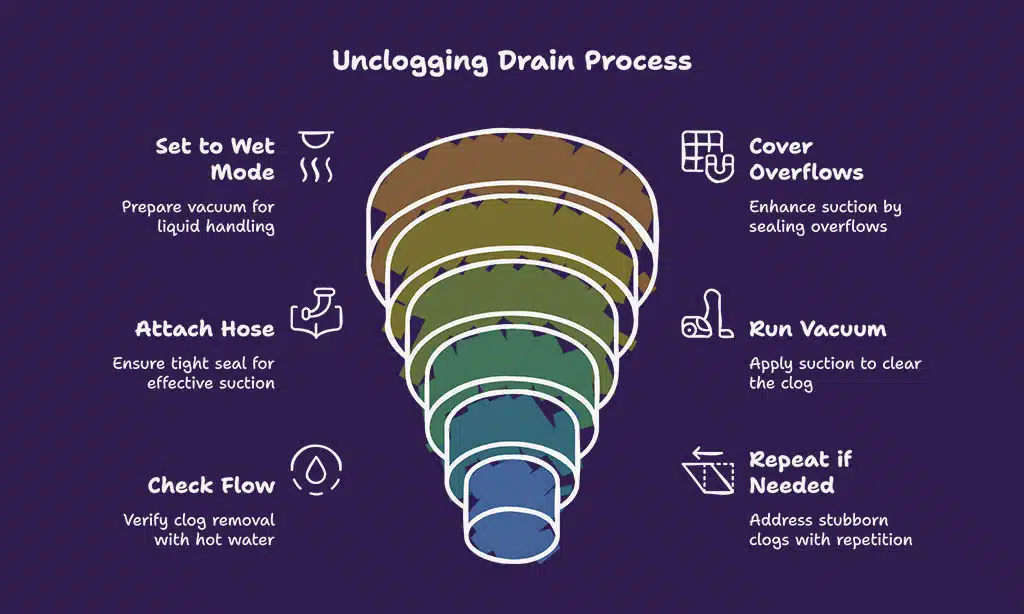
A wet and dry vacuum can help with a clogged drain. It is powerful and safe for this job.
- Set the vacuum to wet mode if the clog involves water. This setting ensures it can handle liquids.
- Cover the overflows on the sink or tub using tape or a rag. This creates better suction power.
- Use the hose attachment that fits tightly on your drain opening. A good seal is key for strong suction.
- Turn on the vacuum at its highest power setting. Let it run for 1-2 minutes while firmly holding it in place.
- Check if the clog is gone by running hot water down the drain. Hot water clears leftover debris like soap scum.
- For stubborn clogs, repeat this process several times until water flows freely again.
- Always clean the vacuum thoroughly after use to remove dirt and prevent bad smells from forming inside it.
- This method works great for hair clogs, small food bits, and gunk buildup in kitchen sinks or bathroom drains!
Biological Enzyme Cleaners
Biological enzyme cleaners break down organic matter, like soap scum and hair clogs. These natural drain cleaners are safe for old pipes and septic systems. They use enzymes to eat away at blockages without harming your drains.
Products like Drainbo are popular options for this method.
Pour the cleaner into your clogged sink or shower drain as directed. Let it sit overnight for the enzymes to do their work. Rinse with hot water in the morning to clear out any loose debris.
This method works best on slow drains caused by built-up gunk over time. Skip harsh chemicals and give these a try!
Tips for Maintaining a Clear Drain
Pour boiling water down the drain once a week. This helps melt soap scum and clear small clogs before they grow worse. Use about 4 cups at a time for better results.
Stop food, grease, or hair from going down the sink. Use drain covers in your kitchen sink and bathtub to catch debris. Clean these regularly to avoid buildup that causes slow drains.
When to Call a Professional
Stubborn clogged drains can mean big trouble. If boiling water, baking soda and vinegar, or a wire hanger fail, call for help. Persistent slow drains might damage pipes over time.
Hair clogs or soap scum in deep parts of the drain could need special tools. Professionals handle tough blockages safely. They also prevent harm to old pipes that natural methods can’t fix.
Takeaways
Clearing a drain without chemicals is simple and safe. A plunger, baking soda tricks, or a wire hanger can do wonders. These methods are easy, quick, and kind to your pipes. Got a slow sink? Try hot water with dish soap or vinegar for natural cleaning power.
Keep these tips handy; you’ll thank yourself later! Ready to tackle that clog today?
FAQs
1. How can I unclog a drain using boiling water?
Pour boiling water slowly into the clogged drain in stages. This works well for clearing soap scum or minor clogs in your kitchen sink.
2. What is the best way to use baking soda and vinegar for a slow drain?
First, pour baking soda down the drain, then add vinegar. Let it fizz for 15 minutes before flushing with hot water.
3. Can I use a wire hanger to remove hair clogs?
Yes, straighten out a wire hanger, leave one end hooked, and carefully fish out hair clog from the drain.
4. Is there a natural drain cleaner made with lemon juice?
Mix baking soda with lemon juice to create foam that helps break down grease or buildup inside drains.
5. Should I use dish soap with hot water for stubborn clogs?
Yes, pour dish soap into the clogged sink first and follow it up with hot water to loosen greasy blockages easily.
























