

Starting organic farming can feel overwhelming. Many farmers worry about costs, soil health, and meeting organic standards. Shifting from conventional farming to organic takes time and effort, but it’s worth it.
Organic farming improves soil fertility, reduces chemical use, and supports sustainable agriculture. With the right plan and knowledge of practices like crop rotation or composting, the transition becomes easier.
This guide will help you step by step. Learn how to improve your farm’s soil, manage pests naturally, and get USDA organic certification. Ready to start your journey? Keep reading!
Educate Yourself on Organic Farming Practices
Learn the basics of organic farming by exploring topics like soil health, biodiversity, and ecological balance. Study methods such as mulching, intercropping, crop rotation, composting, and green manure use.
These practices improve soil fertility while reducing chemical dependency. Follow USDA organic standards to understand certification rules and sustainable agriculture requirements.
Organic farming focuses on working with nature—not against it.
Attend workshops or online courses about integrated pest management (IPM), natural weed control, and using organic fertilizers. Learn about cover crops that protect topsoil during dry spells or reduce surface runoff.
Research animal husbandry techniques for efficient nutrient recycling with animal manure.
Develop a Comprehensive Transition Plan
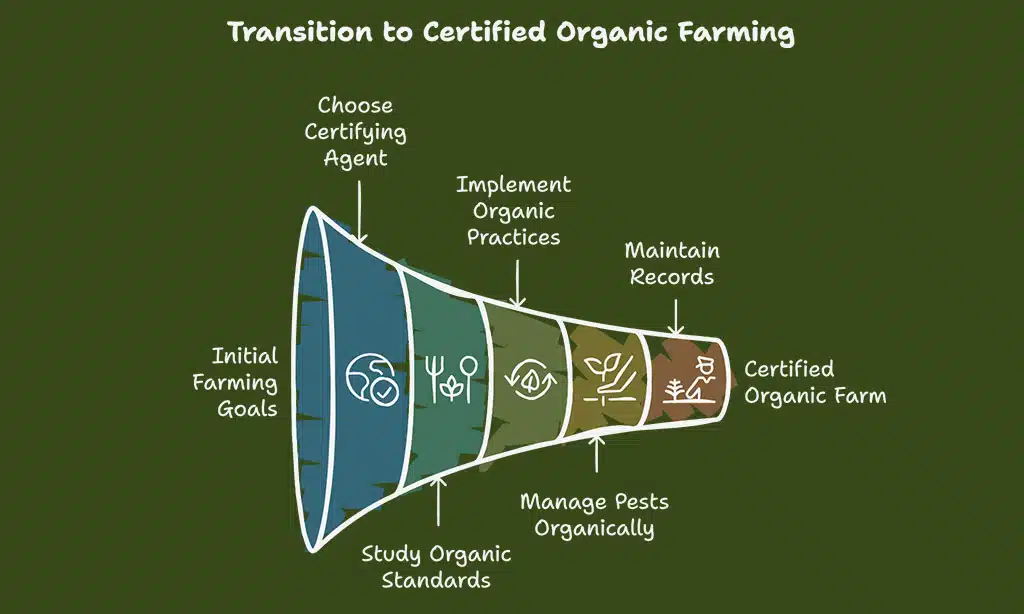
Start by setting clear goals for your organic farm. Decide which crops to grow and how much land to use. Choose a USDA-Accredited Certifying Agent early in the process. This agent can guide you through the USDA organic certification steps.
Study the standards for certified organic farms, including rules about synthetic chemicals and genetically modified organisms (GMOs). Think about timelines too—it takes three years of following organic practices before your farm qualifies as certified organic.
Create a plan that focuses on improving soil health and crop yields. Include methods like crop rotation, composting, and cover cropping in your strategy. Use soil amendments such as green manure or natural fertilizers to boost fertility.
Address pest management using beneficial organisms or integrated pest management (IPM), not chemical pesticides. Record all farming activities carefully—these records are essential when applying for certification later on.
Keep long-term sustainability in mind while balancing costs with returns from future sales of vegetables and other agricultural products grown organically.
Assess and Improve Soil Health
Test the soil to check its health. Use a soil test kit or contact local services like the Natural Resources Conservation Service (NRCS). Soil tests show pH levels, nutrients, and organic matter percentages.
Healthy soil needs a balance of nutrients like nitrogen, phosphorus, and potassium.
Add compost to boost organic matter. Spread green manure or grow cover crops like clover or rye for better nutrient cycling. Rotate crops each season to prevent nutrient depletion and control pests naturally.
Avoid heavy machinery that causes soil compaction. Use organic fertilizers for lasting improvements in soil quality. Focus on these steps to improve crop yields sustainably while protecting natural resources.
Select Suitable Organic Seeds and Inputs
Choose certified organic seeds that match your soil and climate. Avoid genetically modified (GMO) seeds, since they don’t meet organic farming standards. Use cover crops like clover or alfalfa to enrich the soil with nitrogen before planting cash crops.
Use high-quality organic fertilizers such as compost or green manure to improve soil health and boost crop yields. Add natural pest control products like neem oil or introduce natural predators, such as ladybugs, for sustainable pest management.
Organic pesticides can help prevent serious infestations without harming the environment.
“Healthy soil grows healthy plants.” – USDA National Organic Program
Implement Crop Rotation and Diversification
Rotate crops to keep soil healthy and prevent pests. Different plants use and return nutrients in unique ways. For example, grow nitrogen-fixing legumes like clover or beans after high-demand crops such as corn.
This practice boosts soil fertility naturally.
Add crop diversification to protect against disease and improve yields. Mix grains, vegetables, cover crops, or green manure in your fields. Planting a variety enhances biodiversity and reduces weeds without synthetic chemicals.
It also supports sustainable farming by balancing nutrient use across seasons.
Adopt Natural Pest and Weed Management Strategies
Use natural methods like integrated pest management (IPM) to control pests. Introduce natural predators, such as ladybugs, to eat harmful insects. Use organic farming practices like mulching and intercropping to reduce weeds.
Grow cover crops to block weed growth and improve soil quality.
Avoid chemical sprays by using organic solutions like neem oil or compost tea. Hand-pulling weeds or grazing animals can manage unwanted plants in small areas. Focus on healthy soil management since strong crops are less likely to attract pests or get overrun by weeds.
Keep the ecosystem balanced for long-term sustainable farming success.
Create and Use Compost for Organic Matter
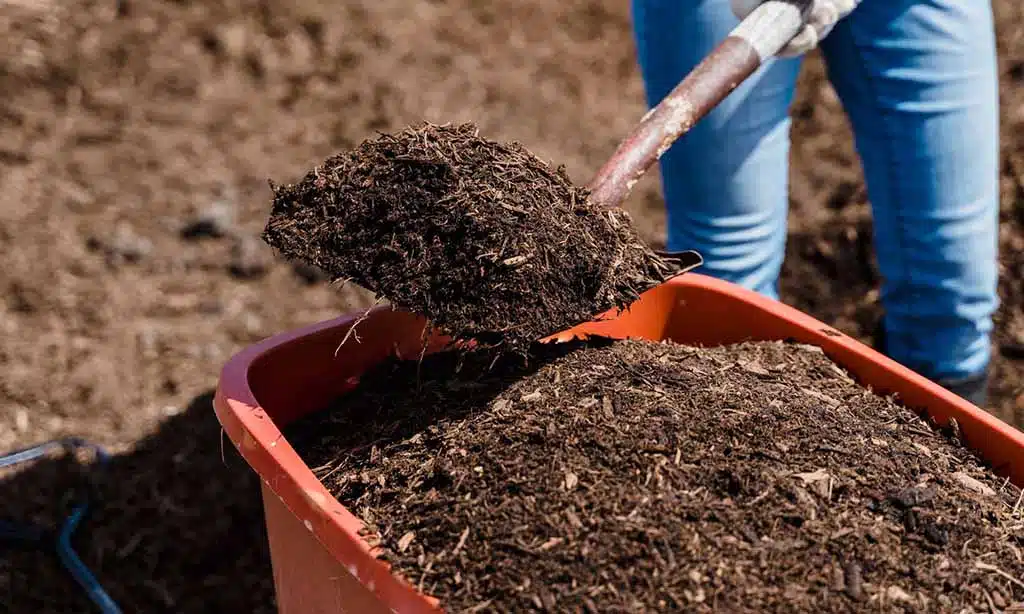
Composting turns organic material like food scraps, green manure, and plant waste into rich soil. This improves soil quality and boosts nutrient management for better crop yields. Organic farmers use compost to reduce soil depletion, recycle nutrients, and cut disposal costs.
It also helps maintain sustainable farming practices.
Add compost to fields as an organic fertilizer or mix it with cover crops to enrich the agricultural system further. Healthy compost supports moisture retention and reduces water consumption in your cropping systems.
This keeps soils fertile while protecting against erosion over time.
Document Farming Practices and Maintain Records
Keep track of every organic farming activity. Record soil management, crop rotation plans, organic matter use, pest control methods, and weed management strategies. Write down the types of seeds, fertilizers, or compost used in your fields.
This helps monitor soil health and crop yields over time.
Maintain receipts for organic inputs like green manure or cover crops. Store these records securely for organic certification inspections. USDA-certified agents may ask for detailed logs to verify compliance with organic standards.
Organized records also help improve sustainable farming practices year after year.
Apply for Organic Certification
Getting an organic certification proves your farm follows organic practices. It helps you sell your products as certified organic.
- Contact a USDA-Accredited Certifying Agent. These agents check if you meet the organic standards.
- Review the National Organic Program (NOP) rules. Learn what is required for soil health, pest management, and crop rotation.
- Prepare a detailed Organic System Plan (OSP). This plan explains your farming methods, inputs, and how you maintain soil quality.
- Use only approved inputs like organic fertilisers or compost. Avoid chemicals not allowed under organic standards.
- Keep clear records of all farming activities. These include input purchases, planting dates, and pest control methods used on crops.
- Pay the application fee to the certifying agent. Costs vary based on farm size and location but usually range from $500 to $1,500 yearly.
- Schedule an inspection with your agent after submitting your OSP and documents.
- During the inspection, show your fields, tools, records, and facilities used in production.
- Wait for a compliance review by the certifier after inspection is complete.
- Receive certification approval upon passing all checks if your farming meets USDA Certified Organic rules.
Market and Distribute Your Organic Produce Effectively
Sell your organic food at farmers’ markets to reach local buyers. Many people visit these markets to find fresh, sustainable produce. E-commerce platforms also help you sell directly to customers online.
Use clear pictures and details about your organic farming practices.
Offer fair pricing based on the quality and effort of organic production. Highlight benefits like better soil health or natural pest management in marketing. Partner with restaurants or grocery stores that focus on sustainable agriculture for bigger sales opportunities.
Takeaway
Switching to organic farming takes effort but brings big rewards. Learn the steps, plan carefully, and improve your soil with compost or green manure. Rotate crops and manage pests naturally to keep plants strong.
Keep clear records and apply for certification to grow trust with buyers. Start today—small actions can lead to a healthier farm and better future!
FAQs
1. What is organic farming, and how does it differ from traditional farming?
Organic farming focuses on sustainable agriculture by using natural methods like crop rotation, organic fertilizers, and integrated pest management (IPM). Unlike traditional farming, it avoids synthetic chemicals to improve soil health and protect the environment.
2. How can I improve soil quality when transitioning to organic farming?
You can boost soil health by adding organic matter such as compost or green manure. Using cover crops and rotating crops also helps maintain nutrient levels in the soil.
3. What steps are involved in getting an organic certification?
To get certified, you must follow approved organic practices for at least three years. This includes proper weed management, pest control with natural predators, and avoiding synthetic inputs while maintaining records of your farm’s activities.
4. How do I manage pests without chemical pesticides?
Integrated pest management (IPM) offers solutions like introducing natural predators or using biological controls. These methods help protect crop yields while promoting sustainable use of resources.
5. Are there programs that support farmers during this transition?
Yes! Programs like the Conservation Stewardship Program provide guidance on sustainable farming techniques and financial assistance to commercial farms adopting conservation-focused practices.
























