


Transferring credits between Australian online platforms can feel tricky. Many students want to move their study credits from one university to another. This happens for many reasons, such as switching programs or moving to a different city.
One key fact is that up to 33% of credits can transfer for a three-year degree at Australian universities.
This blog will show students how to navigate credit transfer in Australia. It talks about what credit transfer means and the steps you need to follow. You’ll learn about the challenges and get answers to common questions.
Keep reading for helpful tips on making your academic journey smoother.
What is Credit Transfer?
Credit transfer allows students to apply their previously earned academic credits toward a new program. It streamlines the educational journey and can provide opportunities for advanced standing in a degree.
Definition
Credit transfer refers to the process of recognizing and accepting academic credits from one institution to another. This system allows students to use previously earned credits toward their new degree programs.
In Australia, up to 33% of credits can be transferred for a three-year bachelor’s degree, and up to 25% for a four-year degree. International students can also take part in this process but must follow visa regulations.
Transferring credits helps streamline transitions between online learning platforms or universities. Each Australian educational institution has its criteria for credit transfer policies based on course equivalency and accreditation.
Students should check if their previous education fits within the time limits required for transferring credits before applying formally after admission into their new program.
Purpose
The purpose of transferring credits between Australian online platforms is to provide students with flexibility in their education. Students can leverage their prior learning by earning credit for completed courses.
This process helps them complete a bachelor degree more quickly and efficiently.
Transferring credits can benefit international students as well. They may receive recognition for previous study, making it easier to meet visa regulations while pursuing an education here.
Up to 33% of credits from a three-year degree and up to 25% from a four-year degree can be transferred in Australia. Understanding this system allows students to maximize their educational experience.
Benefits
Credit transfer offers significant advantages for students in Australian online education. Students can transfer up to 33% of credits from a three-year degree and up to 25% from a four-year degree.
This flexibility helps students save time and money while pursuing their academic goals.
International students also benefit, as most Australian universities accept credit transfers, aligning their previous study recognition with current qualifications. Understanding the credit points system aids in navigating this process efficiently.
These benefits make transferring credits between universities an attractive option for many learners looking to maximize their educational opportunities.
Steps to Transfer Credits in Australian Online Platforms
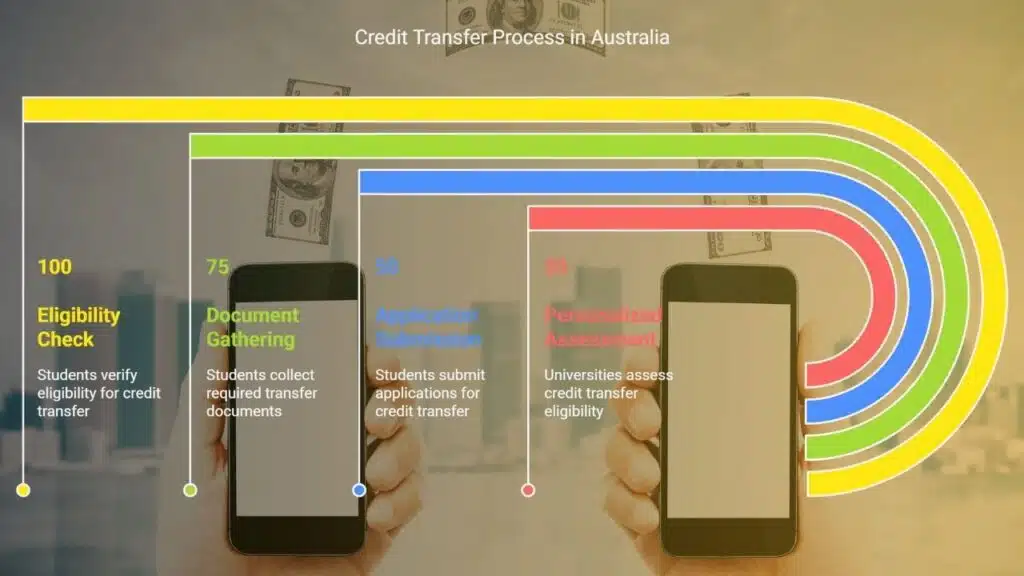
To transfer credits between Australian online platforms, first check your eligibility criteria. Next, gather the required documents and follow the application process to ensure a smooth credit transfer.
Eligibilitycriteria
Eligibility criteria for credit transfer vary across Australian universities. Students must check if their previous education meets the specific requirements of the new institution.
Many universities allow up to 33% of credits to transfer for a three-year degree and up to 25% for a four-year degree.
International students can also transfer credits but need to comply with visa regulations. After gaining acceptance into a degree program, they can formally apply for credit recognition for online courses.
It’s crucial that the new university appears on the Commonwealth Register of Institutions and Courses for Overseas Students.
Required documents
Students need to gather specific documents for a credit transfer. These documents typically include academic transcripts from previous institutions. They must show all completed courses and grades.
Students also require course descriptions or syllabi that detail the content of those courses. This information helps universities assess course equivalency.
For international students, visa regulations play a crucial role in the process. Institutions may ask for proof of English proficiency as well. Most Australian universities review these documents carefully before approving any credit transfers.
Timely submission of accurate paperwork can speed up the approval timeline significantly.
Application process
The application process for transferring credits in Australia begins after acceptance into a degree program. Prepare necessary documents, including transcripts and course outlines from your previous education.
Up to 33% of credits can be transferred for a three-year degree, while up to 25% applies to four-year degrees. Ensure that your former institution’s courses meet the new university’s standards.
Once you gather all required materials, submit them through the online platform of your chosen Australian educational institution. Many universities support credit transfer from international students but depend on course equivalency and accreditation.
Understanding the time limits for past education is crucial to ensure eligibility in the credit transfer process.
Personalized assessment
Personalized assessment plays a vital role in transferring credits between Australian online platforms. Universities evaluate each student’s previous education to determine if it matches their course requirements.
It helps identify which credits are transferable and how many points a student can claim. For three-year degrees, up to 33% of credits may transfer, while four-year programs allow for 25%.
Students must initiate the application after gaining acceptance into a degree program. The new university must be on the Commonwealth Register of Institutions and Courses for Overseas Students.
This ensures that credit transfer aligns with standards set by Australian higher education institutions. Understanding this process is essential for those looking to maximize their transferable education experiences in Australia.
Challenges in Credit Transfer

Credit transfer often presents obstacles that students must overcome. Many institutions have different educational standards, which can complicate the process of recognizing course equivalencies.
Differences in educational systems
Australia has a unique educational system that differs from many other countries. In Australian universities, students can transfer up to 33% of credits for a three-year degree and up to 25% for a four-year degree.
This allows students greater flexibility when considering credit transfer eligibility. International students also face specific visa regulations while pursuing studies in Australia.
Course equivalency plays a crucial role in credit transfers between institutions. Many universities assess whether previous courses match their curriculum before accepting any credits.
Students must check if their education falls within the correct time limits for transferring credits as well. Understanding these factors is vital for anyone looking to navigate online course transfers among Australian educational institutions effectively.
Minimum grade requirements
Minimum grade requirements play a significant role in credit transfer. Students often need to achieve a certain grade to qualify for transferring credits between Australian online platforms.
Many universities set this standard around a passing mark, which can vary by institution.
For most courses, students must earn at least a C or equivalent grade. This threshold ensures that the education received is comparable to the new program’s rigor. Each university assesses these grades based on its own policies and standards for degree credit points.
Understanding these requirements helps students with transfer credit eligibility and supports smooth transitions into their chosen programs.
Credit transfer limits
Australian universities have specific limits for transferring credits. For a three-year degree, students can transfer up to 33% of their credits. In the case of a four-year degree, this limit drops to 25%.
These restrictions help ensure that students complete enough coursework at their new institution.
International students must comply with visa regulations while attempting to transfer credits between Australian online platforms. Institutions evaluate course equivalency and accreditation before accepting credit transfers.
Students need to check if their previous education meets time limits for credit transfers as well.
Delayed processing times
Delayed processing times can hinder the credit transfer process. Students often face slow responses from universities when applying to transfer credits. This delay can lead to uncertainty in their study plans, especially for those seeking admission into new programs.
Many factors contribute to these delays. Universities receive numerous applications and must evaluate each one carefully. Processing takes longer if applicants do not submit required documents on time or miss eligibility criteria deadlines.
Up to 33% of credits may get transferred for three-year degrees, but waiting too long could affect a student’s ability to start classes on schedule. Understanding this is crucial for anyone considering how to transfer credits between Australian online platforms.
Difficulty matching course content
Matching course content poses significant challenges during credit transfers. Each university in Australia maintains its own curriculum standards. This difference can create gaps between courses from various institutions.
Students might find their previous coursework does not align with the new university’s requirements.
For international students, this issue becomes even more complex. They must ensure that their prior education meets the course equivalency needed for credit transfer. The acceptance of transferred credits often hinges on these factors, which can limit options and slow down application processes.
Understanding how to navigate these mismatches is crucial for successful credit evaluation when studying abroad in Australia.
FAQs and Further Information
Find answers to common questions about credit transfer processes. Explore how these transfers can help students, especially those studying abroad in Australia.
What is the process for transferring credits?
Transferring credits involves several steps. First, ensure your previous education meets the eligibility criteria for credit transfer at your new institution. For a three-year degree in Australia, up to 33% of credits can transfer, while for a four-year degree, that number is 25%.
Gather required documents like transcripts and course syllabi that prove the content of your studies.
After securing admission into a degree program, formally apply for credit transfer. The new university must be on the Commonwealth Register of Institutions and Courses for Overseas Students.
The assessment focuses on course equivalency and accreditation to determine how many credits you can receive. International students may also participate but must comply with visa regulations as they navigate this process.
Can international students transfer credits in Australia?
International students can transfer credits to Australian universities. They must follow visa regulations while doing so. Up to 33% of credits can transfer for a three-year degree.
For a four-year degree, students can transfer up to 25% of their credits. Most Australian universities accept credit transfers from international students. The decision depends on course equivalency and accreditation.
Students need to check if their previous education meets the correct time limits for credit transfers. After gaining admission, they can formally apply for a credit transfer. The new university must be on the Commonwealth Register of Institutions and Courses for Overseas Students (CRICOS).
Understanding the credit points system is essential in this process, as it affects qualification assessment and study credit evaluation.
What are the benefits of credit transfer?
Credit transfer offers significant advantages for students. Up to 33% of credits can transfer for a three-year degree, while 25% may apply to four-year degrees at Australian universities.
This policy allows students to save time and resources in their educational journey. Many institutions accept credit transfers from international students, making it easier for them to study abroad.
Transferring credits helps students maintain momentum in their studies. They can avoid repeating courses they’ve already completed. Understanding the credit points system also streamlines the process of transferring university credits in Australia.
Students should ensure that their previous education meets the required criteria within acceptable time limits for transfers.
How does credit transfer differ between institutions?
Credit transfer processes vary among institutions across Australia. Each university sets its own policies regarding acceptance of transfer credits. For instance, some universities allow up to 33% of credits for a three-year degree and up to 25% for a four-year degree.
Other institutions may have stricter limits or different criteria.
Course equivalency plays a crucial role in credit transfers. Universities often evaluate whether previous education matches their curriculum before granting credit. Most Australian universities welcome international students transferring credits, but these students must comply with visa regulations.
It is essential for applicants to review the specific guidelines of their chosen university to ensure successful transfer outcomes.
How does credit transfer benefit international students?
Transferring credits offers many advantages to international students. These students can transfer up to 33% of credits for a three-year degree or 25% for a four-year degree at Australian universities.
Most institutions welcome these transfers and follow the credit points system. This process helps students save time and money while pursuing their education in Australia.
International students must comply with visa regulations during this process. They need to ensure their previous education meets specific time limits for credit transfers. Understanding course equivalency and accreditation also plays a crucial role in successful credit transfer applications.
By navigating these requirements, international students can make the most of their academic journey in Australia’s vibrant eLearning environment.
FAQs
1. What does it mean to transfer credits between Australian online platforms?
Transferring credits means moving academic points from one eLearning course in Australia to another, within the rules of university admissions.
2. How can I start the process of transferring my credits?
You begin by contacting your current and prospective universities’ admissions offices. They will guide you on how to move your eLearning credits in Australia.
3. Can all types of courses have their credits transferred between online platforms in Australia?
Not always. It depends on the specific policies of each Australian eLearning platform and what is accepted by university admissions.
4. Are there any challenges when transferring my credits between Australian online platforms?
Yes, some challenges may arise due to different credit systems or course requirements among various Elearning platforms in Australia used by universities for admissions.






















