While studying online in Australia can be thrilling, it’s not always a straightforward process. Many students face issues like hidden fees, unclear policies, or even threats to their privacy on the internet.
If you’re unsure about your rights as an online student, you’re not alone.
Did you know that international students in Australia are protected by strict consumer laws? These laws ensure that education providers treat all students fairly and deliver quality courses.
They also safeguard payments and uphold standards for safety and privacy under acts like the Online Safety Act 2021.
This guide will walk you through five key legal rights every Australian online student should know. You’ll learn how to protect yourself and make informed choices while studying online in this country. Keep reading to secure your study experience!
Legal Rights for Online Students in Australia: 5 Must-Know Protections
Understanding Quality-Assured Education in Australia
Australia ensures quality education through strict regulations. All online courses meet national standards set by the Tertiary Education Quality and Standards Agency (TEQSA). These rules guarantee consistency in lessons, resources, and assessments.
International students benefit from laws like the Education Services for Overseas Students Act 2000, which protects their rights during studies.
Institutions follow guidelines to maintain fairness and inclusivity. Many colleges create a reconciliation action plan to support First Nations people and foster cultural respect. Students accessing online learning experience high-quality content aligned with Australia’s global education reputation.
Ensuring Fair Treatment by Australian Education Providers
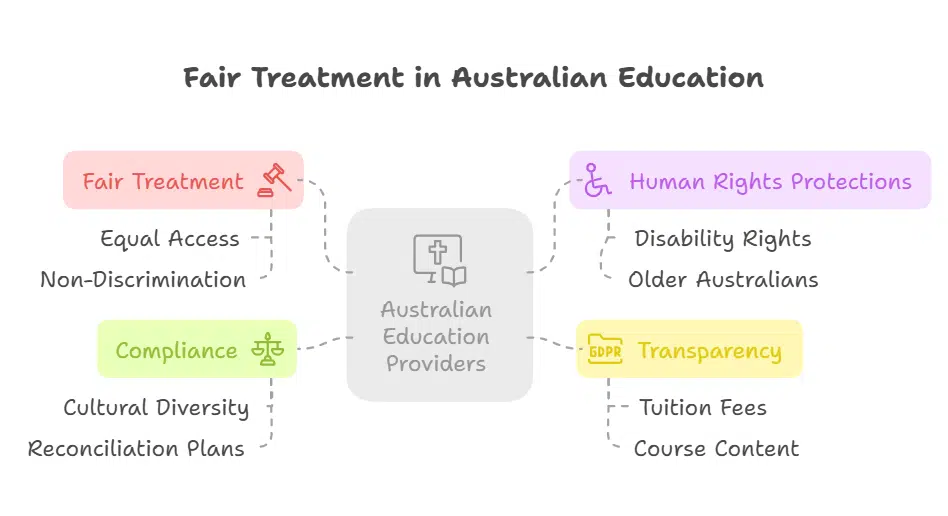
Australian education providers must treat all students fairly, including international students. These institutions follow laws to ensure a positive learning experience for everyone.
Human rights protections extend to people with disabilities and older Australians, promoting equal access to online tools and resources. Education services must meet high standards while respecting cultural diversity and reconciliation action plans.
Providers also need transparent policies on tuition fees, course content, and compliance with the privacy policy. New rules focus on safeguarding rights by preventing discrimination or unfair practices.
Students have the right to raise concerns if treated unjustly and can report issues for investigation under Australian law.
Protecting Course Fee Payments for Online Students in Australia
Australian laws ensure online students are protected from financial losses if their course cannot proceed. The Tuition Protection Scheme (TPS) helps safeguard fees paid in advance by international students.
This system provides options like refunds or alternative placements when a provider fails to deliver the promised education.
Online students should review contracts before making payments. Many providers include refund policies and terms that clarify fee protections. Understanding these agreements helps avoid disputes and ensures fair treatment under Australian consumer law.
Ensuring Online Safety and Privacy for Students
The Online Safety Act 2021 strengthens protection for students against online harm. This law addresses abusive behavior and toxic content on social media platforms like Facebook. New regulations ban children under 16 from using these platforms to ensure their safety.
International students also benefit from privacy policies that control ad targeting and safeguard sensitive data.
Children’s rights focus on creating a safe online environment free from violence and harassment. Privacy policies protect personal information, demanding responsible action by education providers.
Many states enforce unique laws, so it is crucial for both local and international students to understand specific regional rules on online activity.
Reporting and Resolving Complaints in Online Education

Students can report issues with their online education to the Australian Department of Education. Concerns about quality, unfair treatment, or fee disputes are handled under strict regulations.
International students studying in Australia have additional protections ensuring fair processes for complaint resolution. Laws like the Online Safety Act 2021 also address problems related to cyberbullying and other harmful digital interactions.
Education providers must follow a clear privacy policy when managing complaints. This ensures student information remains confidential during investigations. If unresolved through internal channels, students may contact independent ombudsman services for a neutral review.
These options protect both local and international learners from rights violations while fostering safer learning environments online.
Takeaways
Every Australian online student deserves to know their rights. These laws protect your education, safety, and payments while ensuring fair treatment. International learners also gain support through specific policies and visa regulations.
Awareness of these protections leads to a better study experience. Stay informed and confident as you pursue your goals!
FAQs on Legal Rights For Every Australian Online Student
1. What legal rights do Australian online students have?
Australian online students have the right to fair treatment, access to quality education, and protection under consumer laws. These rights apply to both local and international students.
2. Can international students in Australia access the same legal protections as domestic students?
Yes, international students studying online in Australia are entitled to many of the same legal protections as domestic learners. This includes rights related to refunds, course quality, and contract terms.
3. Are online institutions required to provide clear information about courses?
Yes, all educational providers must give accurate details about course content, fees, and requirements. This ensures that both local and international students can make informed decisions.
4. What should an Australian online student do if they face unfair treatment?
If you face unfair treatment as an online student in Australia, you can file a complaint with your institution or seek help from organizations that support student rights for both domestic and international learners.