
Planning for a financially secure retirement is one of the most important steps in life. How to choose the right pension plan in India is a question that requires careful consideration. Choosing the right pension plan can help ensure that your golden years are stress-free and comfortable.
With so many options available in India, it’s essential to understand your needs and evaluate your choices carefully.
In this guide, we’ll explore how to choose the right pension plan in India for 2025, covering all the key factors, benefits, and strategies.
Understanding Pension Plans in India
What is a Pension Plan?
A pension plan, also known as a retirement plan, is a financial product that allows individuals to save and invest for their post-retirement life. These plans provide a steady stream of income after retirement, ensuring financial independence when you stop earning actively.
Understanding how to choose the right pension plan in India involves knowing the types of plans available and how they can meet your financial goals.
Types of Pension Plans Available in India
1. Government-Backed Pension Schemes
-
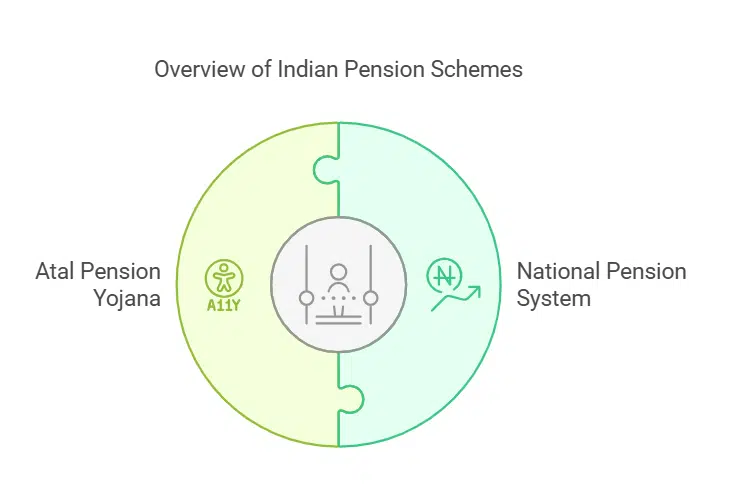
- National Pension System (NPS): This low-cost and tax-efficient scheme is regulated by the Pension Fund Regulatory and Development Authority (PFRDA). It allows individuals to invest in various asset classes, including equities, corporate bonds, and government securities, making it a versatile option for different risk appetites. For instance, an investor with moderate risk tolerance can opt for a 50:50 mix of equity and bonds to balance returns and stability. Knowing how to choose the right pension plan in India can help you maximize such benefits.
- Atal Pension Yojana (APY): Designed primarily for workers in the unorganized sector, this scheme offers fixed monthly pensions ranging from ₹1,000 to ₹5,000, based on contributions. It is backed by the Government of India, ensuring guaranteed returns and stability, which makes it a go-to option for those seeking low-risk solutions.
| Plan Name | Target Audience | Returns | Flexibility | Risk Level |
| National Pension System | General public and professionals | Market-linked | High | Moderate |
| Atal Pension Yojana | Unorganized sector workers | Fixed | Low | Low |
2. Private Pension Plans
-
- Offered by leading insurers like HDFC Life, ICICI Prudential, and SBI Life, these plans provide customized options to suit varied goals. They often include unit-linked insurance plans (ULIPs) for high returns or traditional endowment-based plans for security. For instance, the HDFC Life Click2Retire allows growth-oriented investments in equity with significant tax benefits, appealing to those with long-term horizons.
3. Employer-Sponsored Pension Plans
-
- Many corporate employers in India offer group pension schemes with employer contributions. These plans are a great way to build retirement savings while benefiting from employer matches. For example, companies in the IT sector often match employee contributions up to 5-8% of their salary, significantly boosting the savings corpus.
| Plan Type | Advantages | Disadvantages |
| Government Plans | High security, tax benefits | Lower returns, limited flexibility |
| Private Plans | High returns, customization | Higher costs, market risks |
| Employer Plans | Employer contributions | Limited portability |
Key Factors to Consider When Choosing a Pension Plan
Assessing Your Retirement Goals
To choose the right pension plan in India, start by defining your retirement objectives:
- Desired Lifestyle: Factor in living expenses, healthcare, and leisure activities. For example, a couple aiming for regular travel post-retirement would need a larger corpus than someone planning a modest lifestyle. Learning how to choose the right pension plan in India ensures that your goals align with your savings.
- Expected Retirement Age: Calculate the number of years you’ll depend on your retirement savings. For instance, retiring at 55 versus 65 could mean a significant difference in savings required. A 10-year difference could increase your required retirement fund by as much as 50%, depending on your lifestyle.
Evaluating Risk Appetite
Pension plans range from low-risk options like government schemes to high-risk investments in equities. Align your choice with your risk tolerance:
- Low Risk: Opt for fixed-income schemes like Atal Pension Yojana, which offer guaranteed payouts.
- Moderate Risk: Consider NPS with a mix of equity and bond allocations for balanced growth.
- High Risk: Choose private pension plans investing in equity funds for potentially higher returns, such as the ICICI Prudential Retirement Plan.
| Risk Level | Suitable Plans | Potential Returns |
| Low | APY, Endowment Plans | Fixed and stable |
| Moderate | NPS, Balanced ULIPs | Moderate growth, balanced |
| High | Equity ULIPs, Market Funds | High growth, higher risks |
Comparing Costs and Charges
Hidden fees can erode your returns over time. When selecting a pension plan, compare:
- Entry and exit charges.
- Annual management fees.
- Fund-switching charges (for plans with investment flexibility).
| Charge Type | Description | Impact on Savings |
| Management Fees | Annual fees for fund management | Reduces net returns |
| Entry/Exit Charges | Costs for joining or leaving a scheme | Affects short-term liquidity |
| Switching Charges | Fees for reallocating funds | May limit investment flexibility |
Top Pension Plans in India for 2025

Overview of Popular Government Schemes
- National Pension System (NPS): Offers investment choices in equities, corporate bonds, and government securities.
- Minimum contribution: ₹500 annually.
- Tax benefits under Section 80CCD.
- Example: A young professional contributing ₹10,000 monthly to an aggressive equity mix in NPS could accumulate a corpus exceeding ₹1 crore in 25 years. Knowing how to choose the right pension plan in India helps professionals like these secure their future.
- Atal Pension Yojana (APY): Fixed pension amounts from ₹1,000 to ₹5,000 per month based on contribution.
- Guaranteed returns make it ideal for low-risk investors.
- Case Study: A 30-year-old worker contributing ₹100 monthly can secure a ₹2,000 monthly pension by age 60.
Leading Private Pension Plans
Private insurers offer a variety of plans with high returns and customization. Some popular options include:
- HDFC Life Click2Retire Plan: A unit-linked plan with high growth potential, allowing for equity market participation. It’s ideal for individuals starting their retirement planning early.
- ICICI Prudential Immediate Annuity Plan: Offers immediate income post-retirement, making it suitable for those looking for steady cash flow. For instance, retirees can invest a lump sum of ₹10 lakh and receive a monthly payout of approximately ₹55,000.
Employer-Provided Pension Plans
If your employer offers a retirement plan, understand its features, including:
- Contribution matching.
- Vesting periods.
- Withdrawal options.
| Plan Type | Best For | Key Feature |
| NPS | Moderate risk takers | Market-linked returns |
| Private Plans | High growth seekers | Customization and ULIPs |
| Employer Plans | Employees with matches | Low-cost savings |
Step-by-Step Guide to Selecting the Right Pension Plan
Define Your Retirement Goals and Budget
Determine your expected retirement expenses and create a savings plan that fits your income and lifestyle. Use retirement calculators for precise estimates. For example, an individual aiming for ₹1 lakh monthly expenses post-retirement should target a retirement corpus of approximately ₹2.5 crore, assuming a 4% annual withdrawal rate.
Research and Compare Plans
Analyze multiple plans and providers. Use the table below to compare key features:
| Plan Type | Features | Returns | Flexibility | Costs |
| Government Plans | High Security | Moderate | Low | Low |
| Private Plans | High Returns | High | High | Moderate |
| Employer Plans | Employer Match | Moderate | Medium | Low to None |
Check the Reputation of Providers
- Research customer reviews and ratings.
- Verify the financial stability of insurers through reports by IRDAI or industry benchmarks.
Seek Professional Advice if Needed
Consult certified financial advisors to get tailored recommendations based on your needs.
Common Mistakes to Avoid When Choosing a Pension Plan
- Overlooking Long-Term Goals: Short-term thinking can lead to insufficient savings.
- Ignoring Inflation Impact: Failing to account for inflation can erode the value of your pension. For instance, ₹10 lakh today might only have the purchasing power of ₹5 lakh in 20 years.
- Choosing Plans Solely on High Returns: High returns often come with higher risks; balance is key.
Takeaways
Choosing the right pension plan in India is critical for a secure and comfortable retirement. By assessing your goals, understanding the available options, and avoiding common mistakes, you can make informed decisions.
Start planning early to ensure you have a reliable financial foundation for your golden years. Take action today and invest in your future with confidence by learning how to choose the right pension plan in India.