

The automotive world is shifting gears, with electric vehicles (EVs) becoming an increasingly popular choice among drivers. But before making a decision, understanding the financial implications of owning an EV versus a gas-powered vehicle is crucial.
This comprehensive guide explores seven critical areas where costs differ, helping you make an informed choice tailored to your lifestyle and budget. Let’s dive into the costs of EVs vs. Gas-Powered Vehicles.
Initial Purchase Price: EVs vs. Gas-Powered Vehicles
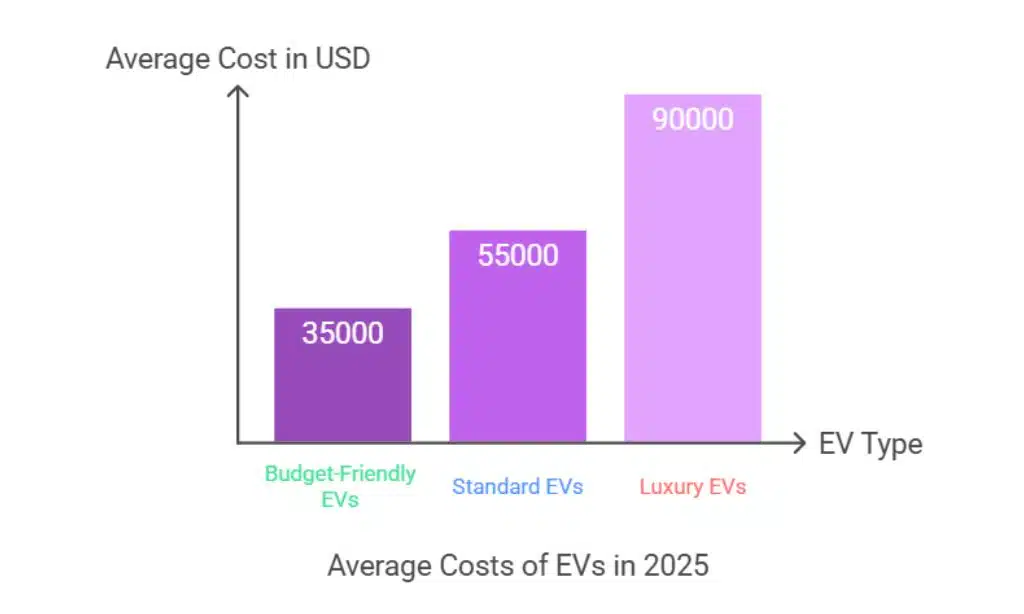
Average Costs of EVs in 2025
The initial price tag of EVs can be daunting for many buyers. In 2025, the average cost of an electric vehicle ranges from $35,000 to $55,000, depending on the model and features. Luxury EVs like the Tesla Model S can exceed $90,000, while budget-friendly options like the Chevrolet Bolt EV start at approximately $27,000.
However, many governments offer tax credits and incentives to make EVs more accessible. For example, the U.S. federal tax credit provides up to $7,500 for qualifying EV purchases, significantly reducing upfront costs. Additionally, some states and countries offer rebates, making EVs even more appealing for first-time buyers.
Cost Breakdown of Gas-Powered Vehicles
In contrast, gas-powered vehicles generally have lower initial prices. Compact sedans such as the Toyota Corolla start around $22,000, while mid-range SUVs like the Honda CR-V average $30,000. The absence of government incentives for gas-powered vehicles further emphasizes their affordability advantage at the time of purchase. However, these savings may diminish over time due to higher fuel and maintenance costs.
Comparison of Initial Costs
| Vehicle Type | Budget Range ($) | Popular Models | Incentives Available? |
| Electric Vehicles | 27,000 – 90,000 | Tesla Model 3, Nissan Leaf | Yes |
| Gas-Powered Vehicles | 20,000 – 70,000 | Toyota Camry, Ford Escape | No |
Pro Tip: Research state-specific incentives and manufacturer discounts to lower the upfront cost of EVs. Websites like Editorialge provide up-to-date information on such programs.
Fuel Costs: Electricity vs. Gasoline
Charging Costs for EVs
Charging an EV is significantly cheaper than filling a gas tank. The cost of charging at home averages $0.13 per kWh in the U.S., meaning a full charge for a 60 kWh battery (around 250 miles of range) costs about $7.80. Public charging rates vary, with fast chargers costing $10 to $20 per session, depending on the provider. To further reduce costs, some EV owners opt for solar panel installations, enabling renewable and near-zero-cost charging at home. According to a 2025 study, EV drivers save an average of $800 annually on fuel compared to gas-powered vehicles.
Gasoline Prices for Conventional Cars
Gasoline prices fluctuate due to geopolitical and market factors. In 2025, the average price of gasoline in the U.S. is approximately $3.50 per gallon. For a car with a 15-gallon tank and 25 miles per gallon fuel efficiency, a full tank costs $52.50 and provides 375 miles of range. Regional price differences can significantly affect yearly fuel costs for gas-powered vehicles.
Annual Fuel Costs Comparison by Mileage
| Mileage (per year) | EV Charging Cost ($) | Gasoline Cost ($) |
| 10,000 | 312 | 1,400 |
| 15,000 | 468 | 2,100 |
| 20,000 | 624 | 2,800 |
Actionable Tip: Use apps like PlugShare to find free or discounted public charging stations to further cut down on charging costs. With EVs vs. Gas-Powered Vehicles, fuel savings are one of the most compelling benefits.
Maintenance and Repairs
EV Maintenance Costs
Electric vehicles have fewer moving parts than gas-powered vehicles, reducing maintenance costs significantly. EV owners save on oil changes, transmission repairs, and exhaust system maintenance. However, battery replacements, which can cost $5,000 to $15,000, may be necessary after 8-10 years. Additionally, most EVs come with manufacturer warranties covering the battery for up to 8 years or 100,000 miles, minimizing concerns for early-stage owners. Tesla, for instance, offers a warranty that guarantees at least 70% battery capacity retention during the warranty period.
Maintenance Costs for Gas Cars
Gas-powered vehicles require routine oil changes ($50-$100 each), spark plug replacements, and air filter changes. Over a decade, maintenance costs for gas-powered vehicles can total $9,000 to $12,000, depending on usage and vehicle type. Furthermore, as gas vehicles age, repair costs for engine and transmission issues tend to rise, often surpassing $2,000 per major repair.
Typical Repairs and Maintenance Costs
| Repair Type | EV Average Cost ($) | Gas Car Average Cost ($) |
| Battery Replacement | 5,000 – 15,000 | N/A |
| Oil Changes | N/A | 400 – 1,000 annually |
| Transmission Repair | N/A | 1,500 – 3,000 |
| Tire Replacement | 500 – 1,000 | 500 – 1,000 |
Expert Insight: Regular software updates for EVs, such as those provided by Tesla and Nissan, can optimize battery performance and prevent expensive repairs. The maintenance aspect of EVs vs. Gas-Powered Vehicles often tips the scales in favor of EVs.
Insurance Premiums: Which Costs More?

Factors Influencing EV Insurance
EV insurance premiums tend to be higher due to the cost of replacement parts and specialized repairs. The average annual premium for an EV is around $1,600, compared to $1,300 for a gas-powered car.
Advanced safety features in EVs, such as collision avoidance systems and autonomous driving capabilities, may qualify for discounts with some insurers, partially offsetting higher costs. Insurers like Progressive and Geico now offer specific EV policies with added benefits tailored for the EVs vs. Gas-Powered Vehicles debate.
Insurance Costs for Gas Cars
Insurance for gas-powered cars is generally cheaper. The cost depends on the vehicle’s make, model, and safety features, with rates averaging $1,200 to $1,400 annually. Older gas models often see higher premiums due to outdated safety features or higher repair costs after accidents.
Chart: Average Annual Insurance Costs (EV vs. Gas Cars)
| Vehicle Type | Average Premium ($) | Discounts for Safety Features? |
| Electric Vehicles | 1,600 | Yes |
| Gas-Powered Cars | 1,300 | Limited |
Tip: Bundle EV insurance with home or renter’s insurance to secure additional discounts. Insurance costs in EVs vs. Gas-Powered Vehicles can vary significantly based on location and usage.
Depreciation and Resale Value
EV Depreciation Rates
EVs historically experience faster depreciation due to concerns about battery life and technology obsolescence. New EVs lose 50-60% of their value within the first five years.
Advances in battery technology and increasing consumer confidence, however, are gradually improving resale values, particularly for models from established brands like Tesla and Nissan. By 2025, EVs with over-the-air updates and long-range batteries hold value better than older models, making them a viable choice in the EVs vs. Gas-Powered Vehicles comparison.
Gas Car Depreciation
Gas-powered vehicles depreciate steadily, losing 40-50% of their value in five years. Their established market presence ensures a robust demand for used cars, often maintaining better resale values than EVs in less developed markets or regions with limited charging infrastructure.
Resale Value Trends Over 5 Years
| Vehicle Type | Depreciation Rate (%) | Average Resale Value ($) |
| Electric Vehicles | 50-60 | 15,000 – 30,000 |
| Gas-Powered Vehicles | 40-50 | 18,000 – 35,000 |
Actionable Insight: Explore certified pre-owned (CPO) EV programs from manufacturers like Nissan and Hyundai to ensure a warranty-backed used EV purchase. Depreciation is a key factor in deciding between EVs vs. Gas-Powered Vehicles.
Environmental and Social Costs
Carbon Emissions Impact
EVs produce significantly fewer emissions over their lifetime compared to gas-powered vehicles. The manufacturing process of EV batteries is resource-intensive, but the reduced operational emissions make them a greener choice. For instance, driving an EV for 10 years can reduce greenhouse gas emissions by up to 70% compared to a gas-powered vehicle of similar size.
The International Energy Agency (IEA) reports that global EV adoption could reduce carbon dioxide emissions by 1.5 billion metric tons annually by 2030. Sustainability is a crucial consideration in the EVs vs. Gas-Powered Vehicles debate.
Societal Costs of Gas Dependence
Gas-powered vehicles contribute to air pollution, health issues, and geopolitical tensions over oil resources. EV adoption reduces these societal costs, promoting sustainability. Additionally, cities with higher EV adoption rates report measurable improvements in air quality and public health outcomes.
Emissions Comparison Over 10 Years
| Vehicle Type | CO2 Emissions (Metric Tons) |
| Electric Vehicles | 10 – 20 |
| Gas-Powered Vehicles | 40 – 50 |
Sustainability Tip: Look for EVs with batteries made from recycled materials or those produced using renewable energy sources. The environmental benefits of EVs vs. Gas-Powered Vehicles cannot be overstated.
Final Thoughts: The Verdict on EVs vs. Gas-Powered Vehicles
Both EVs and gas-powered vehicles have distinct cost structures. EVs excel in fuel savings, maintenance, and environmental benefits, while gas cars offer lower initial costs and established resale value.
The right choice depends on your driving habits, budget, and commitment to sustainability. Use this guide to weigh the pros and cons, and choose the vehicle that best aligns with your needs.






















