
History is rarely just a collection of dates and names; it is a sprawling, interconnected web of human triumph, tragedy, and transformation. If you were to take a core sample of the human timeline and look closely at November 11, you would find some of the most profound shifts in modern civilization. This single date has seen empires crumble, new nations rise, legendary minds take their first breaths, and complex figures take their last.
Whether you are a student of history, a trivia enthusiast, or simply curious about the ghosts of the past, November 11 carries a unique weight. From the eerie silence that fell over the trenches of Europe in 1918 to the birth of literary titans in Russia, this date has continuously reshaped our geopolitical and cultural landscapes.
Below is a comprehensive, in-depth journey through the monumental events, notable births, famous deaths, and global observances that make November 11 a day worth remembering.
Major Historical Events on November 11
Before we dive into the deep context, here is a quick look at the major historical milestones that occurred on this date.
Historical Events at a Glance
| Year | Event | Location | Significance |
| 1620 | Signing of the Mayflower Compact | Off the coast of Massachusetts | The first governing document of Plymouth Colony, establishing early democratic principles. |
| 1831 | Execution of Nat Turner | Virginia, USA | The leader of a major slave rebellion was executed, drastically changing the landscape of American slavery. |
| 1889 | Washington becomes a State | United States | Washington is admitted as the 42nd U.S. state. |
| 1918 | Armistice of Compiègne | France | World War I hostilities officially cease at the 11th hour. |
| 1921 | Tomb of the Unknown Soldier | Arlington, Virginia | Dedication of the monument honoring unidentified fallen service members. |
| 1926 | Route 66 Established | United States | The iconic “Mother Road” is officially designated, linking Chicago to Los Angeles. |
| 1949 | PLAAF Founded | China | The People’s Liberation Army Air Force is officially established. |
| 1965 | Rhodesia’s UDI | Zimbabwe (formerly Rhodesia) | Ian Smith declares unilateral independence to maintain white minority rule. |
| 1975 | The Whitlam Dismissal | Australia | Prime Minister Gough Whitlam is controversially dismissed by the Governor-General. |
1620: The Mayflower Compact Establishes a New World Order Long before the United States Constitution was drafted, a group of English Puritans, adventurers, and tradesmen anchored their ship, the Mayflower, near Cape Cod. Realizing they were outside the jurisdiction of their original charter, they drafted the Mayflower Compact on November 11. It was a groundbreaking social contract in which the settlers agreed to abide by laws created for the general good of the colony. Anthropologically, it is a fascinating moment: a disparate group of people recognizing that without a mutually agreed-upon system of governance, their survival in a harsh, unfamiliar land was impossible.
1831: The Execution of Nat Turner In Jerusalem, Virginia, the state executed Nat Turner, an enslaved African American preacher who had led a devastating rebellion a few months prior. Turner believed he was chosen by God to lead his people out of bondage, resulting in an uprising that left over 50 white Southerners dead. The aftermath of November 11 was brutal. The rebellion shattered the prevailing Southern myth that enslaved people were docile and content. In a panic, Southern legislatures passed draconian laws that prohibited the education, movement, and assembly of Black people—actions that deeply polarized the nation and accelerated the march toward the American Civil War.
1918: The Guns Fall Silent (The WWI Armistice) Perhaps the most famous event tied to this date is the signing of the Armistice of Compiègne. At 5:00 a.m. in a railway carriage in the Compiègne Forest, Germany and the Allied Powers signed the agreement to end fighting on land, sea, and air. The ceasefire took effect at exactly 11:00 a.m. This moment did not just end a war; it closed the chapter on the old world. Four massive empires—the Russian, German, Austro-Hungarian, and Ottoman—were dismantled. The geopolitical map of Europe and the Middle East was aggressively redrawn, planting seeds of conflict that would erupt two decades later in World War II, and continue to affect Middle Eastern politics today.
1926: The Birth of Route 66 On this day, U.S. Route 66 was officially established. Stretching from Chicago, Illinois, to Santa Monica, California, “The Mother Road” became a symbol of American mobility, freedom, and the Westward expansion of the 20th century. During the Dust Bowl of the 1930s, it served as the primary migration route for farming families seeking salvation in California. Later, it became a cultural icon of the post-war American road trip.
1975: The Shocking Whitlam Dismissal in Australia In what remains the most profound constitutional crisis in Australian history, Governor-General Sir John Kerr dismissed the democratically elected Labor Prime Minister, Gough Whitlam. After the opposition blocked the government’s budget in the Senate, Kerr used his “reserve powers” as the representative of the British monarch to sack Whitlam and install opposition leader Malcolm Fraser. The November 11 dismissal fundamentally altered Australian politics, sparking outrage and sparking an ongoing debate about the role of the monarchy in a modern, independent democracy.
International Observances & Holidays
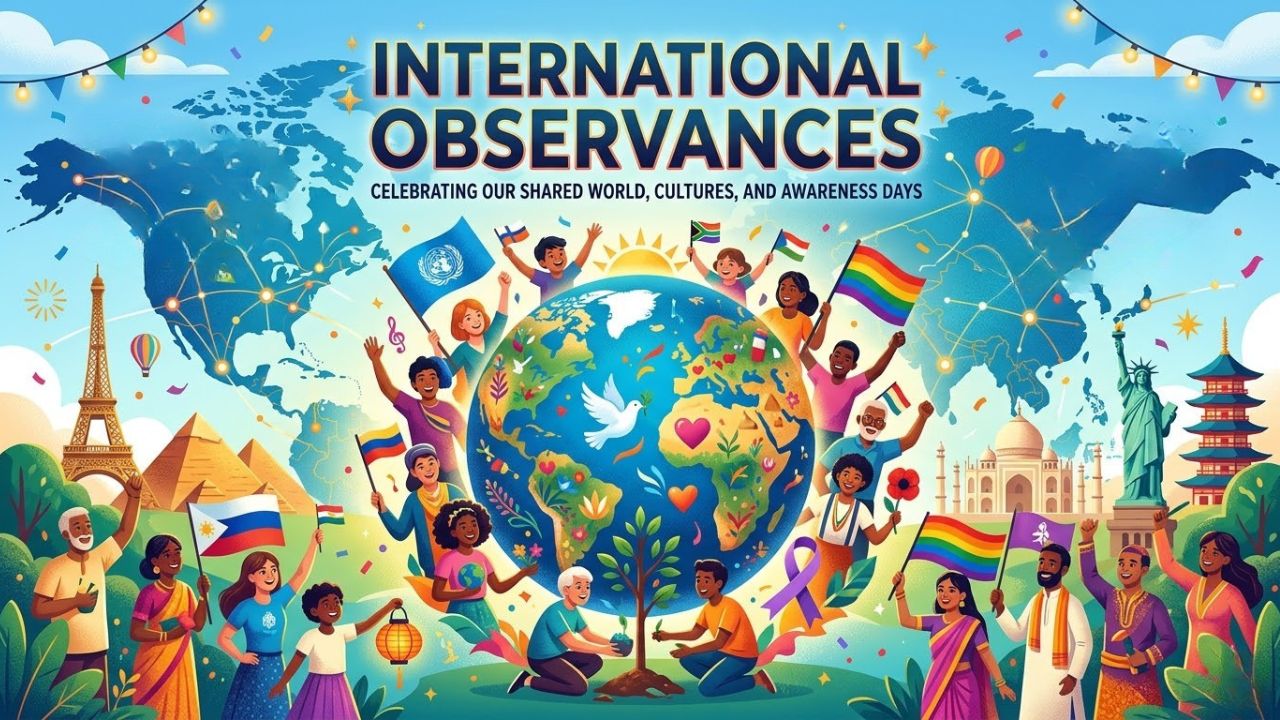
On November 11, nations around the world observe a variety of solemn memorials and joyous celebrations.
| Observance / Holiday | Region / Country | Significance |
| Armistice Day / Remembrance Day / Veterans Day | Global (US, UK, Canada, France, etc.) | Honoring military veterans and the fallen of the World Wars. |
| Singles’ Day | China / Global | An unofficial holiday and the world’s largest online shopping day. |
| National Independence Day | Poland | Celebrates the restoration of Polish sovereignty in 1918. |
| Independence Day | Angola | Commemorates independence from Portugal in 1975. |
| National Education Day | India | Honors the birth of Maulana Abul Kalam Azad. |
The Echoes of War: Veterans and Remembrance Day Across the Commonwealth, November 11 is Remembrance Day, where citizens wear red artificial poppies to honor armed forces members who have died in the line of duty. In the United States, the day is celebrated as Veterans Day, which uniquely honors all military veterans, living and dead. At 11:00 a.m. in many countries, a traditional two-minute silence is held to remember the exact moment the guns fell silent in 1918.
The Commercial Giant: Singles’ Day Originating at Nanjing University in 1993, Singles’ Day (11/11, representing four “single” ones) started as a cynical, anti-Valentine’s Day response by university students. However, e-commerce giant Alibaba transformed it in 2009 into a massive shopping festival. Today, it dwarfs Black Friday and Cyber Monday combined in sheer revenue, turning November 11 into a vital date for the global economy.
National Independence Movements November 11 is a day of sovereign pride for two very different nations. Poland celebrates the restoration of its independence in 1918 after being partitioned and wiped off the map for 123 years by Russia, Prussia, and Austria. Meanwhile, in Africa, Angola celebrates its independence from Portuguese colonial rule in 1975, which came after a grueling 14-year armed struggle and paved the way for the nation’s complex modern era.
Notable Birthdays on November 11
History is driven by human beings, and November 11 has welcomed an extraordinary array of visionaries, artists, and leaders into the world.
Famous Births
| Name | Year Born | Nationality | Profession / Legacy |
| Fyodor Dostoevsky | 1821 | Russian | Novelist, philosopher, author of Crime and Punishment. |
| George S. Patton | 1885 | American | General in the U.S. Army during WWII. |
| Maulana Abul Kalam Azad | 1888 | Indian | Scholar, independence activist, First Education Minister of India. |
| Kurt Vonnegut | 1922 | American | Novelist and satirist, author of Slaughterhouse-Five. |
| Johnny Walker | 1926 | Indian | Legendary Bollywood comedic actor. |
| Demi Moore | 1962 | American | Acclaimed actress and film producer. |
| Leonardo DiCaprio | 1974 | American | Academy Award-winning actor and environmental activist. |
| Philipp Lahm | 1983 | German | Elite footballer; captained Germany to the 2014 World Cup victory. |
Fyodor Dostoevsky (1821) Born in Moscow, Dostoevsky’s works are cornerstones of world literature. Novels like The Brothers Karamazov, Notes from Underground, and Crime and Punishment explored the darkest corners of human psychology, theology, and existential dread. Having survived a mock execution and a grueling exile in a Siberian labor camp, his writing bypassed surface-level storytelling to dissect the human soul.
Maulana Abul Kalam Azad (1888) A monumental figure in the “Bangalee” and broader Indian subcontinent spheres, Azad was a senior leader of the Indian National Congress and a fervent advocate for Hindu-Muslim unity during the fight against British colonial rule. After independence, he became India’s first Minister of Education. He is responsible for establishing the country’s foundational academic institutions, including the University Grants Commission (UGC) and the first Indian Institute of Technology (IIT). His birth fundamentally shaped the modern technological and educational trajectory of South Asia.
Kurt Vonnegut (1922) An American writer known for his dry, satirical, and darkly humorous style. Vonnegut survived the Allied firebombing of Dresden during WWII while being held as a prisoner of war in a meat locker—an experience that formed the basis of his masterpiece, Slaughterhouse-Five. He utilized science fiction and post-modern storytelling to critique war, society, and human folly.
Philipp Lahm (1983) For those who follow top European club performance and international football, November 11 marks the birth of one of the greatest defenders in the history of the sport. Known as the “Magic Dwarf,” Lahm was a tactical genius who redefined the role of the modern full-back for Bayern Munich. In 2014, he reached the pinnacle of international football, captaining the German national team to World Cup glory in Brazil.
Leonardo DiCaprio (1974) One of the most defining actors of his generation, transitioning from a 1990s teen heartthrob in Titanic to a heavily awarded dramatic actor in films like The Revenant and The Wolf of Wall Street. Beyond cinema, he has utilized his massive platform to become one of the world’s leading environmental activists, focusing on climate change and biodiversity preservation.
Famous Deaths on November 11
The closing of a life often leaves a permanent mark on the cultural or political landscape. Here are the notable figures who passed away on this date.
Famous Deaths at a Glance
| Name | Year Died | Nationality | Legacy / Cause of Death |
| Søren Kierkegaard | 1855 | Danish | Theologian and the father of existentialism. |
| Ned Kelly | 1880 | Australian | Infamous bushranger and outlaw; executed by hanging. |
| Shrimad Rajchandra | 1901 | Indian | Jain philosopher and spiritual guide to Mahatma Gandhi. |
| Yasser Arafat | 2004 | Palestinian | PLO Chairman and Nobel Peace Prize laureate. |
| F.W. de Klerk | 2021 | South African | Former President who helped dismantle apartheid. |
Ned Kelly (1880) The story of Edward “Ned” Kelly is woven deep into Australian folklore. A bushranger of Irish descent, Kelly clashed violently with the Victorian police, whom he accused of deeply ingrained corruption and persecution of the rural poor. In his final shootout at Glenrowan, he donned a legendary suit of bulletproof armor made from plowshares. He survived the shootout but was captured and hanged in Melbourne on November 11. To some, he was a ruthless cop-killer; to others, a Robin Hood-esque folk hero standing against colonial oppression.
Shrimad Rajchandra (1901) A towering figure in Indian spiritualism, Rajchandra was a Jain poet, philosopher, and mystic. While his life was short (he died at 33), his impact was immeasurable. He is most historically noted for his deep correspondence and relationship with a young Mahatma Gandhi. Rajchandra’s teachings on ahimsa (non-violence) and strict moral truth became the philosophical bedrock upon which Gandhi built his successful movement for Indian independence.
Yasser Arafat (2004) The death of Yasser Arafat in a military hospital in Paris marked a massive turning point in Middle Eastern geopolitics. As the chairman of the Palestine Liberation Organization (PLO) and the first president of the Palestinian National Authority, Arafat was a polarizing figure. To his supporters, he was a tireless freedom fighter and the undisputed symbol of Palestinian nationalism. To his detractors, he was a terrorist who complicated the peace process. His death left a leadership vacuum in Palestinian politics that is still felt today.
F.W. de Klerk (2021) Frederik Willem de Klerk was the last state president of South Africa under the apartheid era. While he was a product of the white minority rule system, he recognized that apartheid was unsustainable and leading to a catastrophic racial war. He unbanned the African National Congress (ANC) and ordered the release of Nelson Mandela. He shared the 1993 Nobel Peace Prize with Mandela for overseeing the peaceful transition to a majority-rule democracy, though his legacy remains heavily scrutinized by both the left and the right in South Africa.
“Did You Know?” November 11 Trivia
Looking for some historical trivia to share at the dinner table?
-
The Train Carriage of Vengeance: The private railway carriage in which the 1918 WWI armistice was signed in Compiègne did not rest in peace. Two decades later, in 1940, Adolf Hitler ordered the carriage to be brought out of a museum and placed in the exact same spot in the forest. He forced the defeated French forces to sign their WWII surrender inside it, as an act of ultimate historical vengeance.
-
The October Blunder: In the U.S., Veterans Day hasn’t always been in November. In 1968, the government passed a law moving the holiday to the fourth Monday in October just to guarantee a three-day weekend for federal workers. The public was absolutely outraged by the erasure of the historical November 11 significance. The backlash was so intense that President Gerald Ford signed a law in 1975 reversing the decision.
-
A Shared Origin in Acting: Hollywood icon Leonardo DiCaprio and the critically acclaimed Demi Moore were both born on November 11, exactly 12 years apart (Moore in 1962, DiCaprio in 1974).
-
A Cosmic Birthday: On November 11, 1572, the brilliant Danish astronomer Tycho Brahe observed a sudden, blindingly bright new star in the constellation Cassiopeia. It was actually a supernova (now known as SN 1572), and his meticulous notes on it helped shatter the ancient belief that the starry universe was permanent and unchanging.
-
A Presidential Precedent: On November 11, 1921, U.S. President Warren G. Harding became the first American president to ride in a car (a Packard Twin-Six) to his inauguration… wait, scratch that historical myth! He actually rode in a car to the dedication of the Tomb of the Unknown Soldier at Arlington on this very date, solidifying the automobile’s place in official American statecraft.
Final Thoughts
November 11 is a profound microcosm of the human experience. It is a day etched in the stone memorials of global conflicts, honoring those who sacrificed everything for the concept of peace. Yet, it is also a day of birth for literary giants, cinematic icons, and transformative leaders who fought with words, humor, and philosophy rather than weapons.
From the shifting of imperial borders in Europe to the ongoing fight for civil rights in America, and from spiritual awakenings in South Asia to the high-stakes political dramas of Australia, this date proves that history is never static. As we look back at the events of November 11, we are reminded that our modern world—our borders, our literature, and our rights—was forged by the triumphs and tragedies of the past.