

Do you toss and turn at night, staring at the ceiling for hours? You are definitely not the only one feeling this way. Millions of people in the United States fight bad sleep every single night. Here is a fascinating secret. The average person spends about one-third of their life sleeping. That equals roughly 26 years of rest in an 80-year lifespan. Your body needs this critical time to fix itself, build memories, and recharge your brain.
When your rest goes wrong, your whole day feels much harder. I want to share some practical, doctor-approved tips for better sleep every night that actually work. We will walk through setting a schedule that sticks, fixing your bedroom space, and building a calming nighttime routine.
Grab a cup of warm tea, and let’s go through it together. I will show you everything you need to know.
Why Quality Sleep Matters
Quality sleep acts like your body’s personal repair shop. It fixes everything from your immune system to your brain power. According to recent 2026 statistics from the CDC, nearly 37% of adults in the United States do not get enough rest. This shortage directly impacts your daily health.
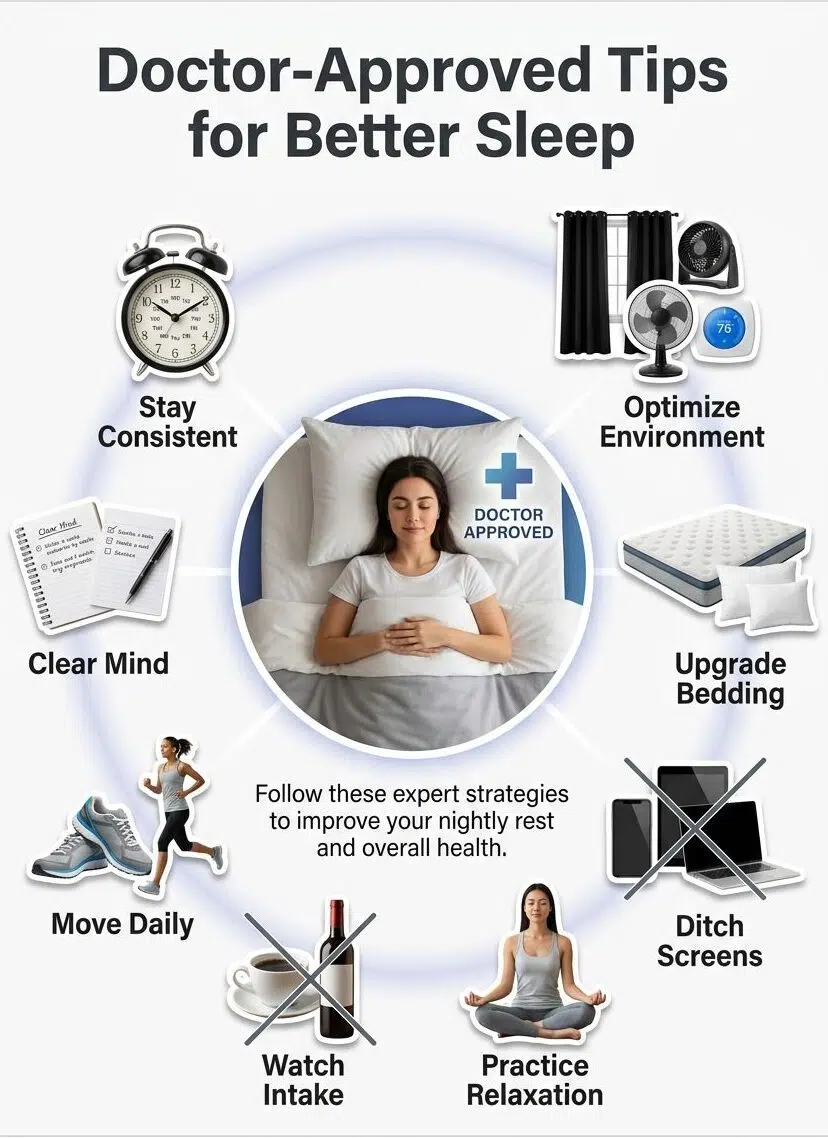
When you rest well, you wake up sharper, happier, and completely ready to take on your day.
Health benefits of proper sleep
Your body does incredible things while you are resting. Your immune system strengthens itself, fights off infections, and repairs damaged cells.
Your heart gets a much-needed break as your blood pressure drops. A 2025 study in the American Journal of Lifestyle Medicine found that not getting enough rest increases the risk of hypertension by up to 1.6 times.
This makes a solid night of rest a direct priority for your heart, not just a luxury. Resting also helps your brain process information, store memories, and clear out toxic proteins that build up during waking hours.
- Tissue repair: Your muscles and skin heal fastest during deep sleep stages.
- Hormone balance: Sleep regulates ghrelin and leptin, the hormones that control your hunger levels.
- Memory consolidation: Your brain organizes the day’s events into long-term storage to keep your mind sharp.
Connection between sleep and mental well-being
Your body gains physical strength at night, but your mind gains something equally powerful. Poor sleep quality directly triggers anxiety and mood swings.
Your brain requires this downtime to process heavy emotions. Without adequate rest, stress hormones spike and leave you irritable. Quality rest acts as a completely natural mood stabilizer.
“Sleep is the best meditation.” – Dalai Lama
Your circadian rhythm controls far more than just when you feel tired. This internal clock regulates neurotransmitters like serotonin and dopamine, which directly influence your mental state.
Consistent schedules keep these chemicals perfectly balanced. Irregular patterns disrupt this delicate balance and cause mental fog. Healthy sleep habits transform how you think, feel, and face each day.
Establishing a Consistent Sleep Schedule
Your body runs on a biological clock, and that clock absolutely craves consistency. Setting a strict bedtime and wake time syncs your internal rhythm with the outside world.
Going to bed and waking up at the same time daily
Your internal timer controls when you feel sleepy and when you wake up naturally. Setting a consistent sleep schedule trains your body to follow this rhythm perfectly. Go to bed at the exact same time every night. Wake up at the same time every morning, even on weekends.
This steady pattern tells your brain when to release melatonin, the chemical that makes you drowsy. Stick with it for two to three weeks, and your body will start to crave rest at that specific hour.
Many health enthusiasts use tracking devices like the Oura Ring or the Sleep Cycle app. These named tools help you monitor your exact timing and hold you accountable to your new schedule.
Adjusting your schedule gradually if needed
Changing your timing requires patience. Rushing the process often backfires and leaves you highly frustrated.
- Start by shifting your bedtime just 15 minutes earlier or later than usual. A common insider tip from sleep specialists is to hold this new time for three days before shifting another 15 minutes.
- Track how you feel during each adjustment period. Your energy levels and daytime alertness will tell you if the new timing works.
- Gradually move your wake time in the same direction as your bedtime shift. This keeps your total rest duration perfectly stable.
- Expose yourself to bright morning sunlight at your new wake time. Sunlight signals your body clock to reset immediately.
- Avoid daytime napping during the transition phase. Extra daytime resting confuses your internal clock and slows down the adjustment.
If you struggle after four weeks of consistent effort, please consult a medical professional. Sleep disorders might need professional attention and guidance.
Creating an Optimal Sleep Environment
Your bedroom acts as your personal sleep sanctuary. The right setup makes a massive difference in how well you rest, and small changes can completely transform your nights.
Keeping your bedroom cool, dark, and quiet
Your surrounding sleep environment significantly impacts your rest. A recent 2026 review by Ubie Health confirms that the best bedroom temperature for most adults in the US falls between 60 and 67 degrees Fahrenheit.
The absolute sweet spot for deep rest is right around 65 degrees. A cooler room helps your body drop its core temperature, which directly triggers natural drowsiness.
Darkness signals your brain to wind down, so invest in high-quality blackout curtains. You can also block out street noise with foam earplugs or a dedicated white noise machine. A dark, cool, quiet space tells your nervous system to relax. This ensures your circadian rhythm stays on track.
Investing in comfortable bedding and pillows
Your mattress and pillows physically shape how well you rest each night. A worn-out mattress loses support and forces your back muscles to work harder.
Quality bedding cradles your spine, keeps your neck properly aligned, and lets your muscles fully relax. Many users on the r/Mattress subreddit note that your choice of sheets is the most common reason you overheat at night.
Breathable fabrics keep you cool and help you stay asleep much longer.

| Bedding Material | Best For | Cooling Rating (1-5) |
|---|---|---|
| Cotton Percale | Hot sleepers wanting a crisp feel | 5/5 |
| Lyocell / Tencel | Extreme night sweats and softness | 4.5/5 |
| Cotton Sateen | Cooler climates and a silky texture | 3/5 |
Pillows matter just as much as your sheets. They support your head and prevent severe neck strain that wakes you up. Test different options before buying. Lie on mattresses in the store for at least ten minutes to feel how they actually support you.
Building a Relaxing Nighttime Routine
Your bedtime routine sets the physical stage for deep, restorative rest. Small habits you build right now will transform your nights from restless to highly refreshing.
Avoiding screens before bed
Electronic screens emit blue light directly into your eyes. This specific light tricks your brain into thinking it is still daytime, which severely disrupts your natural rhythm.
An April 2025 study published in the journal Life underscored that blue light directly disrupts circadian timing. The researchers found that red light or amber light is a much better alternative for evening reading lamps.
Doctors recommend putting away phones, tablets, and laptops at least one hour before you hit the pillow. This simple break gives your mind proper time to wind down.
Blue light specifically suppresses melatonin production in your brain. Ditching screens creates the perfect setup for excellent sleep hygiene.
Trying relaxation techniques like meditation or reading
Relaxation techniques quiet your racing mind and prepare your physical body for rest.
- Deep Breathing: Try the famous 4-7-8 technique developed by Dr. Andrew Weil. Inhale for four seconds, hold for seven, and exhale completely for eight seconds.
- Physical Reading: Reading a paper book engages your brain gently. This does not overstimulate you like digital screens do.
- Progressive Muscle Relaxation: Tense and release different muscle groups starting from your toes up to your jaw. This teaches your muscles to physically let go of accumulated tension.
- Guided Imagery: Take your mind to peaceful places using apps like Calm or Headspace. These tools make the process very easy for beginners.
Journaling your thoughts before attempting sleep also clears immense mental clutter. You can write down tomorrow’s tasks so you can set them aside temporarily.
Managing Diet and Lifestyle for Better Sleep
What you consume completely shapes how well you sleep at night. Minor adjustments to your daily meals can transform your physical rest dramatically.
Limiting caffeine and alcohol intake
Caffeine is a heavily hidden sleep disruptor found in coffee, tea, and even chocolate. A 2025 clinical trial published by Oxford Academic revealed a shocking statistic about late-day coffee. The researchers found that consuming 400mg of caffeine even 12 hours before bedtime significantly delayed sleep initiation and altered sleep architecture.
Cut back on all caffeine after 2 PM to see your sleep quality improve. Alcohol might initially appear to help you fall asleep faster, but it severely interferes with your deep sleep cycles.
Drinking alcohol leaves you feeling groggy the next morning. Skip the evening wine a few hours before bed to rest more soundly.
Eating light meals before bedtime
Your stomach works incredibly hard to digest food. A heavy, greasy meal before bed forces your body to stay active. Light meals give your digestive system an entirely easier job. Eat your final dinner at least two to three hours before you hit the pillow.

“A great insider tip for a late-night snack is drinking a small glass of tart cherry juice. It is naturally high in melatonin and promotes healthy rest without a heavy calorie load.”
Sugary snacks spike your blood sugar levels immediately. This spike is followed by a crash that will often wake you up in the middle of the night.
Avoid massive portions and skip the late-night pizza runs to improve your hygiene dramatically. Managing your diet this way provides easy insomnia solutions.
Incorporating Physical Activity into Your Day
Moving your body physically transforms how you rest at night. Medical professionals confirm this direct connection repeatedly.
Benefits of regular exercise on sleep quality
Exercise works like a magical key that unlocks better rest. Physical activity tires your muscles out, which makes falling asleep much easier. According to Johns Hopkins Medicine, engaging in just 30 minutes of moderate aerobic exercise can immediately increase the amount of slow-wave, deep sleep you get that exact same night.
Your muscles work very hard during the day, so they desperately need rest to recover. This natural biological need pushes your body toward a much deeper state of rest. People who exercise regularly fall asleep faster and stay asleep significantly longer.
Best times to work out for optimal sleep
Timing matters heavily when you work out. Your body temperature rises during physical activity and then drops a few hours later. This natural drop in temperature signals to your brain that it is time to sleep.
- Morning Workouts: Exercising outside in the morning exposes you to natural sunlight. This exposure sets your daily circadian rhythm perfectly on track.
- Afternoon Sessions: Working out between 3 PM and 6 PM gives your body plenty of time to wind down before bedtime.
- Evening Restrictions: Steer clear of high-intensity interval training (HIIT) within three hours of bedtime. Intense cardio leaves your heart rate elevated and your mind fully alert.
Light stretching or gentle yoga close to bedtime works perfectly fine. Just save the heavy lifting for earlier in the day to protect your nightly routine.
Managing Stress and Worries
Your mind constantly spins with tomorrow’s tasks, keeping you wide awake at 2 AM. Getting those racing thoughts onto paper can finally quiet your brain.
Journaling or making a to-do list before bedtime
Racing thoughts steal your rest before your head even hits the pillow. Getting these worries out of your brain works incredibly well for better sleep quality.
A landmark 2018 study from Baylor University found that participants who spent just five minutes writing a highly specific to-do list fell asleep nine minutes faster than those who simply journaled about their day.
- Write down all your specific tasks for tomorrow in a simple list format. This action clears mental clutter immediately.
- Create a gratitude section in your journal where you list three positive things. This shifts your mindset completely away from stress.
- List any major decisions you need to make, and then intentionally postpone thinking about them until morning.
- Document how you felt physically throughout the day to spot patterns that affect your rest.
Practicing deep breathing exercises
Once your tasks are written down, your mind will feel significantly lighter. Now it is time to physically calm your body.
- Sit upright in a comfortable position to let your lungs expand fully.
- Try Box Breathing, a technique popularized by Navy SEALs. Inhale for four seconds, hold for four, exhale for four, and hold empty for four.
- Breathe directly into your belly rather than just your chest to activate your parasympathetic nervous system.
- Repeat this breathing cycle ten to fifteen times each evening. This trains your nervous system to shift into a deep rest mode.
Combine these exact breathing exercises with your bedtime routine. They will soon feel as natural as brushing your teeth.
When to Consult a Doctor
Sometimes your sleep troubles stick around no matter what home remedies you try. That is your clear signal to call a medical professional.
Recognizing signs of sleep disorders
Sleep disorders affect millions of people across the United States. Spotting the warning signs early makes a massive difference in your recovery.

- You wake up gasping for air during the night. This heavily signals a breathing problem like Obstructive Sleep Apnea.
- According to 2026 data from SingleCare, sleep apnea becomes highly common among women after menopause, affecting up to one in four women.
- Excessive daytime sleepiness makes you nod off at work or while driving a car.
- Your partner actively complains about loud snoring that shakes the walls.
- You experience Restless Leg Syndrome, which causes an irresistible urge to move your legs continuously at night.
Morning headaches greet you when you wake up. This suggests that your oxygen flow decreased entirely during the night.
Seeking professional advice for chronic sleep issues
Your doctor can figure out what is really going on if you battle chronic issues. A sleep specialist can run specific medical tests to find the root cause.
They will likely recommend a Polysomnography, which is a comprehensive overnight sleep study. This test monitors your brain waves, oxygen levels, and heart rate while you rest.
If they diagnose you with sleep apnea, they might prescribe a CPAP machine. This highly effective device uses mild air pressure to keep your breathing airways continuously open.
Getting professional advice beats playing guessing games. It puts you directly on the path to restful sleep that changes how you feel completely.
Final Words
You have learned that sleep quality strongly shapes your health, mood, and daily performance in very powerful ways. These practical, doctor-approved tips for better sleep every night cost little money and take minimal effort to start right now.
Setting a consistent schedule, crafting a cool bedroom, and ditching digital screens all work together to transform your nights entirely. Doctors strongly agree that managing your daily caffeine, moving your body, and calming your mind create real results within weeks.
Take action today by picking just one simple tip and making it a solid daily habit. Better sleep is absolutely not a luxury. It is the core foundation that lets you show up as your absolute best self every single day.
Frequently Asked Questions (FAQs) on Doctor-Approved Tips For Better Sleep
1. How can I fall asleep faster every night?
Try a simple bedtime routine, like reading or listening to soft music. Keep your bedroom cool, around 65 to 68 degrees Fahrenheit, which sleep specialists say is the sweet spot for falling asleep faster. Turn off screens at least thirty minutes before bed to help your brain wind down.
2. What foods or drinks should I avoid before going to bed?
Skip coffee, soda, and chocolate at least six hours before bedtime since caffeine stays in your system longer than most people think. Heavy meals late at night make your stomach work overtime while you’re trying to rest.
3. Why do doctors recommend keeping a regular sleep schedule?
Your body has an internal clock that loves consistency. Going to bed and waking up at the same time each day trains your brain to feel sleepy and alert at the right times, even on weekends.
4. Can exercise help me get better sleep every night?
Yes, but timing matters. A 2023 study in Sleep Medicine Reviews found that finishing moderate exercise at least 90 minutes before bed helps you fall asleep faster without leaving you too energized.